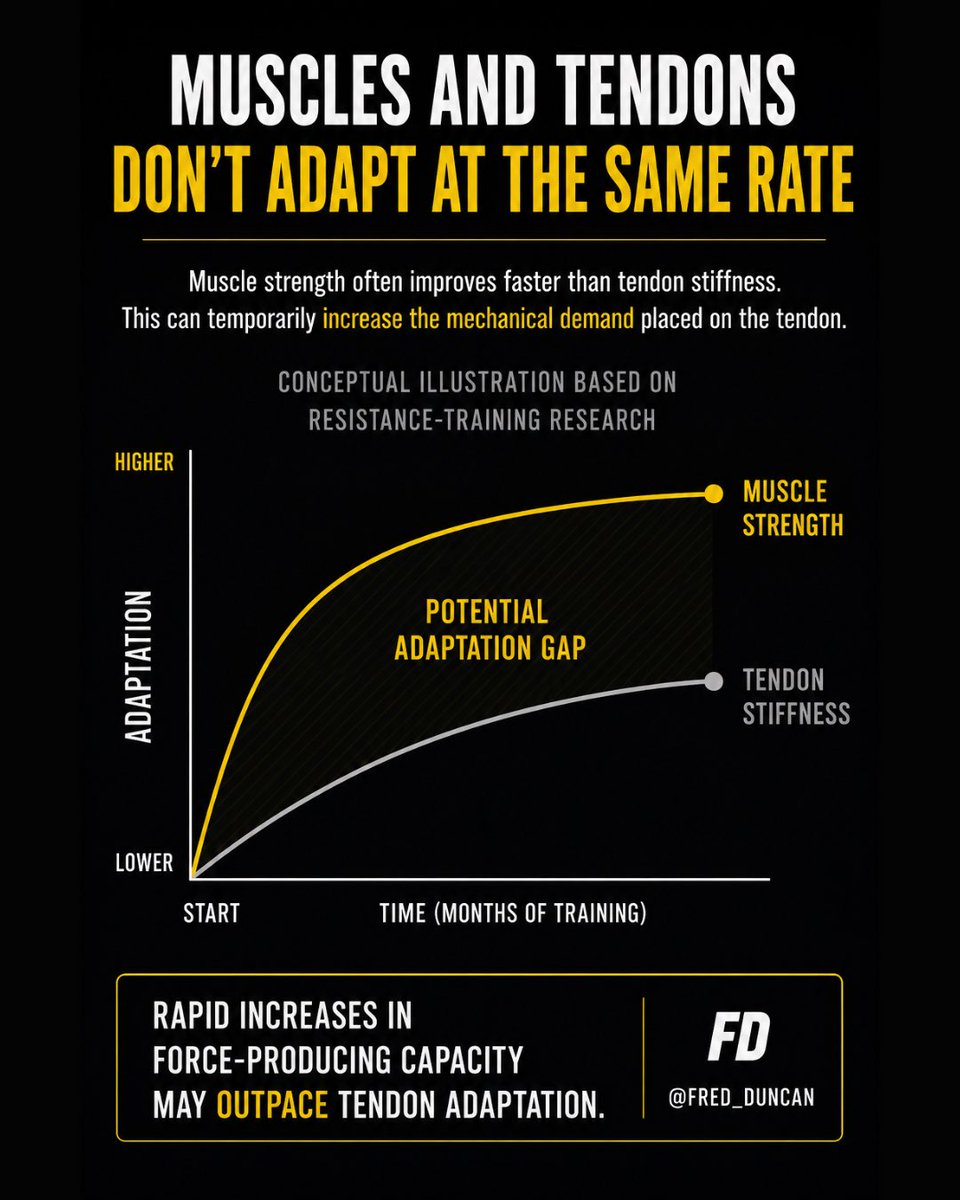
Getting stronger is only part of the equation. The structure of your training matters just as much.
This is one of the biggest reasons we periodize training. We don’t jump straight to max speed, maximal plyometrics, or the highest training loads.
We build the foundation
.@AntonioGracias is a patriot and deserves a medal for doggedly going after these issues
As I've said on the pod, and here many times, we should investigate and put sunlight on all election irregularities — the @Heritage has done the best job to date with their database
And for the love of god, let's just require ID and put an end to this
Swedish warship Vasa sank to the bottom of the Baltic Sea in 1628.
In 1961 it was salvaged and the wood was still strong enough to be able to walk the decks.
Today is the world's best-preserved XVII century ship.
The lowest cardiometabolic risk isn't in the people who avoid coffee. It's in the ones who drink a moderate amount.
In 188,000 UK adults free of disease at baseline, drinking about three cups a day tracked with roughly 48% lower risk of developing diabetes, heart disease, and stroke together, well below people who drank none. Measured by caffeine, 200 to 300 mg a day showed the same pattern. And the protection held even in people who already had one chronic disease, where up to three cups tracked with lower risk of progressing to a second. The metabolites linking coffee to lower risk included VLDL lipids, the amino acid histidine, and a marker of low-grade inflammation, so it's shifting several disease systems at once, not one. Both analyses were independently funded with no industry ties, which isn't a given in coffee research.
The catch is that the benefit sits in the middle, not the maximum. Past about five cups a day the association faded, and in people with an existing chronic disease it edged toward higher risk. Genetics shapes the ceiling: among the heaviest drinkers, slow caffeine metabolizers saw the most risk at high intake, fast ones far less. For a normal habit this is academic, it stays well below those thresholds. And it's observational, so it shows association, not proof that coffee itself did the lowering.
JUST IN: Congress has passed a bill banning members of Congress and their spouses from trading individual stocks in a 232-198 vote.
198 Democrats voted AGAINST this bill.
Start taking the sauna as seriously as exercise
Sauna 2x a week is linked to:
- 25% reduction in heart disease mortality risk
- 28% reduction in all-cause mortality risk
- 22% reduction in dementia risk
Sauna 4x a week is linked to:
- 77% reduction in heart disease mortality risk
- 41% reduction in all-cause mortality risk
- 66% reduction in dementia risk
That's compared to only once a week - it might be even greater when compared to zero times a week
Sauna benefits timeline: https://t.co/Gu38aiQvSg
Sources: PMID: 30486813, PMID: 25705824, PMID: 27932366
Inside an 18th-century British warship. Twelve-year-old me could’ve spent hours staring at this.
A cross-section of an 18th-century British man-of-war in the midst of battle reveals the intense coordination behind naval warfare during the Age of Sail. From the crowded upper decks to the shadowy hold below, every level had a specific purpose. Marines fired muskets, boarding parties prepared for close combat, and gun crews manned lighter 12-pounders above while the lower gun decks unleashed devastating 24- and 32-pounder cannons capable of tearing through enemy ships.
Far below, sailors worked in near darkness around the dangerous powder magazines, carefully supplying ammunition to the guns above. Nearby, a makeshift sick bay treated the wounded, highlighting the harsh conditions aboard these floating fortresses, where hundreds of men lived, worked, and fought in some of the most brutal battles at sea.
Most exercise and aging studies can't answer a basic question: is muscle deterioration from aging itself, or just from decades of moving less? A new Nature Aging study solved this by recruiting older adults who moved as much as people in their twenties.
The researchers from Amsterdam UMC and Maastricht University recruited four distinct groups: young adults in their twenties, older adults whose daily step counts and high-intensity activity matched the young group, older adults who had trained consistently for years (three structured hour-long sessions per week for over a year), and older adults with early physical impairment.
They took muscle biopsies before and after a one-hour cycling session, then measured over 24,000 gene transcripts, 135 metabolites, and 1,383 lipid species.
By matching activity levels between young and older groups, any molecular differences couldn't be blamed on the older adults simply moving less. This isolated aging from inactivity for the first time at this molecular depth.
Key findings:
• The defining molecular signature of muscle aging is an energy crisis. Comparing young adults to activity-matched older adults, 1,106 genes were downregulated with age. These genes build the mitochondrial machinery that produces cellular energy: ATP synthase, cytochrome c oxidase, and NADH dehydrogenase subunits. Mitochondria are the power plants of cells, converting nutrients into ATP, the energy currency cells use to function. When these genes decline, cells lose their ability to generate energy efficiently.
• NAD+ levels declined and triglycerides accumulated inside aging muscle. NAD+ is a molecule required for energy production and cellular repair. Lower NAD+ means less capacity to convert fuel into usable energy. Triglycerides are stored fats, their accumulation inside muscle indicates unburned fuel piling up as the tissue loses its ability to process it.
• More than half the molecular signature of muscle aging was absent in trained older adults. Specifically, 57.1% of age-related gene downregulation and 55.9% of upregulation were missing in the trained group. Their muscle resembled young adults far more than their chronological age would predict.
• The changes training preserved were specifically the energy metabolism ones. Genes like NDUFS1 and COX5A, which were depleted in normally active and impaired older adults, sat at youthful levels in the trained group across all five mitochondrial respiratory complexes. The single most prominent feature of muscle aging turned out to be the single most preventable.
• Being generally active was not enough. Structured training was the difference. The normally active older adults walked as much as young adults, and their energy metabolism genes declined anyway. What preserved the youthful molecular profile was structured, sustained training. Filling a step counter and being genuinely trained are not equivalent at the molecular level.
• Roughly half of muscle aging persisted regardless of training. Changes in genes controlling synaptic transmission (how nerves communicate with muscle) and WNT signaling (a pathway regulating tissue maintenance and stem cell function) appeared in all older adults, trained or not. This unavoidable half is where drugs will have to work.
• The fittest muscle mounted the largest inflammatory response to exercise. All groups activated stress and immune genes after exercise, including IL6, IL1B, and TNF. But the magnitude scaled with fitness. Trained older adults most closely resembled young adults in their response, followed by normally active, with impaired older adults showing the most blunted response. The stress response to exercise appears to be the mechanism of adaptation, not damage to be minimized.
This raises a concern about anti-inflammatory longevity strategies. If the inflammatory stress response is how exercise produces its benefits, chronically suppressing inflammation may blunt the adaptation that exercise depends on. It doesn't mean inflammation is beneficial in general, but the timing and context matter.
A separate discovery: the proteasome appears to regulate NAD+. The proteasome is the cellular machinery that breaks down damaged proteins. When researchers inhibited it, NAD+ levels rose in both muscle and liver cells to a degree comparable to NAD+ precursor supplements. This opens a new route to understanding NAD+ decline that operates through protein turnover rather than just supplying more raw material.
The study draws a clear line between what lifestyle can address and what will require therapeutics. The energy metabolism decline, mitochondrial deterioration, and NAD+ depletion that define muscle aging are largely preventable through structured training. The synaptic and signaling changes that persist in all older adults represent the unavoidable half where drugs will need to work.
The decisions made about structured training in midlife determine which molecular trajectory muscle follows in later decades. Half of muscle aging is optional. The other half isn't. Knowing which changes belong to each category is knowing where behavior ends and biology takes over.
Rep. Gill: "Is it important to be polite?"
Smithsonian Director Hartig: "Yes, sir"
Gill: "The Smithsonian lists politeness as an attribute of white supremacy"
After UNESCO moved forward with criticism of Israel over heritage sites, Israel responded by accusing the organization of ignoring Hezbollah’s military use of Beaufort Castle in southern Lebanon.
Israel says Hezbollah built an extensive tunnel network beneath the historic fortress and used the site to launch roughly 400 rockets at Israeli communities. The Foreign Ministry also released graphics and video it says show the tunnels beneath Beaufort Castle, arguing UNESCO has remained silent on the site’s militarization while condemning Israel.
New episode on Joseph Wechsberg’s 1966 book The Merchant Bankers
Merchant banking is fascinating. It's a very distinctive form of entrepreneurship.
There's an old-school way of doing business that appeals to me.
The merchant bankers’ profiled in this book have a combination of:
•personal honor
•speed of action
•clear thinking
•independent judgment
•seamless webs of deserved trust
•discretion
•and willingness to make unconventional decisions
The founder of every merchant banking dynasty was a merchant before he was merchant banker. Once they discovered financing transactions was more profitable than physically trading goods, their real products became judgment, information, advice, access, and trust.
Their greatest asset was not money.
Their greatest asset was their reputation.
Instead of recounting the histories of families like the Rothschilds, Barings, Hambros, Warburgs, and Lehman Brothers, I wanted to extract the principles they shared. Those principles are what you will learn by listening to this episode.
Timestamps and quotes:
0:01 In every merchant-banking dynasty there is one pioneer who began with nothing and died rich.
1:31 When I asked him how he'd become a millionaire he tapped his right temple and said "I used my head. Don't you ever forget that, my child." I didn't.
3:42 How they make their money is a secret to most people outside the bank— and many people in it.
4:25 Nearly all of them started as a family business.
4:30 Almost all merchant bankers were merchants before they became bankers.
4:45 First they attended to their own affairs, later they financed the transactions of friends and clients.
4:55 It was easier to sell one's signature than a bale of silk; it was also more profitable.
5:22 They knew the best-kept secrets.
5:50 He defined merchant banking as a sense of commercial honor, an absolute fairness in all dealings, and a willingness to suffer pecuniary loss, if need be, rather than tarnish by one unworthy act the good name of the firm.
6:05 Character was prized more than wealth.
7:12 Their motto: "We must not let in daylight upon magic.”
11:41 He comes to us because we give him fast, personal service. I couldn’t tell him, ‘I’ll call you back.’ That’s exactly what the big commercial banks would have done. It would take them a week, processing his request through channels and committee meetings. If we acted like that, we would be out of business in a couple of years. I’ve known him for years. I trust him.
12:30 We have no large bureaucracy inside but a vast network outside. We know a lot about a lot of people. And we rely on the prestige of our name. People trust us.
14:05 One has to keep a lot of useful information in one’s head.
15:06 Merchant banking is not a concrete science but an abstract art.
15:15 People have been fired for incompetence but never for making an occasional mistake.
15:22 We are always encouraged to make fast decisions though it may be the wrong decision once in a while. This is competitive, aggressive business. Very exciting. There is no routine. Every day is different, and you learn as you go along.
15:30 There is no set pattern. Anything that concerns money we attempt to cater for.
15:42 We are consciously unorthodox.
15:53 The big banks live on their deposits, we merchant bankers on our wits.
16:55 What the merchant bank offers above all is trust. A lot of business is done with very little paperwork.
17:08 Merchant bankers are basically trustful optimists.
17:27 Lawyers like to complicate matters. We like to simplify them.
19:31 If one gets too big, one loses one’s flexibility.
20:56 We became marriage brokers, arranging another amalgamation. A process of economic cross-fertilization. We may take a minority interest, but never control. We believe the management should be left to the managers.
25:05 Ideas are a merchant banker’s lifeblood.
25:51 The merchant bank was an ideal combination — efficient and unbureaucratic.
27:09 It’s the name of the merchant banker that builds a magic bridge between buyer and seller. They may not trust one another but both trust us.
29:21 Nothing is more like itself, nothing less like anything else.
35:04 Progress in thinking is progress towards simplicity.
36:53 Influence is more important than power.
37:00 Men of talent are often complex and hard to understand.
39:04 Happiness is not the fulfillment of desires but the fulfillment of duties.
39:13 Management is made up of people, and people are unfathomable.
43:30 Funny thing, the hardest things to raise money for often turn out to be the best.
I’ve always described sprinting as the ultimate plyometric. That doesn’t mean you shouldn’t include other plyometrics in your program. It just means you have to account for the volume of both, especially if you’re sprinting multiple times each week.
If you want to see exactly