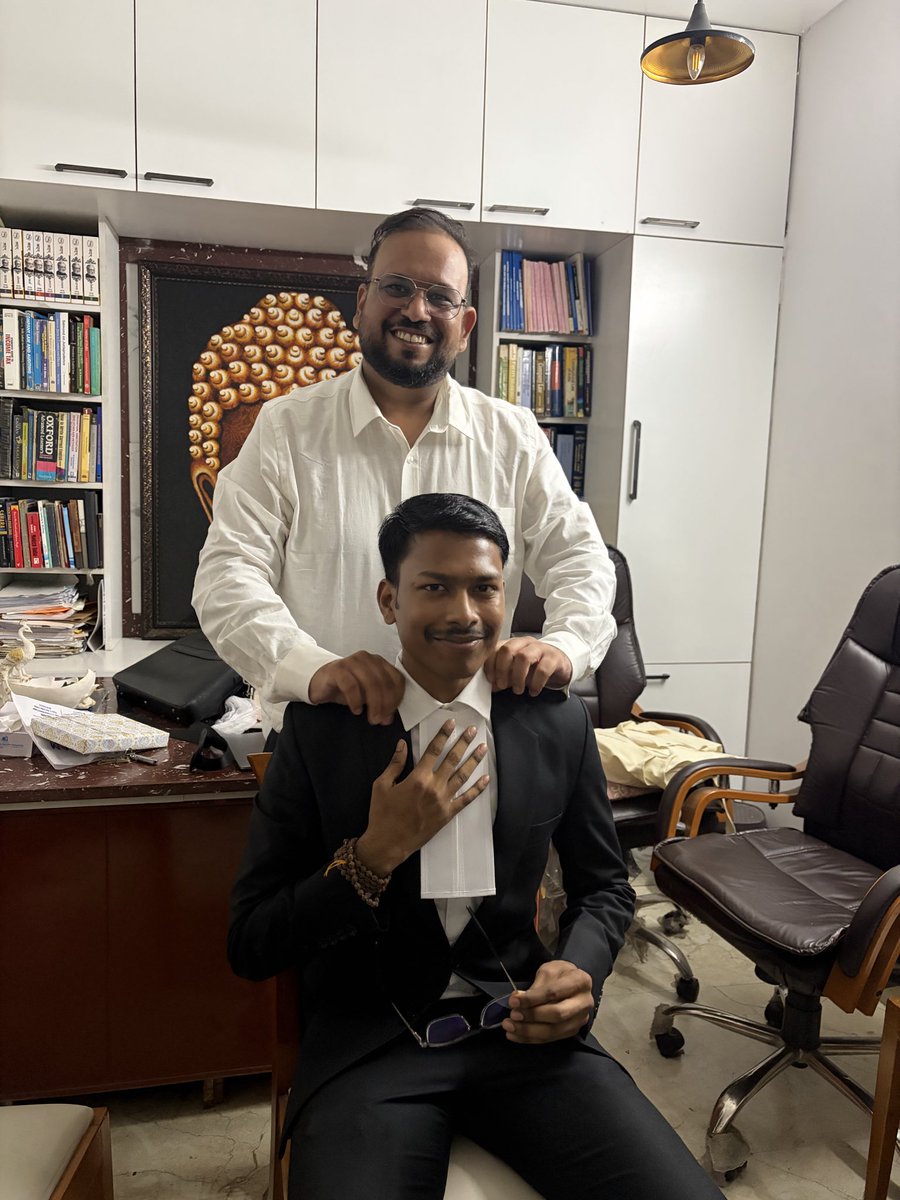
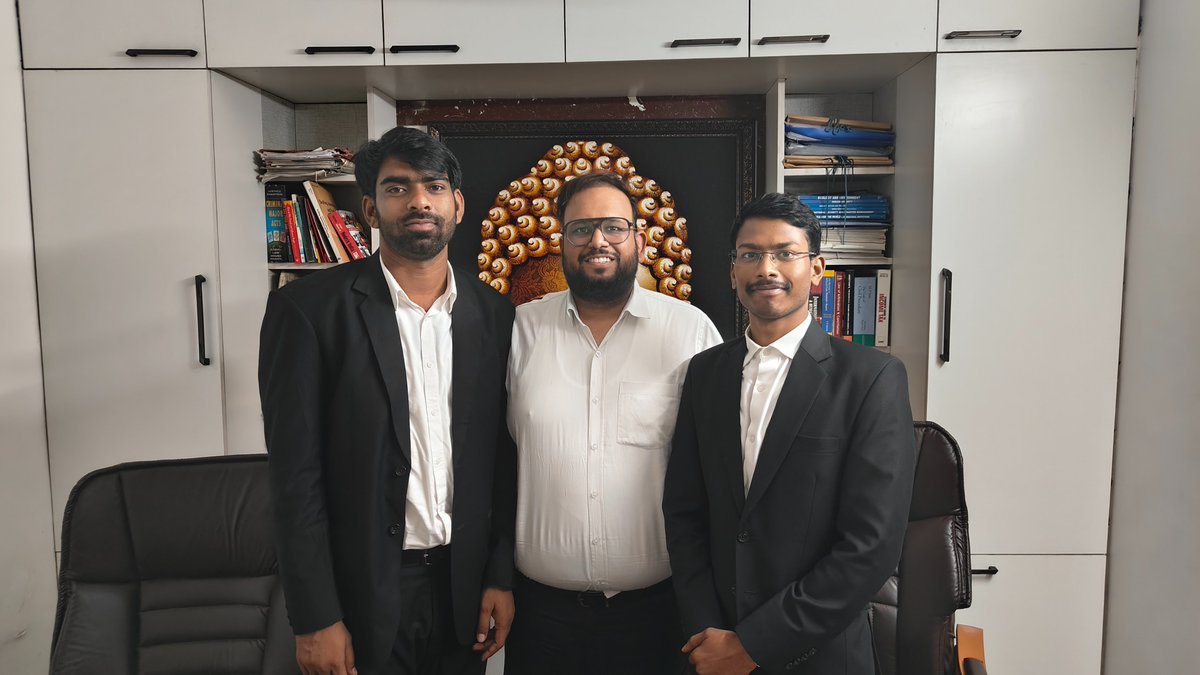
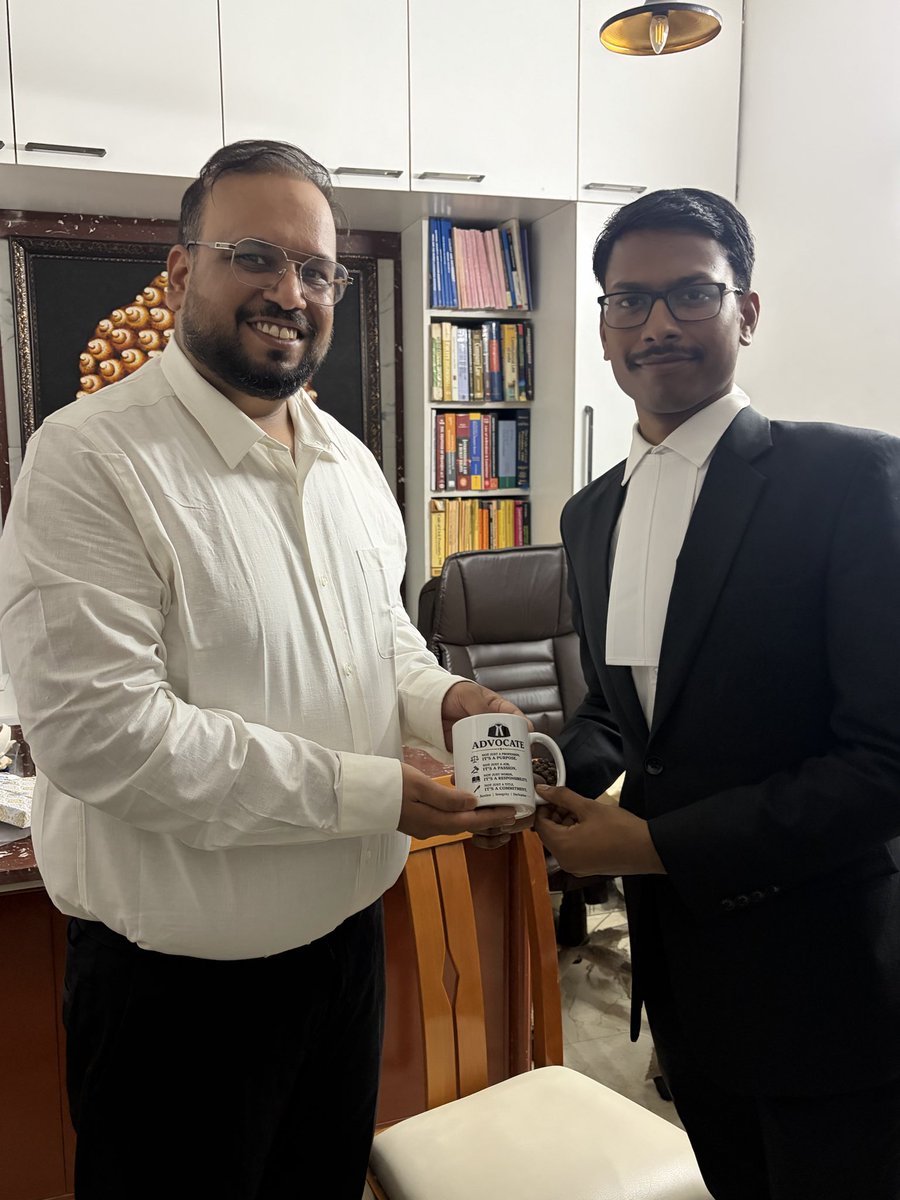
"Successfully completed my legal internship under @lawandnation sir! Ready to take on the next chapter of my legal journey with newfound knowledge and experience. ⚖️
The scales of justice require hands of honor to balance them. Proud to celebrate the Band Ceremony of @VivekUnbeatabl, a milestone steeped in legal tradition and a lifelong commitment to the duty. Join us for an evening of celebration. #legaltradition#Justice#DelhiLawyers
Saurav, Tis Hazari is where some of the tallest lawyers of their time began their practice in Delhi. It was the only court in Delhi at one point, long before people like you came here. Stop disparaging the struggles of those who built from here. But I don’t expect you to understand, when you get mansions to live in off funds and favours.
If “Badmashi” is everywhere—in songs, reels, cars, captions and comments—shouldn’t we stop and ask: what makes this identity so attractive to our young people?
I started asking myself this question while examining the publicly available Instagram profiles of two alleged shooters in the Ankit Balyan murder case in Shamli, Uttar Pradesh.
What I found was difficult to dismiss as a coincidence.
Both are reportedly very young—around 16–20 years old—and appear to come from financially well-off families. Yet their online identities showed remarkably similar patterns: “badmashi” songs, cars with black mirrors, caste/community names displayed on vehicles, and repeated imagery built around dominance, attitude, fear and status.
Then I looked beyond their profiles.
The people engaging with their posts often appeared to be projecting remarkably similar identities themselves.
Same songs.
Same “badmashi” aesthetic.
Same obsession with cars, caste and status.
Same language of dominance.
And that is where this stops being just a discussion about music.
It becomes a question about identity, peer influence, social validation and the culture we are creating around young people.
I am not arguing that listening to a “badmashi” song makes someone a criminal. That would be a simplistic and irresponsible conclusion.
My question is much deeper:
When a particular identity is repeatedly glorified, imitated and rewarded by an entire peer group, what happens to a young person's perception of what is “cool”, respectable and powerful?
Maybe we need to stop asking only “Who committed the crime?”
We should also ask:
“What kind of identity was being built, what behaviour was being rewarded, and what warning signs were we ignoring before the crime happened?”
That is why I criticise badmashi culture—not music.
JUDGMENT OF THE DAY
DAY 5
Can an accused escape trial simply by claiming there was no legally enforceable debt?
The Supreme Court says the law is otherwise.
In today's judgment, the Supreme Court reiterated that once the basic ingredients of Section 138 of the Negotiable Instruments Act are prima facie satisfied, and the issuance/signature of the cheque is not disputed, the statutory presumption under Section 139 comes into operation.
The Court held:
✅ At the stage of issuing process, the Magistrate only needs to examine whether the prima facie ingredients of Section 138 NI Act are satisfied.
✅ Section 139 raises a statutory presumption that the cheque was issued towards a legally enforceable debt or liability.
✅ The accused can rebut this presumption only during trial by leading evidence. It cannot be displaced at the pre-trial stage merely by raising a defence.
Legal Takeaway:
A plea that no legally enforceable debt existed is a matter of evidence at trial—not a ground to dismiss a cheque bounce complaint at the threshold.
Today's Judgment:
Renuka v. State of Maharashtra & Anr.
2026 INSC 327 | Criminal Appeal arising out of SLP (Crl.) No. 7829 of 2023.
The peaceful protest by the students of Jharkhand against the education/employment system has made every Jharkhandi proud. Today I just want to share some of my memories of that place. Morabadi is not just a place,it is an emotion for thousands of students. If you visit the protest site today and talk to any student, you'll feel it yourself. The atmosphere is so positive. Everyone is preparing for competitive exams, helping each other, sharing notes, discussing questions, and chasing the same dream. In today's world, such a healthy environment is rare. The Central Library at Morabadi has helped shape the lives of so many people who later became officers and served/serving the country. I still remember going there when I was preparing for my Class 12 board exams. I wasn't even allowed to study there, but I would quietly walk in, find a corner, and spend hours with my books. Those days still make me smile. Life was so simple then. Students would survive on a ₹10 plate of chana, a glass of sattu, or a plate of dhuska for whole day. Every student sitting there believed that one day their hard work would change their life. Saraswati Puja at Morabadi was one of the biggest and most beautiful celebrations in Jharkhand. For us, it was much more than a festival. Seeing these students protest peacefully made me feel proud and nostalgic at the same time. Thank you, students of Jharkhand, for showing the country that you don't need violence to make your voice heard. A peaceful movement, with the right intention, is always stronger.
Jai Hind. Jai Bharat.
#genz #jharkhandprotests #JharkhandStudents #Morabadi #JPSC #SSCCGL #SSC #Paperleak #Corruption