New paper on Global Environmental Change for those interested in collective Payments for Ecosystem Services and Framed Field Experiments, led by @julianasah#deforestation#REDD
https://t.co/a5HxCqB4eh
Structuring climate finance to benefit women and alleviate poverty https://t.co/TiE7YGkFOX via @cifor
Great work by @nia_atmadja@LestariHiasinta & Houria Djoudi
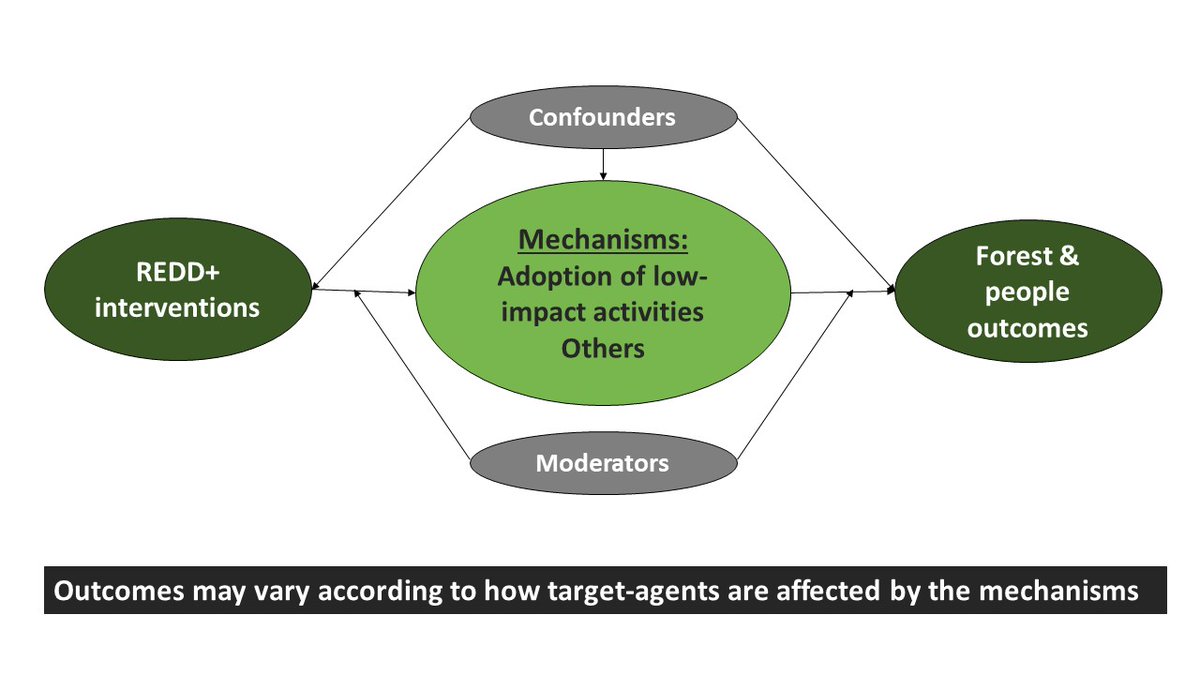
Our results suggest the adoption of low impact activities helped to boost forest cover and to increase income sufficiency in the long run.
They also imply that searching for heterogeneous outcomes is critical to identify which mechanisms affect results over time.
5/5 #FLARETC20
But we re-run the analysis comparing only the 21 treated households which adopted low-impact activities with the control group.
This time we found the initiative saved 15.77 ha/household & raised by 35% the probability of increasing perceived income sufficiency.
4/5 #FLARETC20
Results show the REDD+ initiative did not affect forest cover & perceived income sufficiency.
Since a prior study found the initiative saved 4.3 ha/household after 2 years it started, at first, we inferred the forest outcomes faded away.
3/5 #FLARETC20
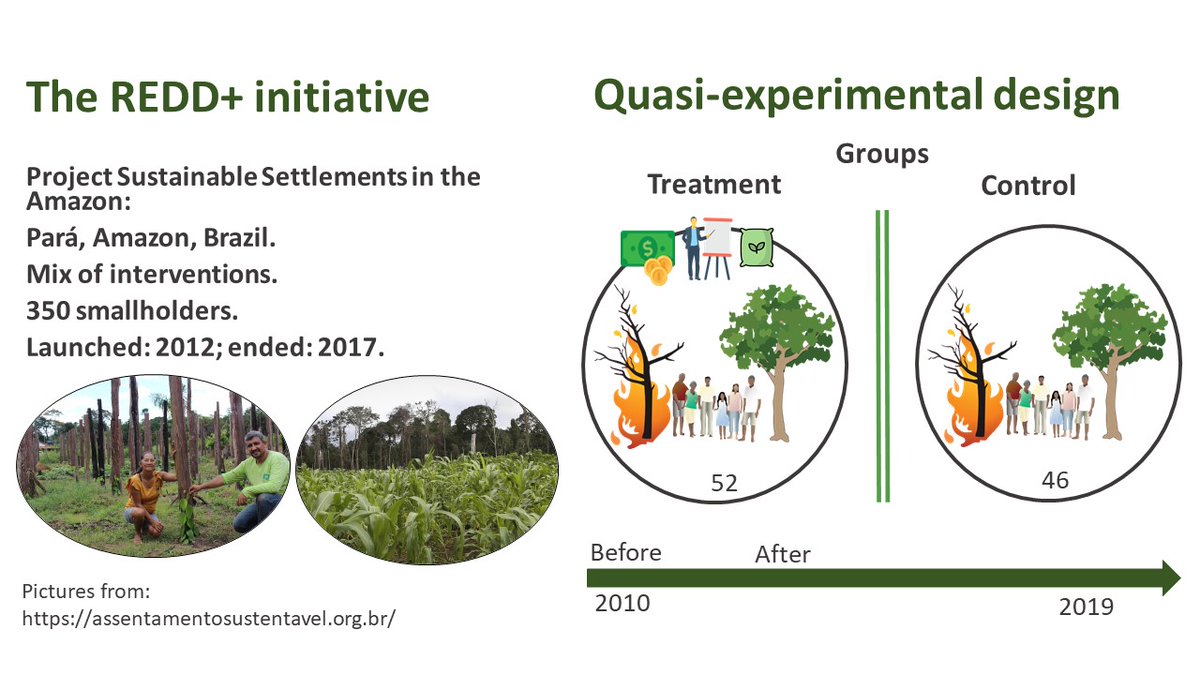
We estimated late (8 years) outcomes to forest cover & perceived income sufficiency of a PES-ICDP mixed-initiative.
Then, we evaluated whether the adoption of low-impact activities improved outcomes.
Data came from interviews (52 treated;46 control households).
2/5 #FLARETC20
Do #REDD+ initiatives promote long-standing desired outcomes for forest & people?
Which are the causal mechanisms responsible for the outcomes?
We answered these questions running a quasi-experiment in the Brazilian Amazon.
1/5 #FLARETC20@cifor@noradno@Climateforest
4/5 These restrictions seem to affect HH income from crops. In intervention villages, average HH income from crops was approx equivalent before (2012) & after (2018) REDD+ was introduced,but such crop-based HH income almost doubled in control villages over the same period
3/5 Drawing from longitudinal research by @CIFOR GCS , we collected data using household (HH) surveys. Our preliminary findings suggest that interventions associated with the #BFCP helped reduced forest clearing by households mostly through restrictions on forest access and use
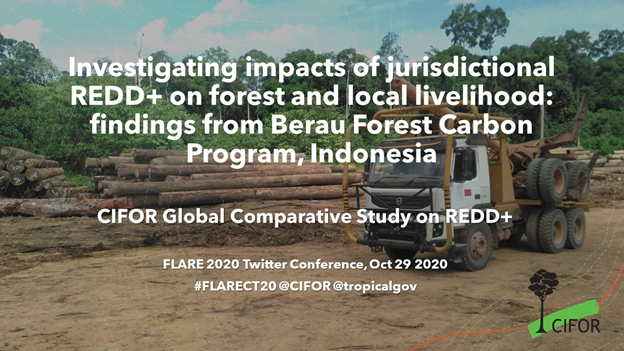
2/5 Designed with the support from The Nature Conservancy (TNC) in 2008, Berau Forest Carbon Program (BFCP) in Berau, East Kalimantan, was led by the Berau district government with the support of various non-governmental organizations #FLARECT20
1/5 Subnational #jurisdictional#REDD+ programs may be more effective than individual projects or centralized regimes in achieving forest conservation goals, but their outcomes remain unclear. We assessed this in 1st district-level program in Indonesia
#FLARETC20@noradno
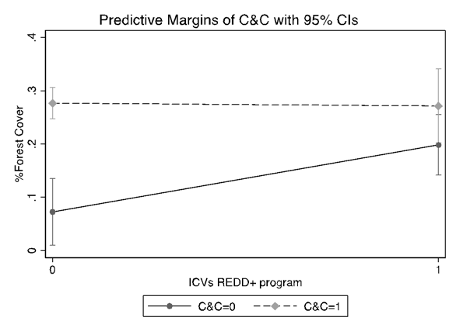
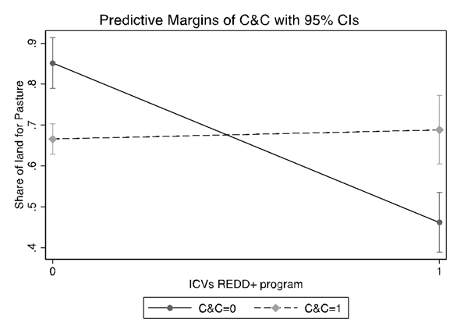
5/5 After factoring in existing policy instruments, I find that #REDD+ does indeed prevent cutting & conversion to pasture where C&C is non-existent/not possible. This paper speaks to the importance of evaluating AND using policy instruments jointly per local contexts. #FLARETC20
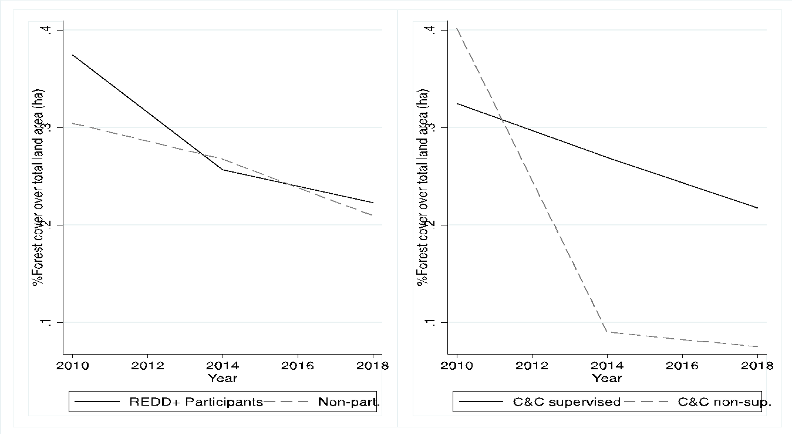
4/5 But, after considering the interaction between C&C and REDD+ I find that for unmonitored households (no C&C), participating in #REDD+ incentivized them to preserve more of their forest cover & reduce the share of land converted to pasture, than HHs without REDD+
#FLARETC20
3/5 I use the #BACI approach using household-surveys collected as part of @cifor GCS study on #REDD+. Using pre-treatment household-level matching and #DID procedures, I find that C&C supervision+sanctioning has a stronger power preventing deforestation than REDD+. #FLARETC20
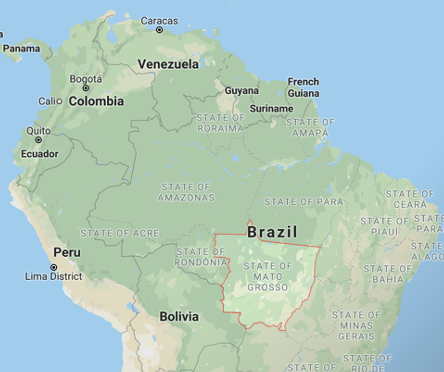
2/5 NGOs are often responsible for implementing #REDD+ in #LatinAmerica. In MatoGrosso, the program (by @icvcentrodevida) used non-monetary incentives to promote sustainable production. Simultaneously the #ForestCode allows deforestation up to 20% of held land. #FLARETC20
1/5 #REDD+ programs are often implemented within a context of existing #Command&Control regimes but evaluated independently of C&C instruments. Does REDD+ enhance or compliment C&C’s effectiveness? I evaluate this in Mato Grosso, Brazil #FLARETC20@noradno@Climateforest
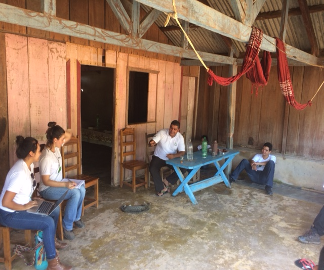
5/5 Collective PES (group level ‘carrots’) combined with Community or Gvmt sanctions (disincentives, or ‘sticks’) can offer effective, equitable & (sometimes) efficient forest conservation outcomes #FLARETC20#REDD Thanks to the support of @noradno@Climateforest @iki_bmu