Started experimenting with hand-tracking-based interactions for my little voxel editor – BoxelXR. There are a lot of things to tune, but overall it feels good. Though it would require some decent work in sound design to compensate for the lack of haptic feedback.
Freud's Prosthetic God.
Generally speaking, the whole culture (including all physical objects and concepts within its space) is such a type of augmentation.
Reminds me of the Anthropic Principle. Your ability to make such an observation requires an unreasonably effective modeling system, like human language. Trained (on cultural artifacts) models are impressive at operating within cultural space. Culture itself is a world model captured by language.
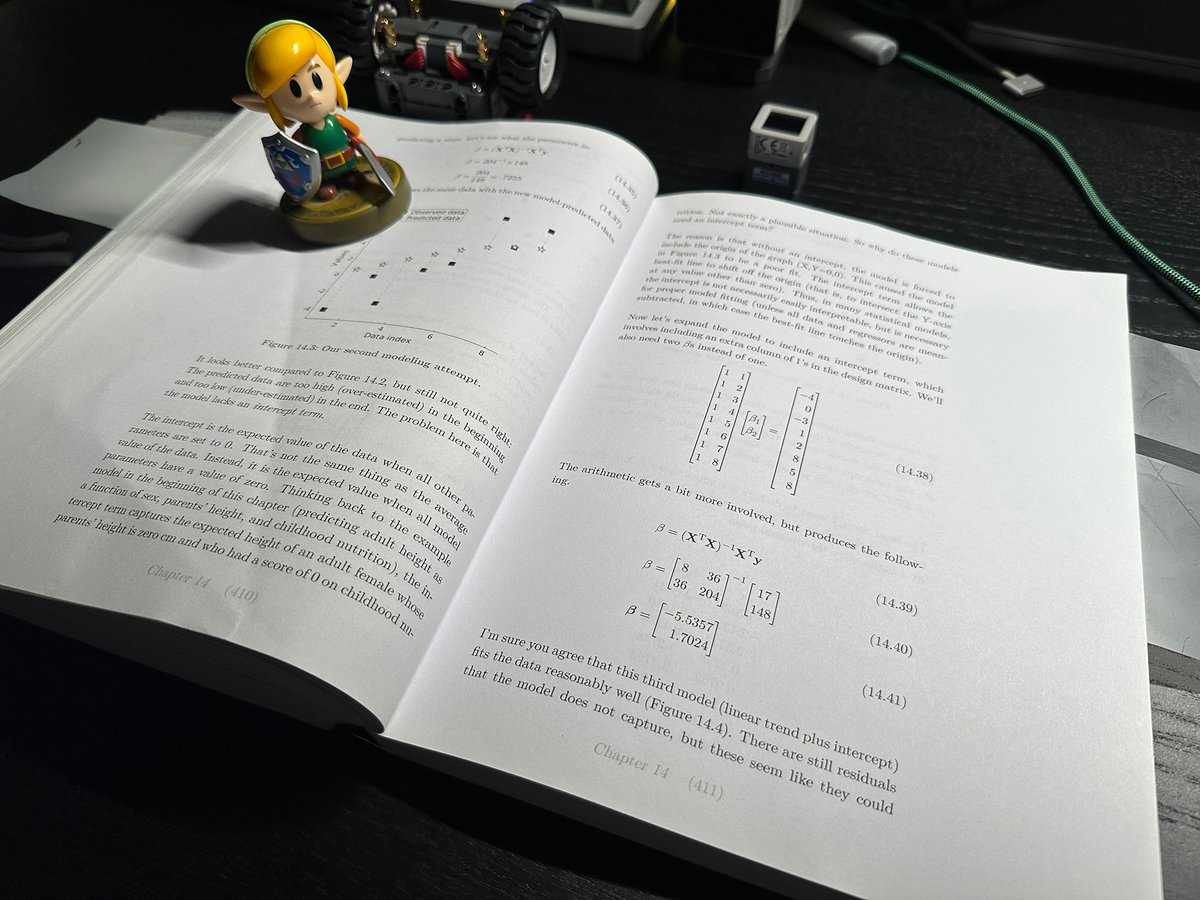
I finished reading Mike X Cohen's Linear Algebra a few years ago. It is a good book. But I stopped doing exercises after the Matrix Inverse chapter. The following chapters were a bit far from what I was doing: 3D Math for Interaction Design.
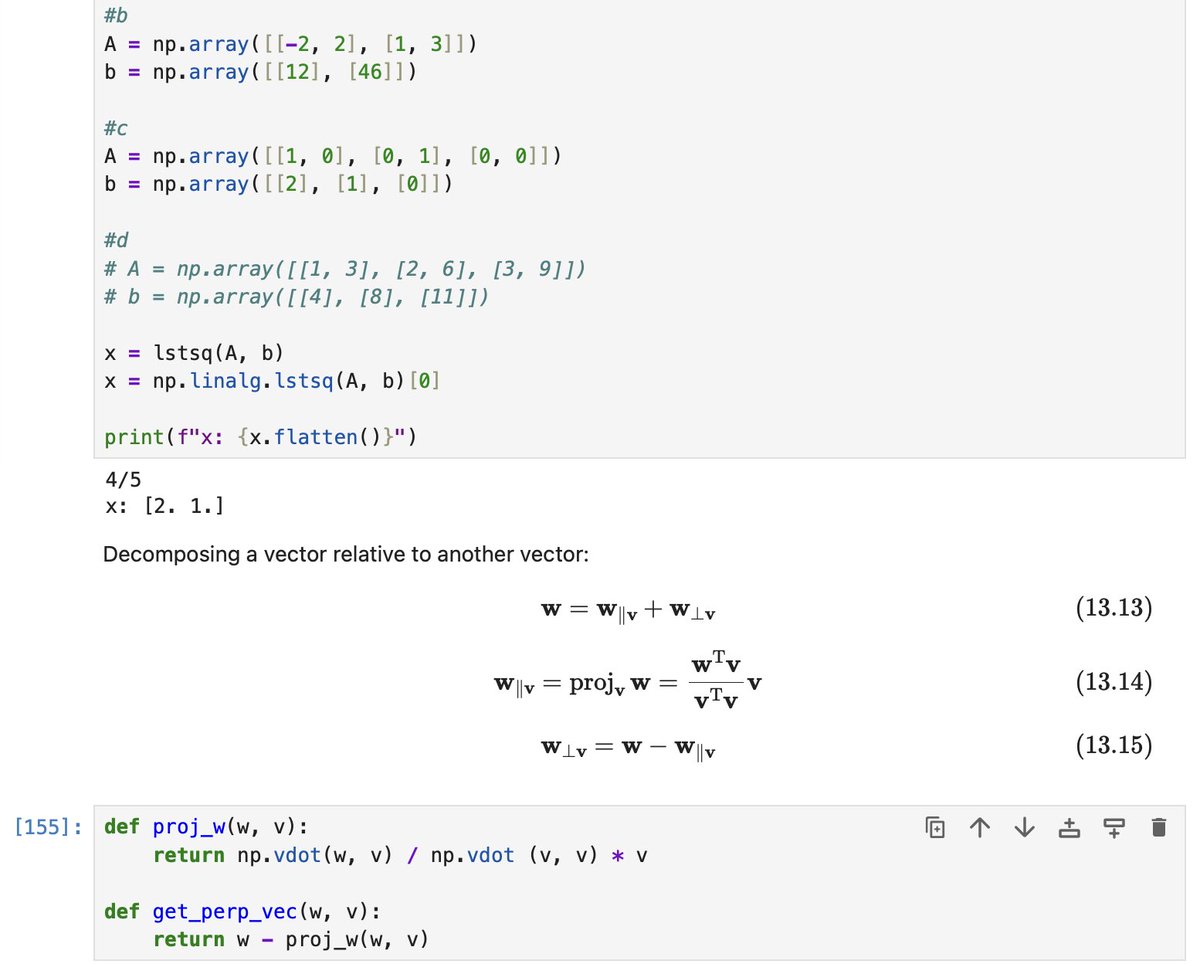
Now, rereading these last chapters (to strengthen the mental model) in the context of designing ML algorithms for my interaction research makes them much easier to understand (“Oh, I know, this is the cost function!”).
To be honest, it was always like that for me. Not seeing the practical application of theory is “one ear in and the other out”.
@Ki_fun_thoughts Makes sense!
Explored a similar idea. Called it Balanced Stepper/Slider because of the optimal cost of the interactions, including false positives, leading to the middle of the value range.
https://t.co/r6TpCZYLK6
... before you snap.
It was 20, actually.
After 8 bars, the practical application of this pattern shrinks significantly because you can't confidently distinguish the bars. But...
... on the other hand, it has its own useful semantics: an overflowing terminal state where incoming changes do not contribute anything meaningful to the system.
Made a Stackchan prototype that follows your typing. Spell checkers are nice, but when your robo buddy raises their eyebrows when you forget the “u” in “color”, it hits different.
Flow: A keyboard sends signals to a MacBook, which tells the robot where to look via Bluetooth.
Made a Stackchan prototype that follows your typing. Spell checkers are nice, but when your robo buddy raises their eyebrows when you forget the “u” in “color”, it hits different.
Flow: A keyboard sends signals to a MacBook, which tells the robot where to look via Bluetooth.