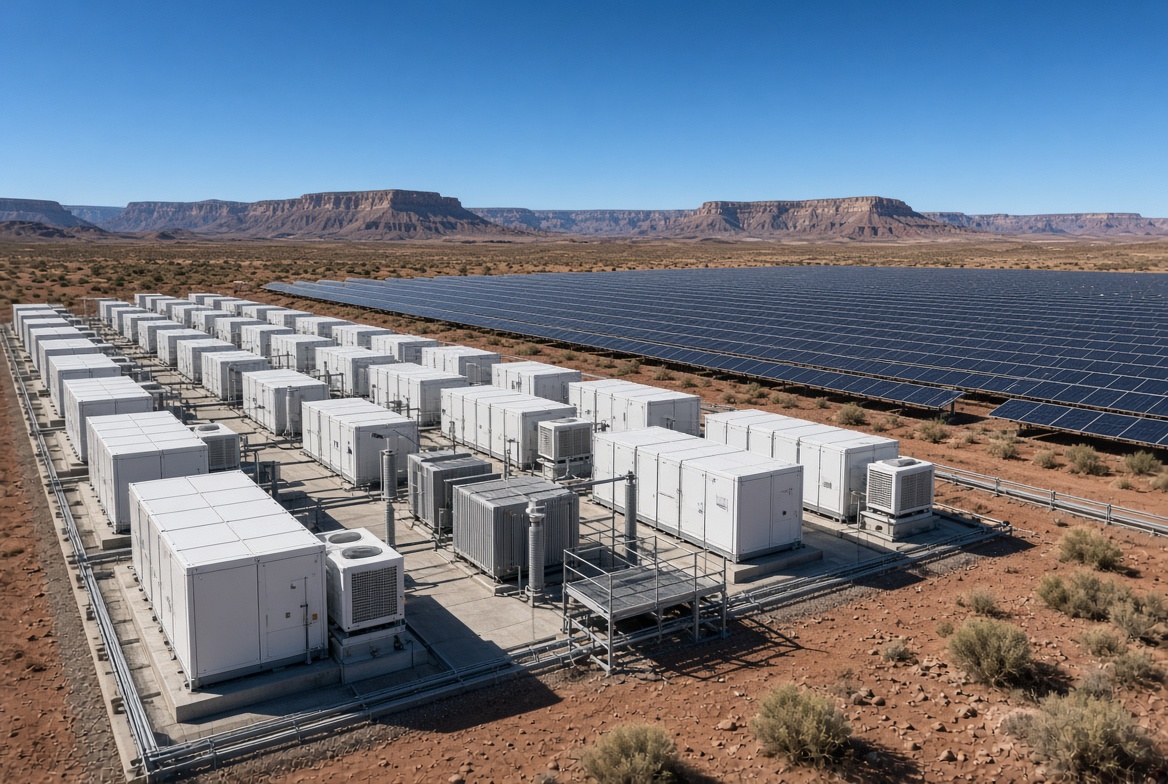
Megapacks locked in beside a high-desert solar farm under crisp midday light — grid-scale storage ready when the sun drops. Pure engineering, no drama. #Tesla#Energy
Elon says Cybertruck order rate far exceeds production, but the line shuts in about 8 months so Cybercab can scale. Capacity is the real constraint, and the opportunity cost of the complex truck is clear. #Tesla#Cybercab
San Antonio Robotaxi covers roughly 274 sq mi, versus roughly 58 sq mi for Waymo there. Vision-only and still a much larger initial zone. The expansion pace is the part to watch. #Tesla#Robotaxi
Tesla stopped taking Cybertruck Premium AWD orders and raised the Cyberbeast price by $7,500 to $109,990. It's now the only orderable trim. With the line set to wind down around mid-2027, the order book is already feeling it. #Tesla#Cybertruck
Giga Shanghai Shipped 87% of Its October Cars Abroad. China Bought 8,817.
Tesla's Chinese factory grew on paper last month while sales to Chinese buyers fell to their lowest level since mid-2022.
Tesla sold just 8,817 cars to buyers in China in October, down 66% from a year earlier and its weakest month in the country since July 2022, according to China Passenger Car Association (CPCA) data compiled by CnEVPost. Over the same month, Giga Shanghai shipped a record 87% of its output overseas.
That split explains why two very different headlines are both technically correct. Tesla China's total wholesale figure rose 10.3% year over year to 67,829 vehicles. But 59,012 of those cars were exports, leaving only a small slice for the market the Shanghai plant was originally built to serve.
The numbers behind the drop
The domestic figure is a calculation: CPCA's wholesale total minus its export count. By that measure, October sales fell 86.4% from September's 64,837, CnEVPost reported. It was the fifth straight month of year-over-year declines in Tesla's China retail sales and the first time they dipped below 10,000 since July 2022, when the plant was partly shut for line upgrades.
Model Y made up 7,807 of the October total, according to CnEVPost, which left 1,010 Model 3s.
Exports moved hard the other way. Shanghai's 59,012 overseas shipments were up 66.3% from a year earlier and nearly double September, the plant's second-biggest export month on record after July's 66,330. The previous record for export share was about 76%, set in October 2022.
A weak market, but not this weak
China's EV market is having a difficult year. CPCA's final October report put passenger new energy vehicle (NEV) retail sales at 1.109 million, down 13.7% from a year earlier, as reported by https://t.co/BzV49SJSbn and EVX News. Overall passenger car retail fell 27.1%.
Tesla's 66% decline was far steeper than either. Its share of China's NEV retail market came to roughly 0.8% in October, down from about 2% a year earlier, according to CnEVPost.
Local rivals kept moving. CPCA's October retail ranking was led by BYD at 250,301 units, followed by Geely at 131,708 and Leapmotor at 83,573, with Xiaomi at 50,123. Tesla did not appear on the list of automakers that retailed more than 20,000 NEVs, a list that ended at 20,793. A month earlier it ranked fourth.
The case for patience
There is a familiar pattern here. Tesla tends to prioritize export shipments early in each quarter and push domestic deliveries toward the end. September's quarter-end push also likely pulled some demand forward.
Last year offers a clear example. After a soft October 2025 of 26,006 domestic sales, Tesla delivered 73,145 cars in China that November and 93,843 in December, per CnEVPost's monthly data.
There is also a policy reason to move cars out of the country now. Electrek reports that Beijing will cut the VAT export rebate on EVs from 13% to 9% on April 1, 2027, which gives every Chinese plant a reason to front-load exports while the higher rebate still applies.
Why the timing argument only goes so far
The quarterly cycle explains why October is weaker than September. It is harder to explain why this October is about a third of last October. Every other first month of a quarter this year landed between 18,485 and 27,249 domestic sales, according to Electrek. October came in at less than half the previous low.
The longer trend points the same way. Through October, Tesla sold 389,905 cars in China, down 15% from the same period last year and about 22% below 2024, Electrek calculated. Shanghai's exports over the same stretch roughly doubled to 420,984, meaning the plant has now shipped more cars abroad this year than it sold at home.
Tesla has been trying to win back Chinese buyers with incentives, including 0% financing and reduced down payments on the Model 3 and Model Y, according to EVX News. Those offers are now facing their first real test.
Why it matters
For years, Giga Shanghai was the clearest proof that Tesla could compete inside the world's largest EV market. It now looks more like a global export hub that happens to sit in China. That is not necessarily bad for Tesla's overall volume, since those cars still find buyers in Europe and Asia. But it shifts more of the plant's fortunes onto overseas demand and trade rules, just as the export rebate is set to shrink.
November and December will settle much of the debate. A rebound toward last year's 73,000 and 94,000 would make October look like timing. A weaker finish would point to a deeper problem in China.
So which will it be: a sharp year-end rebound for Tesla in China, or a sign that local brands have pulled away for good?
Sources
• CnEVPost: Tesla retail sales in China fall to lowest since July 2022 as export share hits record https://t.co/jHskLoLmVC
• Electrek: Tesla's China sales crash 66% to lowest level in over four years https://t.co/9yVGHenbmw
• CarNewsChina: Tesla's China sales fall to 8,800 in October https://t.co/EpFopVgmRy
• https://t.co/BzV49SJSbn: Tesla's China sales sink to lowest since 2022 as exports take 87% of output https://t.co/mtTLITpNPN
• EVX News: Tesla China October, record 87% exports, 8,817 sold at home https://t.co/7C7oR6wzaz
#Tesla #EVs
Tesla's Shanghai factory grew 10% in October. Chinese buyers took just 8,817 of its cars, the fewest since 2022, while 87% shipped abroad. Timing quirk or a deeper China problem? Full story:
Starlink's data-movement stack turns out to be well suited to training super intelligence. Same reliability and throughput problems as satellites, just applied to training data. Grok 4.8's rewritten RL/inference stack is the next piece to watch.
Jay Leno's Model Y L pulled over on its own for an ambulance on FSD (Supervised), no driver input. Small moments like that tell us more than polished demos because they happen in normal traffic. Curious how consistent this is across cities and lighting.
San Antonio Robotaxi just went live with a big zone, and Austin's area grew a lot over the same weekend. The network is starting to look less like isolated pilots and more like something that could connect a region. Still early, but the map is changing fast. #Tesla
Optimus is already on the Fremont line while the rental model takes shape. Musk said Nov 6 he'll probably rent them rather than sell, with build cost starting near $30k and heading toward $20k. Outside deliveries still targeted for the end of 2027. #Tesla#Optimus
Long-term Tesla holders keep saying the same thing: the ride is rough on the way, then the prioritization calls look obvious in hindsight. Cybercab over everything else is the current version of that.
The Robotaxi map is moving fast: Austin up 63% in one update, San Antonio new at roughly 275 square miles, plus Houston, Fort Worth, Dallas, Miami, Orlando and Tampa. Still a small slice of the country, but the direction is clear.
Austin's Robotaxi zone just grew 63%, from 272 to 443 square miles, and San Antonio went live the same day. That's eight U.S. cities, all unsupervised. Curious how wait times look at the new edges over the next week.
Tesla Semis Start Megawatt Charging at the Port of Long Beach
Forum Mobility's first two port chargers are a small step, but they show where electric freight is likely to win first.
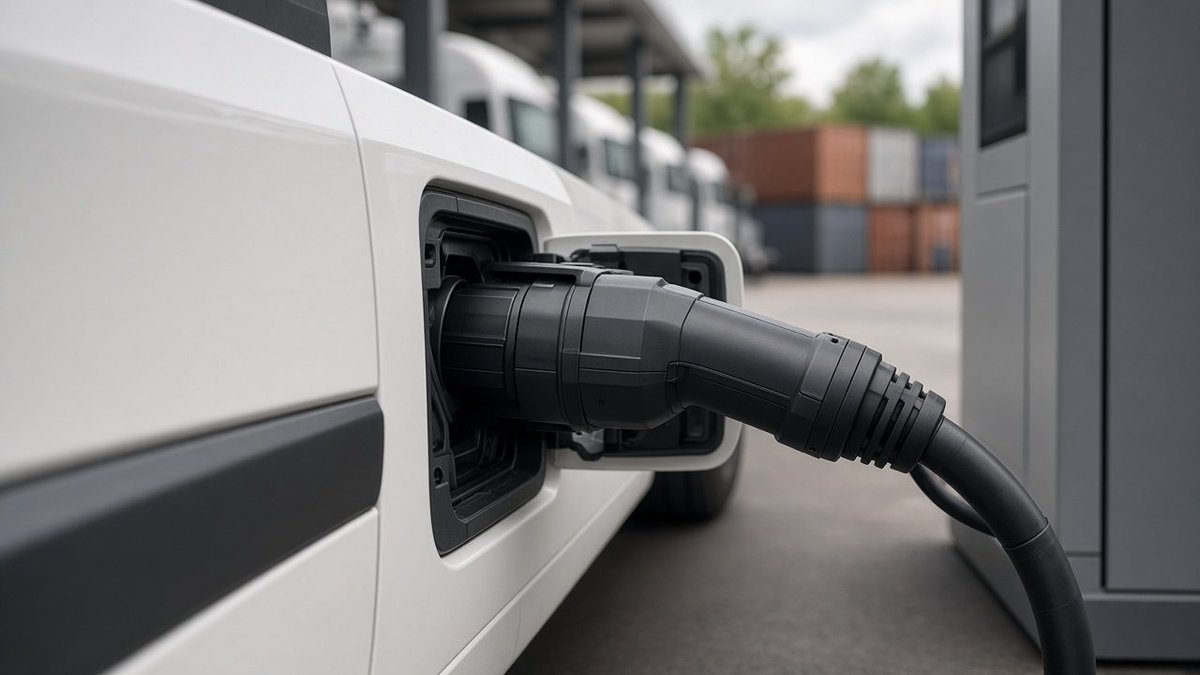
The production Tesla Semi now has a fast place to charge right next to the busiest container gateway in the United States. Forum Mobility cut the ribbon on November 5 on two Megawatt Charging Standard chargers at FM Harbor, its truck depot in the Port of Long Beach, and a customer's new production Semi took the first charge sessions there, the company said in a November 6 release.
Two plugs will not change American trucking overnight. What matters is who is paying for them, where they sit, and how much more is already being built behind them.
What opened
Forum Mobility describes the units as the first v4 MCS chargers compatible with the production Tesla Semi in the Long Beach port gateway. The company says they can recover up to 60% of a Semi's range in 30 minutes, which it pitches as a stop that fits inside a carrier's normal schedule.
The truck in the ribbon-cutting photos wore IMC Logistics colors. According to EVwire, IMC has an initial 50 Tesla Semis on order and is a Forum customer. "Long range electric trucks and ultra-fast charging is the next step in zero emission freight," Jim Gillis, president of IMC's Pacific Division, said in the release.
Forum did not publish a power rating for the two chargers. EVwire noted that the depot has run since December 2024 with 44 CCS ports and 9 MW of total capacity, so the new megawatt posts are joining a site that was built for slower charging.
The bigger buildout
"These are the first of 30 megawatts of MCS chargers we have coming online in the coming months," Forum CEO and co-founder Matt LeDucq said. The company says it is building another 30 MW of charging across four California depots: one in Rancho Dominguez, one in Ontario, and two in Oakland. EVwire reports that Tesla will run public Megachargers at three of those sites, and that the Rancho Dominguez depot, FM Santa Fe, is set to open with 14 pull-through MCS lanes in the first quarter of 2027.
Demand is already lined up. Forum says it has 25 carriers with contracted capacity and customer reservations for more than 330 Tesla Semis. Its next tranche of depots targets more of the Inland Empire and Central Valley, plus Las Vegas, Phoenix, Houston, Dallas, Seattle/Tacoma and Chicago.
Why the port matters
Drayage, the short haul of containers from ships to warehouses and rail yards, is close to an ideal first market for electric trucks. Routes are short and repeated, trucks return to the same yards, and California has pushed hard to clean up port air.
That matters for the economics of charging. A Chargalytics review of the week's charging news put average simultaneous use of Germany's public chargers, which mostly serve cars, at just 13%. The same report found that in China's Yunnan province, electric heavy trucks drew 1.854 billion kWh from January to September, up 502%, with chargers on fixed freight routes staying busy. Its conclusion was simple: freight stops where the schedule says it will. A port depot fits that pattern.
Forum also claims it can fuel trucks with electricity "40% cheaper than diesel." Tesla made a similar case at its Semi launch in Nevada in September, where Electrek reported that Tesla's chart put diesel at roughly $0.80 per mile this year against $0.20 to $0.30 for electricity.
The Semi behind the plugs
Tesla started volume production of the Semi at a dedicated plant in Sparks, Nevada in September. Its third-quarter update lists 25,000 trucks a year of installed capacity, and Electrek reported that the plant is designed for 50,000. Customer trucks at the launch carried PepsiCo, DHL, US Foods, ABF, Einride, IMC Logistics and WattEV logos, and the ZET SCALE alliance named Tesla primary supplier for 2,500 trucks.
The open questions
Tesla has not said how many Semis it has built or delivered, so capacity numbers are a ceiling, not a sales figure. Electrek reported Tesla quoting about $290,000 for the 500-mile Semi, roughly 60% above the $180,000 it advertised in 2017.
The 60% in 30 minutes and 40% below diesel figures come from Forum and have not been independently tested in daily service. And Tesla's own Megacharger map, shown at the launch, has large gaps across the Mountain West and the Plains, so long-haul routes outside California and Texas still lack the plugs that make this work.
The first two chargers are live, and hundreds of reserved trucks are waiting on the next 30 MW. If those depots open on schedule in 2027, will ports become the place where electric trucks finally beat diesel on cost?
Sources
• Forum Mobility release via PR Newswire, Nov 6, 2026 https://t.co/ISLTZmrzEJ
• EVwire: Forum Mobility cuts the ribbon on two Tesla Megachargers https://t.co/xCQ1j9j41R
• Electrek: Tesla Semi enters volume production https://t.co/BKabQkMH1U
• Tesla Q3 2026 update (SEC filing) https://t.co/55xwYmXAAJ
• Chargalytics: This Week in Charging, Nov 6, 2026 https://t.co/08i6ZcyemI
#TeslaSemi #EVs
Production Tesla Semis are now charging at megawatt speed inside the Port of Long Beach gateway. Two plugs today, 30 MW and 330+ reserved Semis behind them. Here's why ports may be where electric trucks beat diesel first.