And as always, as we have exciting updates, like this, we will share with everyone. And there are more exciting updates coming soon…
So support our efforts and donate here: https://t.co/U1acoJP0Zx
Some wild images we captured in early May (see thread below). Footage to come soon...and it is pretty cool!
Our goal is to study and document the cougars that appear to have recently settled in our area—but we need help. We literally have no budget to study cougars…frankly, we didn’t even expect this to be a possibility a year ago.
Plus, all the cameras simultaneously help us study wolves of the area more intensively at the same time. So you can support both wolf and cougar research at the same time.
The largest pack in the Greater Voyageurs Ecosystem this past winter: the Blackstone Pack. Nice of them to give the camera a few nibbles on their way by!
If you enjoy videos like this, we need your help because almost all of our trail camera work is supported by donors. This footage was literally captured because of donors.
We simply need folks who enjoy such content to make a small donation ($10, $25, $50) to our project at the link below to help us cover the costs associated with keeping 350-400 trail cameras going year round. $30 purchases batteries for a camera, $200 purchases a new camera set-up.
Think about it: most people regularly pay $10-20 per month for Netflix, Hulu, etc. so those companies can create endless content and make money. All we are asking for is $10-20 a year to help us cover our costs, and keep this work going so we can share it with everyone.
Of course, the main point of the cameras is wolf research (and now, a little cougar research on the side) but cool footage of wildlife is a byproduct of having so many cameras out.
So help us out and donate here: https://t.co/kZq9wddP8h
What does the “science” actually say about wolves and wolf management? Scroll through the internet and you will find endless content by both pro- and anti-wolf advocacy groups about “wolf science” and how the science always supports their perspectives on wolves and wolf management.
For instance, somehow the ‘science' simultaneously says we can never hunt wolves (per some wolf advocacy groups) and we should hunt/trap wolves (per some pro-wolf management groups).
Which naturally leads to the question: what does the science say and who can you trust to provide scientific information straight up without spin and an agenda?
Our goal is to be that source—a source of sound and reliable scientific information on wolves that people, regardless of their perspective, can trust.
Many pro- and anti-wolf groups have value-based agendas, and often such groups claim the “science" supports their values/agenda—which simply isn't the case.
Science simply tells us how the natural world works and how our actions may impact the natural world. Put differently, science cannot tell us how we should act—that is where values come in.
Our project is focused on science, not values. We aren’t trying to push an agenda, a set of values, or convince you to change your thoughts on wolf management.
Of course, sometimes scientific findings, including our own, are not consistent with the narratives that pro- or anti-wolf groups are pushing.
And as a result, we take the heat from both sides. However, we have not and will not let that influence the information we share or how we approach our work, no matter how much people try to pressure us to do so.
We are simply trying to do rigorous research and to share that research along with insights from the most up-to-date scientific information with everyone.
If you value this approach, please help us keep it going by donating at the link below. Your generosity enables us do rigorous research and share what the science actually says—not what we want it to say.
Support the project here: https://t.co/kZq9wddP8h
The happenings on an old forest road over the past year…pretty cool stuff!
Enjoy this footage? If so, we sincerely need your help to continue this work as almost all of our trail camera work—a large part of our research—is supported by donations.
So if you enjoy our videos and our content, please help us out and support our project by donating at the link below.
This footage, for example, was only captured because of donations in previous year's fundraisers (big thanks to everyone who donated!).
For perspective, this video will likely get 5,000-7,000 likes and be viewed >100-200K times. If everyone who liked this video simply made a small donation ($10, $25, etc) at the link in our bio, we would reach and exceed our annual fundraising goal quickly.
The point is: a little support from the many people who follow our project, ensures we can keep doing this work.
So donate here and support our work: https://t.co/kZq9wddP8h
One of the most iconic, wild sounds of the Northwoods! And you can join us in the field to hear this for yourself this summer…
We will randomly select one person who donates to the project TODAY (and today only!) to join us in the field for a wolf howling experience this summer, where we conduct howl surveys for multiple packs in the Greater Voyageurs Ecosystem.
The donor who is selected will be able to bring two guests and we will work with you to figure out a date that works best for everyone. But it should be an unforgettable experience exploring the Greater Voyageurs Ecosystem!
Donate at the link below TODAY to be entered into the drawing, and we will announce the donor who has been selected later this week!
Donate here: https://t.co/kZq9wddP8h
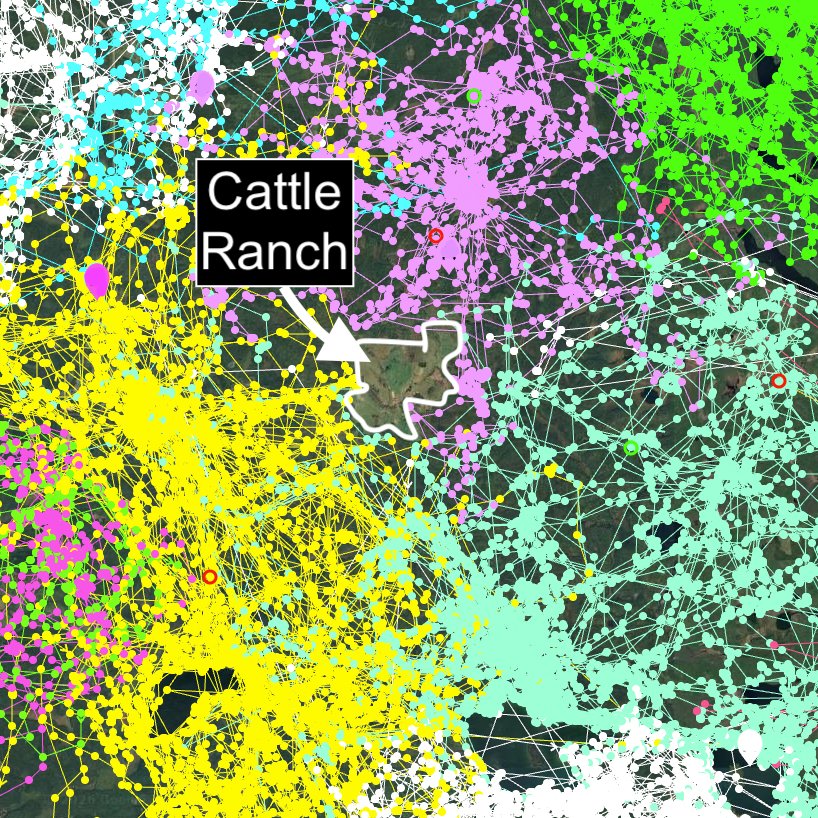
For the 2nd year in a row, there was not a single depredation on the large cattle ranch in the middle of our study area—we were not aware of even a single wolf that even stepped foot on the ranch last year! And last year was the 3rd year in a row where no wolves were killed on the ranch for killing calves.
The 7.5 mile fence in combination with Livestock Guardian Dogs has effectively ended what was a perpetual cycle of death for over two decades: wolves would kill calves almost every year, and then wolves would get killed for killing calves. Each year was rinse, wash, and repeat.
In some years, up to 5 calves were confirmed to have been killed by wolves (and likely more were killed by wolves that could not be confirmed), and up to 16 wolves were killed in a summer as a result (the equivalent of about 4 wolf packs in our area).
So the change over the past few years has been staggering, and illustrates how non-lethal approaches in the Great Lakes area can end long-standing conflicts, and in turn, benefit ranchers, their livestock, and wolves.
Fortunately, our project is in a perfect position to document the efficacy of the non-lethal solutions on this ranch because we are intensively studying wolves all around the ranch and have GPS-data from wolves to examine the efficacy of these non-lethal approaches.
If you value this kind of work, please donate at the link below. Your donations allow us to continue to study and document the efficacy of these non-lethal tools this year and into the future AND enables us to share our findings broadly here with everyone.
Donate here: https://t.co/kZq9wddP8h
Notably, this non-lethal project was the result of a collaborative effort between our project, USDA Wildlife Services, and the rancher. And it was truly a team effort—without all of us helping in big ways, this project would never have happened.
Further, the non-lethal project received considerable support from a variety of groups— including the Minnesota Department of Agriculture, International Wildlife Coexistence Network, Summerlee Foundation, Humane World for Animals, Wildlife Services, and others—who made this effort possible.
A gallon of gas these days is almost $5. All we need is small percent of our followers (>600,000 people) to buy us a gallon or two of gas to reach our annual fundraising goal. And by buy us a “gallon of gas” we mean make a tiny, gallon-of-gas sized donation to our project.
Of course, we aren’t going to complain if you want to fill up our tank for us either! All of the support is a huge help to keeping our research going and enabling us to share it with everyone here.
So, "buy us a gallon" at the link below and support the research and outreach of VWP!
Donate here: https://t.co/kZq9wddP8h
"How are you able to remove wolf pups from the den without getting attacked by their parents”?
We get this question quite often as well as general questions about how we stay safe while studying wolves. E.g., we have been asked if we carry guns for our safety from wolves more times than we can count. So we figured we would share a bit about how we view staying safe from wolves in the field.
The short answer: we are not exaggerating when we say have no concern whatsoever about wolves attacking us because wolves simply are not a threat to our safety because they really don’t want anything to do with us.
And if anyone should get attacked by wolves or concerned about being attacked, it should be us given our work. Let us elaborate.
We have visited active wolf dens and tagged pups every spring for over a decade. We often see or hear adult wolves at dens while doing this work. Yet, we have not had a single evenly remotely concerning or aggressive encounter with an adult wolf while doing this.
If there was any time an adult wolf would have a motive for attacking and killing people, it would be when visiting a den and handling their pups. Think about what would happen if you grabbed a bear cub in front of its mom?
On a similar vein, we spend much of our year studying wolf predation, hiking into recent kills by ourselves to document the kills. Sometimes, especially during winter, this means we get to kills while the carcass is very fresh, sometimes steaming and warm because it occurred an hour or two ago.
In such instances, wolves are undoubtedly somewhere very close by and well aware of our presence. If disturbing a wolf’s kill is what triggers an attack—the kind of things we read about online and see portrayed on TV— then we definitely should have been attacked by now. Yet, we have never had a wolf so much as approach us when checking out their kills (and we have documented a few thousand kills in the past 12 years).
Furthermore, we have had 6-8 people in the field most days of the year visiting areas GPS-collared wolves spend time. We know from our GPS-collar data that we are frequently close (25-200 m) to collared wolves when in the field. And we are typically spending most of our time in the very areas wolves like to spend time!
If being in close proximity to wolves on a frequent basis is what increases the odds of getting attacked, then someone on our project should have been attacked by now. This is especially true because we do almost all of our fieldwork solo because it is most efficient.
And yet, despite all of this and many years of intensive fieldwork, we have not had a single even remotely concerning encounter. This does not mean we have not had close encounters with wolves. We have had over a hundred at least.
But a close encounter where the wolf does not immediately flee does not mean the wolf is being aggressive or showing a lack of fear. Sometimes wolves, like most other animals, are just curious or inquisitive. Instead of being afraid in such moments, we just savor such rare moments and take it in.
Now, these are just our experiences but the data across North America only substantiates our assessment here. There are literally millions of people across North America who hike, camp, and live in wolf country and yet wolf attacks are almost unheard of.
Sure, there have been a few EXTREMELY rare instances where wolves have threatened or attacked people but this is also true of white-tailed deer—in fact there are far more white-tailed deer attacks on people than wolves. Interestingly, though, no one we know regards deer as a threat to human safety (outside of vehicle collisions).
NOTE: if you value this kind of educational content, please help us continue to create it by donating to our annual fundraiser at the link below. Your donations make this kind of content possible—without donor support, our project quite literally would not be able to continue. By donating you support our research and our outreach efforts!
Donate here and support our work: https://t.co/kZq9wddP8h
Northern Minnesota feels like it is getting a bit wilder. Footage from just a few weeks ago. This does not appear to be the mother of the kittens.
Folks tell us all the time how much they enjoy our trail camera videos, and our typical trail camera video is viewed >100,000-200,000 times and liked by 4,000-5,000 people.
We simply need folks who enjoy our content to make a small donation ($10, $25, $50) to our project at the link below to help us cover the costs associated with keeping 350-400 trail cameras going year round.
Quite literally, if a small percent (2-3%) of folks who enjoy our videos make a small donation to our project at the link in the comments, we reach our fundraising goal and it allows us to keep sharing wild moments like this with everyone for free!
Think about it: most people regularly pay $10-20 per month for Netflix, Hulu, etc. so those companies can create endless content and make money. All we are asking for is $10-20 a year to help us cover our costs, and keep this work going so we can share it with everyone.
Of course, the main point of the cameras is wolf research (and now, a little cougar research on the side) but cool footage of wildlife is a byproduct of having so many cameras out.
So help us out and donate here: https://t.co/kZq9wddP8h
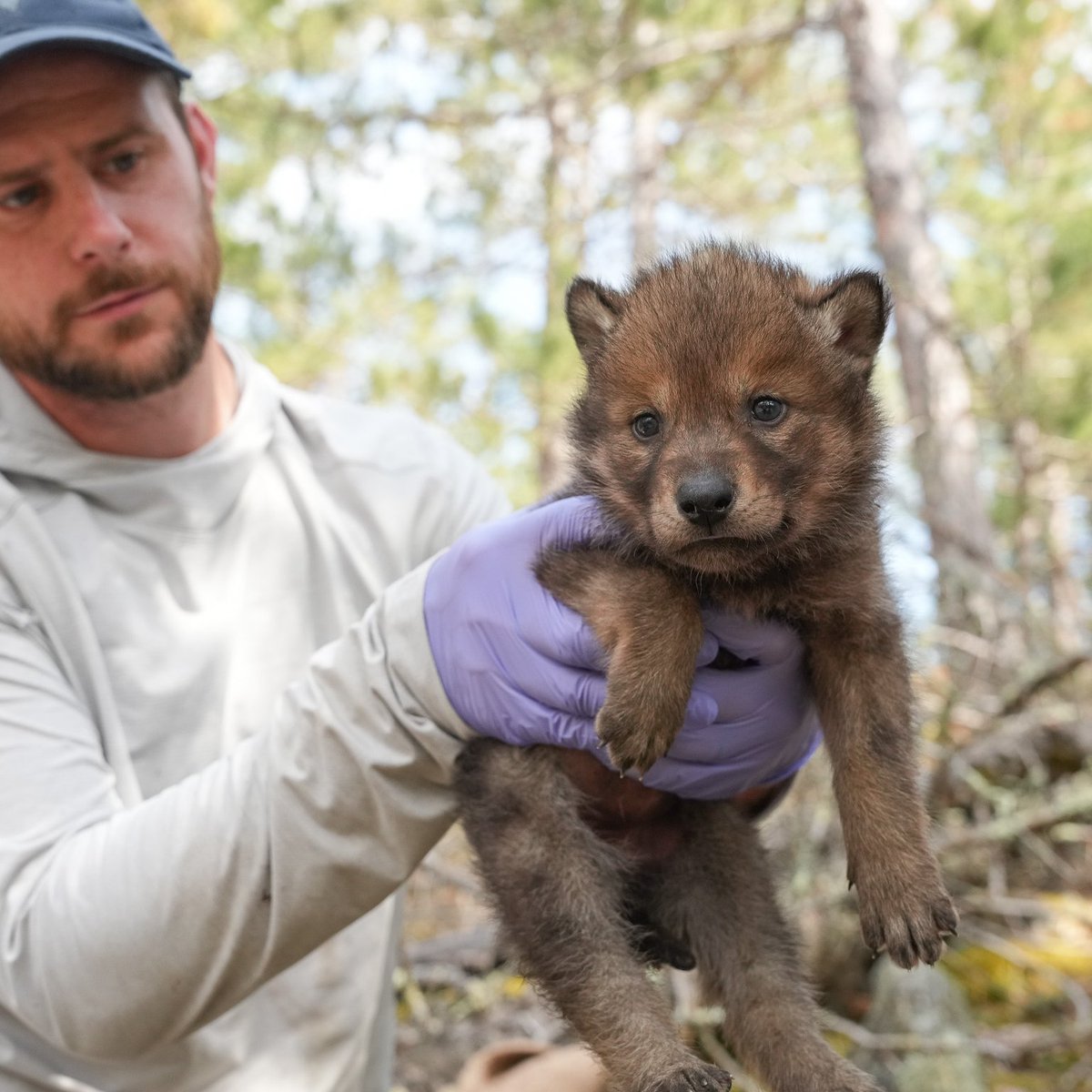
The pups of the Cranberry Bay Pack in a remote area of Voyageurs National Park. The den included a large area at the base of a large balsam fir that was surrounded on one side by really thick deadfall…which makes for a pretty impenetrable den.
We tagged, weighed, and sexed all 6 of the pack's pups, and will use trail cameras for the remainder of the summer, fall, and winter to understand how many of these pups survive.
To do that work, we need your help. Our trail camera research—and all the cool footage you see from our project— is almost entirely funded by annual donations.
So please support our research and outreach efforts by donating here: https://t.co/kZq9wddP8h
More footage of the first documented cougar family in Minnesota in the past century. Volume up for the full experience. More to come soon!
Our goal is to learn as much as we can about these cougars in the coming months. But we could really use some help covering costs associated with this research.
For instance, we collected 9 scats at this kill and they are on their way to a lab for genetic analysis to try to get individual genetics and determine what western population the mom and dad originated from. Genetic samples cost ~$55-70 per sample, depending on the type and quality of the sample.
Your support helps us cover costs like this, and gives us the ability and resources to study these individuals, and any others out there we might learn of.
By donating at the link below, you directly support this research. Plus, the support helps us have the capacity to send in any samples we collect in the coming months.Once we have results, we will share with everyone!
Notably, we also analyze the genetic samples from every adult wolf we collar, pup we tag, or dead wolf we come across. That work has been supported ENTIRELY by folks donating to our project, and the results have provided a wealth of information on wolf pack and population dynamics.
And this work will only continue if generous folks continue to support our work. E.g., a $70 donation ensures we can get the genetics of a wolf.
So please donate to our annual fundraiser to support our research, help us cover these costs, and keep this research going!
Donate here: https://t.co/kZq9wddP8h