I'm pleased to announce a new release of the #idalib#Rust bindings for @HexRaysSA IDA Pro! This release provides new APIs and bug fixes. Thanks to new and existing contributors @mcbbugu, Amaan Qureshi, and @0xdea for their work on this release.
https://t.co/Nwfb25i5Vh
I'm pleased to announce a new release of the #idalib#Rust bindings for @HexRaysSA IDA Pro! This release adds compatibility with latest SDK (v9.4), and a couple of bug fixes. Thanks to @0xdea and @yeggorv for their contributions.
https://t.co/Nwfb25i5Vh
We're pleased to announce a new release of our #Rust bindings for @HexRaysSA IDA Pro! This release adds compatibility with latest SDK, and introduces a Rust-native interface for developing plugins. https://t.co/VAyv0oGP20
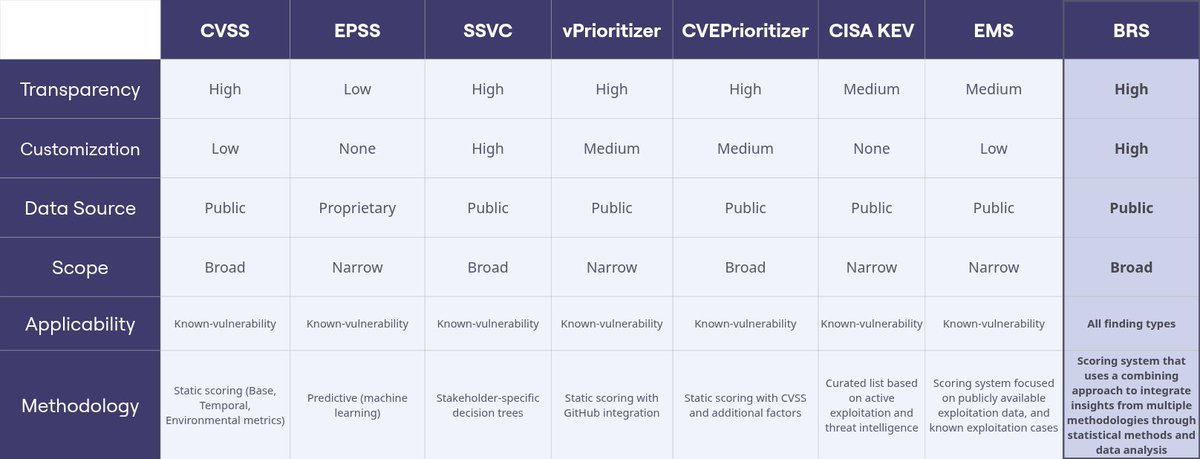
Why create another metric? Traditional scoring systems are often rigid, opaque, and narrow in scope. They may not reflect product-specific requirements, differences across ecosystems such as firmware and cloud containers, or the realities of an evolving threat landscape.
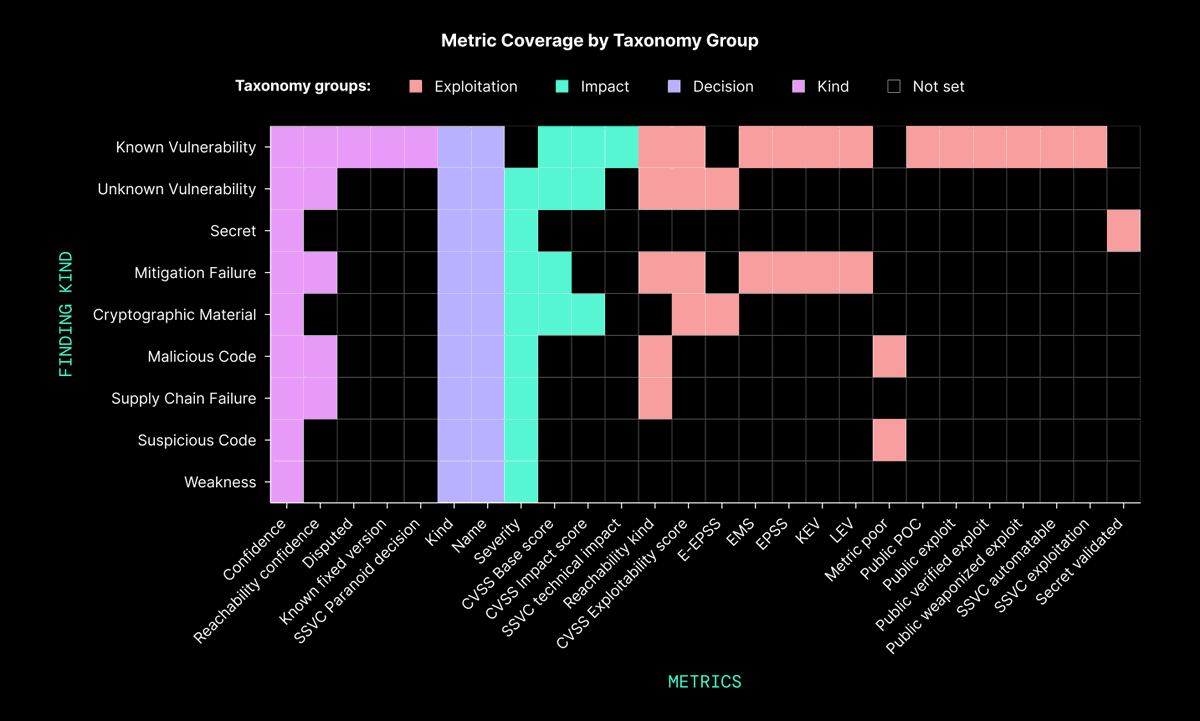
BRS unifies diverse security signals into a single normalized risk score, making it easier to compare otherwise disparate finding types side by side. By combining existing models and metrics, it delivers a more consistent way to assess risk across environments.
What sets BRS apart is its flexibility and transparency. It is configured through product-, organization-, or ecosystem-specific risk profiles and is built to incorporate a wide range of existing metrics.
Relying on a single metric like CVSS or EPSS can miss critical product or organizational context. BRS brings consistency to comparing different risks, such as a known high-severity vulnerability with a PoC versus a potential zero-day.
Today, we’re introducing Binarly Risk Score (BRS), a new risk prioritization system designed to help security teams cut through scanner noise and focus on what matters most. https://t.co/43cf56REim
Slides and demos for our @REverseConf talk by @francesco_ev and @xorpse are up! If you missed the conference, now's you're opportunity to take a look at the talk content and demos.
Slides & demos: https://t.co/B97vstMQEZ
VulHunt framework: https://t.co/L6vwhyR9kH
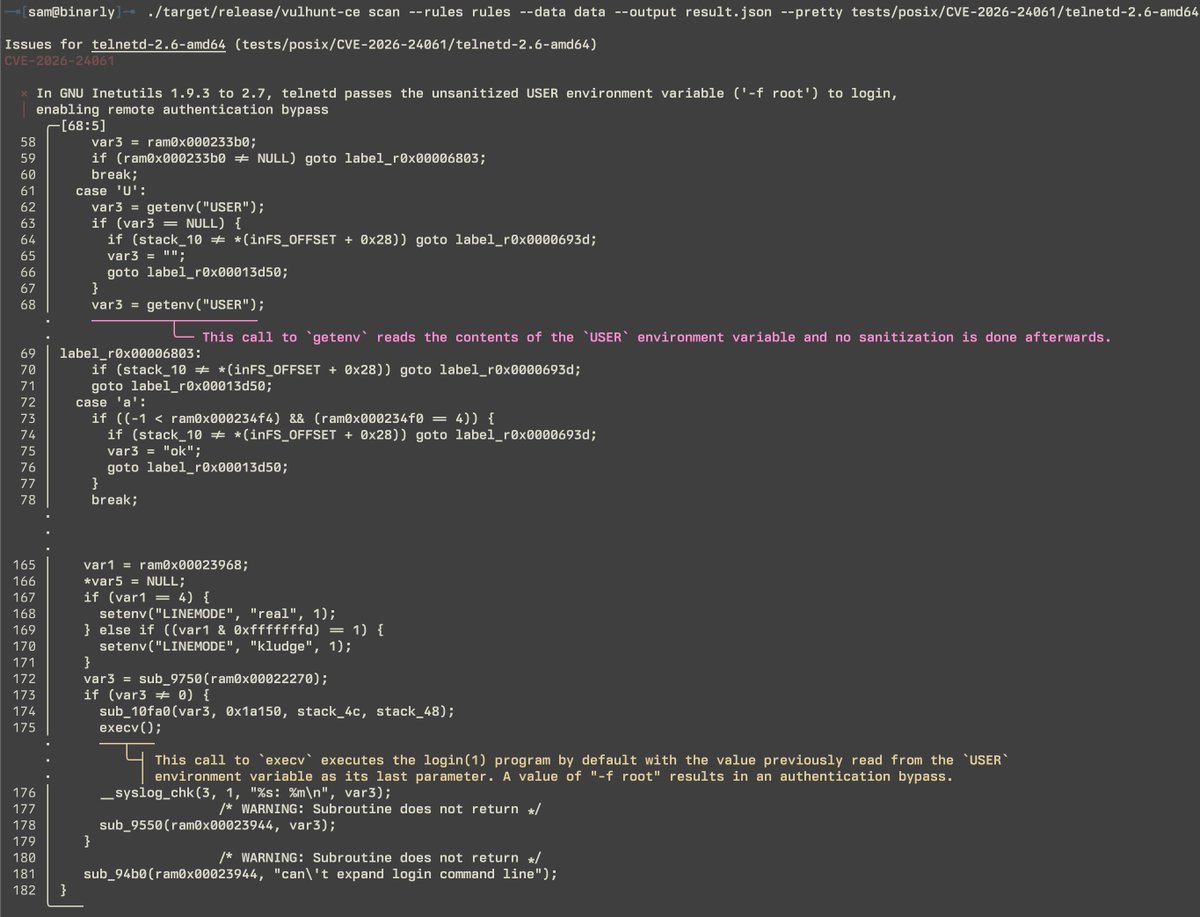
...and, finally, a rule for the very recent authentication bypass in telnetd (CVE-2026-24061).
Test case(s): https://t.co/Lv5ybxOAHE
Rule: https://t.co/65mdYBYgxL
Next up is a rule for #regreSSHion (CVE-2024-6387), showcased on an ARM binary, but we've got test cases covering all of VulHunt's supported architectures (x86, x86-64, AArch64, ARM/Thumb).
Test case(s): https://t.co/tUDyijSblU
Rule: https://t.co/lmmBOvZe13
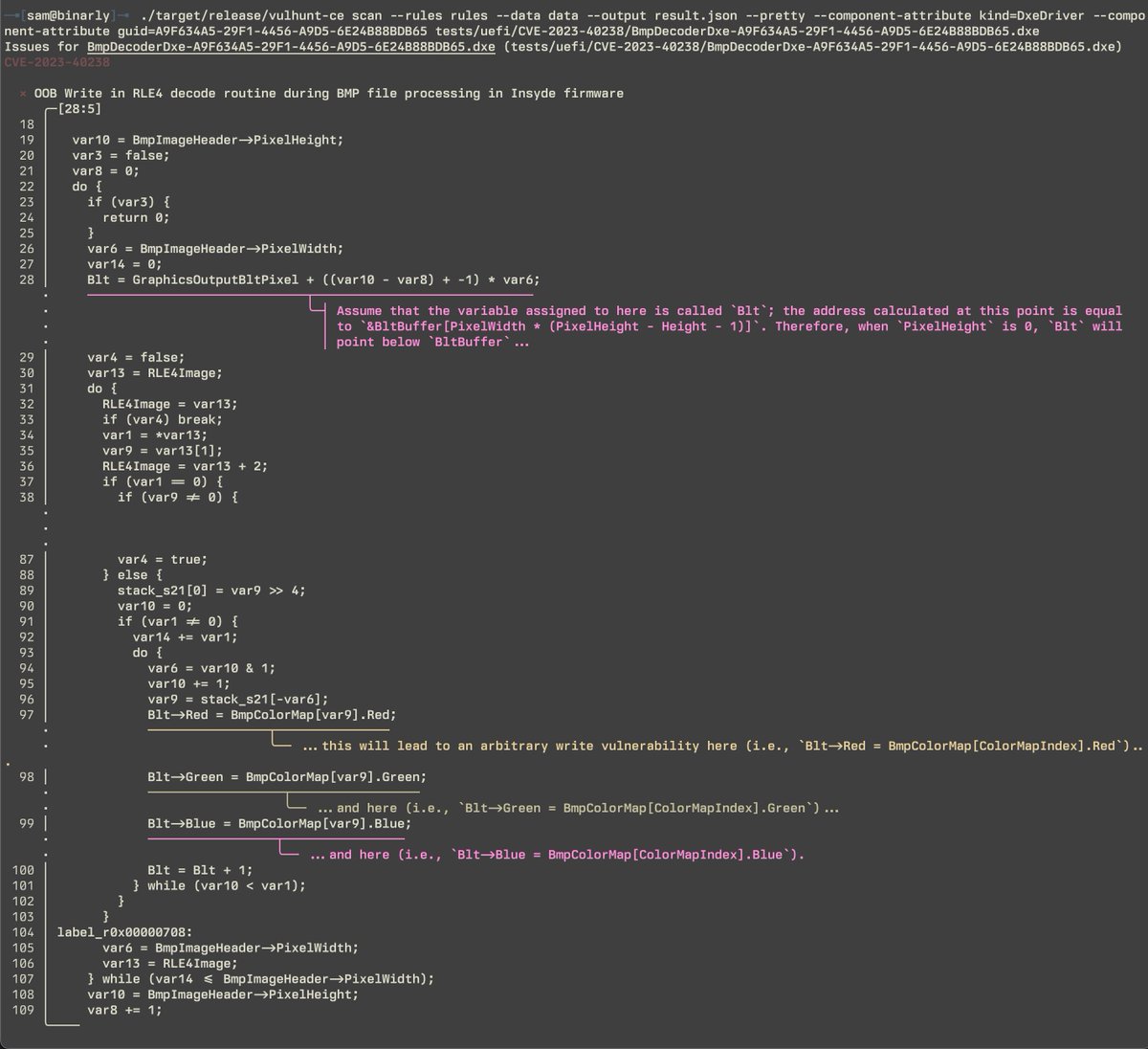
As part of our https://t.co/L6vwhyR9kH release, we've also dropped few rules! First up is a rule to detect a #LogoFAIL variant (CVE-2023-40238) in a UEFI DXE driver for BMP decoding...
Test case(s): https://t.co/FtjBmXoqSu
Rule: https://t.co/TZlfQI7xN6
Our aim is to build a community and ecosystem around VulHunt to provide a comprehensive toolkit and rule collection that aids researchers and practitioners performing any kind of binary analysis. Give it a try!
VulHunt is the culmination of 4 years of R&D with a goal to scale vulnerability detection in binaries. While the foundation is built on tried and true static analysis techniques, we’ve embraced the AI era and expose VulHunt’s capabilities to agents and tools via MCP and skills.
The dream of a fast and reliable binary analysis framework is now a reality.
Today, we’re open sourcing https://t.co/DevsmayD54 🎉
code: https://t.co/Shlxg6i7np
docs: https://t.co/DpjHgJxNxv
A huge kudos to the entire REsearch team!