I for one have resigned from the task of breaking generational curses and what what, im leaving it for the next generation to fix. Im here for a good time not the long time.
I’ve been really sleeping on Gagasi FM, really need to listen to it some more. Post Sizwe Kaya FM is not doing it for me. 947 is a 24/7 advert, Metro is going through an identity crisis.
I won’t lie, you really feel the void of not having parents the most when you become a parent yourself. And it’s not in the hectic of things, simple things like having someone who you can fully trust with your baby for a week or even a weekend away.
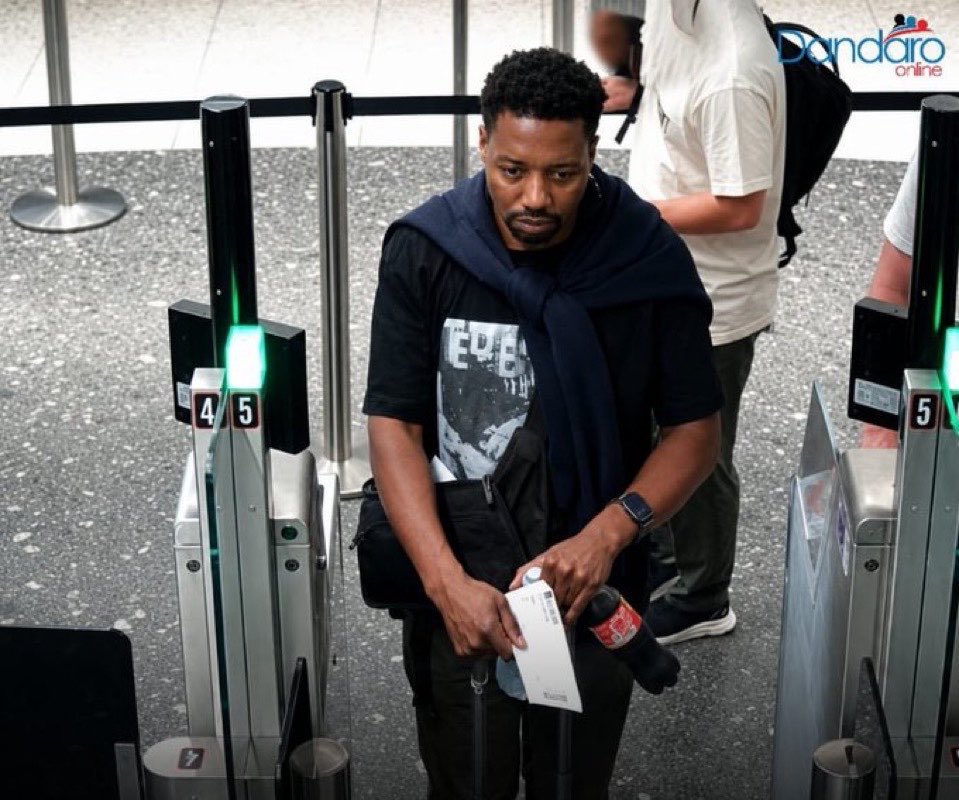
BREAKING: SAPS organised crime and Interpol nab 45 year old Mkhanyisi Tshuma who Ran from the UK after the death of his wife and two children
He has been located in Kengiston, Johannesburg.
#SABCNEWS
@samkebusiness We wait, most African are still 1st and 2nd generation wealth builders, I’d say it’s only by the 3rd generation where families tend to have enough safety net in the form of a house and some business, that it becomes feasible to live off that.
I think Infantino is the same as Blatter, it’s just that he learnt from the Blatter issue that to avoid smoke you have to keep the Americans happy at all costs.
Microsoft CEO Satya Nadella on why winning against ChatGPT, Gemini, and Claude was never the goal:
The Hard Fork hosts ask him directly how Microsoft plans to overtake the competition in the AI model race.
His answer reframes the entire question.
"Our real goal is to get everyone across the ecosystem to the frontier."
Satya explains the problem with how frontier models are currently built. You hill climb, you do reinforcement learning, and then you need data.
But at this point, the world has essentially saturated publicly available data.
So the only way to keep scaling is to pull data from everywhere.
He asks:
"What if you turn that around and said no, there's a base model that has reasoning, that has the agent loop, but you can bring it into your RL. Every company."
This is where his thinking gets interesting.
@satyanadella argues that the future of the firm runs on human capital and token capital together:
"If the future of the firm is human capital and token capital, I want every balance sheet, every income statement in every company to have both."
AI becomes a financial asset sitting on a company's books the same way its people do.
And Microsoft's role in this?
To provide the best possible base model. One that companies build on top of with their own data, their own context, their own weights. One they can even replace.
That last part is the striking bit. Satya is explicitly building a platform where customers are free to walk away.
He frames it not as a risk, but as the whole point:
"I always ask the question — why does Microsoft, or why does the world need Microsoft? And if we are successful, can the world around us be successful? This, I believe, is a more sustainable way to go at it."
It’s a philosophical question, it depends on what one deems footbal to be all about, Stats, Trophies or what you see. Depending on where you land it could be any of the three. Stats - Kane; Trophies -Dembele; and Eye test -Olise.
What makes the current psyopp effective is that instead of deploying bots on the one side, the bots are being deployed on both sides to keep the internet conversation going, with the hope that the “neutrals” can be radicalised to either side.
@malaikadiva The same passion that drives them ends up being their downfall, once you score, forget passion and the African spirit, just play the most boring defence game and get through to the next round.
When people are being manipulated, they don’t realise it. Otherwise, it wouldn’t work.
Whenever bad actors seek to destabilise a country, they don’t manufacture grievances from scratch. Instead, they identify genuine, existing frustrations and use them as vehicles for mobilisation. That is simply the most efficient strategy.
This is why those being mobilised often react emotionally when confronted with the suggestion that someone else may be exploiting the movement because deep down they know in their heart of hearts that they feel very strongly about this. Who are you to tell them someone else is putting ideas in their heads?
In fact, the more genuine the people’s grievance, the easier it is for dark forces to weaponise, and the harder it is for the person experiencing it to see the puppet strings.
This is because external actors don’t invent grievances out of thin air; that would require too much energy to sustain. Instead, they act like a lens focusing sunlight on the grass of genuine systemic failure, economic hardship or social injustice. On things the target population has every right to be angry about.
The crucial distinction lies in where the energy is directed. Instead of channelling public anger into reform, accountability and institution-building, “solutions” are redirected toward maximum polarisation and social fragmentation.
So, anytime someone tells a mobilised citizen, “You’re being used by hidden forces”, the citizen doesn’t hear a political analysis. They hear: “Your pain isn’t real. You are too stupid/gullible to think for yourself”. Naturally, the ego and the emotions revolt and commitment to the cause deepens.
There’s very little anyone can do about this. Directly confronting someone who is emotionally charged with the fact that they are a pawn is always counterproductive. It causes them to dig in deeper because the alternative, admitting they were manipulated while processing their real pain is psychologically devastating.
Another important dimension is how external agitators don’t intervene randomly, but pick moments when those grievances are already near a boiling point. This makes the intervention difficult to detect and attribute. This way, any attempt at de-escalation gets reframed as betrayal or collaboration with the enemy.
The deeper irony is that the very qualities that make someone a good citizen, such as caring deeply about injustice, being willing to act on their convictions and refusing to be gaslit about their own lived experience, are precisely what makes them more recruitable.
The sad thing about destabilisation is that the grievances are real, but the proposed “solutions” are designed not to solve the underlying problems, but to deepen division and erode public trust.
In the end, the people on the ground are left holding the matches to burn their own country down, entirely unaware of who brought the petrol and tyres.
I've seen a lot of responses to my comment, so I want to clarify my position so my audience understands what I actually meant.
I am aware that many linguists classify AAVE as a dialect (or ethnolect) of English. My disagreement is not based on ignorance of that position. I simply disagree with it.
Language classification has always involved more than grammar and vocabulary. History, identity, politics, standardization, education, and cultural recognition all play a role.
My own position is that AAVE is a language. It has systematic grammar, phonology, syntax, semantics, a rich literary and oral tradition, and it serves as a vehicle for the history and culture of a distinct speech community. Those are not trivial differences.
This isn't a unique issue. In South Africa we have similar debates around varieties such as Khelobedu and isiPhuthi. While their historical and political circumstances differ from those of AAVE, my underlying point is the same: these are distinct speech communities whose linguistic varieties are often classified as dialects despite arguments that they should be recognized as languages.
One argument that kept appearing in the replies was mutual intelligibility. My point was simply that mutual intelligibility alone does not determine whether something is a language or a dialect. Linguistics has many examples where mutually intelligible varieties are recognized as separate languages, and others where varieties that are not fully mutually intelligible are classified under the same language.
It's also important to remember that mutual intelligibility exists on a spectrum rather than being an all-or-nothing concept. Saying two speech varieties are mutually intelligible does not mean speakers understand every single word each other says. It means there is a significant degree of comprehension between them.
Finally, I agreed that Black Americans code-switch BUT even if we all agreed that AAVE is a language, comparing code-switching in the US to code-switching in SA overlooks a fundamental difference in linguistic context.
Many South Africans are not simply bilingual, we are multilingual or even polyglots, regularly navigating several distinct languages in everyday life. Both are forms of code-switching, but they arise from different sociolinguistic environments, which is why I don't think the comparison is directly equivalent.