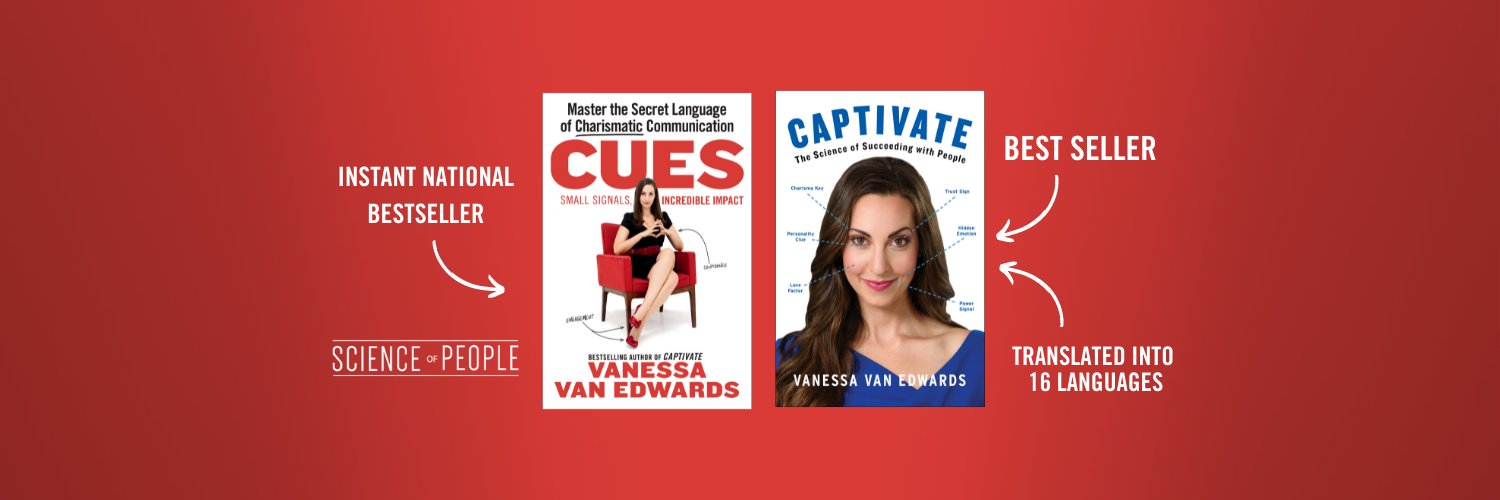
Behavioral researcher and bestselling author @vvanedwards is here to decode body language, mixed signals, and what people really think of you 👀 Watch now on @X
For the longest time, I thought a fulfilling job was supposed to look impressive from the outside. A certain title, income level, lifestyle, or amount of recognition. But the more people I meet, the more I realize fulfillment is actually much more personal than that.
For some people, it’s freedom. For others, it’s purpose. Some people just want work they don’t dread waking up for. Some want creativity, growth, flexibility, impact, great coworkers, meaningful conversations, or enough balance to actually enjoy their life outside of work.
I don’t think there’s one universal formula for a “dream job,” but I do think the feeling matters more than the image.
Curious if you agree — what actually makes a job feel fulfilling to you?
One of the best networking tricks actually comes from the movie business!
It's called a logline. A short, memorable way to explain who you are and what you do without rambling, underselling yourself, or sounding rehearsed.
Most people introduce themselves with a job title....but interesting people tell a story!
A strong logline makes people instantly understand you and want to ask more questions.
This was a question from one of our incredible students at People School, our signature program.
Details on how to join as in my bio!
A lot of the body language cues we use today didn't start in boardrooms! They started in caves!
The reason we make eye contact, protect our personal space, size people up in seconds, and trust certain gestures? Your brain is still running software designed for survival thousands of years ago.
On @JHudShow I break down the surprising caveperson origins behind modern body language and how understanding them can make you more charismatic, confident, and impossible to misread.
Turns out, your inner caveman is still calling a lot of the shots. 👀
What's a human behavior we do today that feels straight out of the Stone Age? 👇
#BodyLanguage #HumanBehavior #PsychologyFacts #JenniferHudsonShow #CommunicationSkills
Topics that get my little sister going: Heated Rivalry, Skincare, Veggies hidden inside baked goods, her nieces, gluten in Europe…we will never leave if these come up!
Did you know you probably use different smiles for different scenarios… without even realizing it? 😅
There’s a smile you use meeting new people!
A polite smile for coworkers.
A nervous smile!!
A genuine excited smile.
(The research shows there may be over a dozen!)
And yes, people can tell the difference.
One of my favorite questions from our live People School sessions was all about what your smile communicates before you even say a word!
Because your facial expressions are constantly sending signals, whether you mean them to or not.
What's your favorite smile type!?
I can’t believe I’m saying this… but sometimes having your phone out is actually okay. 😅
There are social situations (note takers anyone!?) where your phone can make you seem more prepared or may even help other people feel more comfortable.
The problem isn’t the phone itself. It’s the timing, body language, and the signals you’re sending while using it.
Because yes, there’s a huge difference between: “I’m disengaged” and “I’m socially aware.”
This was a question from one of our incredible students at People School, our signature program.
Details on my profile!
Want more friends as an adult?
Do things together.
Pickleball isn’t just fun — it taps into The Shared Activities Principle, which explains why shared experiences create real connection.
Anyone else find their people this way? 🎾👇
Join People School for monthly live workshops! I sometimes bring on special guests like the amazing @davidburkus
Learn more about People School! https://t.co/FvgypuNZUD
One of the most common questions we get at People School is how to make a great first impression when the “standard” social rules don’t apply.
Different cultures, religions, workplaces, and personalities all have different comfort levels with touch and greetings. The key is learning how to read cues without making things awkward. Because confidence isn’t about memorizing one “right” way to interact. It’s about social awareness.
This was a question from one of our incredible students at People School, our signature program. You can find details about how to join in my bio!
My social battery isn't drained because I'm antisocial.
It's drained because work required me to:
• "Circle back"
• Hop on a "quick call" that somehow lasted 54 minutes • Interpret a Slack message that could have meant "great job" or "you're fired"
• Hear "can everyone see my screen?" enough times to qualify as exposure therapy
• Laugh at a joke from the same coworker whose answer to "how are you?" is always "living the dream"
This is why so many people think they're bad at socializing after work. They're not socially depleted from meaningful connection. They're depleted from managing meetings, navigating workplace dynamics, context switching, and being "on" for eight straight hours.
The irony is that the conversations that actually recharge us usually happen after the workday ends. Have you ever noticed that some interactions drain your social battery while others seem to refill it?
You can tell a lot about someone on Zoom… even when they think you can’t.
There’s a whole layer of body language happening in that tiny little box that most people completely miss (and yes, it’s costing them).
In this video I break down a few subtle things that instantly change how you’re perceived on camera—without saying a word.
Once you see it, you won’t be able to unsee it.
👀 watch before your next call
💻 and maybe stop doing that thing you didn’t know you were doing!
One of the fastest ways to lose a sale is trying too hard to convince someone not to be scared.
Top performers do the opposite.
They acknowledge the fear.
“It makes sense you’d be hesitant.”
“A lot of people feel nervous making this decision.” “You should think carefully before committing.”
Counterintuitive?
Yes. Effective? Extremely.
Why it works: pressure creates resistance.
But when people feel understood instead of pushed, their guard drops. Acknowledging hesitation signals confidence, emotional intelligence, and trustworthiness.
The best closers don’t overpower objections.
They normalize them.
HELLO MAY, HELLO FAVORITES!
None of these are sponsored but CALL ME because they are truly my favorite things and I would love it From beauty to wellness to the random little things making my life better lately! None of these are sponsored but CALL ME because they are truly my favorite things and I would love it!
This was a question from one of our incredible People School students during office hours!
Sometimes getting a B+ is actually the healthier option 😅
Highly neurotic people tend to put enormous pressure on themselves to overperform, overprepare, and overperfect everything. The problem is, eventually your standards stop helping you… and start exhausting you.
A lot of ambitious people think their stress is the reason they succeed.
But sometimes it’s the thing quietly burning them out.
One of the biggest mindset shifts is realizing not everything needs to be optimized to death to still be successful.
Want to know your personality type and where you fall on traits like neuroticism? Check out people school here!
https://t.co/FvgypuNZUD
Breaking down exactly what makes a profile stop-the-scroll, build instant trust, and convert—without feeling try-hard or overdone. I’m walking through what works, what’s intentional, and the subtle details most people miss. Can I glaze @Justinsua for this awesome example!?
Did you realize there's a formula to this!? Are you trying any of these? What's worked for you? And of course, if you want me to analyze yours next, comment PROFILE!
We've all been there. A friend asks for advice....and we don't know how to comfort them.
When someone has worries, your instinct might be to fix it. Don’t.
The most powerful thing you can do is acknowledge it.
Not: “you’re fine”
Not: “don’t worry”
But: “that makes sense”
“I can see why you’d feel that way”
Acknowledgment calms the nervous system. It tells their brain: I’m safe. I’m understood.
And from there? That���s when real support actually lands.
Want the exact phrases + frameworks I teach for high-stakes moments like this?
I’m often asked about the habits and rituals that help me prepare for busy days like this one, and honestly, the biggest thing I’ve learned is that performance starts long before you step into the room! I try to protect my energy by getting enough sleep, giving myself extra time so I’m not rushing, and creating as much calm as possible before a high-pressure moment.
I also remind myself that nerves are not necessarily a bad sign. Usually they just mean I care! And wow - does @JenniferHudson make me feel so seen, and cared for!
It’s such an immense privilege to be going back on the The Jennifer Hudson Show, and I’m incredibly grateful for every opportunity to have these conversations and share this work. Thankful to Jennifer and the entire team for making me feel so special!