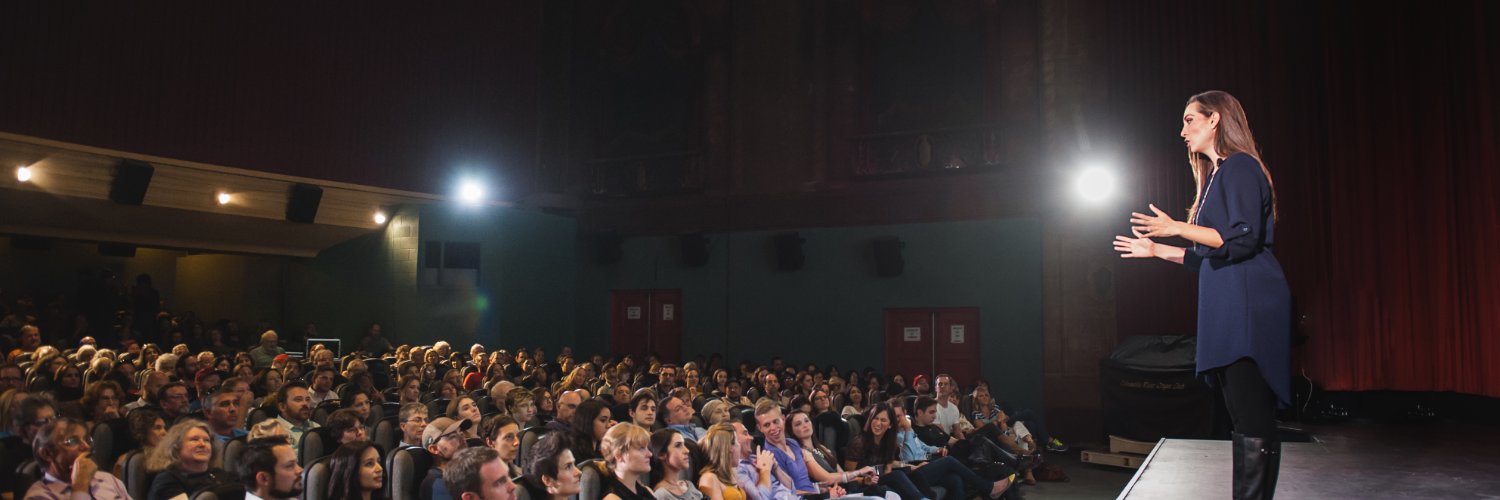
Most people enter conversations focused on what they're going to say next.
Instead, try entering with one goal: discover something you didn't know about the other person.
Ask one more follow-up question. Stay curious a little longer. Some of the best stories, ideas, and connections are hidden just beneath the first answer.
More information on where to find Conversation can be found here:
https://t.co/8BDsTv7THs
Masarwa, Kreichman & Gilaie-Dotan, "Larger images are better remembered during naturalistic encoding," PNAS (2022): [https://t.co/Gmnj7fXh49](https://t.co/kNHwtFPQ9g)
5/
The real question is whether I'm building slides to help me remember what to say, or to help my audience remember it.
Always pick the audience.
Do you present with slides a lot? 👇
1/
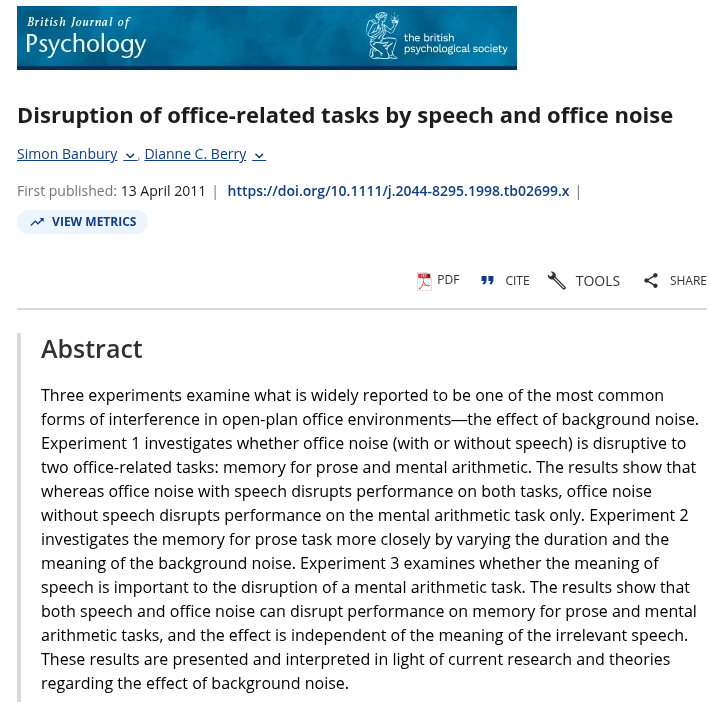
You're a few sentences into a difficult email, and then someone two desks over starts LOUDLY recapping their weekend.
Suddenly, your train of thought is gone. You have no idea what to type anymore.
That's not weak willpower, and researchers have a reason for it. 🧵
4/
So if you hide in a quiet corner with headphones on, you're not being antisocial.
You're working with how attention actually works. Block off focus time the way you'd block a meeting.
1/
Have you noticed that 2pm brain fog where you just read the same sentence four times in a row... and you still don't get it?
It's not you! It's your body clock. 🧵
4/
So stop putting your hardest work at 2pm.
Do your email, expenses, and admin then. Save your sharp morning hours for the work that matters.
What time of day does your brain check out? 👇
Source: de Craen, Roos, de Vries & Kleijnen, "Effect of colour of drugs: systematic review of perceived effect of drugs and of their effectiveness," BMJ (1996).
Get CUES: https://t.co/A16rPs04T8
5/
These are called color cues. I spent two years researching hidden cues like this for my bestselling book, CUES. 📕
What else are we judging by the wrapper without noticing? 👇