I started the Reservation Hatao Andolan ( @RHAreforms ) page on Instagram with one objective -to begin a national discussion on a subject that many people were hesitant to even talk about.
As the movement grew, I realized that I was not mature or experienced enough to lead something of this scale. There are people who have been fighting this battle for years, long before I came into the picture. They deserve the responsibility of taking it forward.
That is why I reached out to Ajeet Sir ( @ajeetbharti) and requested him to lead this movement. He didn't hijack it , I REQUESTED HIM , innumerable times then he agreed. I stand with him wholeheartedly and truly believe there couldn't be a more balanced and unbiased voice to guide it.
I recently saw some new age immature kids having political ambitions ( they personally confessed that to me) wants to make this movement around them. This movement was never about an individual, personal fame, or becoming the face of a cause. It was always about the cause itself. If a better leader can take it further, stepping aside is not weakness-it is responsibility.
One thing I also learned is that many people expect immediate agitation, while my first goal was to encourage discussion. Lasting change begins when people are willing to talk, debate, and question. Agitation without dialogue rarely produces durable solutions.
The movement is bigger than any one person. Leaders may change, but the objective remains the same.
Thank you to everyone who supported the page and helped make this conversation impossible to ignore. Now, let's support the movement- not personalities.
Also Kudos to @talk2anuradha@neha_laldas for speaking about this before anyone else. Can't have a better team!
I started the Reservation Hatao Andolan ( @RHAreforms ) page on Instagram with one objective -to begin a national discussion on a subject that many people were hesitant to even talk about.
As the movement grew, I realized that I was not mature or experienced enough to lead something of this scale. There are people who have been fighting this battle for years, long before I came into the picture. They deserve the responsibility of taking it forward.
That is why I reached out to Ajeet Sir ( @ajeetbharti) and requested him to lead this movement. He didn't hijack it , I REQUESTED HIM , innumerable times then he agreed. I stand with him wholeheartedly and truly believe there couldn't be a more balanced and unbiased voice to guide it.
I recently saw some new age immature kids having political ambitions ( they personally confessed that to me) wants to make this movement around them. This movement was never about an individual, personal fame, or becoming the face of a cause. It was always about the cause itself. If a better leader can take it further, stepping aside is not weakness-it is responsibility.
One thing I also learned is that many people expect immediate agitation, while my first goal was to encourage discussion. Lasting change begins when people are willing to talk, debate, and question. Agitation without dialogue rarely produces durable solutions.
The movement is bigger than any one person. Leaders may change, but the objective remains the same.
Thank you to everyone who supported the page and helped make this conversation impossible to ignore. Now, let's support the movement- not personalities.
Also Kudos to @talk2anuradha@neha_laldas for speaking about this before anyone else. Can't have a better team!
@sumitsharmagzb@RHAreforms So you saying I contacted you and refused to hand over that page to you! What could be the reason?😂😂 Thank you for clarifying.
The only advantage AI and robots have over humans is simple: They don’t get tired.
They don’t complain about work-life balance.
They don’t need motivation.
They don’t burn out emotionally after one bad quarter.
They just keep working.
People laughed when Founder Of Infosys , Narayana Murthy spoke about 70-hour work weeks.
Turns out he may not have been investing in AI but he understood what humans are about to compete against.
Guess who’s laughing now?
A new macro genius discovered that if you drag a line long enough, the Indian Rupee reaches ₹150/$ and suddenly thinks he’s smarter than central banks, bond markets, and actual economists. These are the same people who confuse a TradingView chart with macroeconomic analysis.
The funniest part? In one breath they scream “de-dollarisation is coming, buy gold, dollar is dying,” and in the next breath confidently predict the United States Dollar will become so powerful that ₹150/$ is inevitable. Apparently the dollar is collapsing and unstoppable at the same time.
The rupee went from 60 to 83 over more than a decade filled with COVID, wars, oil shocks, inflation spikes, and aggressive Fed hikes. And somehow the conclusion is: “Bro, straight line means 150 next.” Incredible intellect. By that logic, every kid with Excel should be running the Reserve Bank of India.
For ₹150/$ to happen rapidly, India would likely need collapsing reserves, massive capital flight, runaway inflation, an oil crisis, and policy paralysis together -not just another podcast economist farming engagement.
If currencies moved the way doomers predict, every Excel analyst would be a central banker.
Suggestion for Zerodha: show the last traded price and the price at which a stock was added to the watchlist. It would give investors better tracking and a much-needed reality check.
@zerodha@Nithin0dha
Everyone screaming “AI bubble” clearly skipped the one thing that actually matters- earnings. Prices aren’t floating on hope. They’re sitting right on top of brutal revenue growth, expanding margins, and real cash flows. This isn’t 1999 where companies had vibes and websites. This cycle has profits -massive ones.
Look at companies like NVIDIA and Microsoft - revenues exploding, guidance getting upgraded every quarter, demand still outstripping supply. Valuations moved up because earnings sprinted faster. That’s called a re-rating backed by fundamentals, not a bubble backed by fantasy.
A bubble is when prices run ahead of reality.
AI stocks are doing the opposite -reality keeps running ahead of expectations.
What people really mean when they cry “bubble” is: “I missed the rally and now I’m uncomfortable buying higher.” That’s not market analysis. That’s emotional coping.
Every major wealth cycle looked “overvalued” while earnings were compounding in real time. Internet, smartphones, cloud- same noise, same fear, same regret later.
AI isn’t expensive.
Your mindset is outdated.
When earnings grow this fast, high prices aren’t risk ignoring the shift is.
History doesn’t punish believers in growth.
It punishes those who wait for crashes that never come.
AI is not the bubble. AI is the detonator.
AI isn’t built on cheap money, reckless leverage, or financial engineering. Corporations aren’t funding it with borrowed fuel like 2000 or 2008. They’re paying for it with real cash flows, balance-sheet strength, and operational savings. It’s strategic. It’s audited. It’s intentional.
-People are already cautious.
-Regulators are already vigilant.
-Public sentiment is already debating misuse.
That’s not how bubbles behave- bubbles thrive on denial, not scrutiny.
A real bubble needs:
1.Leverage that shouldn’t exist
2.Optimism detached from math
https://t.co/mh1GQBjrz8 chasing narratives, not profits
https://t.co/u9kUth4nDu economy pretending risk isn’t real
>AI isn’t that. AI is a cost-saver, not a debt-builder.
>It’s reducing headcount, not inflating it.
>It replaces inefficiency -it doesn’t depend on it.
So if something pops, it won’t be AI.
It will be everything AI unmasks: industries bloated on outdated models,companies scaling with bodies instead of systems,businesses surviving on reputation instead of productivity.
Never underestimate someone who overestimates himself
I'll Admit - I Was Wrong About Gold!
I dismissed gold as an asset. No yield, no cash flows, no reinvestment ability- from a traditional valuation lens, gold looks inefficient. Businesses compound, bonds pay interest, real estate generates rent. Gold does none of that.
After watching Nikhil Kamath's podcast with Ray Dalio, I realised that this framework misses a crucial dimension: recognition risk.
Most financial assets are someone else’s liability.
-Fiat currency depends on governments maintaining discipline.
-Bonds depend on the issuers remaining solvent.
-Bank deposits depend on the stability of the financial system.
Gold, in contrast, has no counterparty. It does not require trust in an institution, a balance sheet, or a promise to pay. That absence of liability is precisely why gold has survived across centuries, monetary regimes, wars, and currency resets.
The lack of an interest rate is often cited as gold’s weakness. Analytically, it is its strength. Gold is not designed to grow capital; it is designed to preserve purchasing power when monetary systems are stressed.
This reframes gold not as a return-generating asset, but as a monetary hedge insurance against currency debasement, excessive debt, and loss of confidence in paper money.
Equities remain the best long-term wealth creators.
But gold plays a distinct role: protecting wealth when the assumptions underlying financial assets fail.
Ignoring gold because it doesn’t compound is not rational it is a category error.
This podcast forced me to update that view.
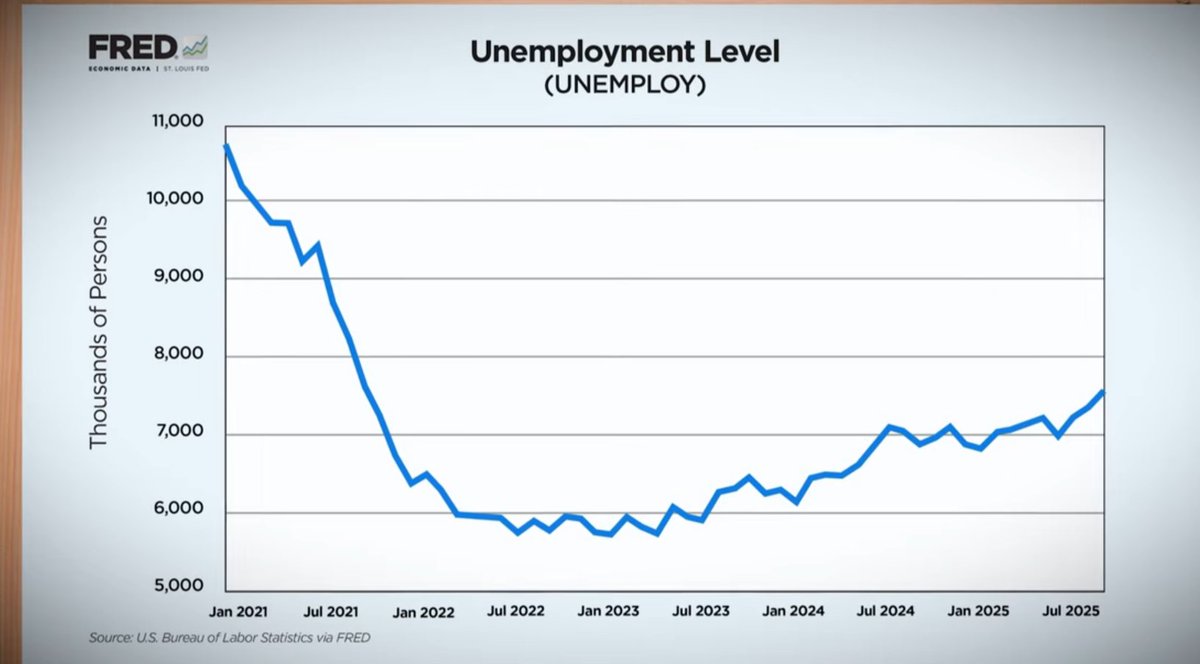
India’s Gig Economy: A Low-Wage Trap in the Name of Employment
India proudly celebrates the rise of the gig economy. It shouldn’t.
What is being marketed as job creation is, in reality, a mass absorption of unskilled labour into low-wage, zero-bargaining-power roles. These sectors did not exist at scale 15 years ago, yet millions now depend on them not because new opportunities emerged, but because better ones disappeared.
The economics is brutal and simple.Near-infinite labour supply + minimal skill requirement = structural wage suppression.
Workers are counted as “employed,” but earnings per worker continue to thin out. This improves unemployment statistics while hollowing out income quality, productivity, and long-term skill formation. The economy looks busy, but not richer.
This is not a stepping stone. It is a labour trap-where time is spent working without compounding skills or wages. Consumption survives, but does not grow. Savings erode. Social mobility stalls.
For all the talk of platforms and flexibility, the uncomfortable truth is this: India is expanding employment without expanding value creation.
You can boast about gig jobs.
Markets will eventually price the consequences
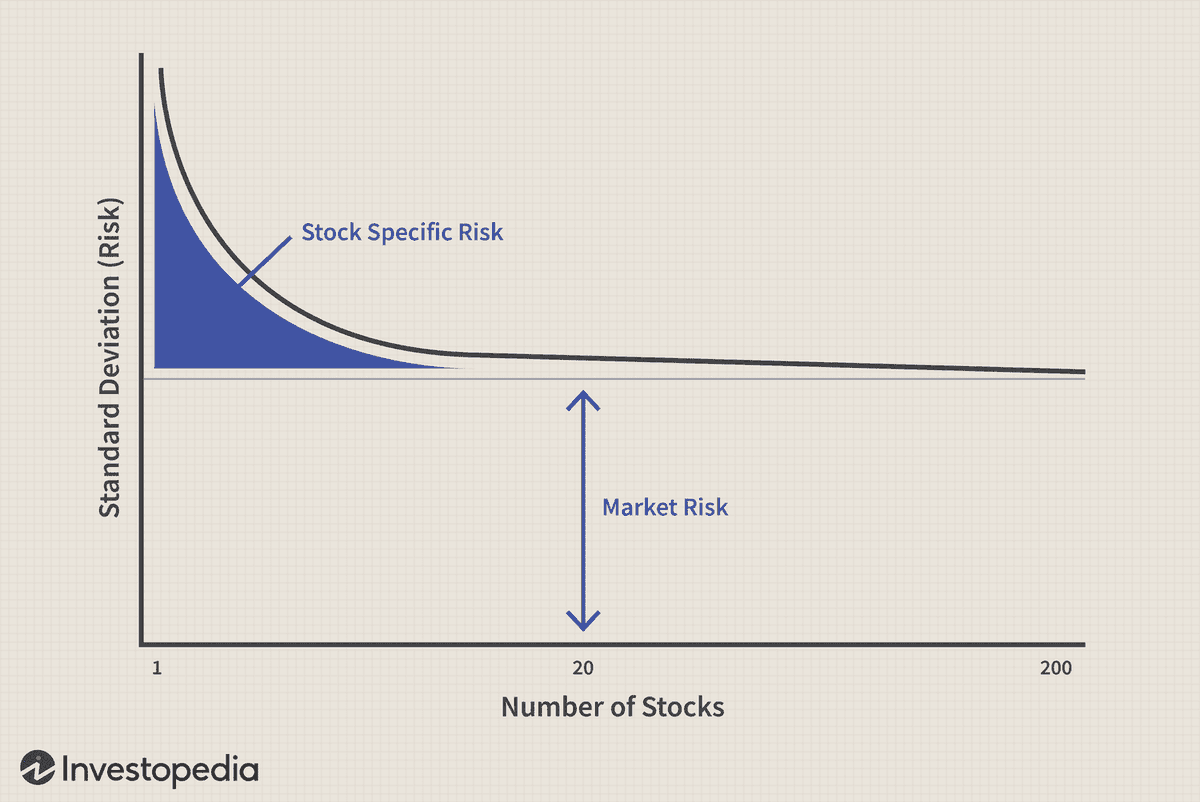
The most important portfolio question isn’t which stock it’s how many stocks. Data shows that diversification benefits peak far earlier than most investors think. Academic studies (including classic portfolio theory and later empirical work) show that 70–80% of diversification benefits are achieved with just 8–12 stocks. Beyond 15 stocks, risk reduction flattens but return dilution keeps increasing.
Now look at portfolio math. In a 30-stock portfolio, a single stock has ~3% weight. Even if that stock becomes a 10x, it adds barely 27–30% to the entire portfolio over multiple years. That’s not outperformance that’s noise. Meanwhile, the remaining 29 stocks quietly pull returns back toward the index. This is exactly why most over-diversified portfolios struggle to beat the Nifty.
Concentrated portfolios work because alpha is not evenly distributed. Market data consistently shows that a small fraction of stocks drive most index returns. If your winners don’t have meaningful weight, they can’t move the needle.
Diversification is sensible when capital is large and preservation matters more than growth. But most retail investors don’t have that luxury. They need compounding, not comfort.
So ask yourself honestly:
Do you want to protect wealth or create it?
Because beyond 15 stocks, you’re not diversifying risk you’re diversifying away your chances of outperforming.
Investors love treating valuations like a traffic signal: red means sell, green means buy. Reality is far more inconvenient. Selling just because a stock looks “expensive” is one of the dumbest ways to lose a great compounding machine.
Leadership, brand power, scale and execution don’t show up neatly in a P/E number. Sometimes the premium is the story.
But here’s the nuance no one likes to hear: there’s a difference between “expensive” and “delusional.” When valuations hit a point where even optimistic future revenues can’t mathematically justify today’s price, that’s not premium- that’s fantasy.
That’s when the market is pricing in 10 years of growth that the business can barely deliver in five. And no amount of narrative can save a stock from gravity when expectations are that inflated.
The mistake? Investors treat both situations the same. They sell winners too early because the multiple “looks high,” and they hold bubbles too long because the story “sounds right.” The smart money does neither.
Great companies deserve high valuations.
Unsustainable valuations deserve your exit.
The skill is knowing which bucket your stock falls into and refusing to let a single metric make the decision for you.