Vascular Surgeon at Vasc Inst of Chatt by way of AZ; aviation, defense, history, baseball, soccer, wine; husband, dad to 3 kiddos and 2 blk labs; Air Force Vet
Soryu was the thoroughbred. Unlike Akagi and Kaga, both converted from treaty-doomed battleship hulls, she was designed as a carrier from the keel up, and at 34.5 knots she was one of the fastest carriers ever built. With her sister Hiryu, she formed Carrier Division 2 under Admiral Tamon Yamaguchi, the most aggressive carrier commander in the Japanese navy. She had launched planes against Pearl Harbor, Wake Island, Darwin, and Ceylon without a scratch.
On the morning of June 4, she was caught in the same trap as her sisters: hangars full of fueled, armed aircraft, fighter cover dragged down to sea level by the doomed American torpedo squadrons.
Her executioners came from the Yorktown. Thirteen Dauntlesses of Bombing Three, led by Lt. Cmdr. Max Leslie, arrived overhead at almost the same moment the Enterprise bombers found Akagi and Kaga, completing the most lethal coincidence in naval history. Leslie himself had nothing to drop. A faulty electrical arming switch had accidentally jettisoned his bomb into the sea on the flight out, along with three other planes' bombs. He led the dive anyway, strafing all the way down to draw fire for the men behind him.
It took three minutes. Three 1,000-pound bombs walked down her flight deck: one forward of the forward elevator, two more around the amidships elevator, plunging into the hangars among the armed planes. Fire reached her gasoline systems and munition rooms almost instantly. Within twenty minutes of the first hit she was a furnace from end to end, and the order to abandon ship came at 10:45, the fastest death of any carrier that morning.
Captain Ryusaku Yanagimoto refused to leave the bridge. He was so beloved by his crew that they decided to save him against his will, and chose Chief Petty Officer Abe, a navy wrestling champion, to physically carry him off. Abe climbed to the burning bridge and found his captain standing motionless, sword in hand, staring toward the bow. He stepped forward to grab him, and stopped. By every account, the sheer force of the man's will would not allow it. Abe turned away in tears. As he climbed down, he heard Yanagimoto calmly singing Kimigayo, the national anthem, alone on the bridge of his burning ship.
Soryu burned through the afternoon. At 19:13, as her survivors watched from the decks of the destroyers Hamakaze and Isokaze, she slipped under, taking more than 700 of her crew and her captain with her. She sank within minutes of Kaga, two funeral pyres going down almost together.
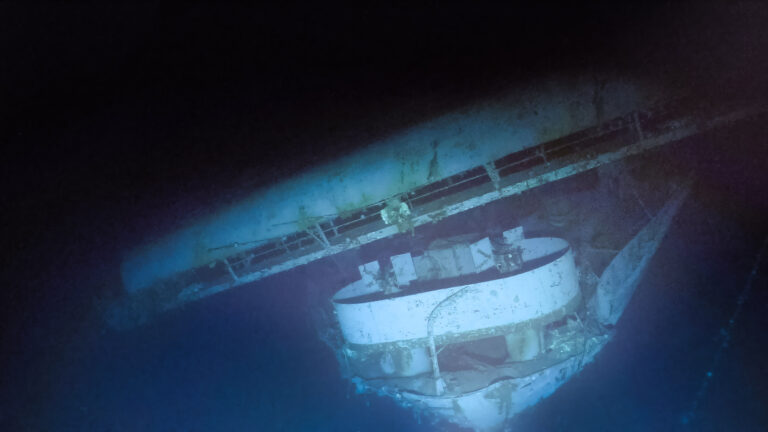
Of the four carriers lost at Midway, Soryu remains one of the ghosts. The 2019 expeditions that found Kaga and Akagi never located her. She is still out there, somewhere under three miles of Pacific.
Yorktown should not have been at Midway at all. A month earlier at Coral Sea, a Japanese bomb had torn through her decks, and the estimate to fix her ran to 90 days. Japan crossed her off as sunk. Admiral Nimitz gave Pearl Harbor's shipyard 72 hours. Some 1,400 workers swarmed her around the clock, welders still aboard as she steamed out to the ambush. Her presence at Midway was itself a kind of resurrection. She would need two more.
On the morning of June 4, her air group earned its keep: her dive bombers destroyed Soryu, and her torpedo squadron's sacrifice helped pull the Japanese fighters out of position for the killing blow. But by midday, one Japanese carrier was left alive. Hiryu, under the ferocious Admiral Yamaguchi, found Yorktown first.
The first strike came around noon: dive bombers, eighteen launched, most shot down on the way in, but three bombs got through. One burst near the island, one went down the smokestack and knocked out five of her nine boilers, one punched through the flight deck. Dead in the water and burning, she should have been finished.
She wasn't. Her damage control crews patched the deck with timbers and steel plate, relit the boilers, and within two hours she was making 19 knots and refueling fighters. The repair was so complete that when Hiryu's second strike arrived, the Japanese pilots reported attacking a different, undamaged carrier. Japan would end the battle believing it had knocked out two American carriers. It had hit the same unkillable ship twice.
That second strike was led by Lt. Joichi Tomonaga, whose plane's left fuel tank had been shot through that morning over Midway and could not be refilled. He led the mission anyway, knowing it was one way. His torpedo bombers bored in through everything Yorktown's escorts could throw at them, and two torpedoes slammed into her port side, jamming the rudder and cutting all power. Tomonaga did not return. Yorktown rolled into a 26-degree list, and with capsizing looking imminent, Captain Elliott Buckmaster gave the order no captain wants to give. The crew went over the side in good order. American doctrine, unlike the Japanese tradition that kept captains on burning bridges, expected Buckmaster to live; he left the ship last, sliding down a line into the sea.
And still she floated. All night, all the next day, the list never worsened. So on June 6 Buckmaster came back with a hand-picked salvage crew, the destroyer Hammann lashed alongside providing power, and they began to win: fires out, the list reducing, a tow rigged. Yorktown was coming home a third time.
Then, that afternoon, the Japanese submarine I-168, having slipped through the destroyer screen after a patient day-long approach, fired four torpedoes from inside the escort ring. One broke Hammann in half; she sank in four minutes, and as she went down her own depth charges detonated, killing men in the water. About 80 of her crew died. Two more torpedoes hit Yorktown.
Even then she refused to go quickly. She lingered through the night, and at dawn on June 7 the men on the surrounding destroyers stood at attention, ships' flags at half mast, as she rolled onto her port side and sank into three miles of water. The battle had ended days of fighting with a strange symmetry: four Japanese carriers and one American, all on the same patch of ocean floor.
In May 1998, Robert Ballard, the man who found the Titanic, found her: upright, intact, her guns still trained skyward, her hull number still visible, three miles down and almost untouched by time.
D-Day Minus 1 has begun in England. Ike is feeling the pressure like no other can. These are the most stressful hours of his life. A journalist notes he is "bowed down with worry...as though each of the four stars on either shoulder weighed a ton." He has a constant ringing in his right ear. Almost frantic with nervous exhaustion, he lights cigarette after cigarette, some 60 filterless a day. He has a palsy in his hand from signing so many orders. The fate of the free world rests with him and him alone. See more at https://t.co/91MLInspp6
84 years ago today, a pilot running out of fuel made a decision that won the Pacific War. Most Americans have never heard his name.
June 4, 1942. Six months after Pearl Harbor, Japan's navy is undefeated. Four of the carriers that burned Pearl, Akagi, Kaga, Soryu, and Hiryu, are steaming toward Midway to finish off the US Pacific Fleet.
At 7:52 AM, Wade McClusky launches from USS Enterprise leading 32 Dauntless dive bombers. Here's the detail nobody mentions: McClusky is a fighter pilot. He'd been given the air group weeks earlier and had barely flown a dive bomber in combat. Now he's leading every SBD the Enterprise has at the most important target in the Pacific.
9:20 AM. He arrives at the intercept point where the Japanese fleet is supposed to be.
Empty ocean. Nothing for miles.
The Japanese had turned. Nobody knew where. And now McClusky owns the worst math problem in naval aviation: his fuel is bleeding away, and every minute he keeps searching, he condemns more of his own pilots to ditch in open water where nobody will find them.
Doctrine is clear. Turn back.
McClusky keeps going. He works a search pattern, squeezing miles out of dying fuel tanks.
9:55 AM. Far below, a single Japanese destroyer is cutting a white scar across the ocean at flank speed. It's the Arashi, racing to rejoin the fleet after depth-charging the American submarine Nautilus. Think about that. A failed sub attack is about to give away the entire Japanese navy.
McClusky reads the wake like an arrow and follows it.
10:02 AM. The horizon fills with the entire Japanese strike force. Four carriers, their decks crammed with planes being refueled and rearmed. Fuel lines snaking everywhere. Bombs stacked in the open.
And here's the miracle: the sky above them is empty. Minutes earlier, American torpedo squadrons had attacked at sea level and been annihilated. Torpedo 8 lost all 15 planes. One survivor, Ensign George Gay, watched what came next while hiding under his seat cushion in the water. Those doomed pilots dragged every Japanese fighter down to the waves. The door upstairs was wide open.
10:22 AM. McClusky pushes over from 14,500 feet. Both squadrons follow him down onto Kaga. It's actually a mistake, doctrine said split the targets, but Lt. Dick Best catches it mid-dive, pulls out with two wingmen, and goes after Akagi alone. His single bomb pierces the flight deck into the packed hangar. It's enough.
By 10:28, Kaga, Akagi, and Soryu, the third hit simultaneously by Yorktown's bombers, are floating infernos. Six minutes. Three carriers that attacked Pearl Harbor, gone. Hiryu follows them to the bottom that evening.
The cost of McClusky's gamble was real. Many Enterprise bombers never made it home, some shot down, others swallowed by the sea when their tanks ran dry. McClusky himself was jumped by two Zeros on the way out, took five bullets through his shoulder, and still flew his shot-up Dauntless back to the Enterprise.
Admiral Nimitz said McClusky's decision "decided the fate of our carrier task force and our forces at Midway." Japan never won another major battle.
One borrowed pilot. One destroyer's wake. One choice to keep flying when every gauge said go home.
84 years ago today, the most important Japanese admiral in the Pacific sailed into a fog bank he could not see out of, carrying secret orders he believed were known to no one on earth.
The Americans had read them three weeks ago.
In May 1942, Admiral Isoroku Yamamoto had a plan to end the war in the Pacific in 30 days. He would draw the surviving US Navy carriers into a trap near a tiny atoll called Midway, 1,300 miles northwest of Hawaii, and destroy them with the largest naval force ever assembled. 200 ships. 700 aircraft. 100,000 men. Four heavy carriers under Vice Admiral Chuichi Nagumo would lead the strike. The American fleet, which had only three serviceable carriers left after the Coral Sea, would be annihilated. Then Hawaii would fall. Then the US would sue for peace.
The plan was perfect.
It was also compromised.
In a basement in Pearl Harbor, a small team of cryptanalysts under Commander Joseph Rochefort had broken the Japanese naval cipher JN-25 in the spring of 1942. They were reading roughly 20 percent of every Japanese signal in real time, and educated guesswork filled in the rest. By mid-May they knew the target was somewhere referred to only as "AF." But where was AF?
Rochefort had a hunch. He sent a signal in the clear from Midway saying their water distillation plant had broken down. Two days later, Japanese intercepts mentioned that "AF" was running short of fresh water. Bingo.
By May 27 Admiral Chester Nimitz knew the date of the Japanese attack, the composition of the Japanese force, the route Nagumo would take, and roughly the time he would launch his first strike. He pulled every American carrier to a point northeast of Midway called "Point Luck" and waited. The trap had been set for him. He set a trap inside the trap.
On June 2, Nagumo's four carriers approached Midway through the worst fog any of them had ever seen. Visibility dropped below 600 yards. His ships could barely see each other. He held radio silence to protect his approach. He believed he had complete surprise. He believed the American carriers were thousands of miles away in the South Pacific. He believed he was about to win the war.
Yamamoto, on the battleship Yamato 600 miles behind him, had intelligence that the American carriers might in fact be at sea. He chose not to break radio silence to warn Nagumo. He assumed Nagumo had the same intelligence. Nagumo did not.
At 4:30 AM on June 4, Nagumo launched 108 aircraft against Midway from a position the Americans had been waiting for him to reach.
By sunset, three of his four carriers were burning hulks. The fourth would sink the next morning. Japan lost 3,057 men, 248 aircraft, and the four best carriers of the Pacific War in a single day. Japanese naval aviation never recovered. The war was decided in six minutes between 10:22 and 10:28 AM on June 4.
The whole disaster traced back to one decision on June 2: a Japanese admiral sailing into fog, trusting that nobody knew where he was going.
#onthisday American film and television actor Paul Xavier Gleason died on May 27, 2006, at a Burbank, California, hospital from pleural mesothelioma, a cancer of the lining of the lung connected with asbestos, which he is thought to have contracted from asbestos exposure on ...
For Memorial Day, do yourself a favor and take three minutes of your time to listen to this Civil War letter from Maj. Sullivan Ballou to his wife.
I just started re-watching the Ken Burns series, which debuted in 1990 to a record-breaking audience of 40 million, for the first time since it originally aired.
While I had forgotten all of the specifics of the show over the years, I NEVER forgot this letter or this moment, which closed the first episode.
Burns kept a copy of the letter in his wallet for 25 years.
The insane part is that almost every bullet point on this list could have been a once-in-a-generation achievement for an entire aerospace company.
SpaceX did all of them within roughly 20 years while simultaneously building:
the world’s largest satellite constellation,
fully reusable rockets,
human spaceflight systems,
global internet infrastructure,
AI compute clusters,
and now potentially orbital data centers.
At this point, SpaceX feels less like a normal company and more like a civilization infrastructure engine 🚀
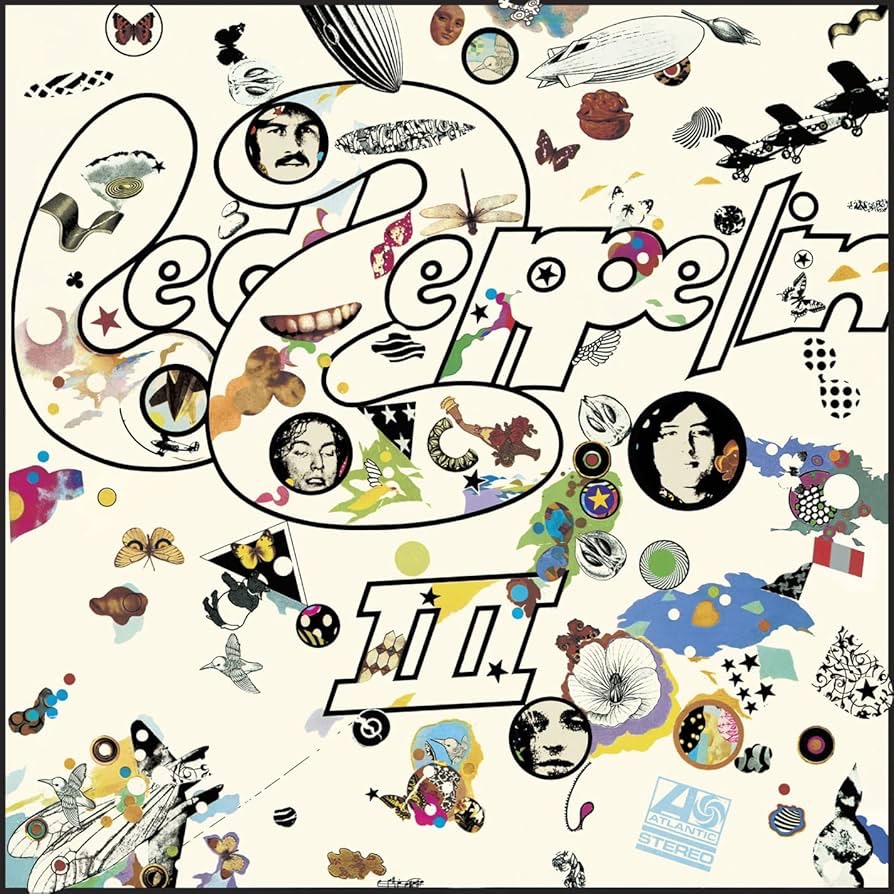
Led Zeppelin - Led Zeppelin III (1970)
Released on October 5, 1970, it was Led Zeppelin’s third studio album and followed the massive commercial success of Led Zeppelin II.
After years of intense touring and a heavy, blues-driven sound, Jimmy Page and Robert Plant decided to change course to avoid repeating themselves. Following an exhausting tour of North America, Plant invited Page to retreat to Bron-Yr-Aur, an old, isolated cabin in the Welsh mountains with no electricity or running water.
There, in a peaceful rural setting, they composed much of the acoustic and folk material that would define the album, inspired by nature and Celtic legends.
Recorded between November 1969 and August 1970 at various locations, including Olympic Studios in London, Headley Grange with the Rolling Stones’ mobile studio, and Island Studios, the album showcased a surprising evolution.
John Paul Jones contributed orchestral arrangements, and John Bonham maintained his power even in the softest moments. The cover was iconic, featuring a rotating wheel that revealed different images and symbols, including Page’s famous Zoso logo.
Upon its release, it sparked controversy because many fans and critics expected more heavy rock like “Whole Lotta Love” and were surprised by the acoustic and folk shift, but over time it was recognized as one of the band’s most important works, where they proved they weren’t just a group of powerful riffs but true versatile artists.
It reached number one in both the United States and the United Kingdom, sold millions of copies, and paved the way for the legendary Led Zeppelin IV. Jimmy Page has called it the true beginning of the band because it allowed them to explore without limits.
A decade ago we should have had a replacement for the C-5 through the design stage and in production.
Flying through 2050 is a bureaucratic maneuver with a peacetime mindset ruled by accountants.
This mindset needs to be ripped out root and branch along with a cold-restart of our mindset towards proper stewardship of our military-industrial base.
In the Salamander World, the primes would be told to submit their solution by 01OCT2026.
Design selection by 31MAY2027. (Preferred option would be a fly off like we have for YF-16/VF-17 & YF-22/YF-23, but I am flexible)
Prototype will ready NLT 30SEP2028 with first flight NLT 30SEP2029.
Yes, that is an aggressive timeline. That is a measure of how critical strategic airlift is.
Prior generations did it better and faster with only analog and manual tools, caffeine and tobacco.