Are breastfeeding rates lower in maternity care deserts? Chanell Haley & co from @TulaneSPHTM mapped the data in Louisiana and examined racial/ethnic disparities. Another free-to-read study from our May/June issue:
https://t.co/OSGuuTpUw0
@mgcromeens Another free-to-read study from our May/June issue addresses a different angle of endometriosis: @DerejeGedle of @UQ_News & co found a higher risk of iron deficiency in Australian Longitudinal Study on Women's Health participants with endometriosis.
https://t.co/qnWoEhAV1K
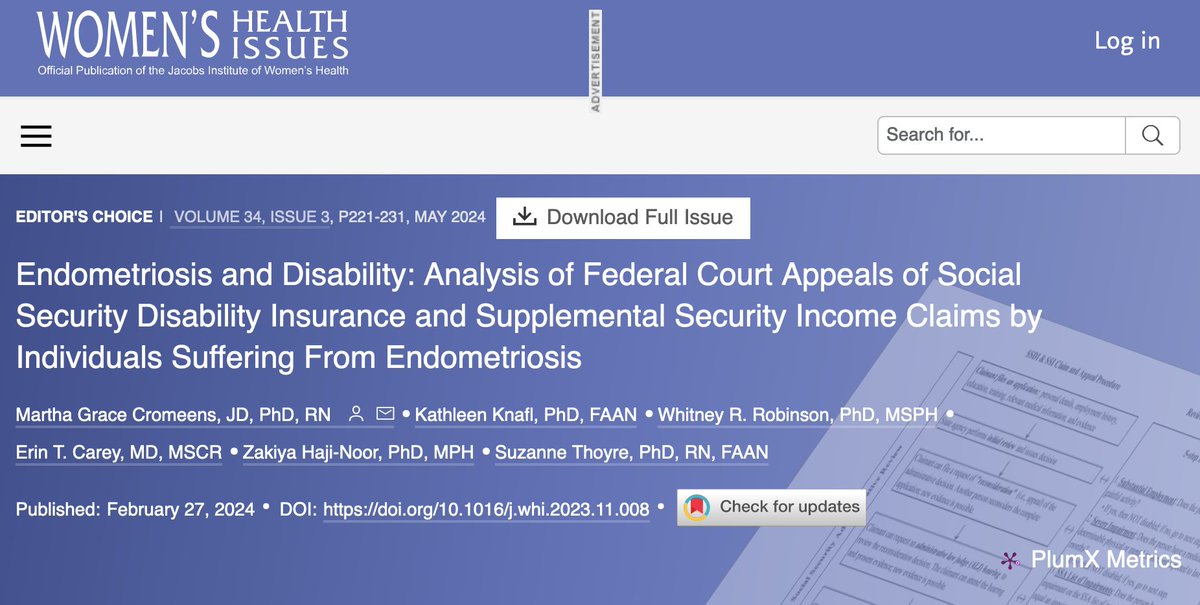
Check out our latest Editor’s Choice! @mgcromeens of @UWSoN & co analyzed disability appeals from people with endometriosis and identified several barriers they face to getting disability payments. Their study is free to read here:
https://t.co/hH17UKCmri
“The health care, policy, and legal systems can leverage the findings in this study to create a more equitable disability application and review system for those with chronic pain conditions such as endometriosis.” -@mgcromeens et al.
https://t.co/hH17UKCUgQ
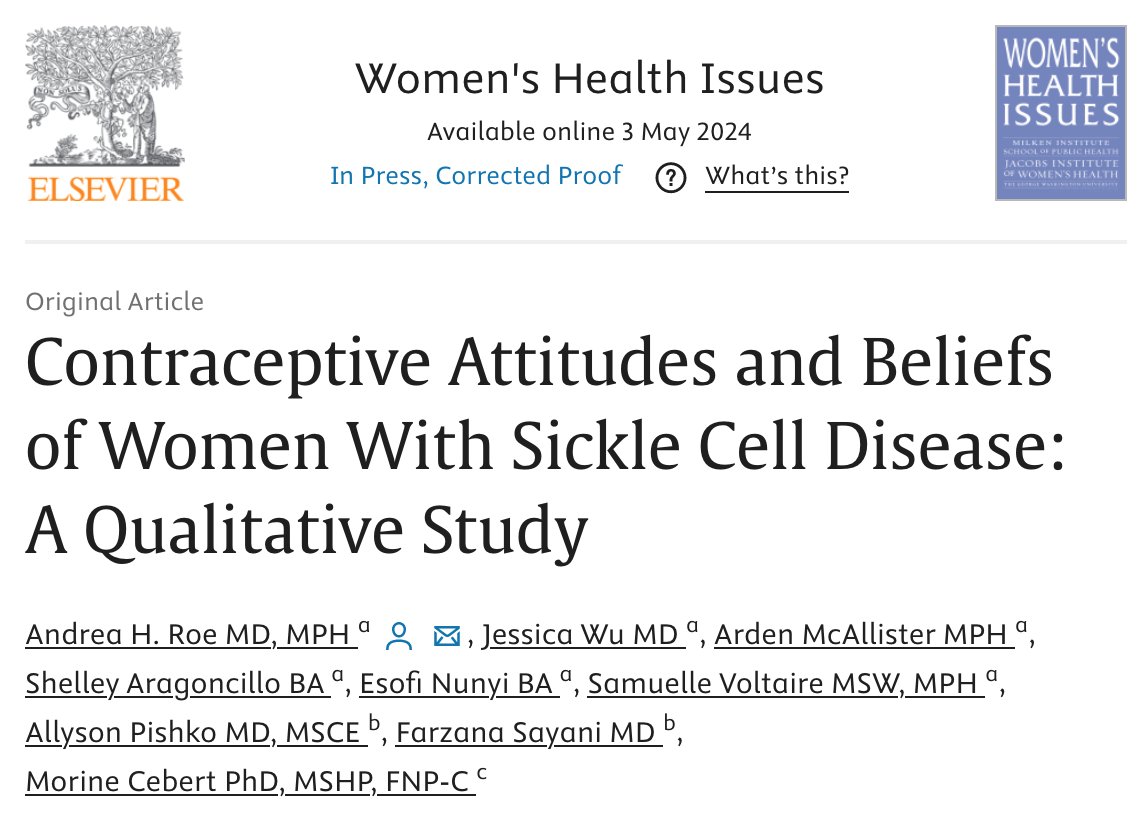
A useful companion to @EricBoodman's horrifying piece on sickle cell patients pressured into sterilization ( https://t.co/svwAxZsdjN) is a new study by Andrea Roe & co that discusses shortcomings in contraceptive counseling for sickle cell patients. https://t.co/YFtJlxsCSL
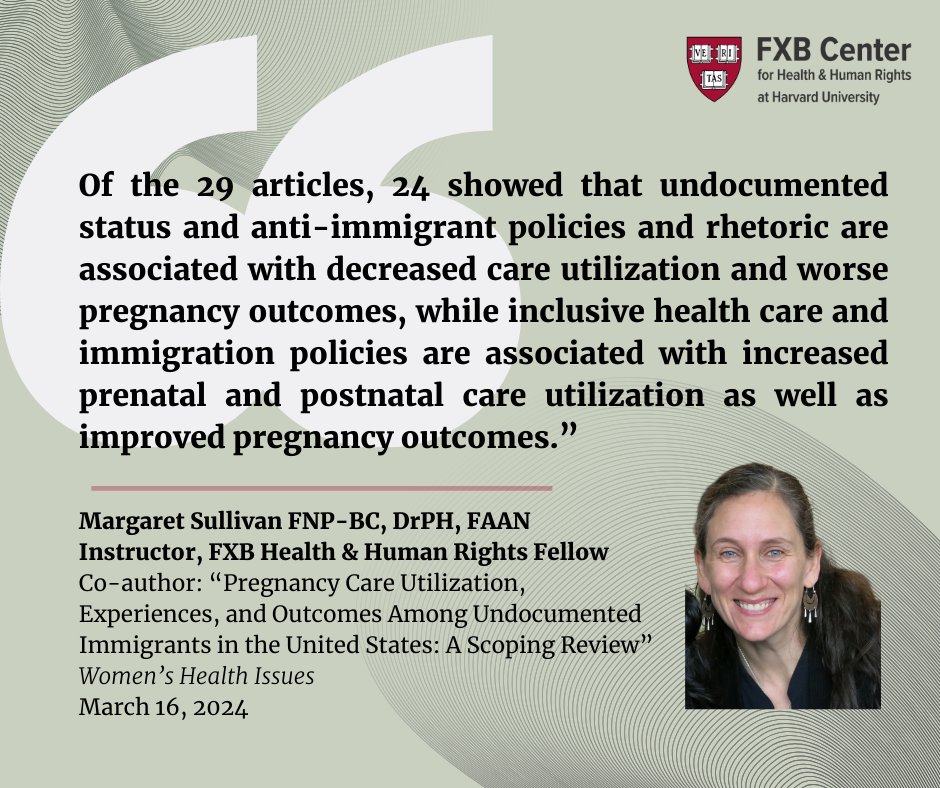
FXB Health & Human Rights Fellow and Harvard Instructor Margaret (Maggie) Sullivan, FNP-BC, DrPH, FAAN, co-wrote an article on @WHIjournal on the many barriers faced by undocumented immigrants in the US in terms of #pregnancy#care access.
Read in full ➡ https://t.co/DFqiFFLQEz
Administrative claims are a valuable data source for studying maternal health disparities, but come with pitfalls that researchers should avoid. In our new @WHIjournal paper, @toyyapujol and I outline these pitfalls and propose some practical solutions. https://t.co/WYxHXfXNtW
#SickleCell amplifies the importance and risks of contraception and may complicate individuals' #autonomy and #access. We need to recognize the risk of coercion, and maximize #ReproductiveAgency, and for patients with SCD.
Our research in @WHIjournal📘
https://t.co/caaWryHhhh
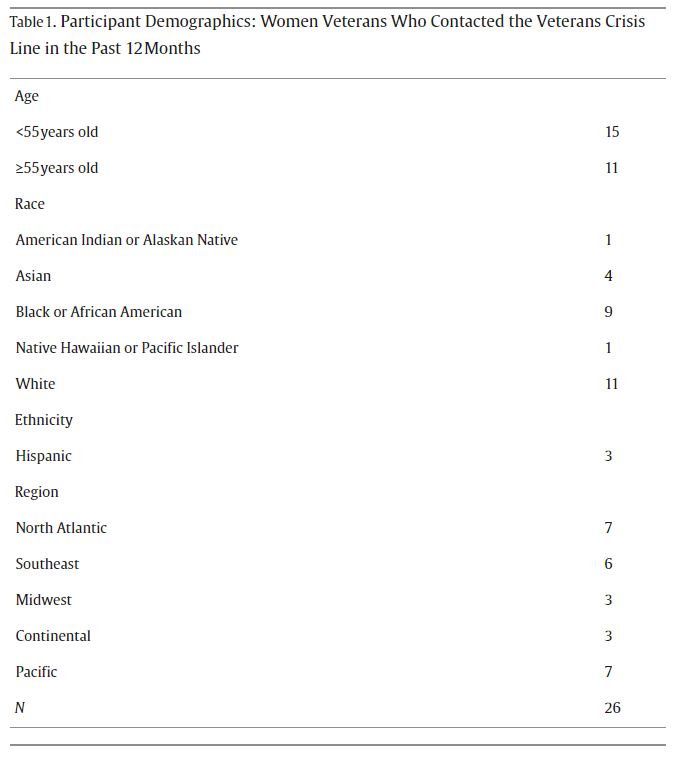
#Newpub in @WHIjournal by @CUPhysMed faculty Dr. Lindsey Monteith & team on "Something Has to Be Done to Make Women Feel Safe": #Women Veterans' Recommendations for Strengthening the #Veterans#CrisisLine for Women Veterans. @RMIRECC https://t.co/MFNMs5cBST
Based on findings that childcare precarity is associated with worse maternal health, Duh-Leong & colleagues highlight the work of entities like @NYCEDC that recognize the importance of high-quality, affordable early childcare access for economic well-being https://t.co/bf3NtPDYT4
In our latest Editor’s Choice study, Carol Duh-Leong of @NYUGrossman & colleagues found that childcare precarity when a child was 3 was associated with higher odds of maternal depression 6 years later.
https://t.co/6ZJKQutNoO
@BetsyLehmanCtr @JohnsHopkinsSPH@MassDPH Gibbs Prize Honorable Mention study by Sung W. Choi of @SPAatPSH & co found that Tennessee residents’ odds of having an out-of-state birth increased by 13% after the state implemented its Fetal Assault Law. Congratulations to the authors!
https://t.co/kTUSrWqNlx
Congratulations to 2023 Gibbs Prize winners! Godwin Osei-Poku, @BetsyLehmanCtr & co investigated severe maternal morbidity in MA birthing people with opioid use disorder; Sarah White, @JohnsHopkinsSPH & co examined laws related to drug use during pregnancy
https://t.co/1rN53Yh3XG
@BetsyLehmanCtr @JohnsHopkinsSPH Gibbs Prize Honorable Mention study by Xiaoli Chen & co of @MassDPH found pregnant people with disabilities were more likely to report several forms of stress & lack of support. They recommend better screening & support. Congratulations to the authors!
https://t.co/ti8SwRLDzk
@BetsyLehmanCtr “Future research should ... identify factors that may disproportionately impact patients with OUD and cause the disparities evident in our study, including the role of stigma and punitive policies toward birthing people with OUD.” -Osei-Poku et al.
https://t.co/8C5IeGQEhW