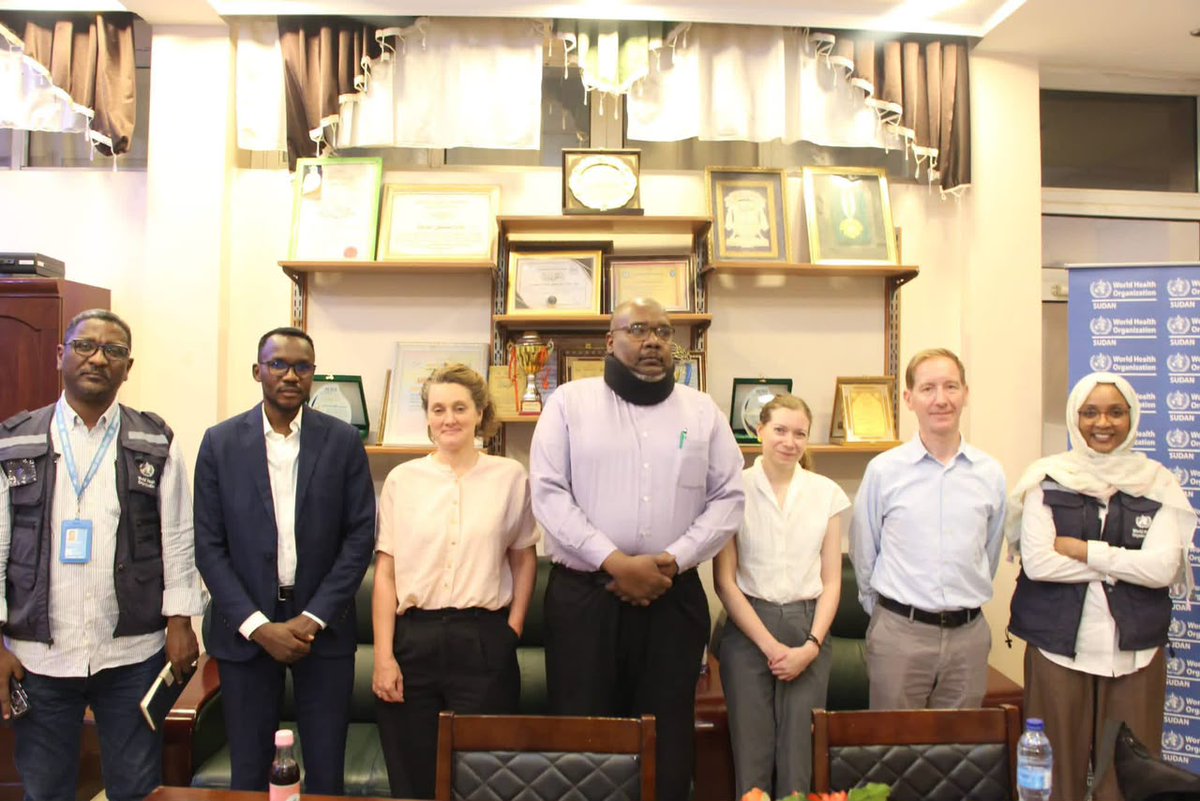
The 13th deployment of Emergency Medical Teams (EMTs) to #Sudan in 2026 took place this month.
An EMT from Doctors of Rahman worked alongside #Sudanese healthcare workers, bringing life-saving expertise and critical medical support to Khartoum, Wad Madani, Ad Dabbah, and El Obeid.
47 specialists provided specialized care to >2500 patients, including >150 complex procedures such as open heart and orthopedic surgeries.
Supported hospitals, strengthened health care services, and reached communities in displacement camps.
Delivered critical medical supplies worth over US$ 200,000.
In El Obeid: >1,500 patients seen, 16 major surgeries performed, and medicines, maternity equipment, portable ventilators, and surgical sets donated.
@WHO with @FMOH_SUDAN and health partners supported the deployment.
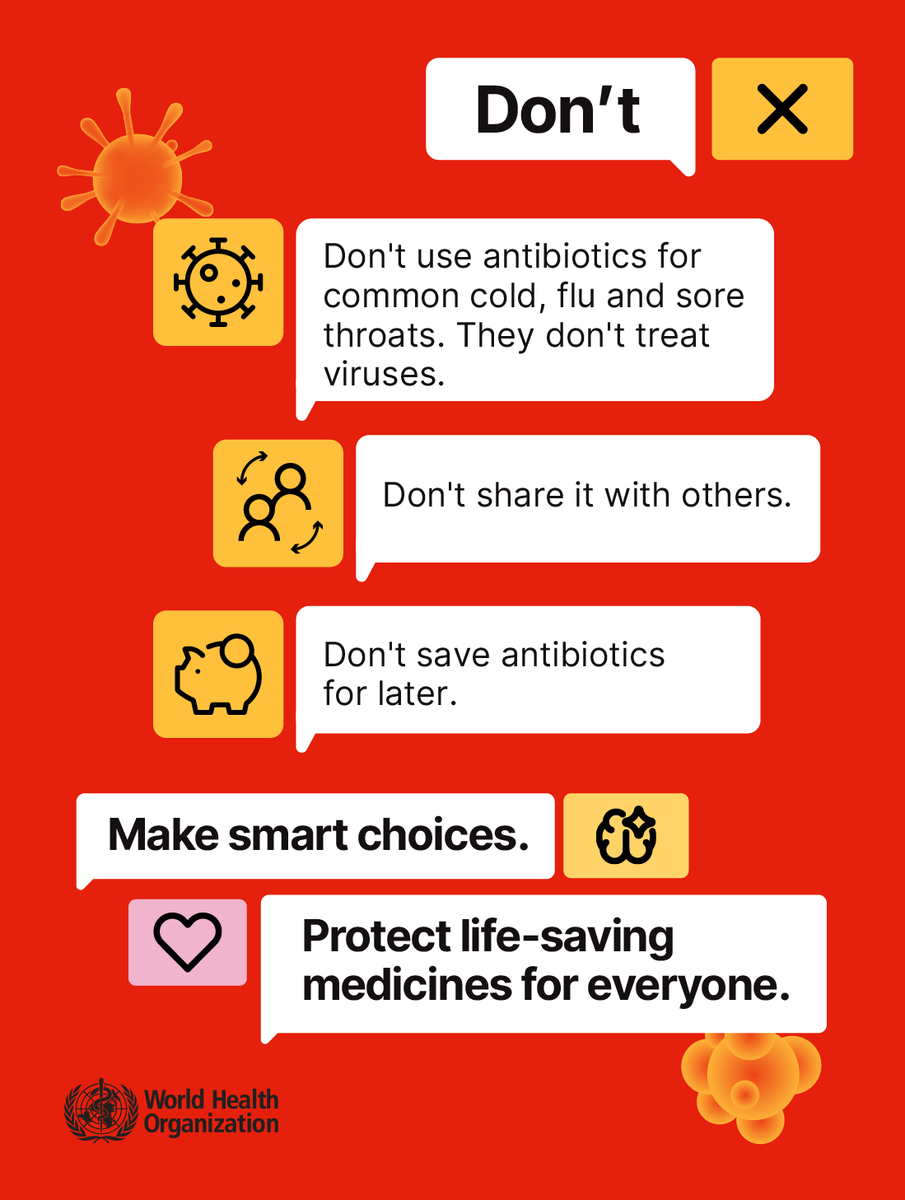
It is World Antimicrobial Awareness Week. #WAAW2026
Test your knowledge of antibiotics!
🟠Antibiotics are not safe to use without a doctor’s prescription.
🟠Use antibiotics only as prescribed, and for the full prescribed duration.
Increased attacks on health facilities and civilian infrastructure, including the drone attacks documented by @UNHumanRights, are deeply alarming and further depriving people in #Sudan of live-saving care. The violence must stop.
The best medicine is peace!
https://t.co/L6hH0zmRS9
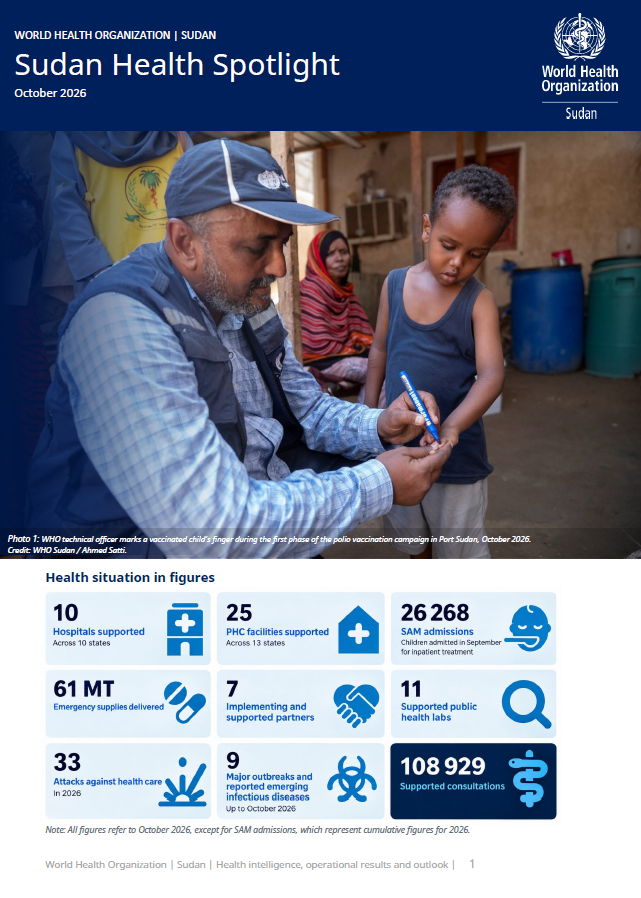
Across Sudan, 21 million people need health assistance, while 37% of health facilities are non-functional in most states with up to 80% non-functional in Darfur.
In White Nile and North Kordofan, conflict, displacement, disease outbreaks and shortages of medicines and electricity are putting further pressure on already stretched health services.
WHO is calling for urgent, flexible and sustained funding to keep essential services running, support frontline health workers, ensure reliable supplies and electricity, and strengthen outbreak preparedness and response.
Read more: https://t.co/hunZbOOXs7
Recent attacks on electricity infrastructure and fuel depots across Sudan have disrupted life-saving healthcare, putting patients at risk.
At Umm Badda Hospital in Khartoum State, power outages and fuel shortages have affected critical services, including lifesaving dialysis services for patients with kidney failure.
Civilian infrastructure must never be attacked.
#NotATarget
.@WHO is calling for sustained support to keep essential health services functioning in #Sudan's White Nile and North Kordofan states, where conflict, displacement, disease outbreaks, and shortages of medicines and power continue to strain the health system.
Read more ⬇️
🔗 https://t.co/qGK9Q77JD3
"Sudan’s energy crisis is taking a devastating toll on health care. At Kuwaiti Pediatric Hospital and El-Obeid Teaching Hospital in El Obeid, children have lost their lives when power cuts disrupted oxygen generation.
A population already suffering from conflict cannot endure another preventable crisis.
Hospitals need reliable energy to save lives."
Dr Abdinasir Abubakar, WHO Representative in #Sudan
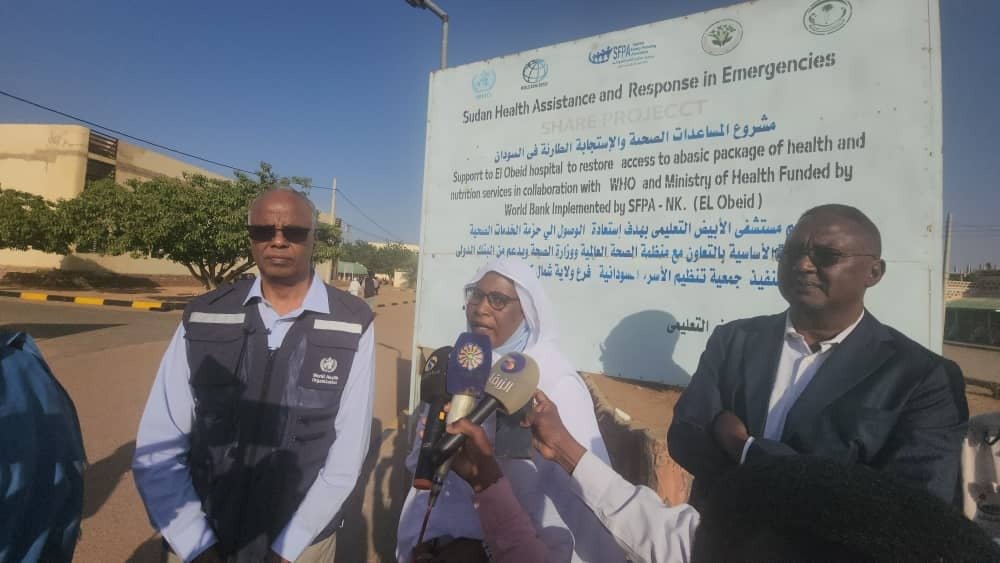
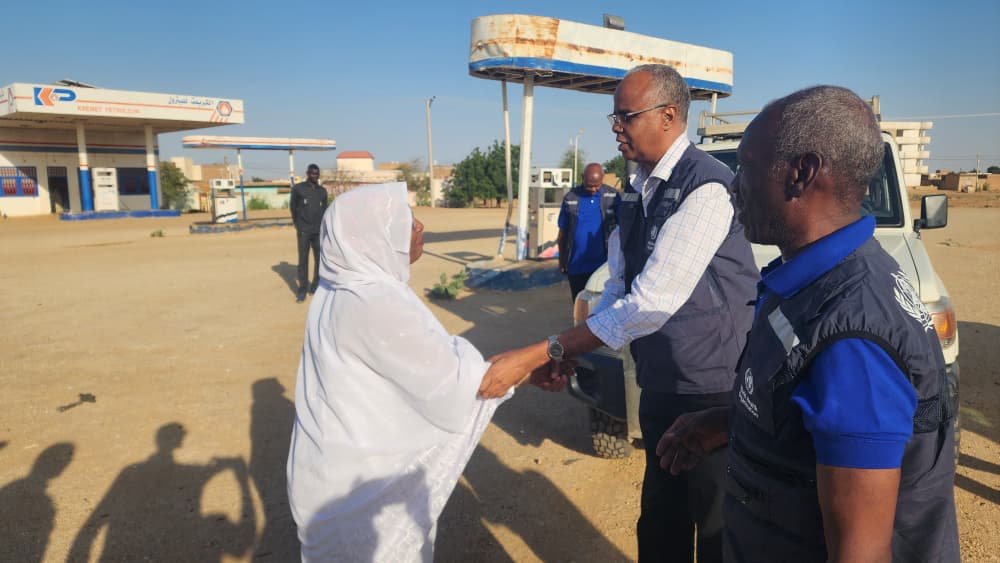
As his mission to El Obeid concludes, @whosudan Representative Dr Abdinasir Abubakar visited a displacement camp and witnessed firsthand the immense health needs of displaced families and the efforts of health partners to deliver essential care under difficult conditions.
El Obeid hosts most of the more than 141,000 internally displaced people (IDPs) in North Kordofan's Sheikan locality. Health authorities and partners are responding to the needs of displaced families and host communities through mobile clinics and other essential health services.
Despite significant challenges, @WHO has delivered critical emergency and nutrition supplies and continues to support the cholera response. WHO is also strengthening local preparedness and response capacities to help sustain an effective response.
#Sudan
Prolonged conflict and economic hardship are exacerbating health and nutrition needs in El Obeid, Northern Kordofan.
@WHO Representative Dr. Abdinasir Abubakar is currently on a mission to El Obeid with his team, meeting with government and health authorities and partners, and visiting key health infrastructure.
Today, he visited El Obeid Teaching Hospital and Kuwaiti Specialized Children’s Hospital, where he met hospital management and frontline health workers. WHO continues to support both hospitals with essential medicines, medical supplies, equipment, operational assistance, and capacity building to help sustain critical health services.
Together with the acting State Minister of Health, Dr. @abdinasirgole also joined the monthly Health Cluster partners meeting, which brought together six health partners to strengthen coordination and the collective health response.
Humanitarian health needs remain critical in North Kordofan. Thousands of displaced people in camps and host communities are facing the combined impact of conflict, food insecurity, malnutrition, and disrupted health services.
🚨Urgent and sustained humanitarian support is needed.
Today, I started two-day field mission in El Obeid, North Kordofan, & was warmly welcomed by the State Minister of Health and her team. In a state severely affected by conflict, @WHOSudan is here to listen, assess priority health needs, & identify where our support is needed most
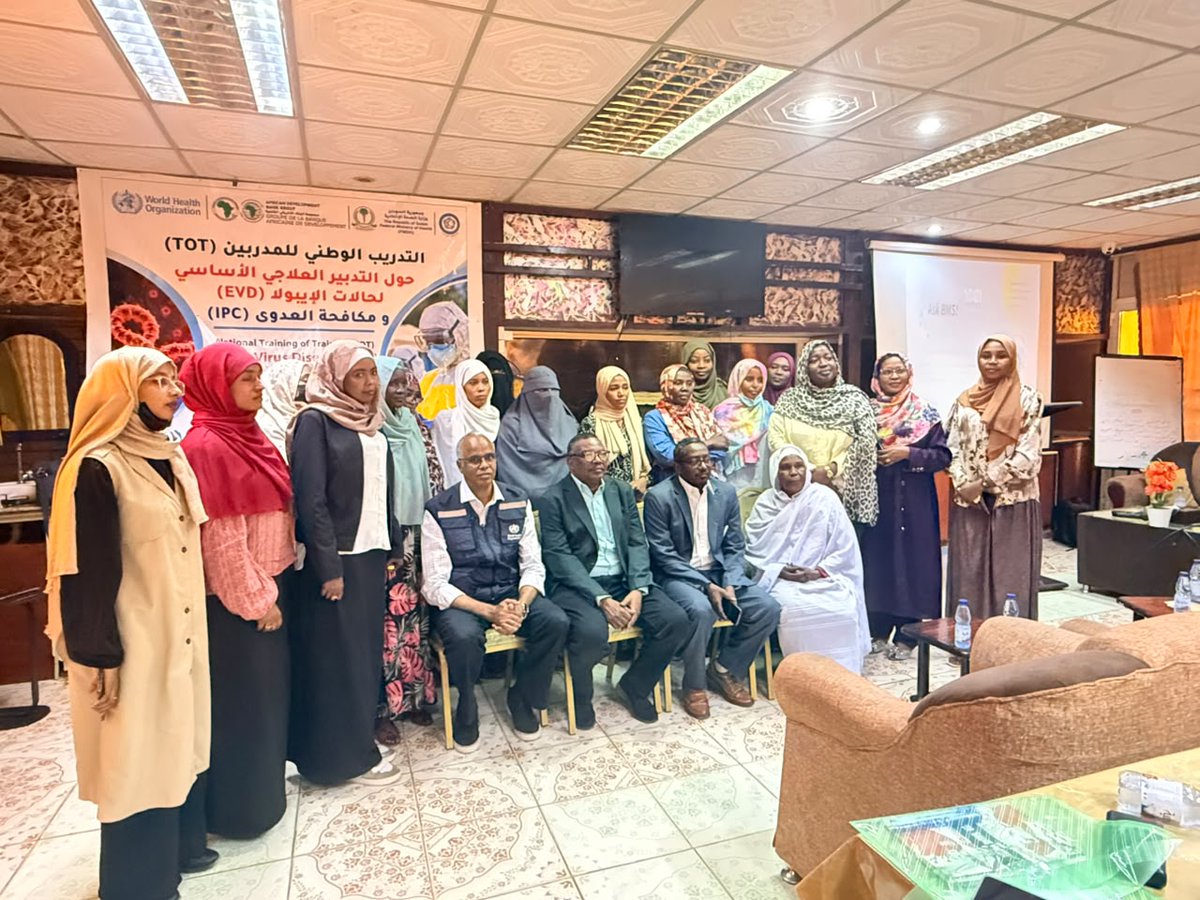
With @AfDB_Group support under the Sudan Health Emergency and Infrastructure Project (#SHEIP), @WHO and @FMOH_Sudan today launched a 4-day training in #Kosti, White Nile State, on Ebola case management and infection prevention and control (IPC), bringing together 40 frontline health workers from White Nile, Blue Nile, and South Kordofan states.
The training will strengthen early detection and effective management of suspected cases in line with WHO standards.
@whosudan Representative Dr Abdinasir Abubakar, speaking at the workshop opening in Kosti, commended the strong partnership between WHO and the Ministry of Health in strengthening preparedness for public health emergencies while addressing the health needs of host communities, internally displaced people, and refugees.
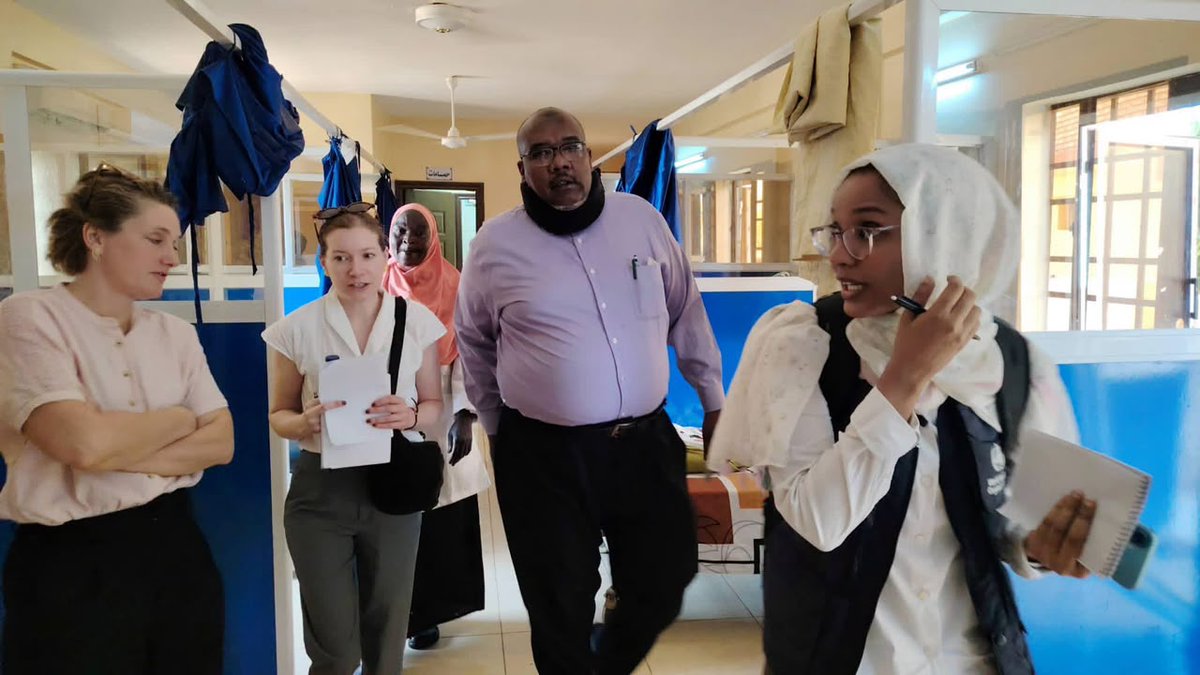
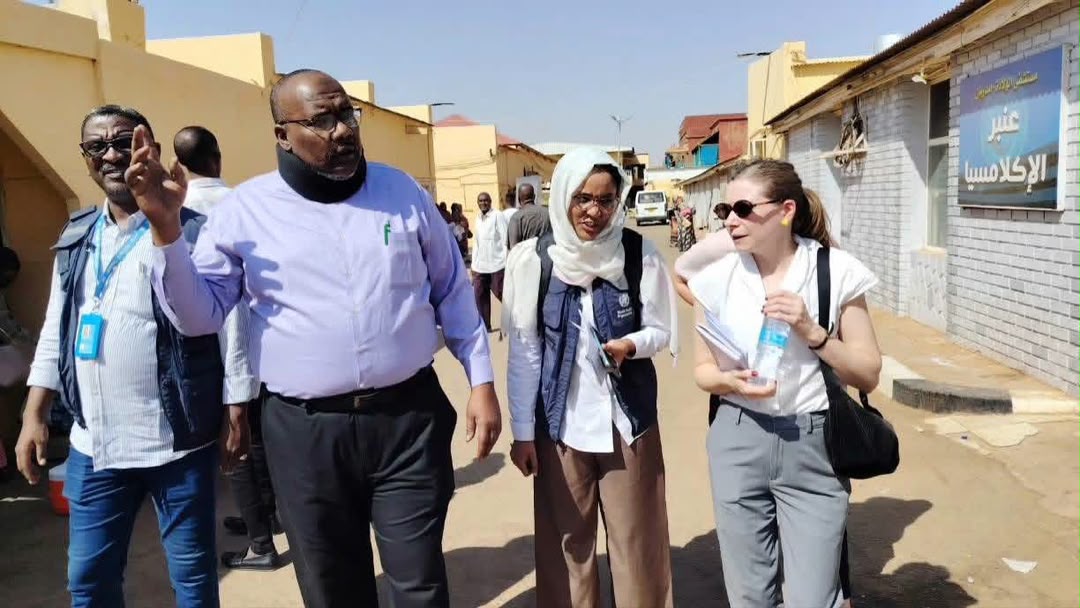
Power outages and fuel shortages are threatening life-saving health services across Sudan. I saw this firsthand at Kosti Hospital, the Dialysis Center, & the blood bank.
Investing in sustainable solar energy is critical to keeping critical health services running & saving lives
.@whosudan Representative Dr. Abdinasir Abubakar is currently visiting #Kosti, White Nile State, accompanied by members of the WHO Sudan technical team. Dr. Abdinasir met with state government officials, health authorities, health partners, and WHO staff in Kosti. Discussed the health needs of host communities, refugees, and displaced communities in the State and highlighted priority @WHO humanitarian response and recovery interventions.
Dr @abdinasirgole also visited a WHO-supported hospital, dialysis center, blood bank, and an internally displaced persons (IDP) camp, where he listened to health workers and community members.
White Nile State currently hosts over 216,000 internally displaced persons and nearly 455,000 refugees – half of the total refugees hosted in #Sudan.
.@WHO, with @FMOH_SUDAN conducted a capacity-building workshop for 65 frontline health and nutrition staff of Kosti and Rabak maternity hospitals in White Nile State on the Baby-friendly Hospital Initiative (BFHI) on 27–29 October.
The workshop also included a self-assessment of the hospitals to evaluate compliance with BFHI standards and identify implementation gaps in line with the WHO guidelines for implementation of BFHI programmes.
BFHI is a global quality-improvement programme launched by WHO and UNICEF in 1991 to protect, promote, and support breastfeeding in maternity and newborn services.
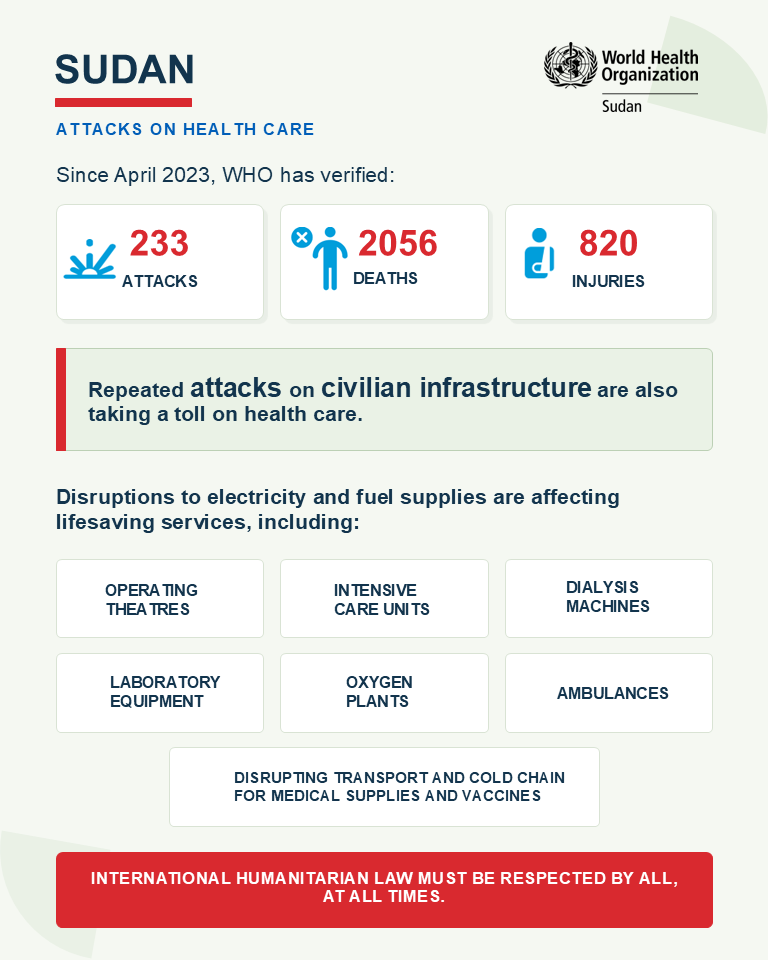
Attacks on civilian infrastructure and health care continue to put lifesaving services at risk in #Sudan.
Electricity and fuel disruptions from attacks are affecting critical services, from lifesaving surgical interventions, intensive care, and dialysis to oxygen supplies, ambulances, and the cold chain for critical medical supplies.
Civilians, civilian infrastructure, and health care must be protected.
International Humanitarian Law must be respected by all, at all times.
#NotATarget
The UK’s @FCDOGovUK visited Omdurman Maternity Hospital on 14 October. Omdurman Maternity Hospital is a @WHO -supported facility that previously benefited from UK support.
Between 2023–2025, FCDO funding helped sustain lifesaving SRH and GBV services across 70+ health facilities in #Sudan, reaching over 500,000 people.
🙏 Thank you, FCDO, for your partnership, which made this possible.