Tickets are on sale for Weapons in Society IV: £15 standard entry, £6 PGR/ECR (both plus booking fees). Sign up by 29 February to avoid disappointment. https://t.co/1nkyt3p3dF
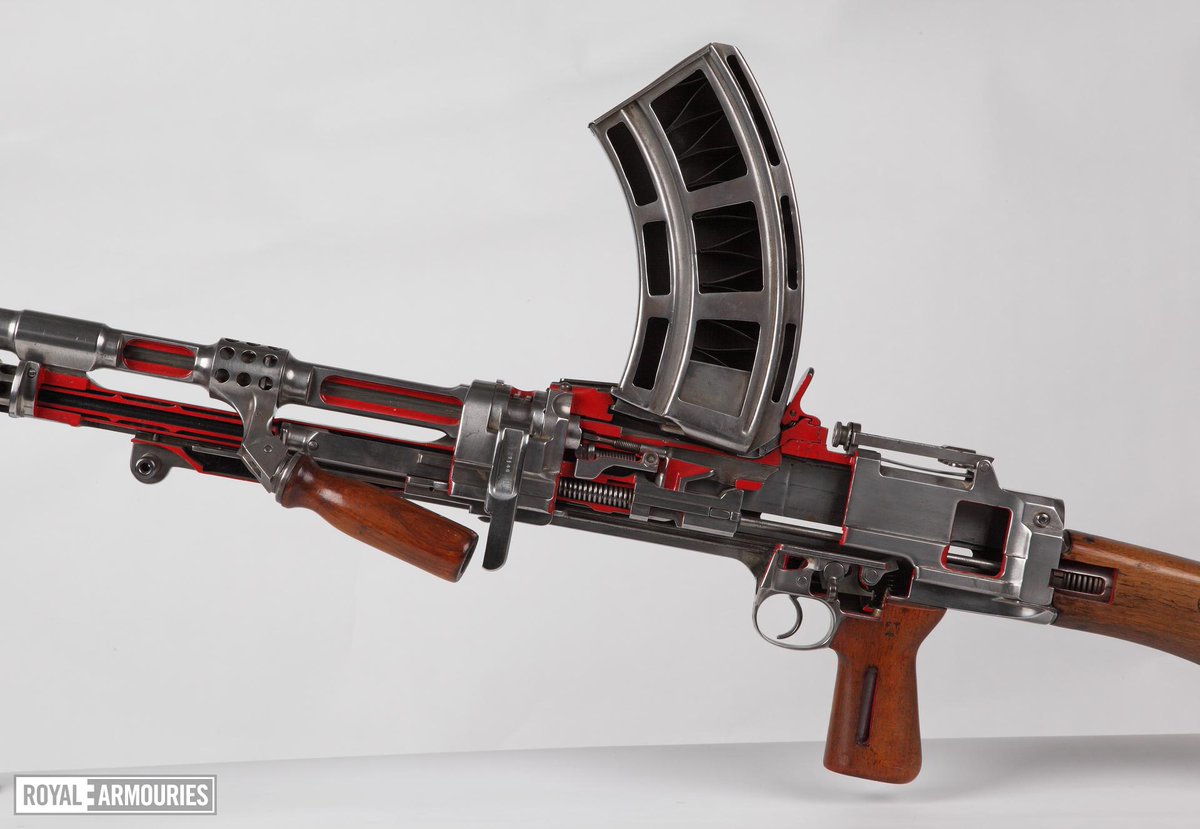
@jameslangham69 will explore guns in popular music, from the SA-80's appearance in rap to Noel Coward's 1941 'Could You Please Oblige Us With a Bren Gun?' Needless to say, we certainly can - this sectioned Mk. III (PR.1187) laying bare its interior workings.
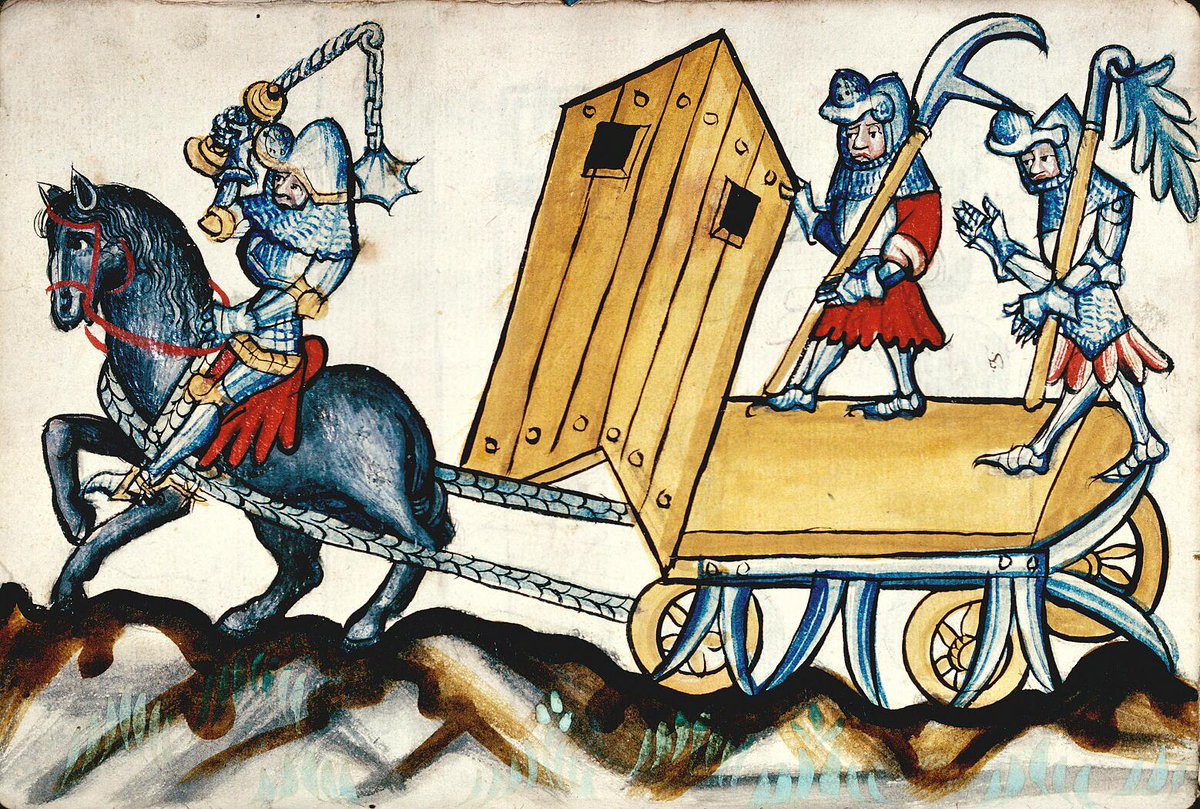
Alastair Holdsworth will enter into the fray over the use of flails in medieval warfare - as potentially illustrated in this 1360 manuscript (courtesy of Arca IRHT-CNRS and the Besançon Bibliothèque municipale d'étude et de conservation).
From the Imperial War Museum, Ian Kikuchi will join us to examine their display of weapons. We have a long history with the IWM, whose first curator Charles ffoulkes was also Master of the Tower Armouries, and crafted this rather macabre model rack (XV.30).
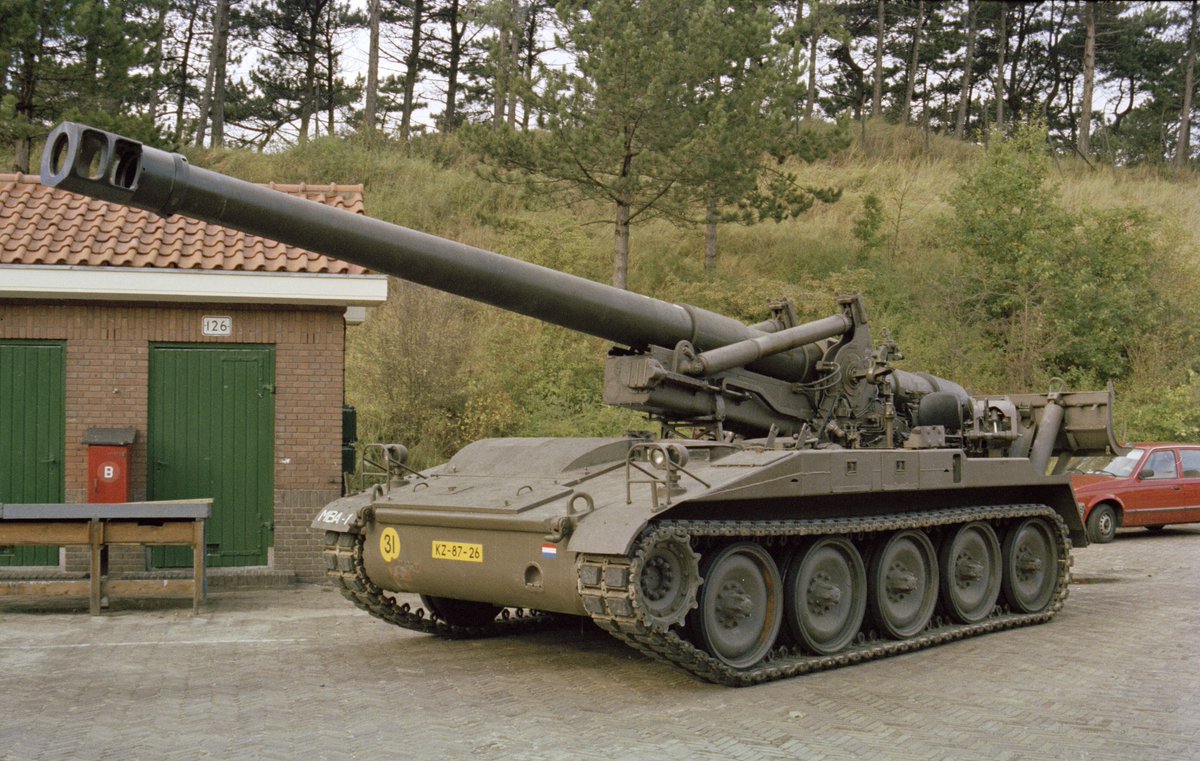
Dr Laura Considine (@LawrahCon) of @CGSCLeeds/@POLISatLeeds gives the keynote: 'The everyday nuclear weapon'. Alas, we hold radioactive weapons but not atomic - though XIX.900, a barrel from the nuclear-capable M110 (cr: Netherlands Institute for Military History), almost counts.
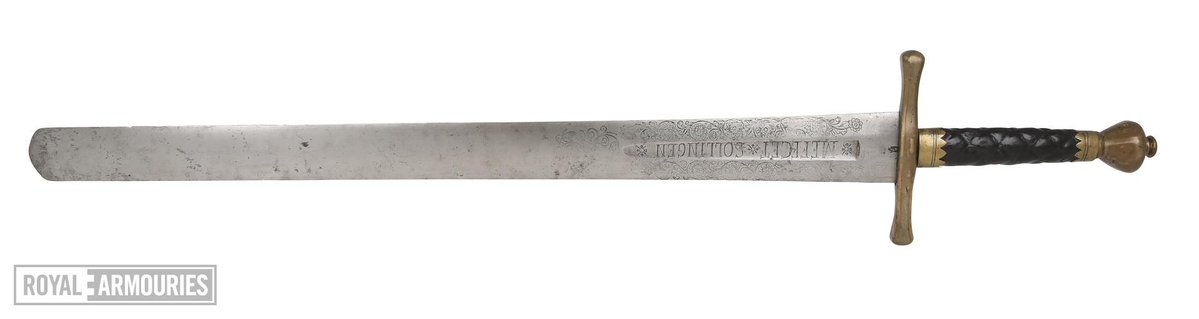
Our first paper in the 'significance of swords' panel sees @robjoneshistory of @studyabroadbath covers the role of civic swords in the high middle ages. This later German executioner's sword (IX.35) similarly acts as both tool and symbol of power.
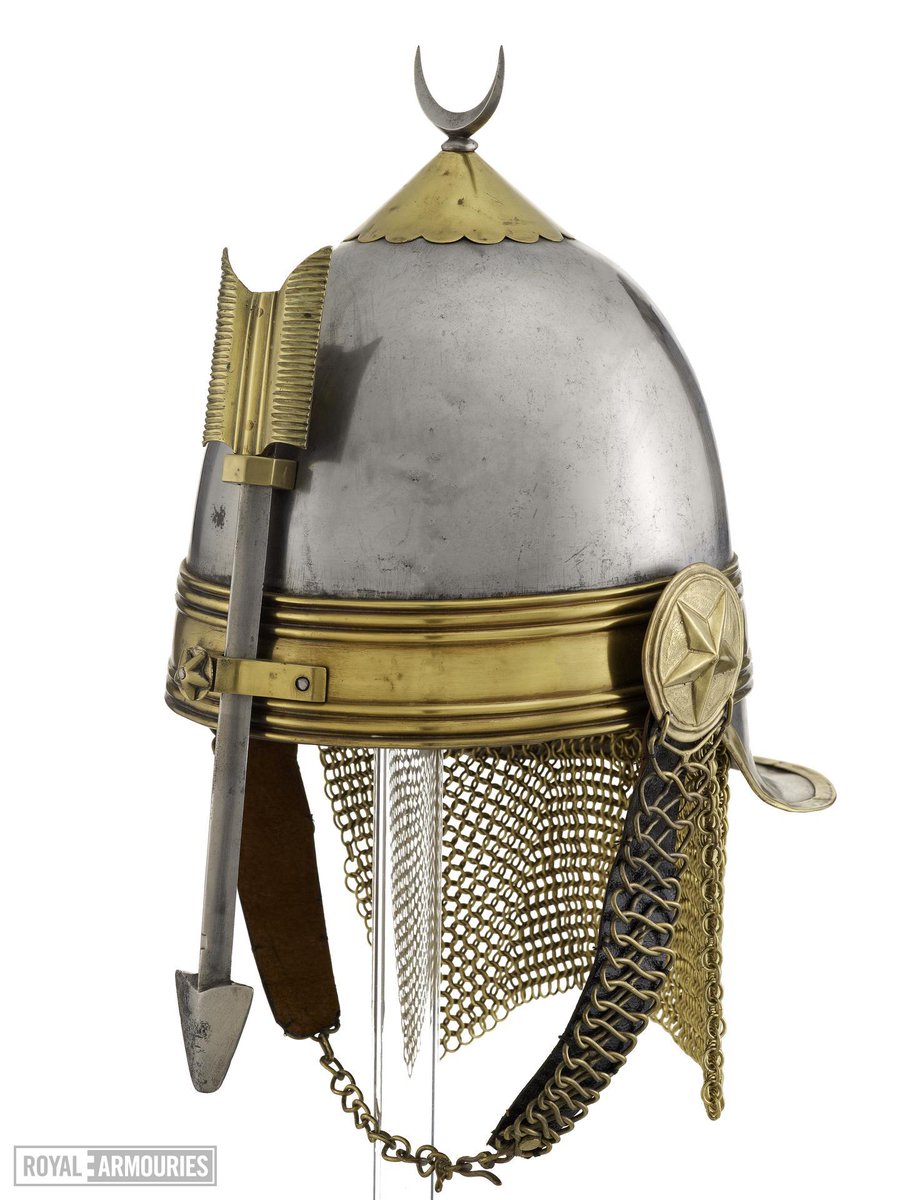
Our final panel, 'Arms/Art/Armour', starts with Ruel Macaraeg's search for the missing arms and armour of nineteenth century Egypt. This helmet (XXVIA.226) is a rare example, though likely manufactured in Birmingham.
In our final paper of the 'Technology and innovation' panel, Dermot Rooney will explore the tactics, ethics and social perception of the 1940s armoured flamethrower. The alarming bullet hole in the fuel tank of PR.1567, a 1960s Soviet flamethrower, shows the merits of armour!
Next comes @KatieLVernon of @yorkmedieval to detail the armed cleric in Middle English romance, juxtaposing the knightly sword and the falchion. Does our later falchion IX.5409, with its narrow elegant blade and gold decoration, blur those categories?
Dr Cheryl Baker (@HelloCheryl)'s paper covers migrants and gun culture in sixteenth century Southampton. Here we have XIX.165, an English bronze saker of 1529 - but cast for Henry VIII by the Arcana family of north-east Italy, who came to England in 1523.
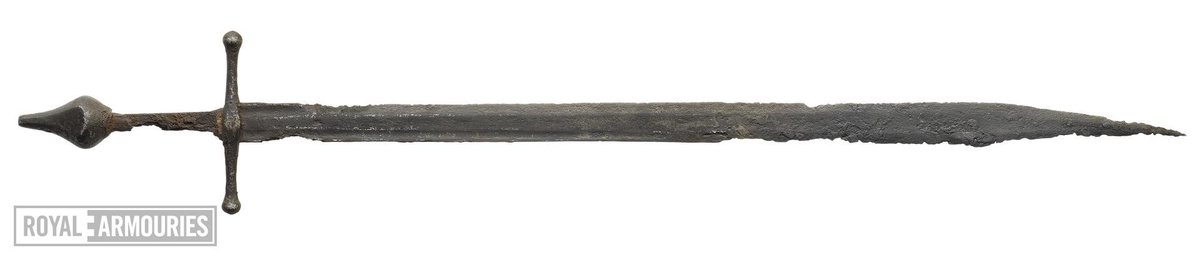
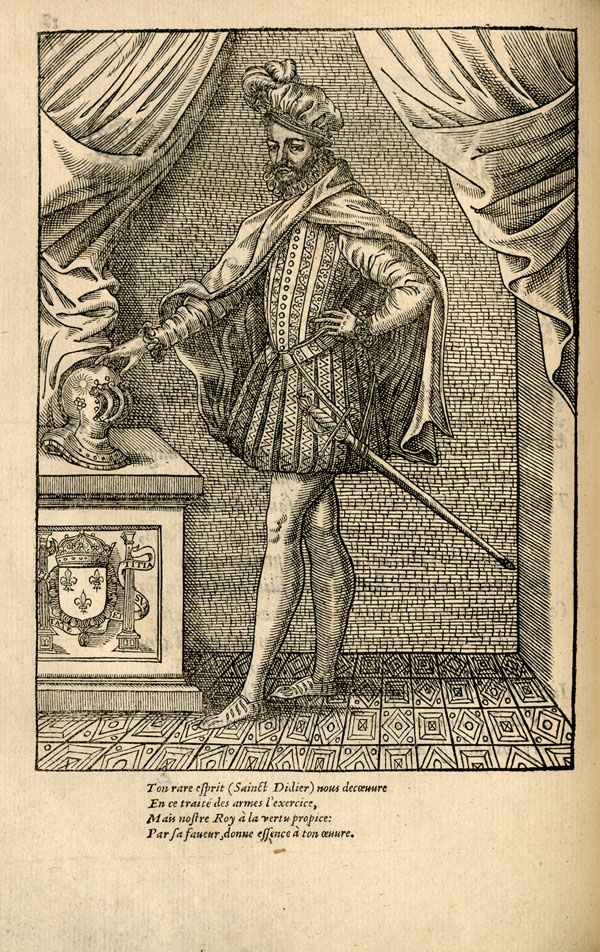
To start us off, here's something for Rob Runacres (@RenSwordClub) of @WinchesterHist and his paper on princely swordplay in Louis XIII's court. Compare this early Italian rapier (IX.3479) with an illustration in Sainct-Didier's 1573 manual (credit: Blois Bibliothèque Municipale)
With the deadline for ticket sales for the @Royal_Armouries Weapons in Society conference fast approaching (29 February), over the next few days we'll illustrate the fascinating range of papers our speakers will deliver - mostly from objects in the museum's collection.
There might be sixteen shopping days until Christmas, but there's only three days left on the call for papers for Weapons in Society IV in Leeds in March 2024. 'tis the season, so make yourself jolly via https://t.co/ko8selUVht
Whether you're there to push forward the frontiers of human understanding, or just want to get your hands on objects from the national collection of arms and armour, mark your diaries for the Weapons in Society IV conference in Leeds on 12 March 2024.
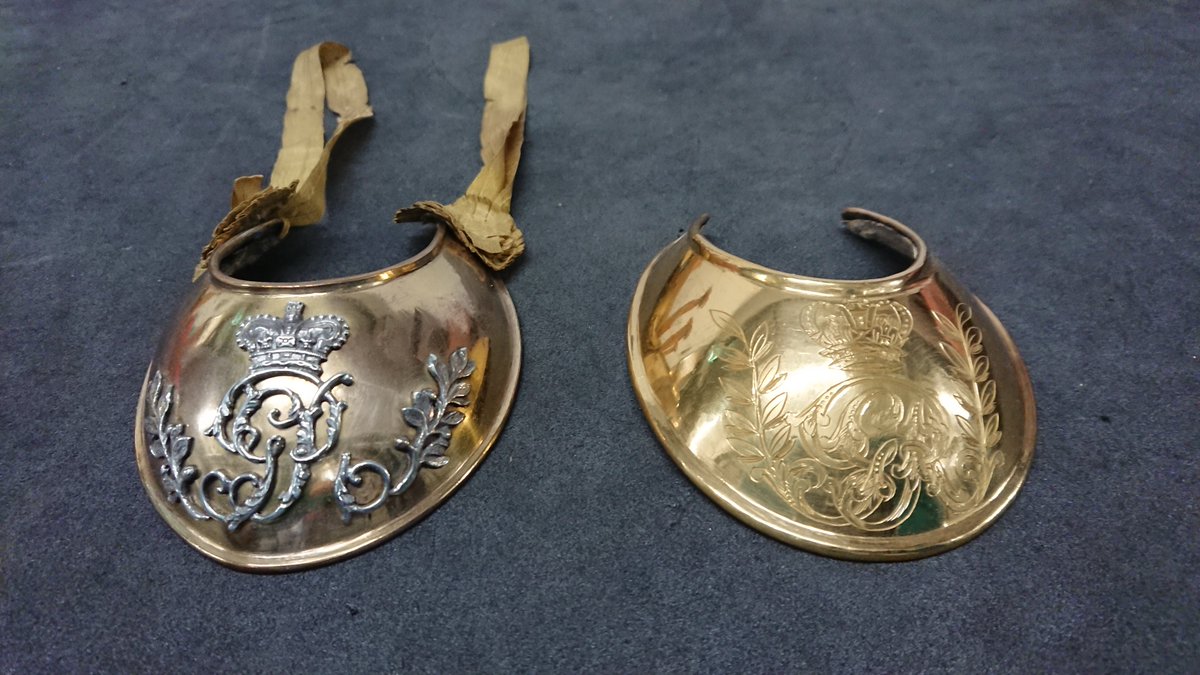
@LeedsUniHistory@RMB_History's paper for our upcoming conference will look at the Britain's Napoleonic fencible regiments and their weapons, badges, flags - and perhaps even armour, if the gorgeous gorgets (XVI.158 and XVI.170) worn by Napoleonic officers still count as armour.
A Friday afternoon read: the the paper to be given by our curator of firearms Lisa Traynor looks at motives and means in the Era of Assassinations (1848 - 1914). However, you might remember her previous examination of assassination's (potential) outcomes. https://t.co/kpPZomFh6b
@ManMetUni@samanthalnelson's forthcoming paper will explore the role of Tudor women in furnishing soldiers with arms and armour - perhaps like this mid-16th century pauldron and vambrace from a demilance armour (III.1710), once part of the Earl of Pembroke's arsenal.