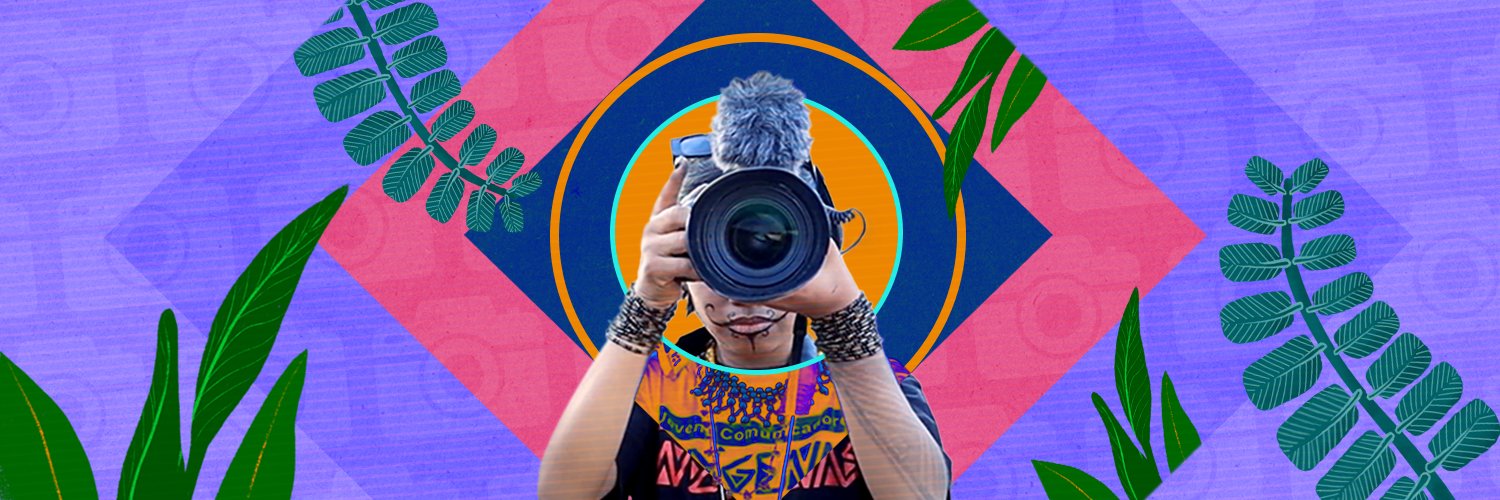
Grounding verification in local knowledge and lived experience strengthens the credibility of this work. Investing in community-led approaches is essential to protecting democracy and building a more resilient information ecosystem. Read the full article: https://t.co/WtE3R4H9kG
Internet shutdowns are increasingly used during elections to restrict access to information and hide human rights violations. But even under these conditions, evidence doesn’t disappear. That’s exactly what initiatives across East Africa are showing. Follow the 🧵to learn more:
When connectivity is cut, documentation becomes harder, but not impossible. When access is restored, evidence can still be recovered, verified, and preserved.
Heading to @rightscon 2026 in Lusaka?
On May 5 (Day 0), join us for an off-site workshop on how truth is being challenged and reclaimed in the age of #AI.
Learn more and register (limited spots): https://t.co/8VqScucPAM
Why does this matter? Our December submission to the @OversightBoard showed how AI-generated content exploits blackouts, overwhelms fact-checkers, and casts doubt on real footage. Meta’s recommendations can now support transparency and accountability. Remember the case: https://t.co/rlfkteqmbn
The @OversightBoard, which reviews Meta’s content moderation, has issued its decision on an AI-generated video claiming to show missile damage in Haifa during the June 2025 Israel-Iran war. The ruling validates WITNESS’s long-standing warnings about deceptive AI. Follow the 🧵
We call on @Meta to implement these recommendations fully and urgently, not as a future roadmap, but as an immediate operational commitment proportional to the scale of harm already documented.
📲Read more: https://t.co/339tWnnlLj
At the report launch, our Executive Director @SamGregory discussed the impact of AI on humanitarian action in an increasingly complex information environment and the need to maintain the ability to know what is real.
📲Read more here: https://t.co/m5Xxt7Kewf
The World Disasters Report 2026, launched by @ifrc, highlights harmful information as a humanitarian crisis threatening aid, trust, and communities, and features WITNESS insights on AI and synthetic content 🧵
For years, we’ve worked to prepare human rights defenders globally for the realities of #AI + emerging technologies.
While we aren’t new to this space, the landscape we work in + the challenges we face are ever-evolving and the stakes have never been higher 🚨
Check out our work on AI at https://t.co/dYIDG0BeBe
WITNESS is thrilled + honored to announce we have been named as a beneficiary of the @ProtonPrivacy Lifetime Charity Fundraiser 💜
https://t.co/0FhffDQes0
@ProtonPrivacy As a leader in privacy and security, we are delighted to have the generous support of the @ProtonPrivacy community behind us – fueling our mission to protect truth and secure #accountability ✊🏽
Learn more about our work at https://t.co/auvitjU98a
In an AI-shaped world, video is still crucial for accountability, but its credibility is under pressure.
🔗Read the full @nytimes article where our Executive Director, @SamGregory, discusses this “deeply contradictory” moment and how we can still show what’s real with video: https://t.co/rH2F0RfESY
So what can we do to make sure we get this right? At @witnessorg, we’re calling for:
➡️Pipeline responsibility (not just platform enforcement)
➡️Interoperable provenance standards
➡️Honesty about the limits of automated detection
➡️Meaningful civil society participation
👩🏽💻Read our full statement at: https://t.co/SLJsI523Sr
“Safe and trusted” AI ≠ Rights-respecting AI 🚨
In India, we see this playing out in real time. In contrast with the country’s official AI rhetoric, the ground reality of AI-generated hate, discrimination, + surveillance against marginalized communities signals a stark gap between what “safe and trusted” AI promises vs. what it is actually delivering.