For the past 30 years, judges have determined whether to impose forfeiture as punishment in criminal matters. However, this is inconsistent with centuries of common-law practice and a 2000 Supreme Court ruling. Allowing this decision to stand will expose defendants to billions of dollars in annual forfeitures without the procedural safeguards the Constitution demands.
#criminalliability #economicliberties
The #Constitution gives Congress the power to regulate interstate and international commerce, so why is the Colorado Supreme Court allowing the County of Boulder to unconstitutionally regulate and tax the energy industry? If this lower court’s decision is left to stand, it will have serious consequences for our nation’s corporate infrastructure and #economy.
WLF was joined by the @NFIB Small Business Legal Center and @NAWorg on this brief.
#commerce #environmentalregulation
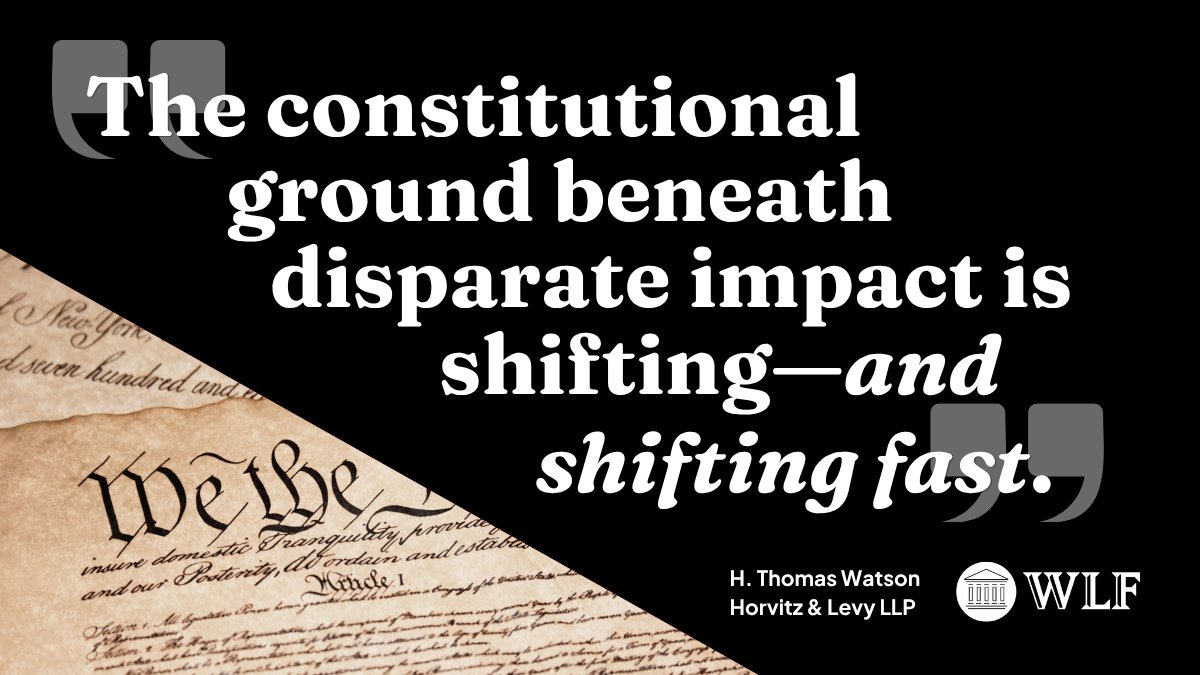
Do disparate impact provisions violate the Fourteenth Amendment? #California courts have consistently applied disparate impact analysis on cases for decades, but #SCOTUS jurisprudence has been laying the groundwork for a successful constitutional challenge to these provisions. @horvitzlevy attorney Tom Watson dives into the constitutional arguments in this new WLF publication.
#litigation #Constitution #equalprotection
Rule 23 requires plaintiffs suing under the Fair Credit Reporting Act (#FCRA) to prove an injury before they may be joined in a class action. But the District Court ignored this requirement, violating Article III of the #Constitution. Allowing the District Court’s certification order to stand not only enables the exploitation of the class action process but also threatens the integrity of the consumer-reporting system that businesses and consumers rely on.
@USChamber@ABABankers@JennerBlockLLP
#classactions #creditreport
Why does HHS's 340B drug discount program validate SCOTUS's Loper Bright decision?
@WLF Senior Litigation Counsel Jay DeSanto examines why an #HHS agency's definition of "patient" under the program is fundamentally flawed and harmful to companies and patients alike.
#pharma #healthcare #AbbVie #HRSA
Outside investors are increasingly financing plaintiffs' lawsuits against businesses, adding new financial pressures, strategic complications, and ethical questions to complex litigation.
A new @WLF working paper examines the rise of third-party litigation funding (#TPLF) across the U.S., UK, and EU and what companies facing funded claims should know.
@Mayer_Brown
#litigation #classactions
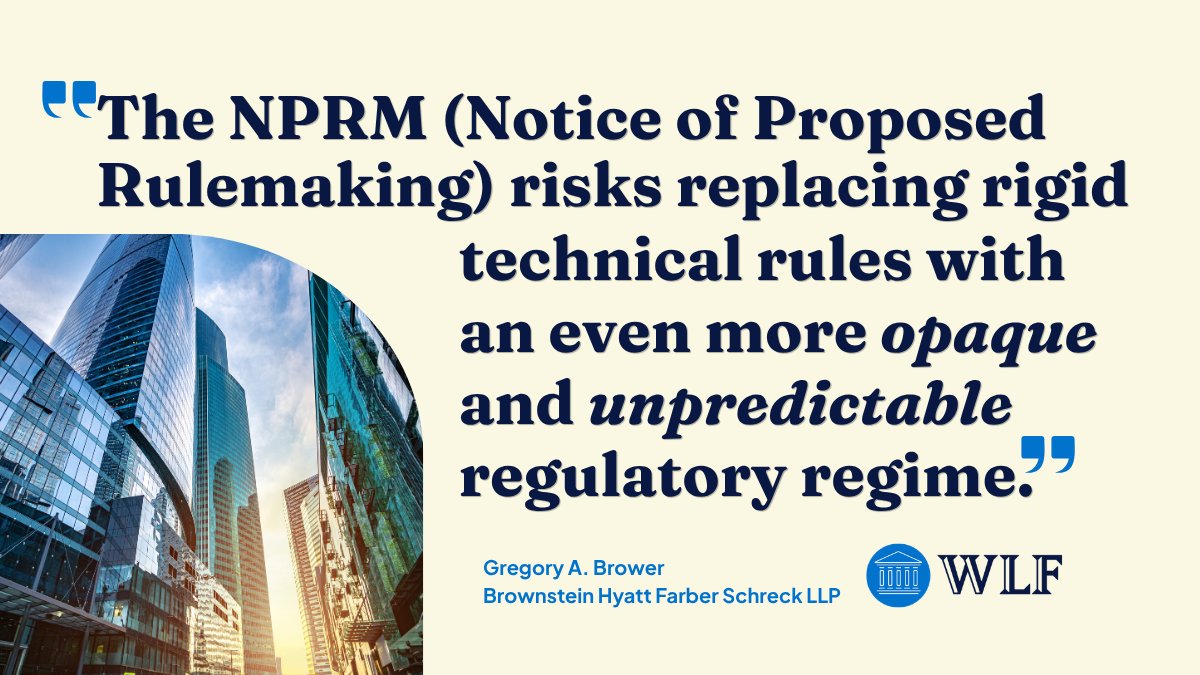
How effective is the Treasury Department’s Financial Crimes Enforcement Network’s “Notice of Proposed Rulemaking” when it comes to preventing money-laundering and financing terrorism? @BrownsteinHyatt attorney Greg Brower takes a closer at this new proposal.
#Securities #banking #fraudprevention
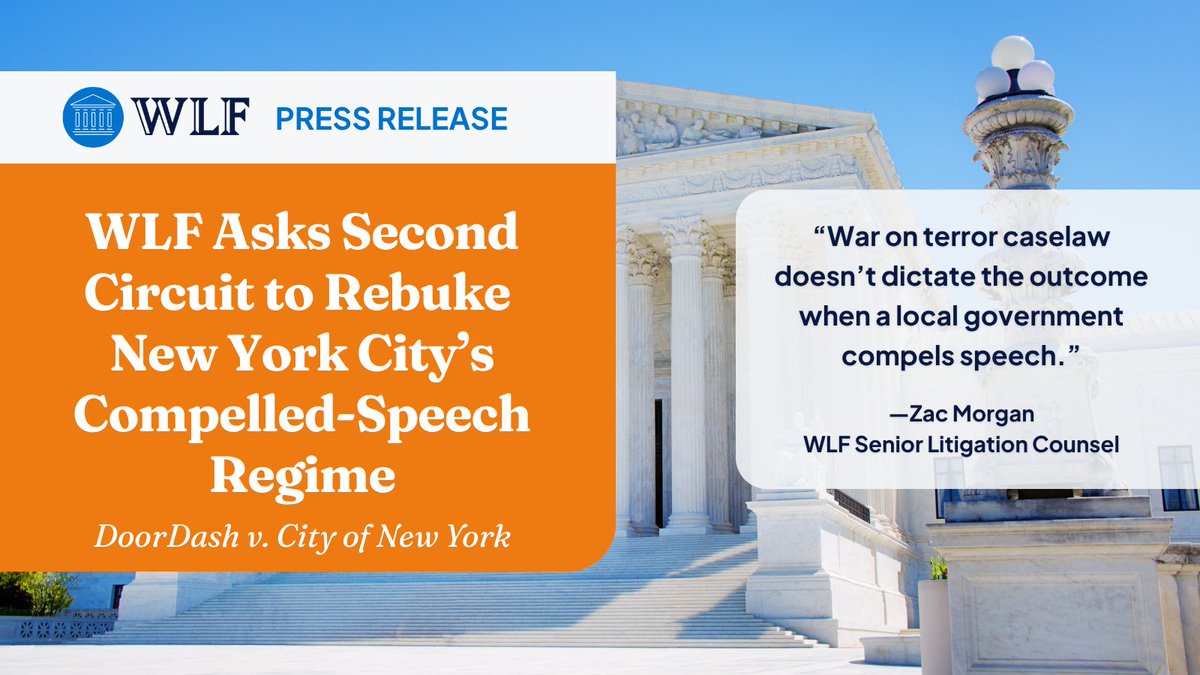
Can the government tell you how much to tip your delivery driver?
New York City thinks it can by forcing Delivery Services to push tipping screens earlier in the transaction process and emphasize its preferred 10% tip. A lower court held that this did not violate the #FirstAmendment by incorrectly relying on a 9/11 national security case. Tipping is not a national security issue.
The government regulating the communication of prices rather than prices themselves is in fact the government regulating speech.
#NYC #compelledspeech #DoorDash #UberEats
6/6 - Paul Clement is right: "There are certain things even the unitary executive cannot do."
As staunch defenders of the unitary executive, @WLF agrees. The vesting of executive power in the President is merely the power to faithfully execute those laws.
#PerkinsCoie #DCCircuit
1/6 - A 3-judge panel of the DC Circuit heard argument in Perkins Coie v. DOJ. That case involves challenges to executive orders that, as WLF’s brief put it, “singled out four private law firms [@PerkinsCoieLLP, @SusmanGodfrey, @WilmerHale, and @JennerBlockLLP] for punishment” because the President “doesn’t support the firms’ prior legal representations and pro bono work.”
The orders directed that “attorneys at those firms [be] stripped of security clearances, debarred from government contracting and government employment, and excluded from federal buildings.”
5/6 - In our brief, we explained that the orders should fall wholesale and the injunctions should be affirmed because they violate the #FirstAmendment. The government tried to downplay the First Amendment, claiming that this case merely involved an interference with freedom of “commercial association.”
But as Paul Clement (arguing for the law firms) explained in a colloquy with Judge Pillard, whatever the merits of a distinction between commercial and noncommercial activity, the President can’t impose punishments against commercial concerns for their expressive speech—here, the advocacy for clients and causes the White House opposes.