It's time to get outside and visit your state parks! 🌳Join the @MassDCR Park Passport Challenge (June 21–Nov 30): visit 12 parks, collect stamps, earn a sticker & enter a prize drawing. Free & fun for all ages! 🥾🌞 Learn more: https://t.co/xFKRH4oak8 #MAStateParks#Summer
Your baby needs a little tummy time daily.
Yesterday I wrote about crawling, noting that with sleep recommendations now (wisely) advising infants sleep only on their backs, babies are spending less and less time in a downward facing position - making it all the more important that parents build well supervised tummy time into their daily routines.
Tummy time has many benefits.
Primary among them, it strengthens the back, neck and arm muscles that help with holding up the head, rolling over, sitting and crawling.
It also helps to decrease the incidence of flat spots on the back of your baby’s head.
And it can help relieve gas and constipation, just to name a few.
You can begin short, supervised periods of tummy time as soon as your child is born.
These earliest sessions often begin on mom’s chest - but can be done on other safe surfaces as well. Begin with 2-3 minutes at a time and work your way up.
The American Academy of Pediatrics recommends increasing the frequency and duration of these sessions to the point your baby spends a total of 20-30 minutes a day by the time your baby is 7 weeks old.
Be forewarned that, especially early on, tummy time is a workout (and therefore not always well liked by some children) - but with time and experience will help to develop the muscle strength your newborn lacks.
This little one (shared to IG by enjoybabyss) has got tummy time down pat. Check out those strong neck muscles!
Your toddler’s favorite role play model is YOU.
I got such a kick out of watching this video - shared to TT by briannarenee717 - because it brilliantly illustrates two points I’m often making:
First that young children’s dramatic play is more likely to begin by reflecting household routines than fantastical adventures.
And second that young children are expert observers, picking up on even the smallest nuances of our behaviors and day to day routines.
When our hero “feeds” a new babydoll she received for Christmas, the storyline extends well beyond the basics. Look at all the knowledge she’s picked up about the act (and frequent messiness) of feeding - and how she incorporates it into her play.
It’s not just “I’m feeding the baby” but that a spill has occurred. How does she approach the situation? In the same way her own mother has doubtless modeled… by calling for an imaginary paper towel from her supportive dad.
What a lovely window on both her sophisticated play and cooperative family dynamic.
Am I reading with my baby too soon?
(Spoiler alert: No. Never.)
A parent recently reached out with this very question, noting that her infant often seems more focused on her during reading time than on the books themselves.
Perhaps she was just introducing them too early?
In reality, it’s never too early.
But it’s also important to realize that, in the earliest months of life, the goal of reading isn’t about your child attending to the text - or even to the illustrations.
Reading with your infant is a social activity.
It is an opportunity for bonding.
It’s an opportunity to expose your little one to rich and varied vocabulary.
If your baby spends the whole time looking at you, that’s just fine. In fact, it’s beneficial.
As you read, your baby is attuned to the way your mouth is making all these amazing sounds.
Watch this little one closely.
Her eyes rarely leave big brother’s face. I can’t say with certainty that she even glances at the book itself.
But we’d be hard pressed to suggest she isn’t eating the experience up!
She knows from repeated readings that this particular book (“Moo, Baa, La-la-la!” by
@SandyBoynton - who is, BTW, the patron saint of board books) is filled with new and unusual sounds - which she anticipates (and delights in) on every page.
In time she’ll begin attuning to the book. To how its pages work. To its colorful illustrations. And eventually to the strange marks on the page that seem to hold meaning.
But for now, savoring the experience with her brother is plenty. And hugely beneficial to her developing brain.
It’s never too early.
This literate brother-sister duo was shared to TT by nguyetanhbuu.
Calling all Worcester-area child care providers: Help protect children from lead. Collect a soil sample from your facility’s yard, garden, or outdoor play area and have it screened at a free SoilSHOP event in Worcester on 4/20. See full details: https://t.co/AQmhY77yqI
Want to give your child a leg up in kindergarten?
Expose them to a million extra words. It’s easier than it sounds.
I wrote recently about the vocabulary building power of reading aloud to your child.
Books expose children to new worlds through their storytelling - and with those new worlds come new WORDS. Words that you may not have had occasion to use otherwise.
Reading develops this vocabulary quality in part through vocabulary quantity.
A recent study from Ohio State University suggests that children who are read five books a day from infancy will be exposed to 1.4 million more words by kindergarten than those who lack this advantage.
If five books seems like a lot, rest assured that there’s advantage to any reading at all. Children read a single book a day will benefit to the tune of 290,000 more words.
A rich vocabulary lends itself to explosive reading growth when the time comes. That’s because you can’t truly decode words you don’t know.
So read, read, read with your little one. You’ll be amazed by the return on investment.
This adorable little book worm was shared to IG by pitterpatterpals_.
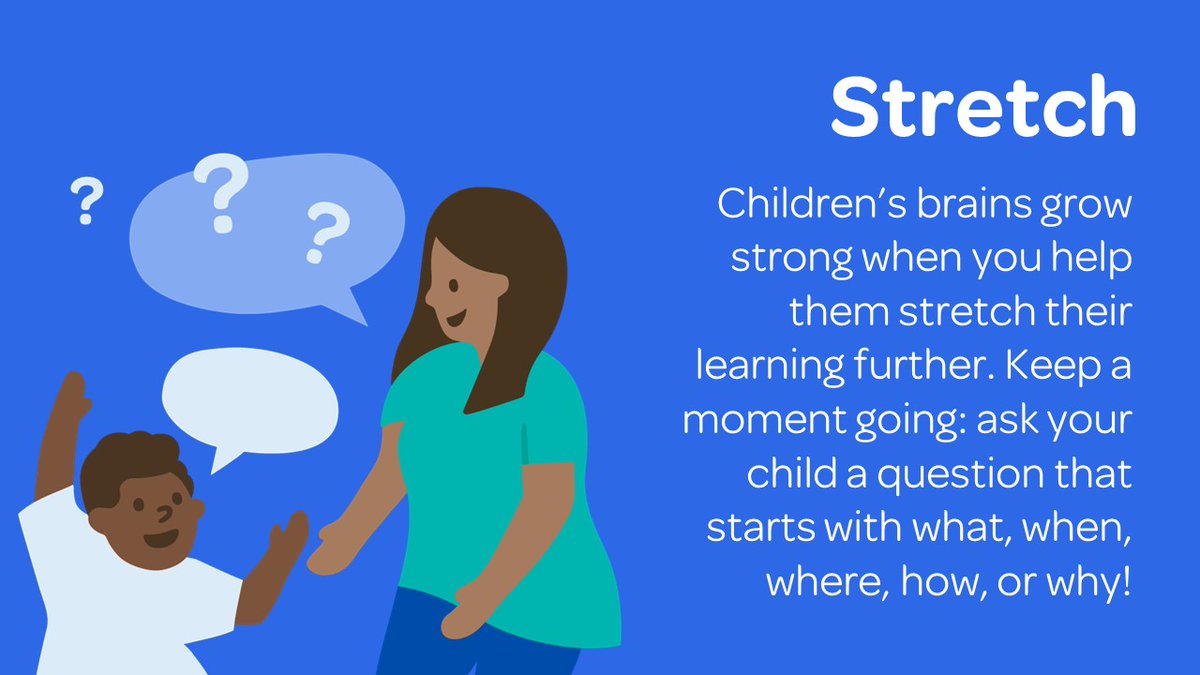
When you stretch a conversation with your kiddo with questions like, "What do you think about that?" you're growing their brain muscles. 🧠💪
This is just one way to turn any moment into a #BrainBuilding one!
Go to https://t.co/yVnyDjOXJS for more great #BrainDevelopment tips!
Skip the flashcards! Learning happens best through natural play and interaction. Follow your child's interests and "serve and return" their communication. #PlayfulLearning#serveandreturn#executivefunctioning https://t.co/8mfQ8Hkbzb
A fun family holiday activity can also be a moment of mindfulness. Creating a calming glitter bottle is a great sensory tool to help soothe children through their big emotions & can also help adults with their own feelings of anxiety or stress. Learn more: https://t.co/kvSJ15kkAY
"Mess-making is undeniably good for kids...Messy play supports the development of their senses, which is critical for learning about the world & brain development. Its freedom and inherently open-ended nature helps build creativity."
Tips on messy play: https://t.co/tdDWRuizQ2
One week from today! Worcester Senior Center, 5:30 pm.
“Equity from the Start” Community Forum co-hosted by @CM_Batista, @ClarkUniversity & Together For Kids Coalition. Join us to build a comprehensive actionable Early Childhood Plan for the city.
RSVP: https://t.co/6nz1kt1v5H
On September 30th, ACE will be hosting an Immigrants' Rights Clinic at 51 Gage Street, geared towards helping as many Haitian families as possible that day.
We welcome in-kind & financial donations! Ship or drop off items at 51 Gage St or make a donation: https://t.co/2WHv0BiEtW
The continued funding for our Union 28 Community Network for Children program and other programs funded by the Massachusetts Department of Early Education and Care, Coordinated Family and Community Engagement grant, is essential for families in our communities.
#COVID19 PCR testing and vaccines/boosters are back at the @umassmemorial Mercantile Center today from 10 am - 3 pm…and they’ll be available every Monday and Thursday next month, too! October dates posted soon.
September is Family Meals Month! Did you know, children whose families have meals together at least 3 times per week are more likely to be a healthy weight and eat more nutritious foods overall? Whether it's breakfast, lunch or dinner, strive for regular mealtimes when possible!
Walking on a busy street? Point out the traffic lights to your child & ask them to count how many red lights you see. Green lights? Green AND red? They're practicing early #mathskills & using working memory to hold all of the different numbers & colors in mind. 🚦