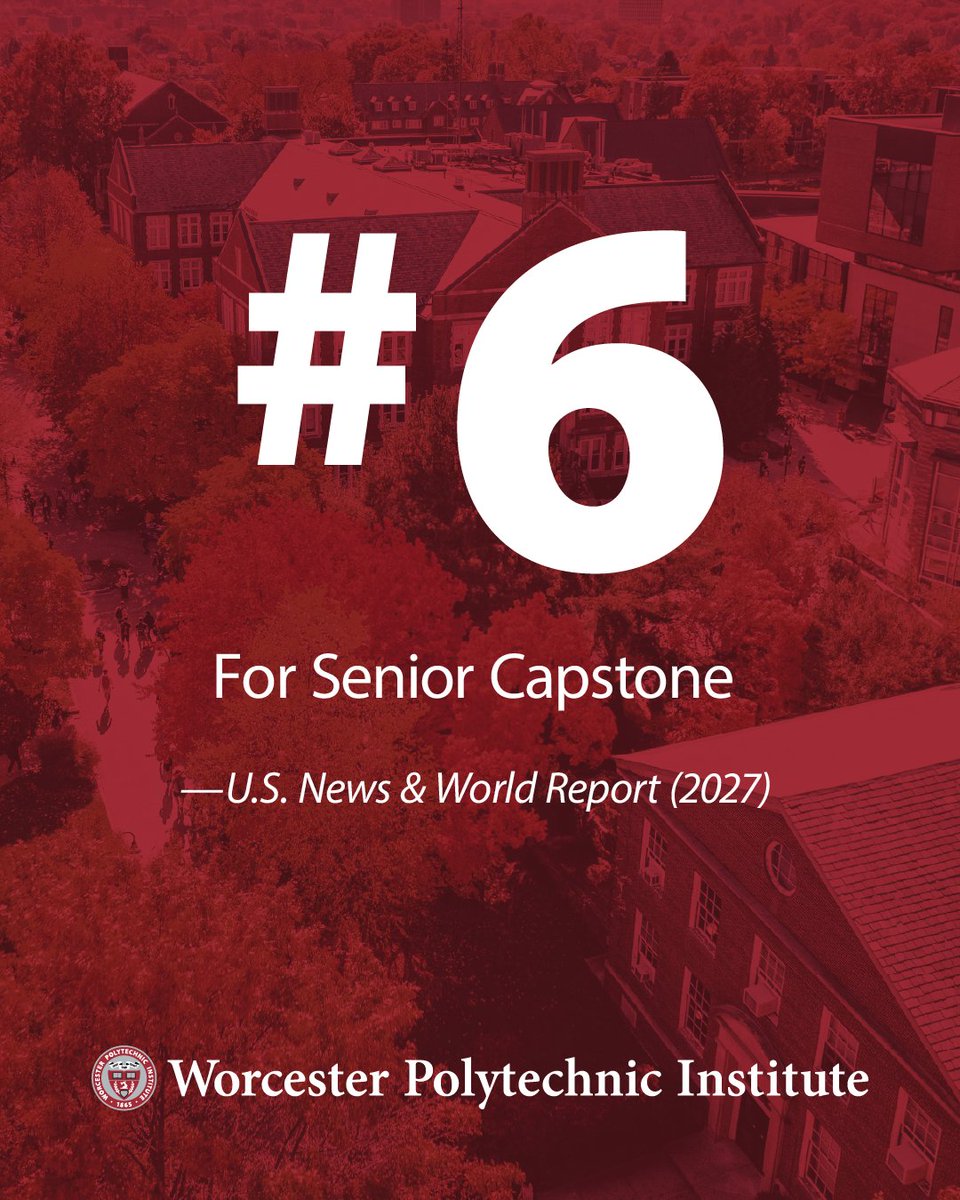
#6 for senior capstone experience.
#13 for co-ops/internships.
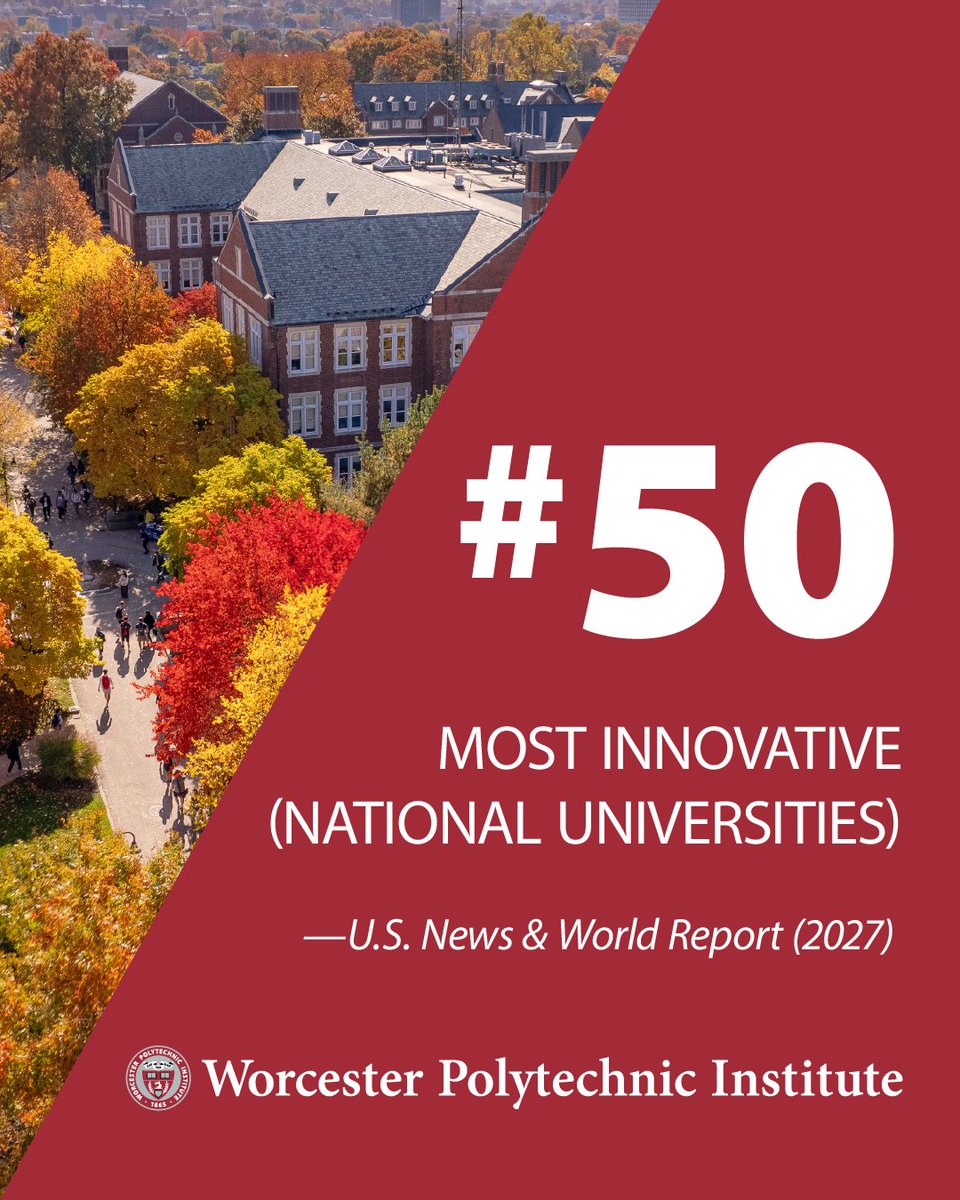
#50 for innovation.
#58 for best value.
The 2027 U.S. News & World Report rankings are out, and WPI’s hands-on approach is getting noticed.
Immersive education. Proven ROI. 📈
Today, we honor and express our deepest gratitude to the brave men and women who have served our nation. To our WPI veterans and all veterans across the country, your dedication, sacrifice, and courage do not go unnoticed. Thank you for your service on this Veterans Day.
More than half of Americans are stressed about money this holiday season. How do you cut back on gifts without it getting awkward? WPI Associate Professor Alexander Smith tells @USATODAY: be honest, start with one or two people, and aim for moderation over all-or-nothing.
WPI is launching a new Master of Science in Supply Chain Management, a STEM-designated graduate program designed to prepare students to connect business strategy, data analytics, and technology to solve complex supply chain challenges.
🔗 Learn more: https://t.co/IcSocowyIS
#SupplyChainManagement #GraduateEducation #SupplyChain #STEM
Congratulations robotics engineering student Antonio Marzoratti! He’s been named one of Boston Business Journal’s 25 Innovators Under 25.
Antonio co-founded a mobility company that is developing PAWE (Portable Affordable Wheelchair Enhancer), an attachment that converts a traditional wheelchair into an electric one for improved mobility. Antonio and his team work closely with WPI’s i3 Lab, finding support and mentorship in the university’s hub for student innovation and entrepreneurship.
Congrats! https://t.co/Jx3NimDxFL
Buy now. Pay later. Spend with stablecoins. Let AI shop for you. The way we pay is changing fast and WPI Business School experts are breaking down what it means for your wallet. Listen to this “Business Class for Consumers” on The WPI Podcast.
🔗 Download here: https://t.co/gtritjaQRi
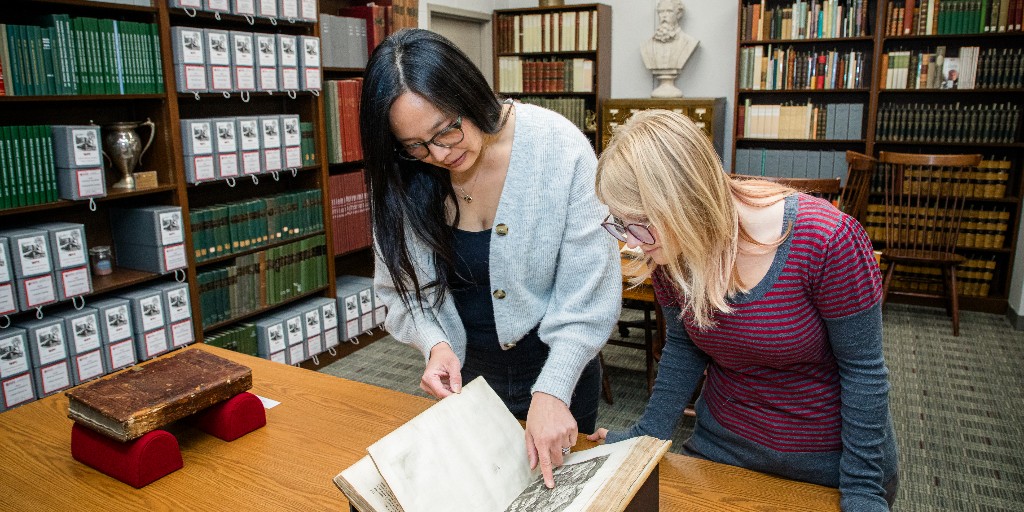
Volcanoes and physics and Dickens, oh my! WPI’s Archives and Special Collections helps students see evolution of science—and lots more.
🔗 Read about it: https://t.co/5hu5lPtFzd
Nostalgia on the menu? Research from Purvi Shah, a marketing professor in The Business School, on the power of nostalgia in brand decisions is cited in an article by TheStreet on the return of an updated classic treat at Friendly’s restaurants.
🔗 Learn more at: https://t.co/PGVLtLxEUd
What does learning look like when students take ownership, connect theory with practice, and tackle real-world problems? At the most immersive STEM university in the US, project-based learning has shaped the WPI experience for decades. Meet Impact by Design, WPI’s new framework for designing meaningful projects. #PBL
Read the story: https://t.co/cmjJlYwtuc.
What if recycled batteries lasted twice as long? WPI researchers built cells from battery waste that kept 70% capacity after 2,590 cycles. 🔋
Professor Yan Wang's team upgraded both the cathode and anode materials from mixed battery waste, outperforming commercial materials.
Read the full story: https://t.co/8kRaXbgpw5
Researchers at Worcester Polytechnic Institute have demonstrated that bamboo can be converted into competitive transportation fuel using hydrothermal liquefaction, a process that converts biomass into biocrude. Economic modeling suggests bamboo-based fuel could sell for as little as $2.75 per gasoline-gallon equivalent at commercial scale, with greenhouse gas emissions 26 times lower than conventional petroleum diesel. A life-cycle assessment found the fuel generates just 3.5 grams of CO2-equivalent per megajoule. Bamboo also requires only about 13% of the cultivated land needed to match current US corn ethanol production, grows on poor or degraded soils, and produces negligible waste due to its very low ash content. Unlike annual crops, bamboo is a perennial grass that requires minimal agricultural inputs and stores large amounts of carbon underground. The research is published in Sustainable Energy & Fuels.
Modeling the brain 🧠🔍️
Stephanie Dalton Cowan illustrated the cover story for Worcester Polytechnic Institute’s journal about new discoveries in brain mapping through electromagnetic brain stimulation. @WPI
https://t.co/VzjKelTBou
What’s the best way to learn in the age of AI? The answer could be a teaching method we’re all about at WPI. Project-based learning. It’s immersive, hands-on, experiential learning. All of our students do it, practicing theory in multiple real-world projects and strengthening their collaboration, leadership, and critical thinking skills along the way.
Want to learn more? A new episode of The WPI Podcast explores all things project-based learning with Kris Wobbe, interim dean of The Global School and director of WPI’s Center for Project-Based Learning. https://t.co/RtLSEXTGK2
Can AI help doctors catch melanoma sooner?
@WPI researchers' TwinSight model placed 3rd of 181 teams in an international skin imaging AI challenge, combining two types of deep learning to analyze lesions. The goal: a handheld tool for primary care visits. 🔬
https://t.co/jSxxfXdASY #AI #Melanoma #DigitalHealth
Whether it's your phone, a laptop, or even a toy just hanging around the house, there's a distinct possibility you have a device with a lithium-ion battery in your home. The experts at WPI are testing just how dangerous these batteries can be if they're not treated properly.
Bamboo isn't just for pandas. New WPI research from the Department of Chemical Engineering finds bamboo-derived biofuel could compete with gasoline and diesel on cost while producing far lower greenhouse gas emissions. Because bamboo grows quickly and needs less land, it could help create sustainable fuels without a food-versus-fuel tradeoff. Read more about the study: https://t.co/1pVMXST4x0
A researcher @WPI received close to $533,000 to provide research experiences to undergraduates examining the role sepsis can play in triggering severe blood clots https://t.co/0WY6WIPCLQ
Could bamboo become a source for renewable fuel for transportation?
WPI researchers Michael Timko and Timothy Woodard explored the possibilities in a new study. https://t.co/5whIsPuoVY
Did you know there’s a partial replica of a 16thCentury Tudor estate on campus? Read more about the history behind Higgins House in the Telegram & Gazette’s Worcester County Wonders series.