Chess has a funny way of exposing the difference between making moves and understanding the position.
Wadim Rosenstein has shown that supporting chess means supporting the entire ecosystem — players, teams, clubs, coaches, arbiters and tournaments.
In a game where everyone sees the board, leadership is about seeing three moves further.
The board is set. ♟️
@WadimRosenstein@WR2026official
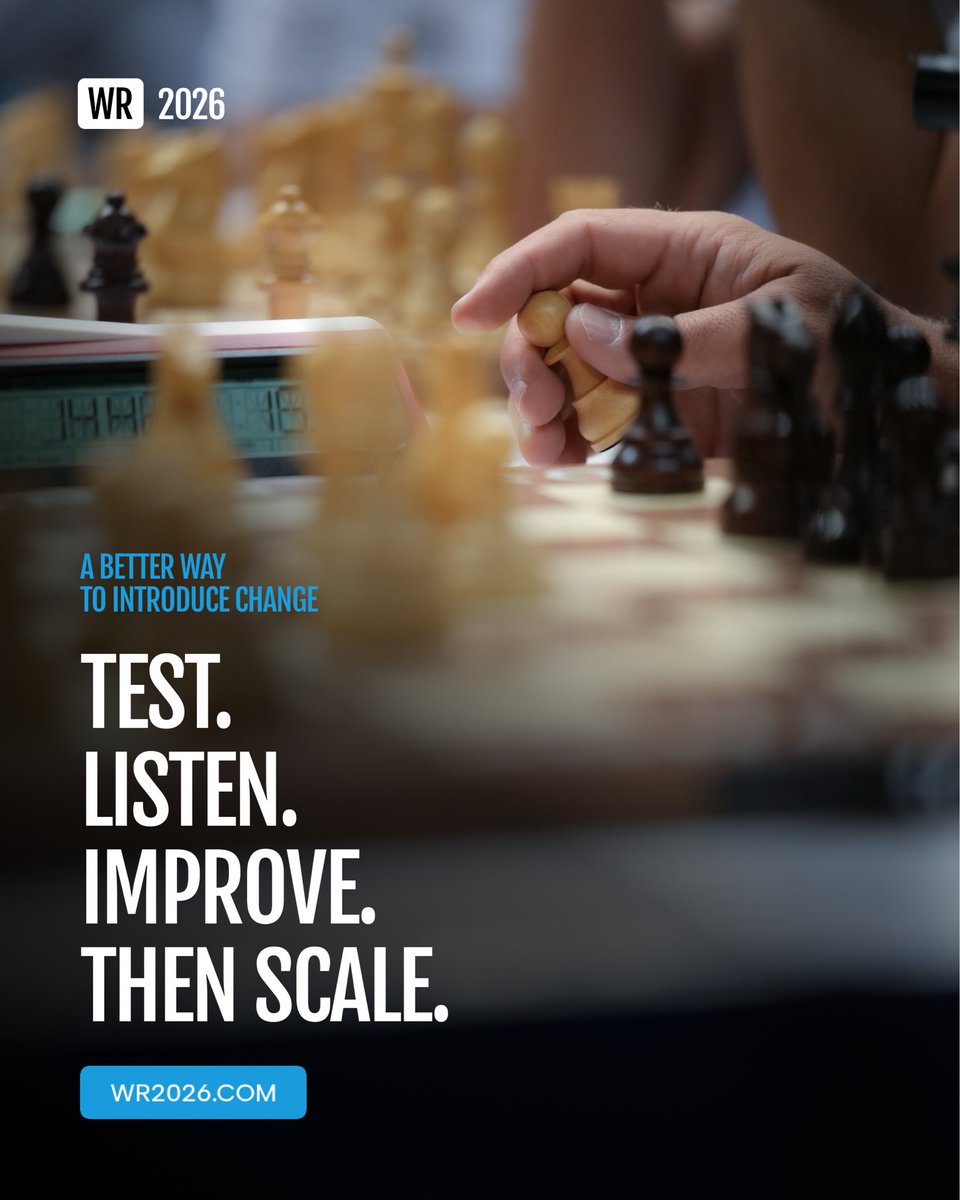
New ideas in chess can be debated for years. Sometimes, they can also be introduced too quickly, without enough testing, communication or feedback.
There is a more practical way.
The principle is familiar from modern agile management, which is about introducing change through testing, learning and adaptation, rather than applying it all at once.
Chess can use the same approach.
At the 2024 WR Chess Masters Cup in London, a faster classical time control was tested in a real tournament. The aim was not to declare a new standard or to replace classical chess. It was to test whether a faster format could complement it, and to see how the format worked in practice for players, organisers, spectators, arbiters and federations, and to learn from the experience.
The same principle can apply to other innovations in chess. Start with a pilot, communicate clearly, listen to the people involved, measure what works, improve what does not, and then take the next step.
Change works better when the people and institutions affected by it are part of the process.
Federations are asked for their vote. But how often are they asked what would actually make their work easier?
Not what looks good in a report. Not what sounds impressive from a stage. What would make a real difference on Monday morning?
More affordable tournaments for your players? Better training for coaches and arbiters? Equipment? Digital services that actually work? Support in working with ministries or attracting sponsors?
Tell us what your federation needs first.
The discussion around Wadim Rosenstein’s support for German chess should be based on facts, not political rhetoric.
Wadim’s involvement in German chess dates back to 2022 and has included support for teams, players, clubs, trainers, arbiters and tournaments. That history deserves to be considered in its full context.
Disagreements between candidates are inevitable in any election. But allegations should be addressed through the appropriate FIDE processes—with transparency, evidence and due process—not through public accusations and counter-accusations.
For me, the fundamental question is simple: which programme can deliver stronger development, greater resources and sustainable opportunities for federations, players and the wider chess community?
Chess deserves an election focused not on personal attacks, but on performance, solutions and the future of our sport.
@WR2026official
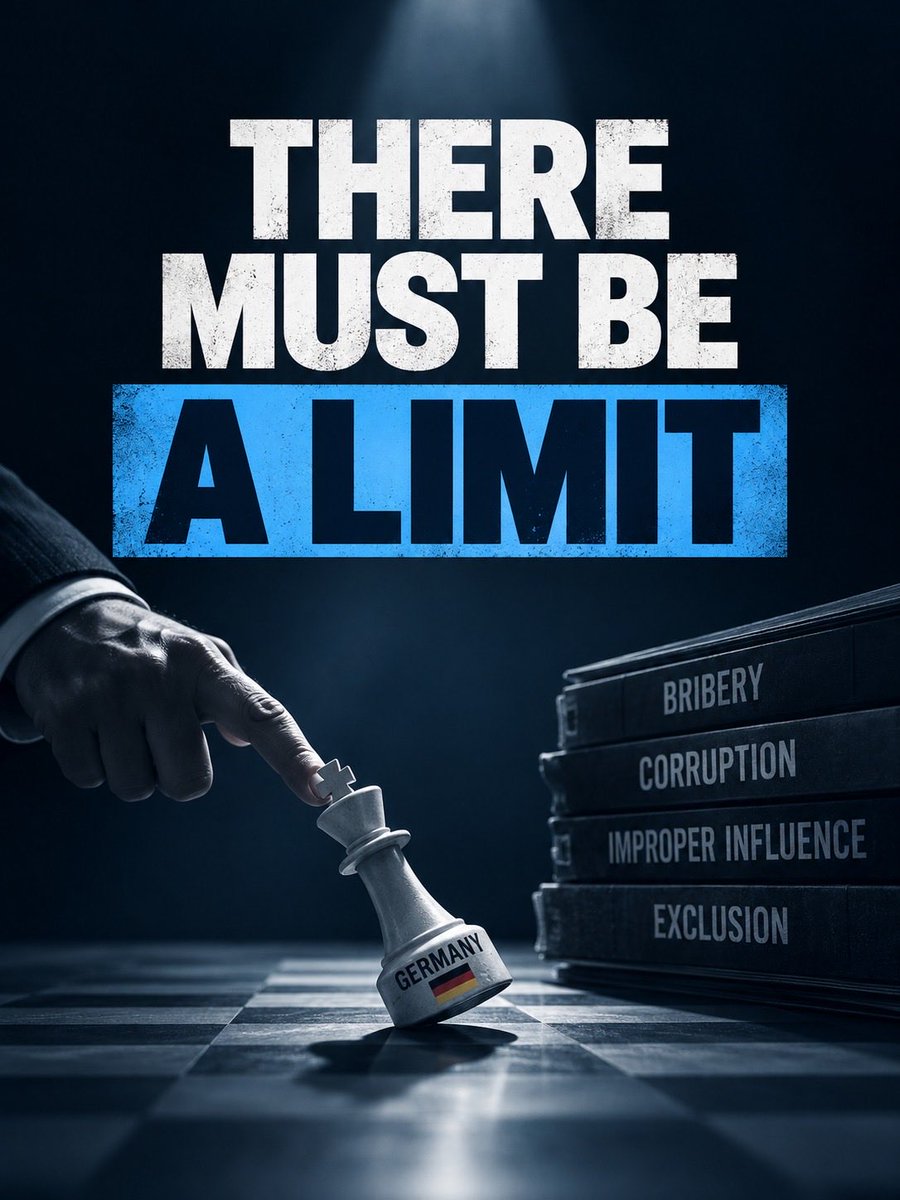
THERE MUST BE A LIMIT
Elections can be tough. Political competition can be very tough. But there is a line between fighting for votes and trying to remove an opponent from the electoral process itself.
Timur Turlov’s campaign accused me of bribery, corruption and improper financial influence because of a transparent sponsorship agreement supporting German chess. They then went further and demanded the exclusion not only of me as a candidate for FIDE President, but also of the German Chess Federation.
The FIDE Electoral Commission has now ruled that both requests were inadmissible: I‘m not excluded. Germany is not excluded. No interim measures have been imposed.
This matters not only because the attempt to remove me from the election failed. One of the most respected chess federations in the world was dragged into this dispute, and its reputation was put at risk purely as part of a political fight against an opponent.
That is not how this should work. Neither Germany nor any other national federation should become an instrument in an election campaign, or collateral damage in an attempt to eliminate a candidate.
The remaining ethics allegations have not yet been decided on their merits and may still be referred to the Ethics and Disciplinary Commission. I am fully prepared to defend our position there. But one thing has already happened: the attempt to use these allegations as a way to change the field of candidates has failed.
And this is where the fundamental line must be drawn. Candidates should compete on their programmes, their teams, their experience and their vision for the future of FIDE. They can argue. They can criticise each other. They can run a tough campaign. But elections should not be decided through attempts to remove an opponent by administrative means and place a national federation under attack in the process.
Timur Turlov wants to lead FIDE. Then he should be prepared to win this election through the votes of the federations, not through attempts to exclude those who stand against him. I am ready for that kind of election.
Let the federations compare us.
Let the federations decide.
And let the winner be the candidate they genuinely trust with the future of FIDE.
A promise is easy to make. A deadline is harder to meet.
The WR 2026 programme sets out what happens in the first 100 days after the election, and when.
Days 1-30. A Global Federation Needs Assessment is conducted for all federations. The results are published with clear priorities and criteria, and a Federation Support Action Plan is defined and shared.
Days 31-70. Every federation is assigned a named FIDE contact. Response times are tracked and published. New communication standards are introduced and applied.
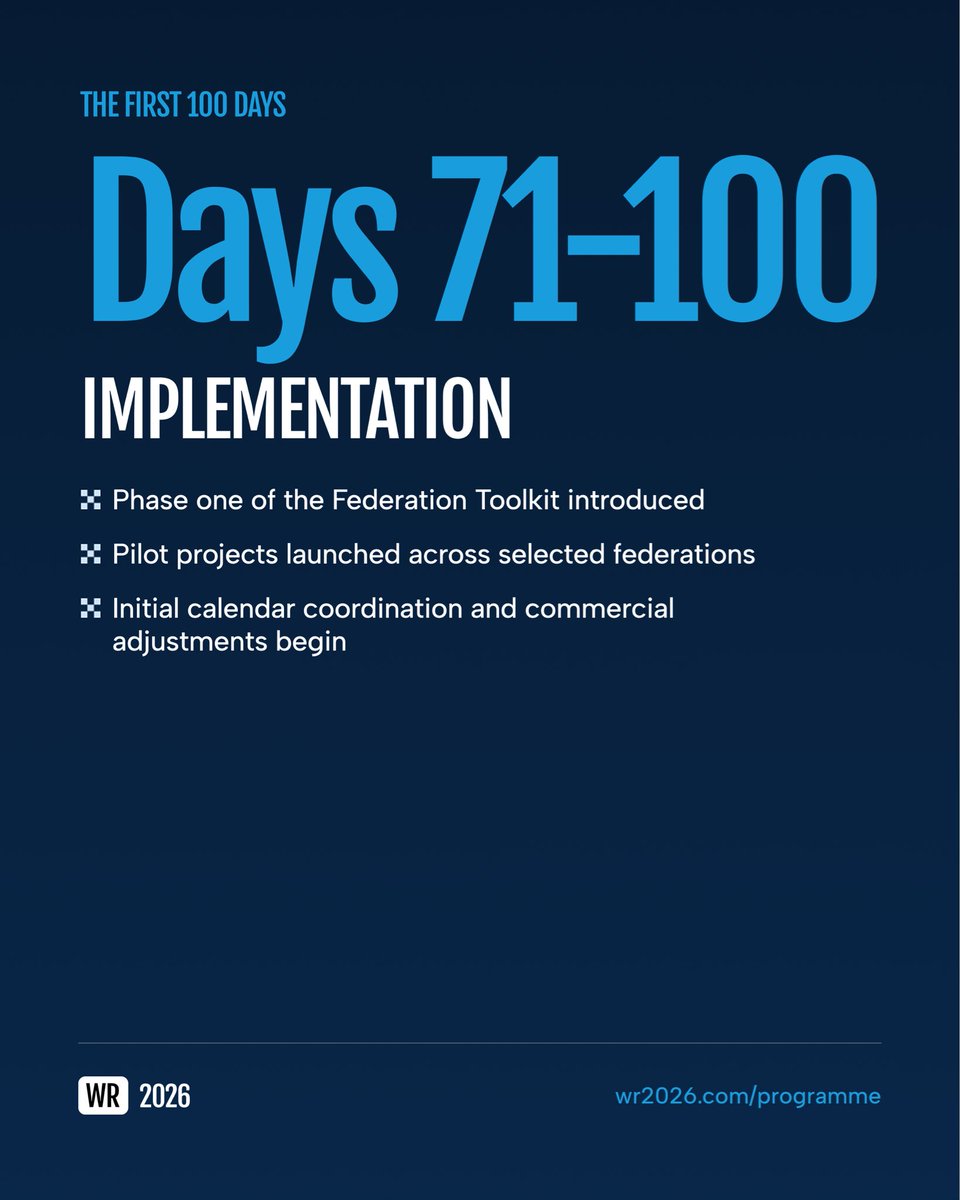
Days 71-100. Phase one of the Federation Toolkit is introduced, pilot projects start across selected federations, and the first calendar coordination and commercial adjustments begin.
By day 100, every federation should be able to say what has changed. That is the point of putting dates on a programme.
Azzedine Brahim Djelloul - President of the Algerian Chess Federation.
Mr Brahim Djelloul's involvement in chess began in his native Oran, where he founded, coached and captained several clubs. He spent nearly two decades building the game at regional level, presiding over the Oran Chess League from 1998 to 2016. He was elected President of the Algerian Chess Federation in 2017, and continues to serve in that role today.
Under his presidency, Algeria has expanded its international footprint, qualifying a record three players for the 2021 World Cup and Women's World Cup in Sochi. He established the country's first internationally accredited chess academy and has placed particular emphasis on school chess and the development of Algeria's young women players. In February 2022, he was elected Vice-President of the Arab Chess Union.
He has championed chess as an Olympic sport under the motto "It's time for Olympic chess". As part of these efforts, chess appeared for the first time at the Mediterranean Games in Oran in 2022 as an exhibition sport and returned to the Arab Games in Constantine in 2023 as a full competitive discipline.
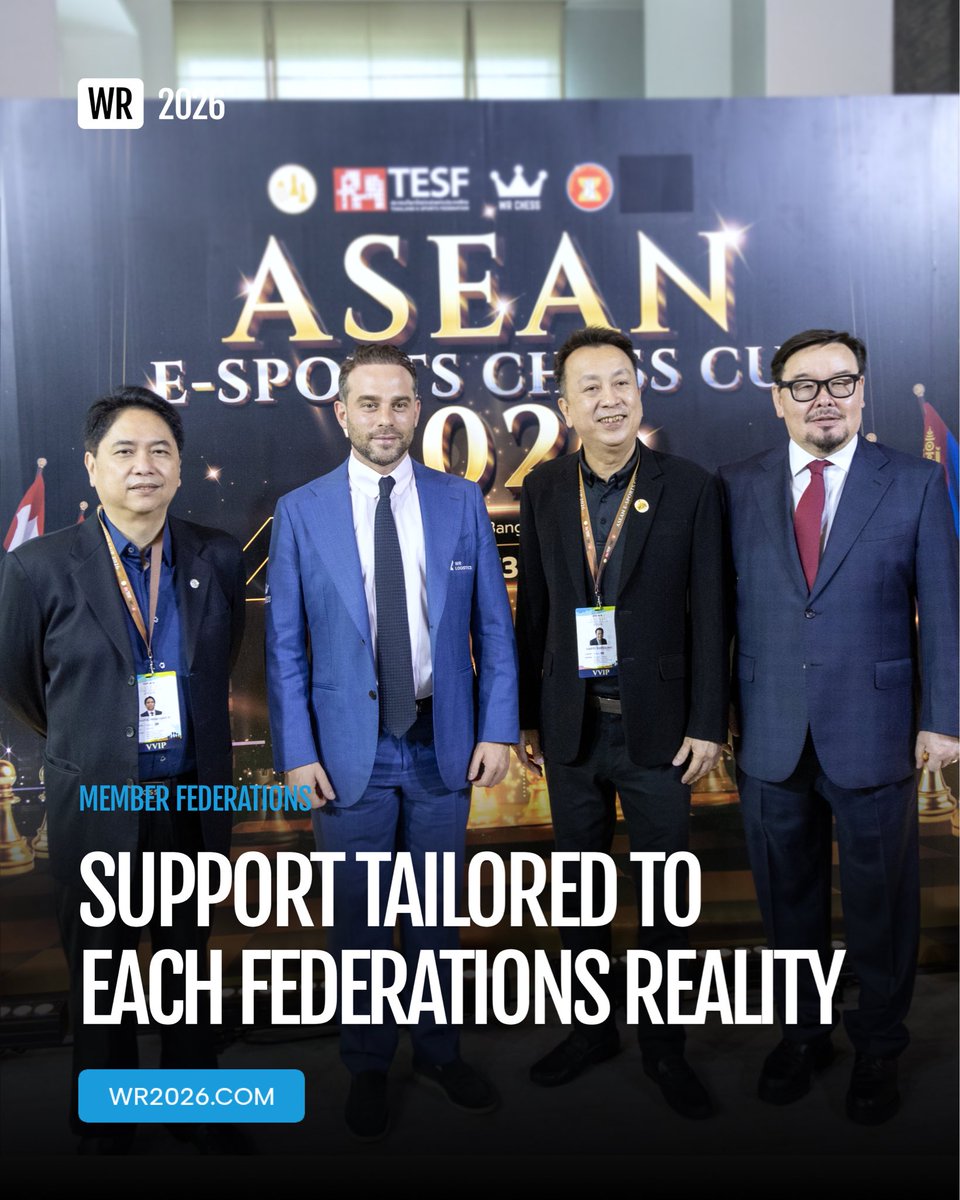
This is the experience Azzedine brings to WR 2026. He knows how much can be achieved when people working on the ground receive the right support. Our programme follows the same principle: support for federations should reflect their real circumstances rather than offer everyone the same standard solution.
In many countries, chess is kept alive by a small number of committed people. They run clubs, organise tournaments and train players, often with limited resources.
A single grant may solve an immediate problem. But it cannot provide a federation with a development strategy.
The WR 2026 programme proposes long-term development plans based on the real needs of each federation. That support may include training, digital services, equipment, or organisational expertise.
The aim is not to offer every federation the same package. It is to help each federation build what it actually needs.
Eloi Relange has led the French Chess Federation since 2021. During that time, the number of active licences has grown by 84%, from 50,000 to 92,000. The federation has also joined the French National Olympic and Sports Committee and obtained official delegation status from the Ministry of Sports.
His experience goes beyond federation leadership. An International Grandmaster since 1998, Eloi was also one of the early pioneers of digital chess media. Between 1999 and 2001, he produced and hosted Diagonale on CANALWEB and directed live coverage of major international events, including the Kasparov-Kramnik World Championship match in London.
This combination of experience as a player, digital expertise and federation leadership is why Eloi is part of the WR 2026 team. He knows that federations do not grow through a single standard formula. They grow when support reflects their real circumstances.
A federation with thousands of players, sponsors and full-time staff does not need the same support as a small federation run by volunteers. Treating them as if they do may be convenient for the system, but it does not help the federations.
Wadim's programme proposes a different approach: start with what each federation actually needs. For some, that may be equipment. For others, training, digital services, help securing official recognition or a long-term development plan.
That is what putting federations first should mean in practice: listening to them and providing support that reflects their reality.
Dear colleagues, dear friends of chess,
While reviewing the officially published FIDE electoral documents, my team discovered a deeply concerning fact: the status of delegates from 13 national federations who are entitled to vote in the upcoming FIDE Presidential Election is still marked as “Pending case in front of FIDE Electoral Commission.”
We are talking about 13 votes - a number that could potentially have a significant impact on the outcome of the election.
For this reason, yesterday I submitted a formal request to the FIDE Electoral Commission demanding full information regarding the grounds for each of these 13 pending cases, the relevant complaints and documentation, as well as clarification on when and how the final decisions will be made.
This situation causes me serious concern.
We must exclude even the possibility that decisions concerning the right of national federations to participate in the election could be used as an instrument to influence its outcome. This is precisely why maximum transparency, equal treatment of all federations and candidates, and strict compliance with the electoral regulations are essential.
FIDE does not belong to individuals or to particular groups. FIDE belongs to the entire global chess family.
Our unity is built on democratic principles, respect for every national federation, and equality of votes. No personal or political ambitions can be placed above these principles.
I call upon all national federations to pay close attention to this situation and to demand full transparency regarding these 13 pending cases.
13 federations. 13 votes. Only days remain before the election.
The chess world has the right to know what is happening.
And together, we must protect FIDE.
FIDE sets the rules that shape chess world. But what rules should govern its own leadership?
Term limits are not about one president or one election. They define how FIDE should be governed in the future.
What do you think?
In 2020, a television drama about chess became an entertainment phenomenon: 62 million households chose to watch The Queen's Gambit in its first 28 days, and it reached the Netflix top 10 in 92 countries.
Two years later, Lionel Messi and Cristiano Ronaldo were pictured opposite each other across a chessboard in a Louis Vuitton campaign: even the position on the board was real, taken from a 2017 encounter between Magnus Carlsen and Hikaru Nakamura.
Neither came from the traditional world of tournaments and clubs. Yet both showed how easily chess can move beyond it.
For Wadim Rosenstein, the lesson is straightforward. Chess does not have to search for an audience. Much of that audience is already there. Some play online every day. Others follow leading players and major events. By March 2026, https://t.co/VrwKVQnear had reached 250 million members.
The difficulty is that these different parts of chess do not always connect. An online player may know little about the main over-the-board tournaments. A child learning chess at school may have no idea where to play next. The opportunity is to make it easier for people to explore more of the sport if they want to.
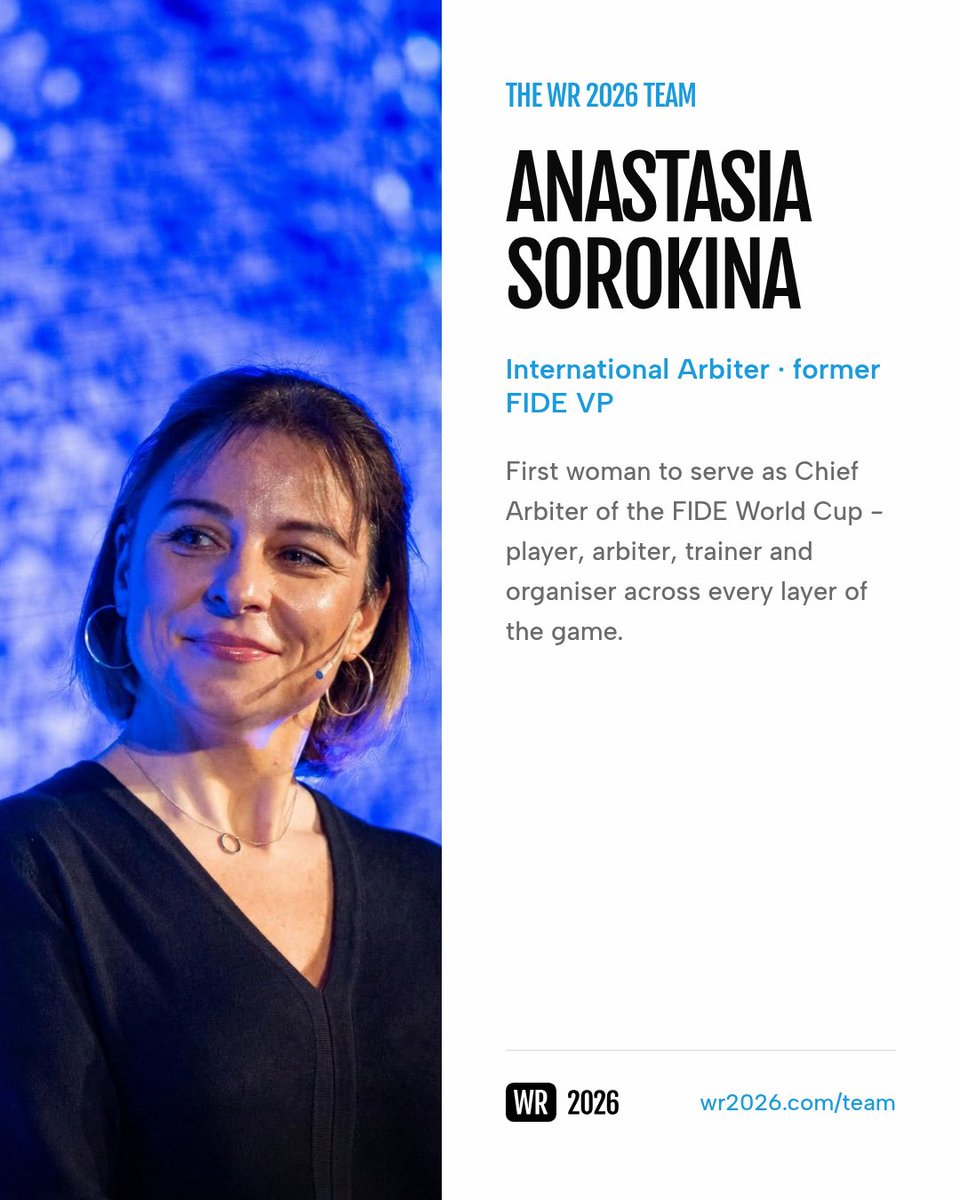
Anastasia Sorokina - International Arbiter, former FIDE Vice-President.
An Australian chess official and lifelong chess professional, Ms Sorokina holds the FIDE titles of Woman International Master (2001), International Arbiter (2002), FIDE Trainer (2005) and International Organiser (2018) - a rare combination spanning competitive play, officiating, coaching and event management.
Ms Sorokina has officiated at the highest level of international chess, serving as Chief Arbiter of three Women's World Chess Championship Matches, the Candidates Tournament 2022, and Deputy Chief Arbiter of the 2024 World Championship Match. In 2025, she became the first woman in history to serve as Chief Arbiter of the FIDE World Cup. She received the Best Arbiter - Woman award at the 2024 FIDE 100 Awards.
She was elected FIDE Vice-President for the 2018-2022 term, and from 2022 to 2026 chaired the FIDE Commission for Women's Chess, leading the development of international women's chess initiatives and social-impact programmes across the world.
Her profile brings something distinctive to the team: hands-on expertise across every layer of the game, as a player, arbiter, trainer, organiser and administrator.
Wadim Rosenstein's professional life started early. As a teenager he began working in sales and client relations while continuing his education. He studied business administration in Germany and later completed an Executive MBA in St. Gallen. While still studying, he founded Business and Trade Solutions in Düsseldorf in 2011; WR Group followed in 2014 and today operates internationally across more than 70 countries.
Those years have shaped the way he talks about leadership. He does not believe the person at the top should control every decision. His preference is to put good people in the right positions, give them responsibility and think several moves ahead about how an organisation should function without depending entirely on one individual.
During the campaign, he has made a point of meeting national federations directly and listening to their priorities. His approach to FIDE is the same one that has guided his work elsewhere. He believes FIDE should be closer to its member federations, more attentive to their needs, and more effective in turning their concerns into practical decisions.
When Wadim was a child, he watched the German Chess Bundesliga with his grandfather and made him a promise: one day, he would win it himself.
More than two decades later, in 2025, that promise became reality. The club Wadim had helped rebuild became German Chess Bundesliga champion, and he was part of the winning team.
Born in the Zhytomyr region of Ukraine, Wadim moved to Germany with his family at the age of ten and grew up in Düsseldorf. He has played chess for more than three decades and still finds time for a game every day.
Chess is part of Wadim's life. He entered this election because, after more than 30 years in chess, he believes FIDE can do more for the people who play and develop this sport.
Thank you, @davidllada.
Open debate, tough questions and honest criticism are exactly what this campaign should be about.
We truly appreciated the conversations in Sofia, and hope there will be many more like them.
I attended an event in Sofia this weekend where I had the chance to spend some time with @WR2026official, as well as with several Delegates and Federation Presidents.
I have to say, I liked what I saw, both from Wadim and his team, and from the participating federations. Debate that went late into the night, questions from both sides, healthy criticism. Good energy and an enriching experience.
I wish the rest of the electoral period were like this.
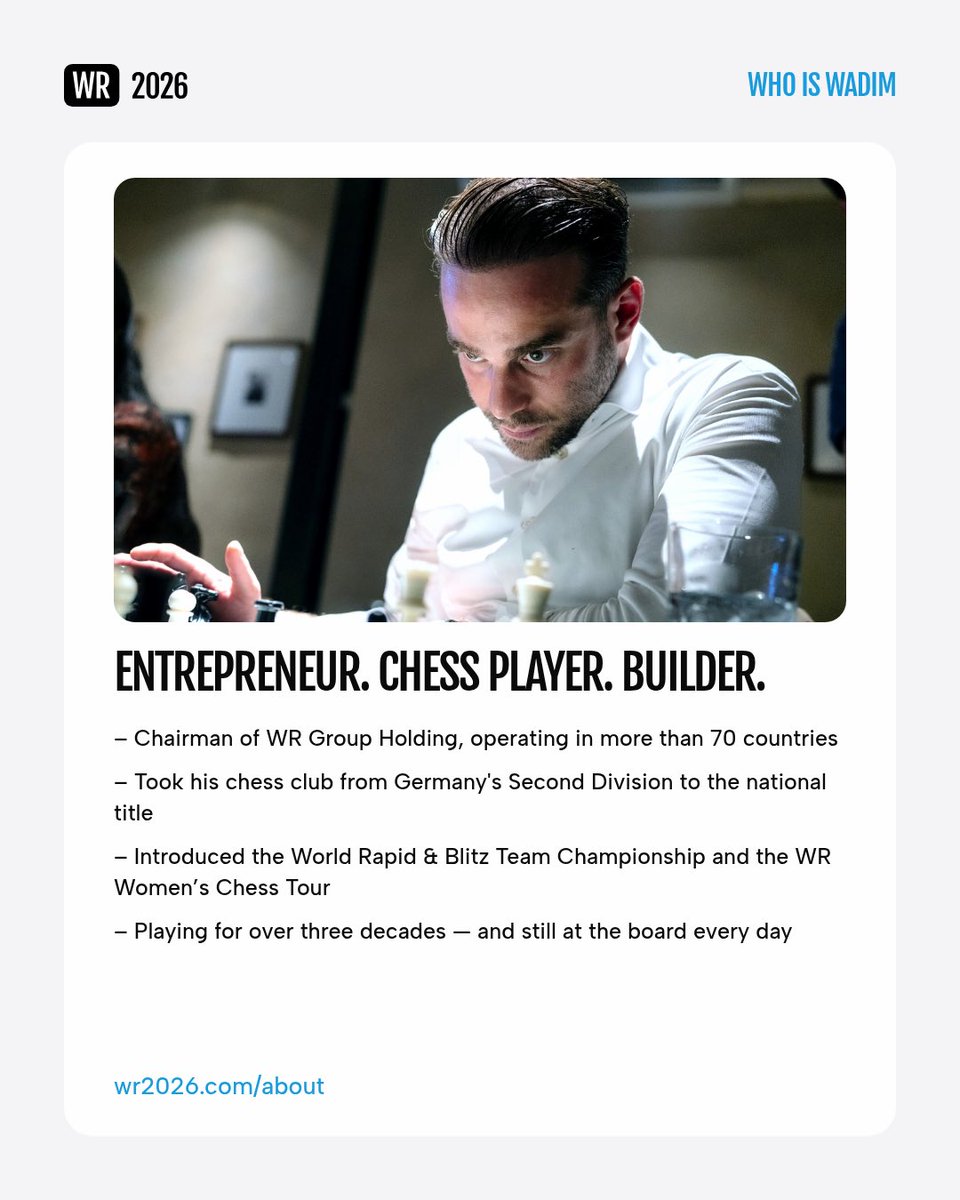
Wadim founded his first company in Düsseldorf in 2011, while still a student. Today, he is Chairman of WR Group Holding, which operates across more than 70 countries.
He brought the same approach to chess: not waiting for new projects to appear, but creating them. He took a chess club from Germany’s Second Division to the national title and introduced the World Rapid & Blitz Team Championship and the WR Women’s Chess Tour.
This is what “builder” means in Wadim’s story: not simply having ideas, but bringing together the people, structure and resources needed to make them work.
It is this experience that he now brings to his candidacy for FIDE President.
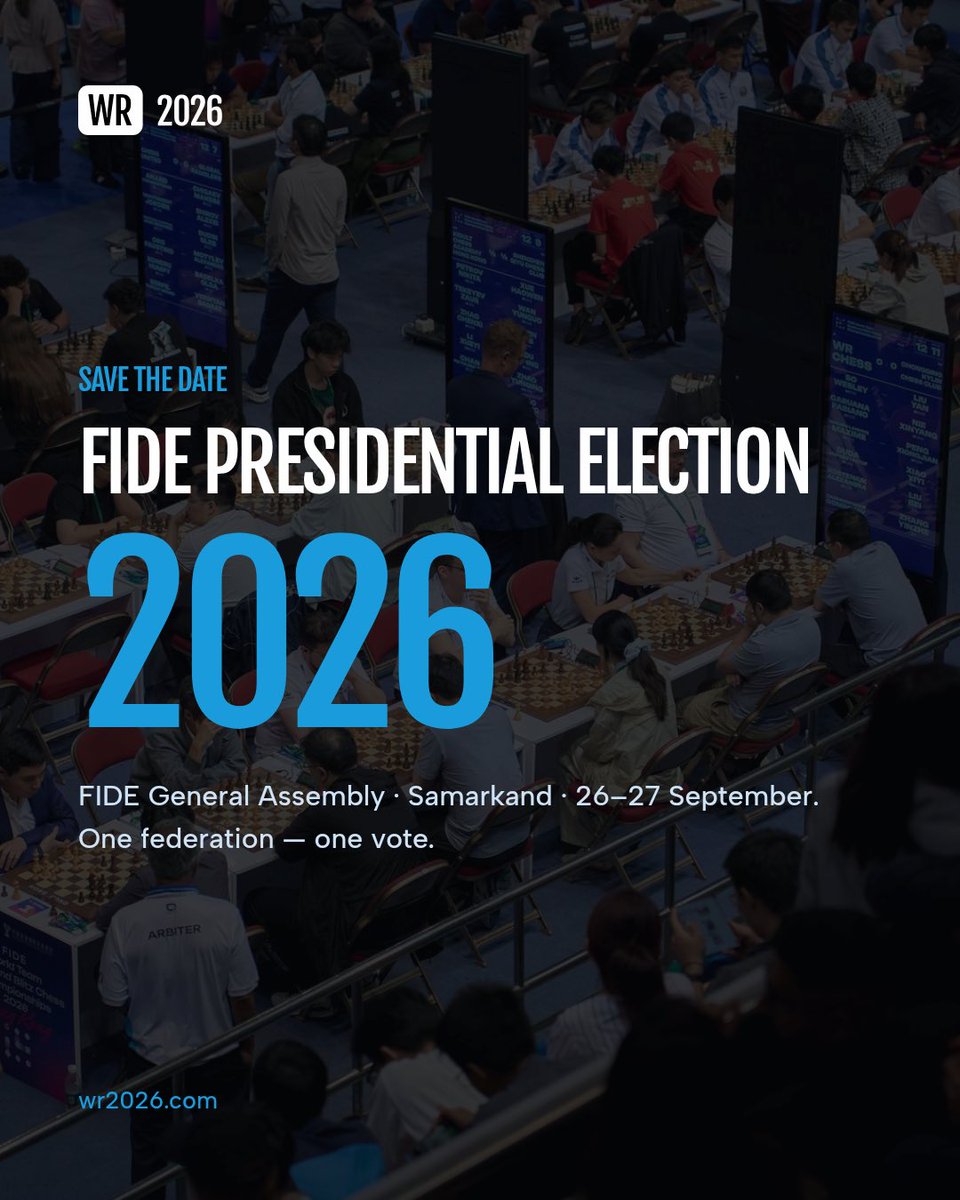
Save the date: 26–27 September 2026.
In less than a month, Member Federations from around the world will meet in Samarkand to elect the next FIDE President.
Behind every vote is a federation with its own players, challenges and ambitions. The decision made in Samarkand will shape how FIDE supports those federations and how chess develops in the years ahead.
We have set out clearly what we believe should change and how we plan to achieve it.
Meet Wadim Rosenstein and read the full WR 2026 programme at https://t.co/1YODQdrh2Q
The World Record Chess Marathon 2026. Sheraton Lima Hotel, Peru, 25–28 June 2026.
An open chess festival for players of all ages and nationalities. Over four days, five FIDE-rated Rapid and Blitz tournaments and three Bughouse events ran alongside elite simultaneous exhibitions — 67 hours of non-stop chess. Entry was free, with a $100,000 prize fund and a Grand Prix across all eight tournaments.
In the six-game headline match, GM Faustino Oro (Argentina), at 12 the second-youngest Grandmaster in history, beat GM José Martínez Alcántara (Mexico) 4–2. The top South American female player in the Rapid events also earned a Wild Card to the WR Women's Chess Tour, Americas Leg in Punta Cana, Dominican Republic.