Meanwhile, trading in GameStop stock has been halted.
Today, the company surprised investors with its earnings announcement, revealing the sale of an additional 75 million shares. This marks a decrease of over $400 million in revenue compared to last year, despite maintaining approximately $1 billion in cash. In the previous month, the company sold 45 million shares for $933 million.
How much do you anticipate the company will be able to raise this time? $GME
Roaring Kitty is 15 minutes late to the live stream. What do you think he's up to? Could he be facing legal restrictions? Is he perhaps on a call with Ryan Cohen? $GME
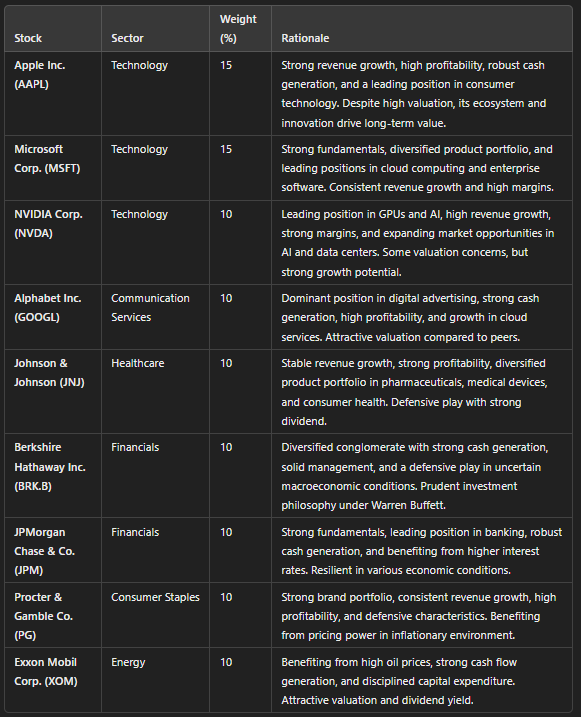
As an exercise, I asked the GPT chat to create a portfolio of 8 stocks to try to outperform the S&P500 over a period of 12 to 24 months. I asked to take into account a number of factors (financials, valuation and macroeconomics).
As the first portfolio was very consensual ( $NVDA, $MSFT and others) I asked for an “off-the-radar” version to see how he would do.
This was the result, what do you think?
#NVDA #ZTS #ASML #SHOP
Is Roaring Kitty Manipulating GameStop $GME Stock?
Keith “Roaring Kitty” Gill is an ordinary trader who became known primarily between 2020 and 2021 for spreading his unconventional investment theses on GameStop via his YouTube channel. His influence led hundreds of thousands of investors and traders to bet on GameStop, resulting in a massive short squeeze and the start of the so-called “meme frenzy,” where several heavily shorted stocks performed exceptionally well as retail investors squeezed short sellers.
Keith Gill’s Testimony on GME Trades
The dramatic events surrounding GameStop’s trading performance in 2021 reached such proportions that they resulted in a U.S. court investigation. Keith Gill was summoned to testify before a U.S. House panel alongside top hedge fund managers. Gill’s testimony was highly anticipated due to his significant role in driving interest in GameStop through his online presence and investment strategies. His “I like the stock” statement was particularly notable, as the public and financial community sought to understand his perspective on the stock’s dramatic price movements and the broader implications for the market.
Legal Outcomes and Aftermath
Although the information provided does not detail any specific court case or legal action directly involving Roaring Kitty and GameStop in 2021, it was reported that Gill’s former employer, MassMutual, faced a fine as part of a settlement with Massachusetts regulators. This could be indirectly related to the broader scrutiny of the GameStop saga.
Following the trial, Keith Gill withdrew from social media and public life, leading to widespread speculation among GameStop shareholders about his whereabouts.
Roaring Kitty: The Return
In May of this year, Roaring Kitty returned to social media three years after the massive GameStop squeeze. A single tweet of a meme was enough to ignite bullish sentiment among GameStop’s retail investors. On May 13th, the video game retailer’s stock surged almost 185%, leading to nearly $1 billion in losses for GameStop’s short sellers over just two trading sessions.
Although the rally was shorter in both scale and duration this time, Roaring Kitty’s comeback made it clear that the meme mania is still alive. More recently, on June 2nd, Keith Gill posted on Reddit under the alias DeepF**kingValue, providing an update on his GameStop holdings. He revealed that he holds 5 million GameStop shares, 120,000 June 21st $20 GME calls, and another $29 million in cash, totaling $210 million in assets.
Once again, the market reaction was overwhelming. GameStop shares jumped more than 70% during pre-market trading and closed the session on June 3rd up 25%.
The Kitten Under Scrutiny
Roaring Kitty’s presence and its impact on GME stock momentum have concerned some market participants. According to the Wall Street Journal, citing unnamed sources, E*Trade is considering removing Gill over concerns of stock manipulation related to his purchases of GameStop stock shortly before the recent meme stock frenzy. It was also reported that the SEC is closely monitoring GameStop’s options activities.
However, there are also defenders of Keith Gill. Jim Cramer, host of Mad Money and often seen as a nemesis of meme stocks by retail investors, stated that there’s nothing wrong with posting one’s options positions.
https://t.co/w8hVLIIxps
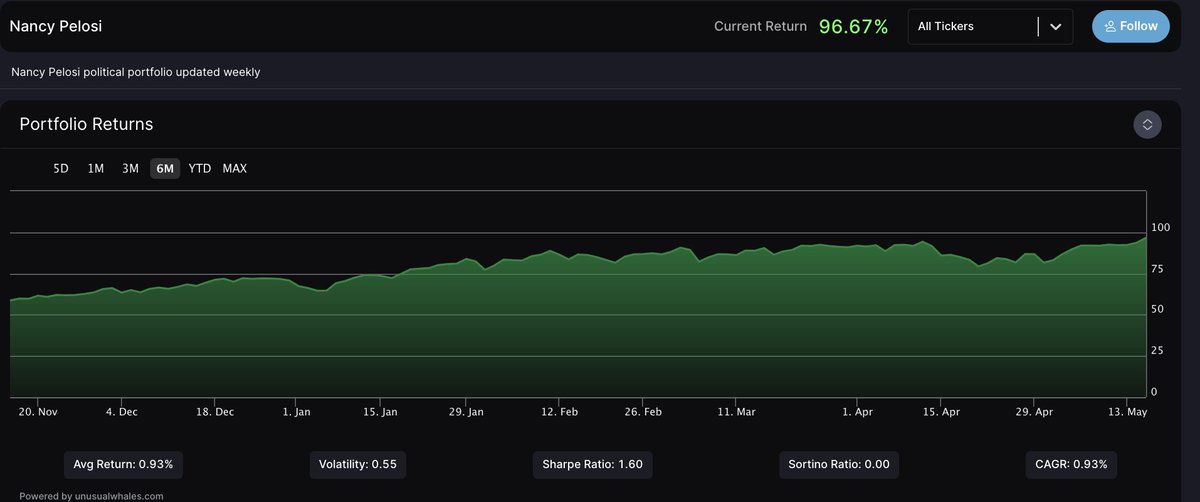
Additionally, the Unusual Whales website pointed out the disparity in scrutiny, noting that while there is significant attention on Keith Gill’s public participation, there is little noise regarding trades made by members of Congress.
https://t.co/KwaGr1r4UG
The Verdict
It’s astonishing to think that a social media user posting memes about various random subjects can significantly influence retail investors to buy a particular stock en masse, not necessarily based on the company’s fundamentals.
In the U.S., it is generally legal for individuals to post videos about stocks and trading ideas. The key distinction lies in the language used in these videos. If a person merely shares ideas or opinions about stocks and trading strategies, it is typically considered within the bounds of the law. However, if someone explicitly instructs or encourages others to buy or sell specific stocks, this could potentially be seen as providing financial advice, which might have different legal implications.
In 2021, Keith Gill was cleared of any conflict of interest, and the current situation regarding his return seems similar. It turns out that, somewhat unintentionally, Gill has acquired a tremendous influence over retail investors, and his mere memes can cause massive volatility in certain stocks. This volatility can result in massive losses for institutional investors and short sellers, potentially triggering a strong reaction that pressures regulators to take extraordinary actions regarding conflicts of interest.
With the massive surge in GameStop stock over just two trading sessions, the company managed to issue 45 million new shares and raise $933 million, which is close to a fifth of its total annual revenues. This raises questions about whether GameStop’s management anticipated such a reaction to Keith Gill’s return. However, it would be insane to think this was a planned decision.
In theory, posting memes and sharing one’s portfolio on social media doesn’t constitute market manipulation. But within the context involving billions of dollars, meme stocks, and powerful hedge funds, there are loopholes that could be interpreted as some form of manipulation.
#GameStop #GME #RoaringKitty
https://t.co/DDvMlp2fwR
I’ve seen numerous posts that Roaring Kitty aka DeepFuckingValue should be punished over GameStop, $GME, for posting his positions.
For reference, Congress has direct oversight over the entire market, as well as rule over individual companies who also lobby to them.
Congress, despite conflicts, trade these companies, and have consistently outperformed the market since 2020.
I hear little noise from media on this issue though.
The return of the meme frenzy’s central figure to social media has caused high volatility in GameStop stock and other meme stocks. Is Roaring Kitty doing something wrong? $GME
https://t.co/Psv0TxjmK9
Apple’s current status as a consolidated, high-revenue company offers lower risk and reliable returns. Still, with fewer growth triggers and a high P/E ratio, it presents a steady rather than high-return investment opportunity. $AAPL
https://t.co/jwwLeAF9in
Microsoft’s new AI-driven computer challenges Apple’s MacBook, sparking a tech rivalry that promises significant advancements in AI technology. $MSFT $AAPL
https://t.co/CszHtZRRI5
"Roaring Kitty” has skin in the game. The protagonist of the meme frenzy is bullish on GameStop, revealing in the latest update of his portfolio that he holds more than 5 million shares in the company. $GME
https://t.co/1bWhNTY0Zq
Dell's Q1 Earnings Summary $DELL
Revenue: $22.2 billion, up 6% year-over-year.
Operating Income: $1.5 billion.
Diluted EPS: $1.27.
Cash Flow from Operations: $1 billion.
Infrastructure Solutions Group (ISG)
AI-Optimized Servers: Orders increased to $2.6 billion; shipments up more than 100% sequentially to $1.7 billion.
AI Server Backlog: $3.8 billion, growing sequentially by approximately $900 million.
Server and Networking Revenue: $5.5 billion, up 42%.
Storage Revenue: $3.8 billion, flat year-over-year.
Client Solutions Group (CSG)
Revenue: $12 billion, flat year-over-year.
Commercial Revenue: $10.2 billion, up 3%.
Consumer Revenue: $1.8 billion, down 15%.
Operating Income: $732 million, or 6.1% of revenue.
Key Highlights
AI Strategy: Dell emphasizes the importance of data, efficiency of AI moving to the data, diverse AI implementations, open modular architecture, and a broad ecosystem.
Product Launches: New AI PCs powered by Qualcomm Snapdragon X Elite and the Dell AI Factory initiative to accelerate AI innovation.
Engineering Leadership: New features and capabilities across Dell’s portfolio, including PowerEdge XE9680L and enhanced PowerStore and PowerScale solutions.
Financial Highlights
Gross Margin: $4.9 billion, 22.2% of revenue.
Operating Expense: $3.5 billion, 15.6% of revenue.
Net Income: $923 million.
Dell Financial Services: Originations of $1.9 billion, managed assets of $14.2 billion.
Capital Returns: $1.1 billion in stock repurchase and dividends; since FY'23, returned $8 billion to shareholders.
Guidance
FY'25 Revenue: Expected to be between $93.5 billion and $97.5 billion.
ISG Growth: Expected to exceed 20%.
CSG Growth: Expected in low single digits.
Gross Margin: Expected to decline by roughly 150 basis points.
Operating Expenses: Expected to be down low single digits.
Diluted Non-GAAP EPS for FY'25: Expected to be $7.65, plus or minus $0.25.
Q2 FY'25 Revenue: Expected to be between $23.5 billion and $24.5 billion.
Diluted Non-GAAP EPS for Q2: Expected to be $1.65, plus or minus $0.10.
Dell continues to leverage its strengths to lead in AI and traditional IT markets, focusing on innovation, cost management, and strong customer relationships to drive future growth.
#DELL #AI #Earnings
Despite recent turbulence, Trump Media & Technology Group stock shows signs of resilience as it climbs back toward its all-time highs. $DJT @WStreetTrends
https://t.co/6Dq3jYMist
Nvidia’s stock is rising due to solid fundamentals and AI growth potential, but caution is needed given the high market euphoria and projections and the tech industry’s cyclical nature. $NVDA @WStreetTrends
https://t.co/0FfzjuaSpm
GameStop’s $GME Cash Bonanza: What Will They Do with $2 Billion?
After a very successful equity offering, GameStop has nearly doubled its cash position and is ready to go on the offensive.
Video game retailer GameStop (NYSE:GME) jumped 25% in pre-market trading on May 28, following the news that the company raised $933 million in cashfrom a recent equity offering. This offering involved the sale of 45 million shares on the market.
With this new capital, GameStop now adds to the $1.073 billion to $1.093 billion in cash that the company anticipated in its preliminary results for the first quarter, bringing the total to approximately $2 billion in cash and equivalents. This is quite a robust position for a company with virtually no debt.
GameStop’s Robust Balance Sheet
If you’ve heard the term “cash is king,” you know that having liquid cash on hand means unparalleled flexibility and security in the business world. With immediate liquidity, having cash on the balance sheet allows a company to handle financial emergencies, seize investment opportunities quickly, or cover operating expenses without the need to sell assets.
First of all, in the case of GameStop, it is important to clarify that the company has not achieved this status through the merits of its core business. On the contrary, if GameStop had relied solely on its revenues, it would probably have a chaotic balance sheet.
Until 2020, GameStop had around $500 million in cash and equivalents and a total debt of close to $1.2 billion. In 2021, everything changed after the “meme frenzy” when GameStop shares skyrocketed, allowing the company’s management to sell shares and raise cash. By 2022, when GameStop completed its at-the-market offering program, the company had raised $1.67 billion, which allowed it to almost completely write off its net debt and still inject a generous amount of cash into its balance sheet.
From 2019 onwards, the company’s revenues have been severely impacted during this same period. Starting in 2020, at the height of the COVID-19 pandemic, there was a brief recovery in 2022, but revenues declined again, culminating in the first quarter of 2024. This clearly shows the decline of a business model losing ground to the digitization of games and the rise of e-commerce versus brick-and-mortar stores.
What Should GameStop Do With Its Cash Now?
Since the end of 2022, GameStop’s management has made it clear that the company’s priority has been to achieve profitability by cutting costs, with no part of its billion-dollar cash holdings earmarked for investment in growth avenues.
In 2023, these objectives were put into practice. Under the influence of Ryan Cohen, who was Chairman of the Board and main shareholder until September and subsequently took over as CEO, GameStop adopted a state of “extreme frugality.” The company cut costs, closed stores, laid off employees, and renegotiated inventory with suppliers. As a result, by the end of 2023, GameStop reported a net income of $6.7 million, compared to a net loss of $313 million at the end of 2022, despite an 11% decline in revenues over the same period.
Despite these efforts, with management providing little clarity on the company’s future direction, it seemed that achieving profitability through cost-cutting alone only postponed the inevitable. The company might still have to burn cash in the near future to keep operations running.
However, after the Q3 earnings, GameStop announced a significant change. The company revised its investment policy, which previously allowed it to invest its cash only in fixed-income assets. Now, CEO Ryan Cohen (along with a few other board members) can invest that cash in other types of equity. This has raised the idea that GameStop’s future could involve transforming into a kind of holding company, shifting away from its brick-and-mortar core business.
Having $1 billion in cash was already considered beneficial for GameStop’s potential future growth. With the recent and unexpected return of Keith “Roaring Kitty” Gill, an iconic figure from the GameStop meme stock saga, the company’s shares saw a significant rise in just two trading sessions. Ryan Cohen and his team promptly seized this unparalleled opportunity to raise even more cash. Now, with $2 billion in cash, any new endeavor can be pursued with more flexibility and security. After all, “cash is king.”
According to GameStop’s investor relations channel, the $933 million raised from the recent equity offering will be used for “general corporate purposes, which may include acquisitions and investments.” In other words, investors can finally expect the beginnings of a new GameStop playing offense, making acquisitions, and most likely pivoting its outdated business model into something potentially bigger and better.
The Bottom Line
In the corporate world, a business that doesn’t grow and is losing sales is doomed to fail. Now, GameStop’s management has the opportunity and resources to change this trend by launching a new phase focused on acquisitions and expansion.
It is up to Ryan Cohen and his team to prudently manage this robust balance sheet and transform GameStop into a sustainable business with growth potential, something the company currently lacks. While there is significant risk in this execution, the injection of almost $933 million in extra cash into the company’s balance sheet (almost overnight) mitigates some of this risk, though the extent of the mitigation is uncertain.
First published on: https://t.co/qLyAG9KXEZ
#GameStop #GME #RyanCohen
After a very successful equity offering, GameStop has nearly doubled its cash position and is ready to go on the offensive. $GME @WStreetTrends
https://t.co/joLZAZIubJ