Clarence Thomas used 27,477 words to try to rationalize how 28 words in the 14th Amendment don’t actually mean exactly what they say.
That’s a thousand words of legal quibbling for every one word of constitutional text.
The 2026 AP Computer Science A Exam scores:
5: 25%; 4: 26%; 3: 15%; 2: 11%; 1: 23%
The 2026 AP Computer Science A exam was taken by ~81,500 students, less than 1% of the U.S. high school population.
AP Computer Science A Multiple-Choice Questions (MCQ):
• AP Computer Science A students demonstrated their strongest MCQ performance on Unit 3: Class Creation; 50% of students earned all possible points on these questions.
• The most challenging MCQ content area was Unit 4: Data Collections; 28% of students earned virtually all available points on these questions.
AP Computer Science A Free-Response Questions (FRQ):
https://t.co/5j6q8LsgRD
I’m grateful for the ways the Development Committee of professors and teachers designed these four questions. Each FRQ is grounded in a recognizable real-world context — username management in an online platform, modeling a refillable bottle, analyzing student attendance records across courses, and computing scores across a game board — making the computational thinking feel authentic rather than artificially contrived.
Since AP scores are reported on a 5-point scale, the free-response questions deliberately include some very difficult points designed to differentiate AP 5s from AP 4s, points of varying difficulty to differentiate AP 4s, 3s, and 2s, and more foundational points to separate AP 2s from AP 1s.
FRQ #1, a Methods and Control Structures question about the Account class, required students to implement one constructor and one method of a website username-management class across seven points. In Part A, students wrote the Account constructor: given a requested username, they had to use the provided isAvailable method to check availability and, if the username was taken, iteratively append increasing integers (“Luis-Cruz1”, “Luis-Cruz2”, …) until an available username was found — a task that requires a correct loop structure with a termination condition, correctly calling a method, and proper string concatenation. In Part B, students wrote getShortenedName: given a username that may contain hyphens (but never at the start, end, or consecutively), return a version with each hyphen and the character immediately preceding it removed, so that “Amy-Marie-Lin” becomes “AmMariLin”. This requires students to traverse the string character by character, correctly identify hyphen positions, and build the return string while skipping two characters at each hyphen occurrence.
The overall difficulty of this question was such that it differentiated well across the 1-5 AP scale. Students receiving AP 1s were typically unable to earn any of these points, whereas students achieving AP 5s typically earned all points possible on Part A of this FRQ, and all or all but one of the points possible on the slightly more difficult Part B.
FRQ #2, a Class Design question, asked students to write the complete Bottle class from scratch across seven points. The class models a refillable liquid container with a fixed capacity: students needed to declare appropriate instance variables, write a constructor that initializes the state of the bottle, and implement an updateAmount method that subtracts a given amount of liquid and — crucially — automatically refills the bottle back to capacity if the remaining amount falls below 25% of capacity. The method returns the amount remaining after the update. A worked example table was provided, showing a case where the amount of liquid fell below 25% of capacity (triggering a refill) and an edge case where the amount of liquid was exactly equal to 25% of capacity (showing that a refill is not triggered). This question tests the full class-design skill: choosing the right instance variables, correctly maintaining the state of the bottle as liquids are removed, and handling boundary thresholds precisely.
This was the least challenging of this year’s FRQs, designed to collect significant data points to enable differentiation of students receiving AP 1s from students receiving AP 2s, who could typically earn a moderate number of points, and then to differentiate students receiving AP 2s from students acheiving AP 3s, who, like AP 4s and AP 5s, earned most or all of the available points.
FRQ #3, a Data Analysis with ArrayList question, asked students to write a single method across 5 points. The method, moreHistoryThanMathAbsences, in the Attendance class, maintains two ArrayList<CourseRecord> objects representing students enrolled in a history course and a math course, respectively. The method must return the count of students enrolled in both courses whose absence count in history exceeds their absence count in math. This requires students to iterate over one list, look up each student’s ID in the other list using getStudentID() to find a match. If a match is found, getAbsences() is used to compare the two absence totals — a cross-list lookup pattern that tests their ability to work with multiple ArrayLists simultaneously, apply string comparison correctly, and maintain a count of absences that meet the criteria.
This was a good question for determining which students should receive an AP 3 or higher, as these students consistently earned the majority of the 5 points, whereas students earning AP 4s generally earned 4 of these points, and students earning AP 5s typically earned all 5 points here.
FRQ #4, a 2D Array question, asked students to write a single method across 6 points. The method, getPointsForRow in the GameBoard class, maintains a 2D array of Space objects (each with a color and a point value). The method returns the sum of point values in a specified row — with a scoring bonus: if every space in the row is the same color, the sum is doubled. Students had to correctly traverse the given row in the 2D array, call the getColor() and getPoints() methods on the Space objects in the row, accumulate the point total, determine whether all spaces in the row share a color (requiring comparison of each space’s color to a reference), and apply the conditional doubling. A concrete worked example was provided: a mixed-color row returning 1300, and an all-red row returning 2000 (double the sum of 1000). The color-uniformity check, requiring students to iterate and compare colors across all elements in the row, is the most syntactically and logically demanding element of this question.
This question was laser focused on the skills expected of students achieving 3s, 4s, and 5s, and students receiving 1s and 2s were not usually able to engage with this especially challenging content. Students achieving AP 3s were expected to earn 1-3 of these points, students achieving AP 4s were expected to earn 4-5 of these points, and students achieving AP 5s were expected to achieve all 6 points possible here.
All subjects' AP score distributions for 2026 will be posted here when available: https://t.co/OrkaQhPZYO
@Big12Conference So why aren’t you sanctioning @GoBEARCATS for knowingly playing him while wagering on the games he played for them? No one cared until @TexasTechFB was getting him help. Hypocrites, the lot of you.
.@jaketapper Anchor of @TheLeadCNN w/
@mkraju
A rare rebuke of trump with an Iran powers resolution
Won't pass the Senate so just symbolic but still, a rare bipartisan rebuke
6.3.26 530 pm ET
Rep. Ted Lieu says the full Epstein files contain information that Donald Trump RAPED minors.
So he started a war to distract us from his crimes.
What's your response to Ted Lieu......??👀
MAKE THIS GO VIRAL ON 𝕏. LET’S GO 👏
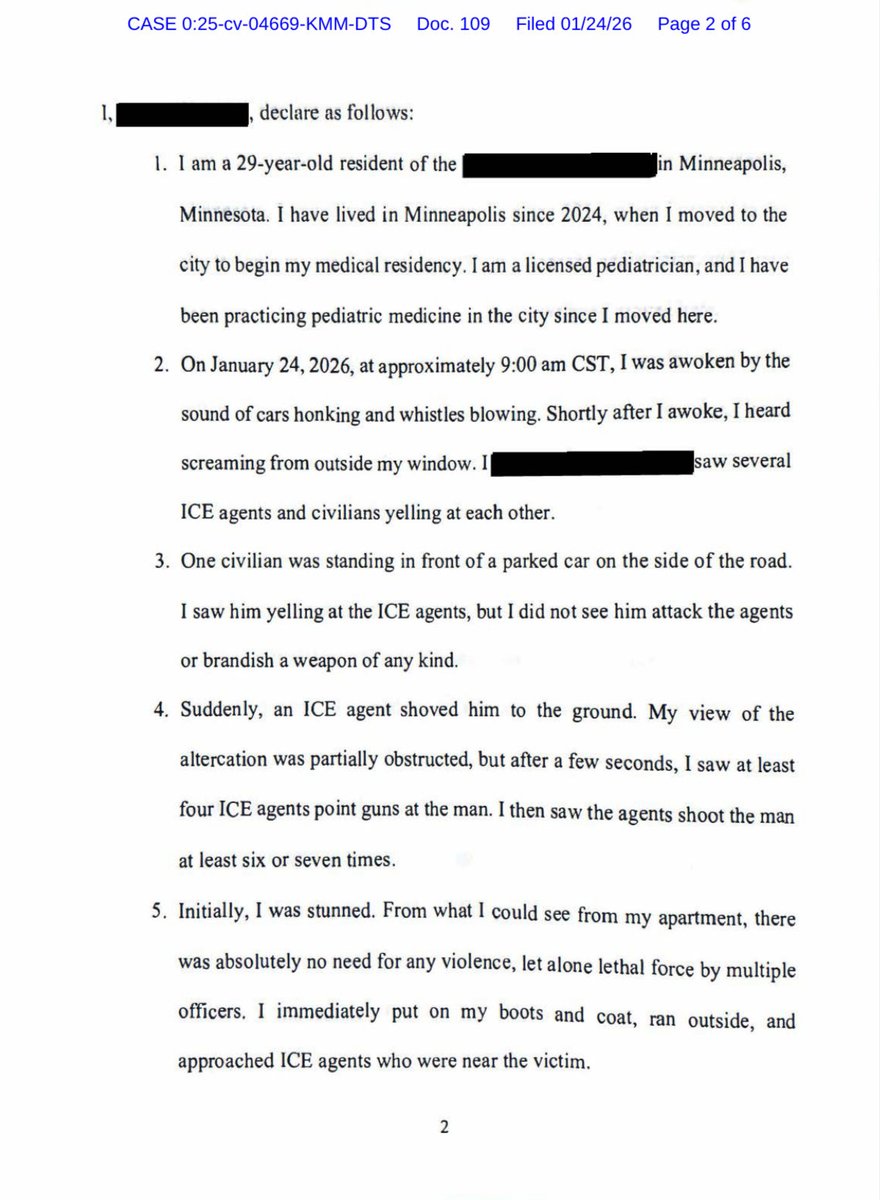
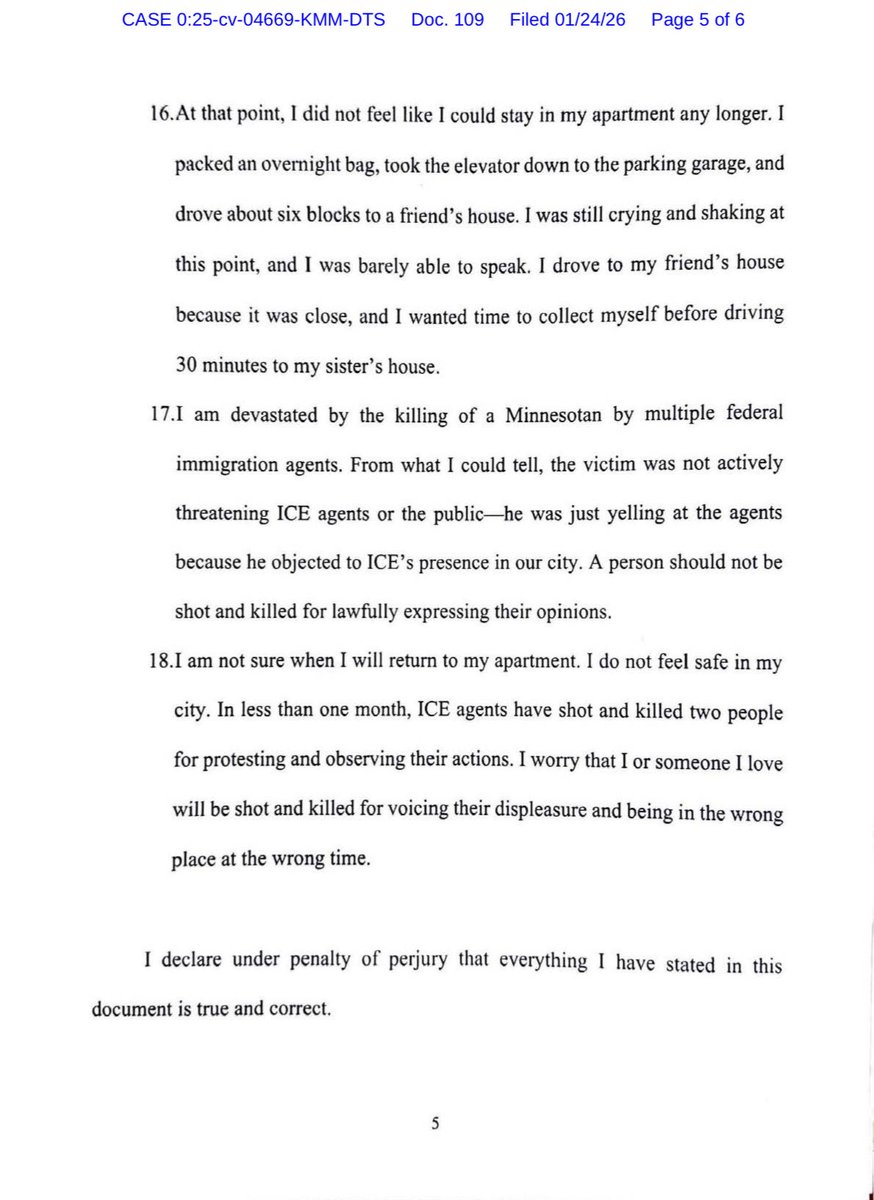
🚨HOLY FU*KING HELL: A physician’s sworn affidavit just destroyed the official narrative.
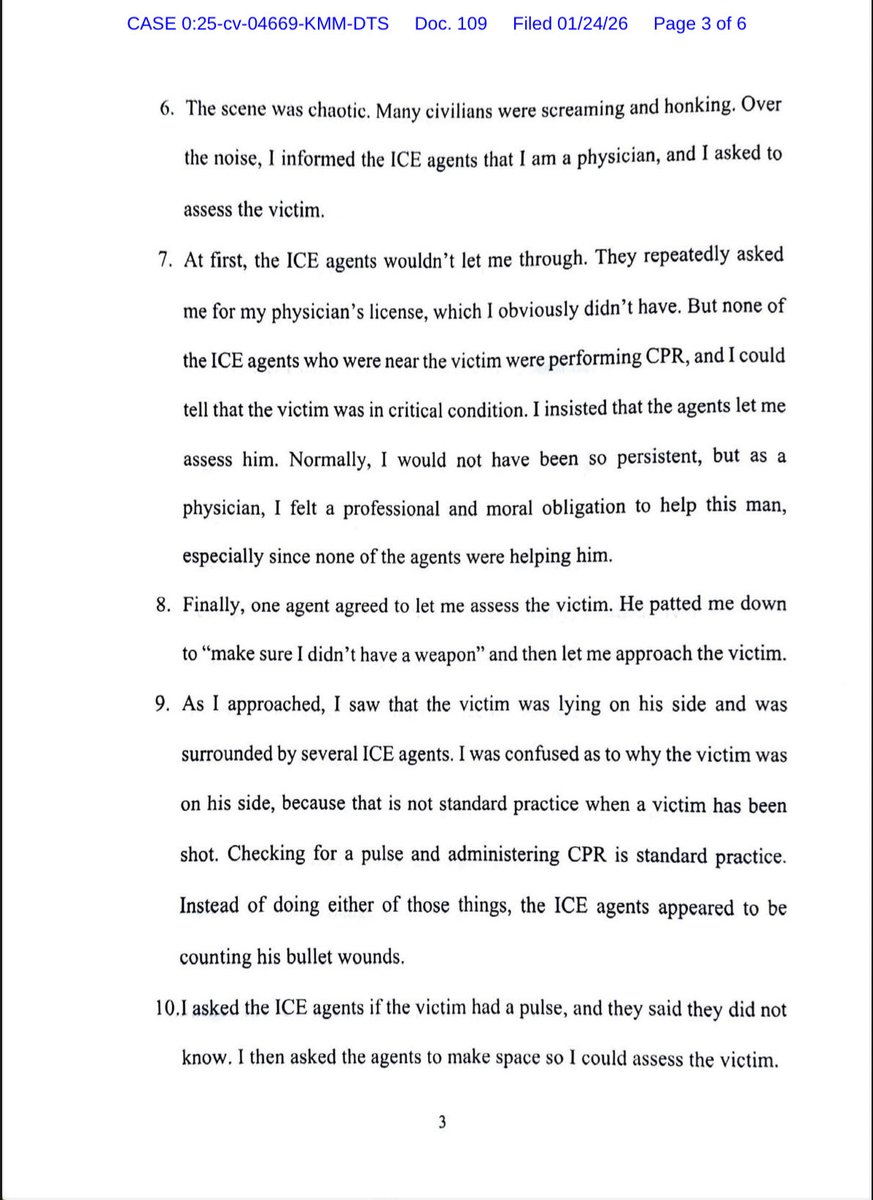
He says he ran to the scene, identified himself as a doctor, and BEGGED to help Alex Pretti.
ICE agents blocked him, demanded a physician’s license, and still weren’t performing CPR.
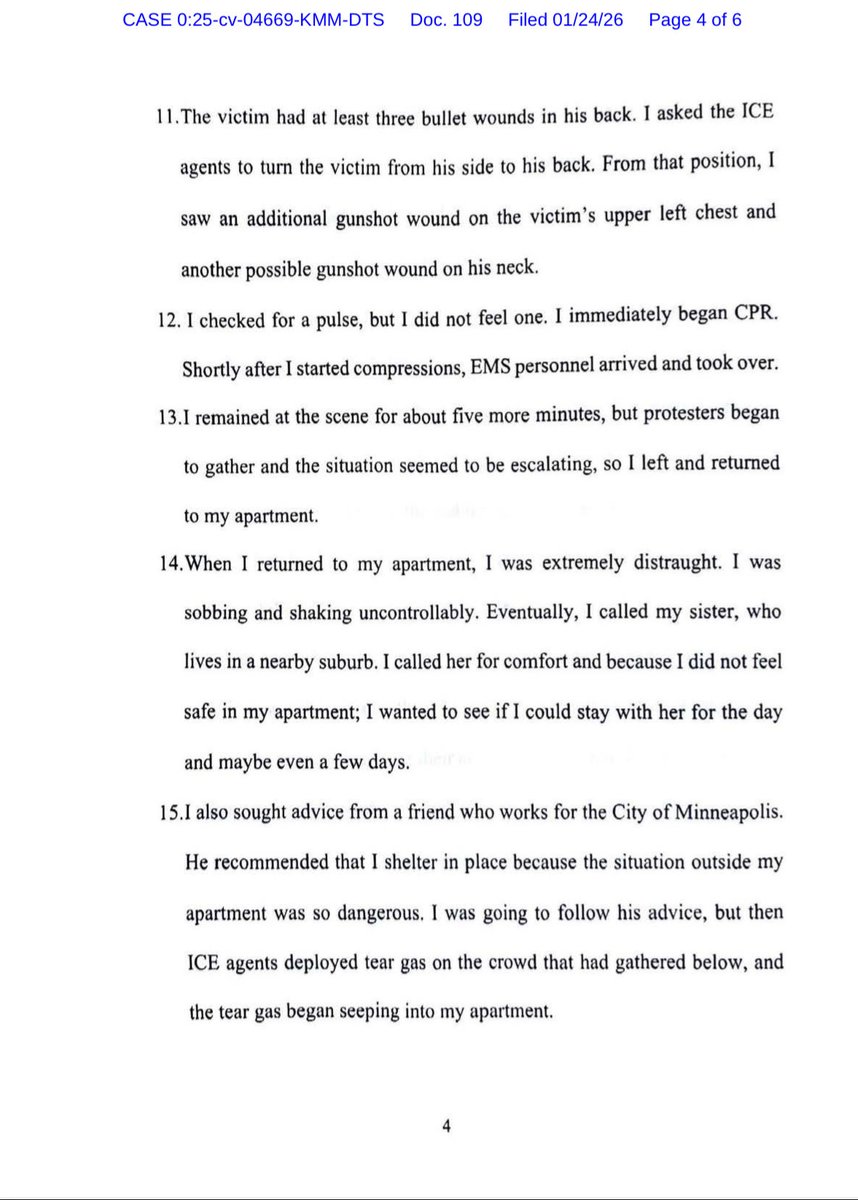
When he finally got through, he found Pretti on his side with multiple gunshot wounds in his back and started CPR himself.
That’s the story: they shot him… then wouldn’t let a doctor treat him.
Case 0:25-cv-04669 | Doc. 109 (filed 1/24/26)
This is a damning piece about a torture prison that is being used by the Trump administration. That’s why the piece was pulled. All Americans deserve to see this story. Shame on Bari Weiss.
GOOD NEWS PATRIOTS! WITH WASHINGTON SHUT DOWN, I, GAVIN C. NEWSOM, AM NOW THE LEADER OF THE FREE WORLD. MY PLATFORM IS VERY SIMPLE: HEALTH CARE FOR ALL AMERICANS (NO MEASLES!), FREE SCHOOL MEALS (WOW PUDDING FOR EVERYONE), FREE CHILDCARE (THE MOMS LOVE ME! MORE BABIES!!) GOOD-PAYING JOBS, AND NO MORE EVIL TARIFFS!!! EGGS WILL BE FREE. HAIR GEL SUBSIDIES WILL BE AVAILABLE (BUT ONLY FOR HANDSOME DEMOCRATS) AND WE WILL ALSO LEGALIZE CANNABIS! CRIME WILL STAY LOW AND EVERYONE WILL BE HIGH ON PATRIOTISM. AND NO MORE TICKETMASTER FEES (FOR THE SWIFTIES, FEES STAY FOR KID ROCK!) THEY WILL CHANT USA! USA! BECAUSE WE WILL BE BACK AND “HOTTER” THAN EVER BEFORE. THANK YOU! — GCN