Digital payments reduce the cost of moving money over great distances, which is good in Africa where travel can be expensive and requires time away from work. https://t.co/PkxhR31hBy
Can we have higher yields and better taste? Research with fungal extracts show positive results across every stage of plant development — better germination, increased yield & enhanced product quality, while improving flavors. https://t.co/f2TCBgl1gi
Why is plant-based dairy growing faster than plant-based meat? In this week's ReThink Food, @JasonWClay takes a look at the issue, breaking down the factors that account for the discrepancy. Read more: https://t.co/bMWxzNUEVA
When the mealybug devasted papaya production in Kenya, farmers had to choose between accepting pest issues or ending efforts to grow papaya. Scientists turned to a tiny biocontrol: a parasitic wasp. According to early trials, it helped double yields. https://t.co/O6vih8VkX2
While leather might not be covered under the EUDR, China, the largest buyer of hides from Brazil, is still interested in the embedded carbon from animals produced on land that was deforested for pasture or for crops that were used to feed the animals.https://t.co/31aqeBFPCe
Since March, the Iran War has disrupted global fertilizer markets, straining global food systems. In this week's ReThink Food, @JasonWClay takes a look at these impacts and examines ways to decouple fossil fuel energy and ag production moving forward. https://t.co/rMJAqpfo0q
Threats to the world's rice supply will likely get worse before things get better. After years of bumper crops, there is a lot of rice stored globally, but it is not clear if or when it will be released onto markets. https://t.co/ry8cZjv8Ix
The shift in irrigated agricultural activity from the Western Great Plains eastward has implications for water infrastructure, land use, and agricultural policy in regions not historically associated with large-scale irrigation. https://t.co/uSrbDlrs5H
Demand for rare earth minerals impacts water quality in the Mekong River, depositing toxic residue in crops grown in Thailand and beyond. In this week's ReThink Food, @JasonWClay examines the connection between rare earth mining and the global food system. https://t.co/HXghpGG6e1
France is the EU’s biggest farming economy but recently it's been importing more food, leading to a collapse of its food trade balance. The war in Iran has worsened the situation, disrupting critical fuel and fertilizer flows from the Persian Gulf. https://t.co/z6v72tOJ33
For international commodity traders and consumer goods manufacturers, ecosystem destruction is moving from a reputational concern to a material financial risk, costing industries $430 billion per year, according to a 2025 report. https://t.co/lOtaH9cOtx
There's momentum in Africa to shift funding from green revolution initiatives to investments helping family farmers increase healthy food for local needs. In this week's ReThink Food, @JasonWClay examines the trend & the factors slowing its implementation. https://t.co/HXghpGG6e1
While water is generally taken for granted, it is fundamental to economic performance. World Bank experts say that global demand for water is expected to outstrip supply by 40% by the end of the decade. https://t.co/5eSgdvLAo1
As we get better at measuring emissions related to all the factors, including land use change and the permeance of removals, we are likely to find that food and agriculture are responsible for far more than we previously thought. https://t.co/nP4aVkLIb8
The biggest-ever study of ancient human DNA shows human evolution has accelerated over the past 10k years. In this week's ReThink Food, @JasonWClay takes a look at the findings, which trace a collection of genetic changes back to the dawn of agriculture. https://t.co/uacBNSwU8l
Seaweed, already the leading source of seafood, can be produced faster and with less impact than any other food source from land or water. https://t.co/b4LdAcLgKR
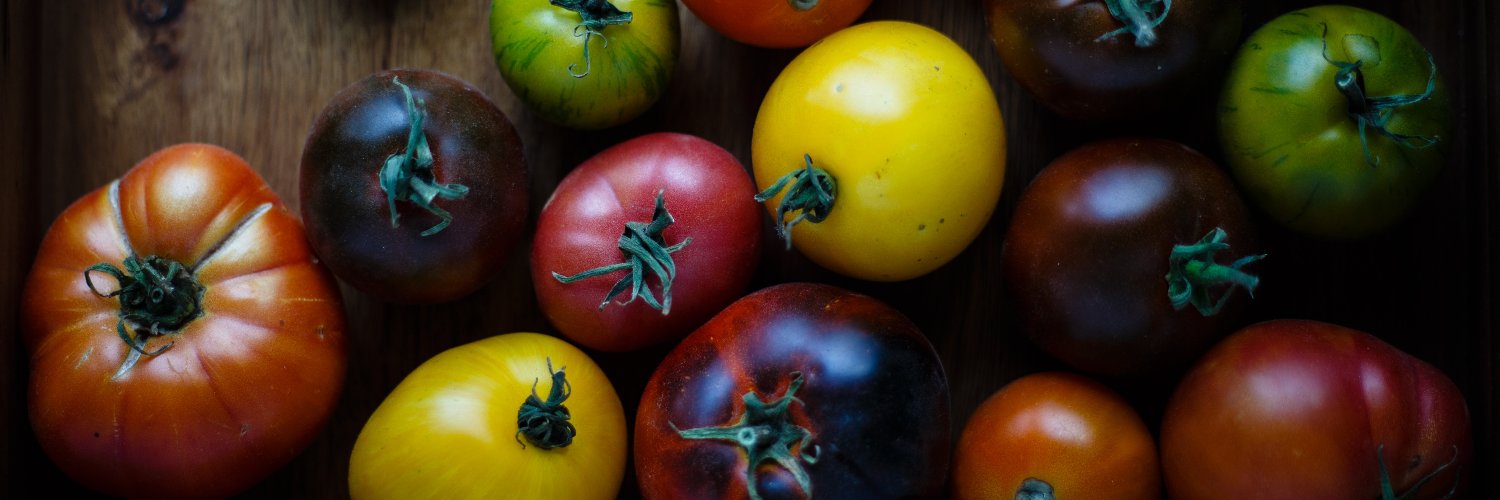
The world eats potatoes, tomatoes, and many other products from the new world. But cheese raises another issue — should it be a “local” product if the feed is not local? And why stop with milk? What about pork, beef, poultry, eggs, or even fed fish? https://t.co/fB4SChygDH
Tracing food commodities to origin can be difficult. In this week's ReThink Food, @JasonWClay considers the implications of new technology, combining isotope fingerprints with geospatial machine learning, that can help identify where food is produced. https://t.co/iD1Fv18Lzi
The oysters in Japan were fine until this year. But changing weather conditions reduced the oxygen and food that oysters need to thrive as they did in the past. https://t.co/oExSJyUzXk
Warmer winters lead to more water pollution. Intense dryness followed by intense wetness brings farm chemicals like nitrogen into both rivers and aquifers. https://t.co/4k23sm4mnI