📢📢 Our next speaker for the PD Seminar is Tyler Goldstein!
Tyler is a former biomechanist with the Marlins and has now founded her own company in KORE Pitching.
The link for hotel rooms is also now live, the discounts on rooms will last thru November 15th, get yours now!
https://t.co/AnkBSZJB1P
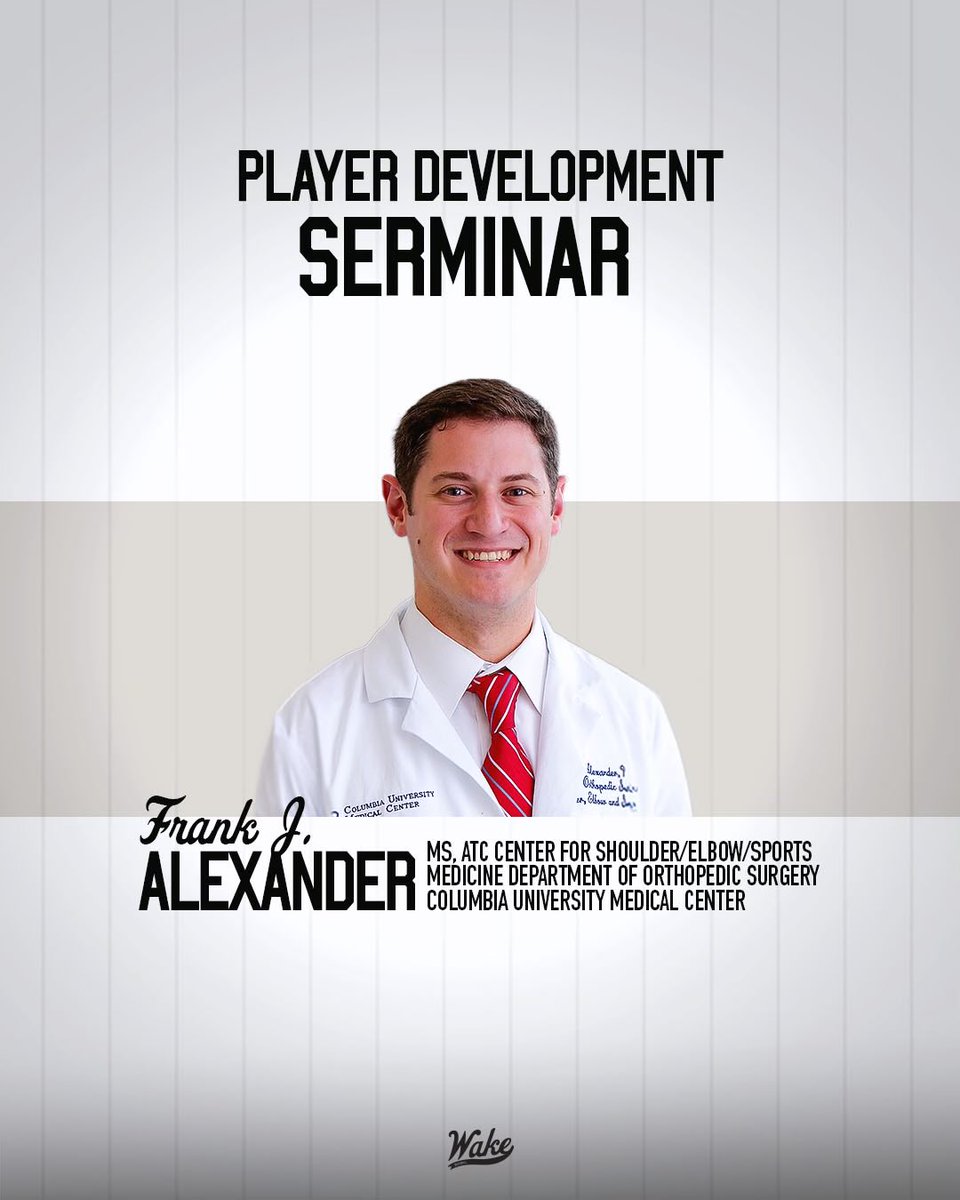
📢📢Frank Alexander (@frank_atc15) is our next speaker for this year’s Seminar!
Among Frank’s roles at Columbia in NYC, he leads the TJ rehab process with Dr. Chris Ahmad, and his talk will focus on their process from the OR to Return to Performance for UCL injuries!
Get your tickets below:
https://t.co/6b2oEipmcD
The Player Development Seminar is back again! Mark your calendars for December 11th-13th, going to be another great baseball weekend in Winston-Salem.
Details on tickets coming soon!
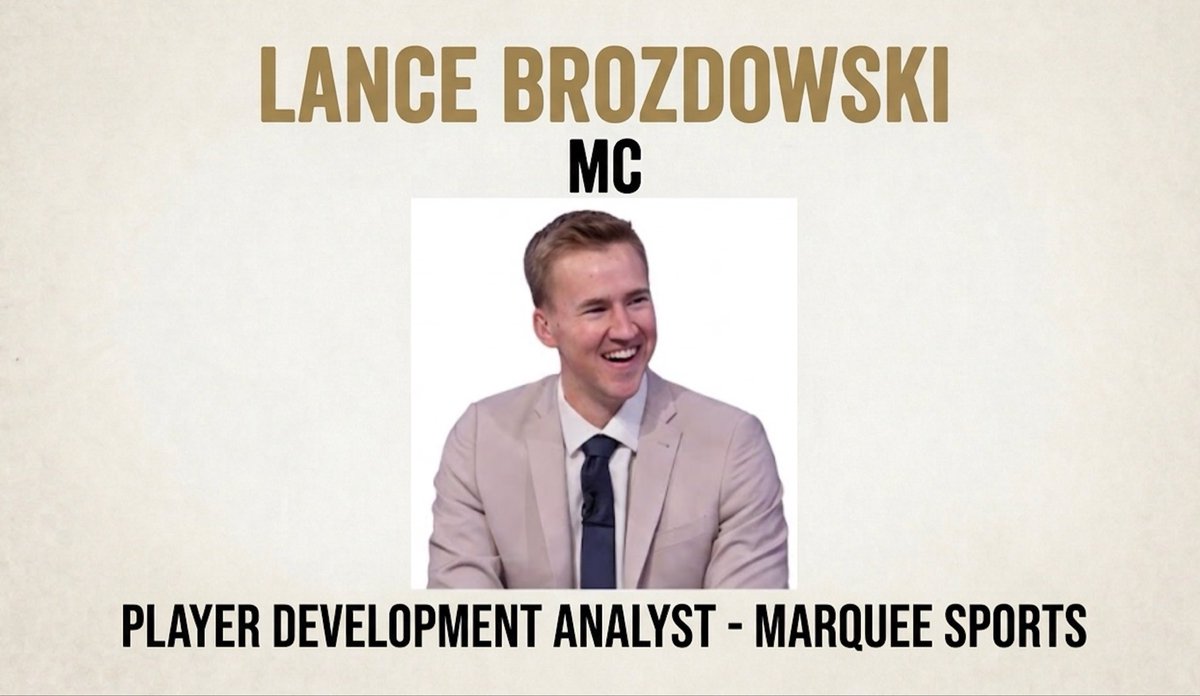
Returning as our MC for the 2026 Wake Player Development Seminar: Lance Brozdowski! We are excited to have Lance back to help lead another awesome speaker lineup to come
Tickets for the event are now live! Use code “EarlyBird” thru September for $50 off
https://t.co/DZHzySf13p
We found the PW. Turns out “check the sticky note on the server” still works in 2026.
The work never paused. The posting did.
Glad to be back.
#GoDeacs
The Bridge videos are ready for purchase! You can buy the full 2023 package for $500 at the link below.
We are also offering a combo package with the 2022 video for $600.
https://t.co/g5BepBLyhx
Can’t say enough about the Bridge Seminar put on by @MikeMcFerran_ & @WakePitchingLab
A collective effort to push the game forward, bringing the absolute best in the game under one roof from biomechanists to surgeons and innovators in player development.
A can’t miss event.
Jimmy Buffi (@jameshbuffi) with @RebootMotion is next, compounded pretty nicely with the previous presentation on biomechanics.
He pointed out that one basic complexity in biomechanics data is simply defining WHEN exactly foot plant and ball release happen, as both occur over a period of time (Edgertronic footage will show you this).
Reboot’s goal is to “build a model that classifies injury probability based on physics based models.”
Two results of their studies that jumped out.
1) low alignment of torso and arm angle had one of the highest injury improbability increases.
2) high torso velocity and high torso alignment with arm angle had the highest correlation with ball velocity
So, as Emily said in the prior presentation, alignment of torso and arm seems pretty important if velocity or health are of interest.
Hitting guy at a pitching conference generating the most laughs and having one of my favorite presentations was not something I expected. Dan Hennigan of Brains & Barrels killed it. @BBHprospect
A couple players he’s recently worked with: Ryan O’Hearn, Taylor Walls
He walked through some key phrases he uses in house to communicate ideas — “Blades & Wobbles” “Screws” and common terms like Shapes and Balance. The common language he used reminded me a lot of what Jagers mentioned regarding having agreed-upon language that stretches through organizations around central ideas.
My main takeaway from his talk is that something I’ve been thinking about a bit from the advance scouting standpoint — there is room to throw pitches that large samples of info say “don’t work” versus a particular handedness of hitter in situations versus specific hitters.
Dan walked through this concept versus two of the best hitters in the game (first pic below) but highlighting shapes that don’t work based on their swing preferences.
He also pointed out some hitters who struggle with versus specific types and why (ie, Alek Thomas vs breaking balls).
Fun topic to dissect, especially for those in the gameplanning space.
Pair of Mets presented next, @ericjagers & Kyle Driscoll.
Palate cleanser from the prior conversation about seam-shifted wake, this was much more of a discussion about experiences, which I found fascinating.
Lot of emphasis from Jagers on common language, allowing for a system to thrive when one individual cannot be everywhere at one time. First picture below of Super Coach illustrating this point.
Multiple book recs from as well, check the last picture below.
Driscoll had a really interesting portion where he asked what makes a good coach, summarized it into the pyramid pictured below, and then emphasized that he thought the time input into coaching was that same pyramid inverted—too much time put into technical acumen, not enough on the interpersonal/empathy side of things.
Glenn Healey on seam-shifted wake is next. Great historic breakdown of where we’ve gotten to with optical tracking (Hawkeye).
I really liked a graphic he leaned on to show magnus movement (movement via spin) versus seam effects (air flow around back effecting movement) — first picture.
First arrow shows movement via spin. Second arrow shows movement due to seam effects (which results in total movement). I’ve never thought of movement as components like this, mainly because the info is not publicly available.
Color in the background is an intrinsic pitch value model. For first picture, darker is lower run value (better for pitcher). In the video darker color means LESS contribution of seams to movement.
Random point that stuck out: <1,000th of 1” variance in seam height has effect on movement.
@ReinselRyan jumped in after Healey and showed some awesome visuals related to Healey’s model in a practical application sense. Essentially they’re able to show how much effect an individual seam has on ball flight at different points as the ball rotates through space.
I’ll throw a video below to show this. Watch how the color on the seam changes.
Still digesting this one, super dense, but have talked to multiple people in baseball that see the application of models like this as the frontier most sharp teams are on right now, and some are probably even further along. (I hope all this is correct.)