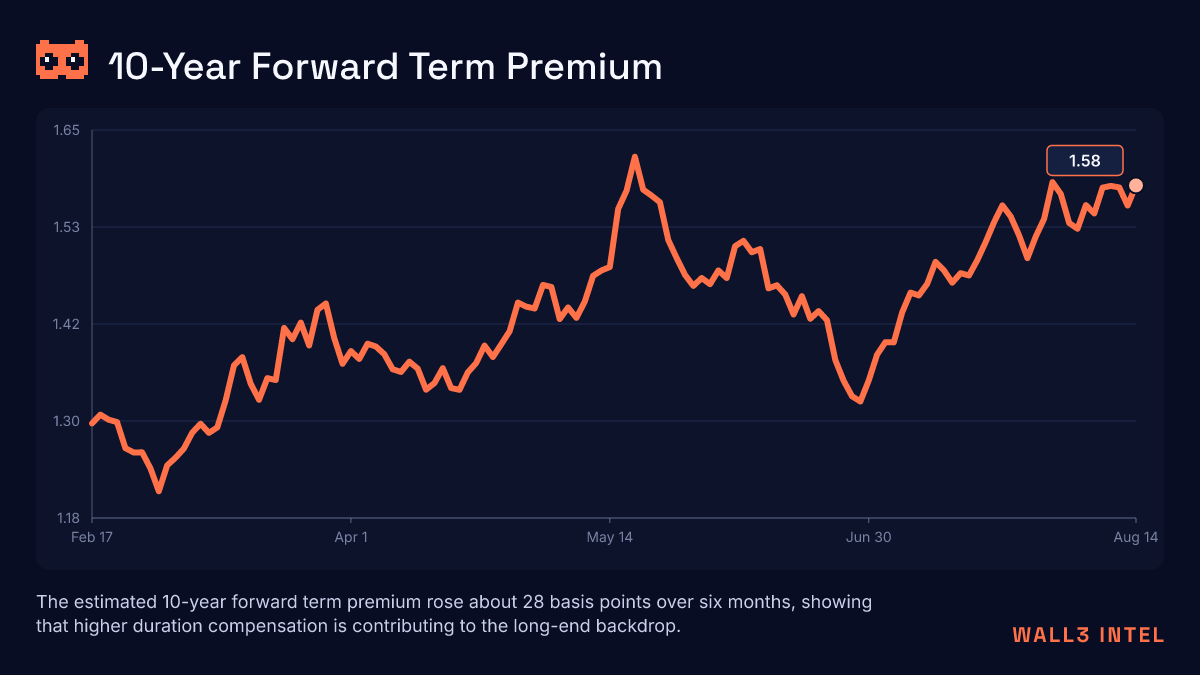
The Fed need not hike for duration to stay restrictive. Fiscal deterioration can create a debt-service, borrowing and term-premium feedback loop. Recent long-yield declines show the path is not one-way, but long bonds, mortgages and duration equities remain vulnerable.
U.S. resilience could be more bullish for the dollar than global risk: firm demand and an inflation-first Fed preserve a relative-rate channel. But broad-dollar momentum is falling, so pressure on EM currencies, debt and importers remains conditional, not confirmed.
U.S. inflation surprises are cooling, but noisy, low-quality breakeven and inflation-premium gauges have firmed. If that compensation persists, lower real yields may translate into less of a nominal Treasury rally—and less valuation relief for long-duration equities.
Softer payrolls may not unlock Fed relief. Vacancy tightness is easing, but falling participation and labor supply can coexist with low unemployment and firm wages. Without broader slack, front-end yields and the dollar could stay supported, giving duration less relief.
Geopolitical threat pressure is cooling, but realized conflict remains elevated and the chokepoint signal has deteriorated sharply. Localized shocks could raise earnings and jump risk for exposed companies without broad panic, leaving the VIX calm as single-name risk rises.
Banks have moderately tightened card standards while delinquencies still eased. With savings near historical lows and spending stronger than short-run income, reduced revolving-credit access could slow transactions and discretionary demand before charge-offs confirm stress.
Labor costs remain historically elevated, but productivity is also strong. That can keep the Fed cautious while favoring operating efficiency: firms converting labor spending into output may defend margins better, though aggregate productivity data do not identify the winners.
A steeper curve is not a broad bank bull case. Term-premium steepening lifts asset yields while wider funding spreads, duration losses and borrower stress erase the benefit. That favors well-funded, short-duration franchises, though recent performance does not identify winners.
A hawkish September hold could hit weaker credit before broad markets. CCC spreads are historically stressed while broad HY and IG remain calmer. Preserved hike risk would keep refinancing costs elevated, making CCC-versus-BB dispersion a cleaner warning than broad indexes.
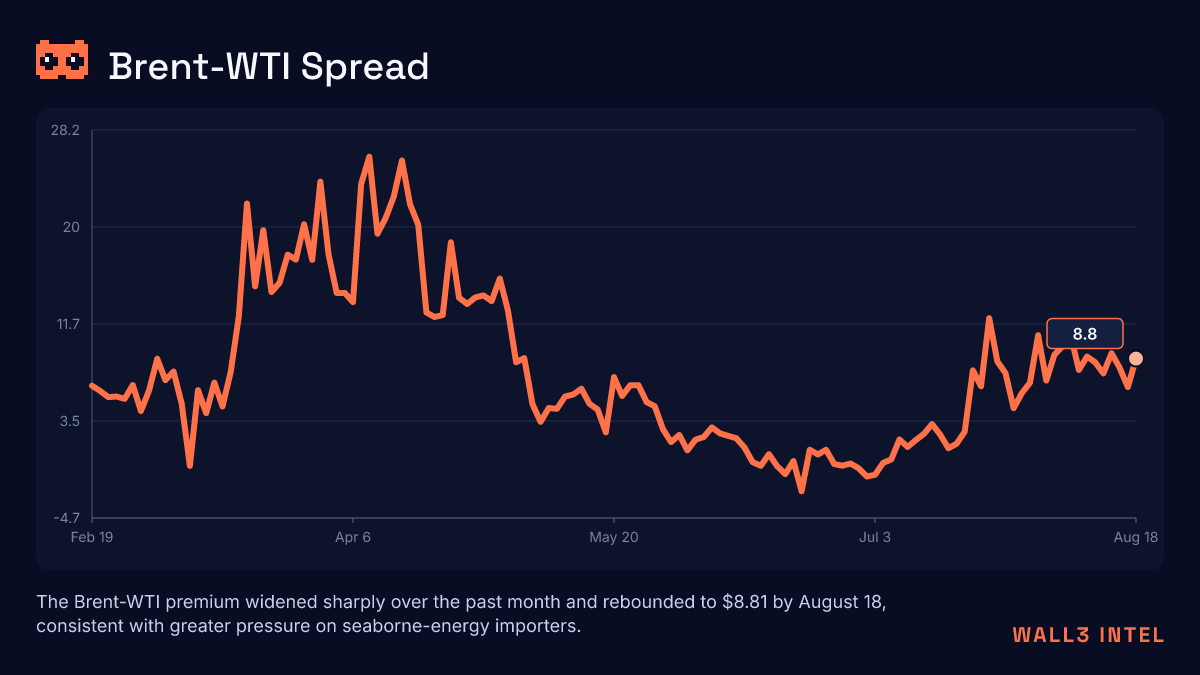
Hormuz stress is becoming a regional inflation trade. Physical disruption now backs noisy market signals. If the Brent premium persists, importer currencies, airlines and energy-intensive firms face higher fuel and freight costs, while Brent-linked producers gain protection.
Business-lending standards have eased as equipment output and core capital-goods orders stay firm. Card standards tightened moderately from early 2026 as saving fell to 2.7%. That supports relative resilience in capex over credit-dependent consumption—not a broad credit crunch.