We're welcoming @UG_Airlines to the Boeing family!
Uganda Airlines will expand its fleet with eight new fuel-efficient airplanes.
✈️ Four 737 MAX
✈️ Four 787 #Dreamliner jets
This order supports growing travel demand across Africa and on routes to the Middle East, Asia and Europe. #FIA2026
Release: https://t.co/YxYbezp9tV
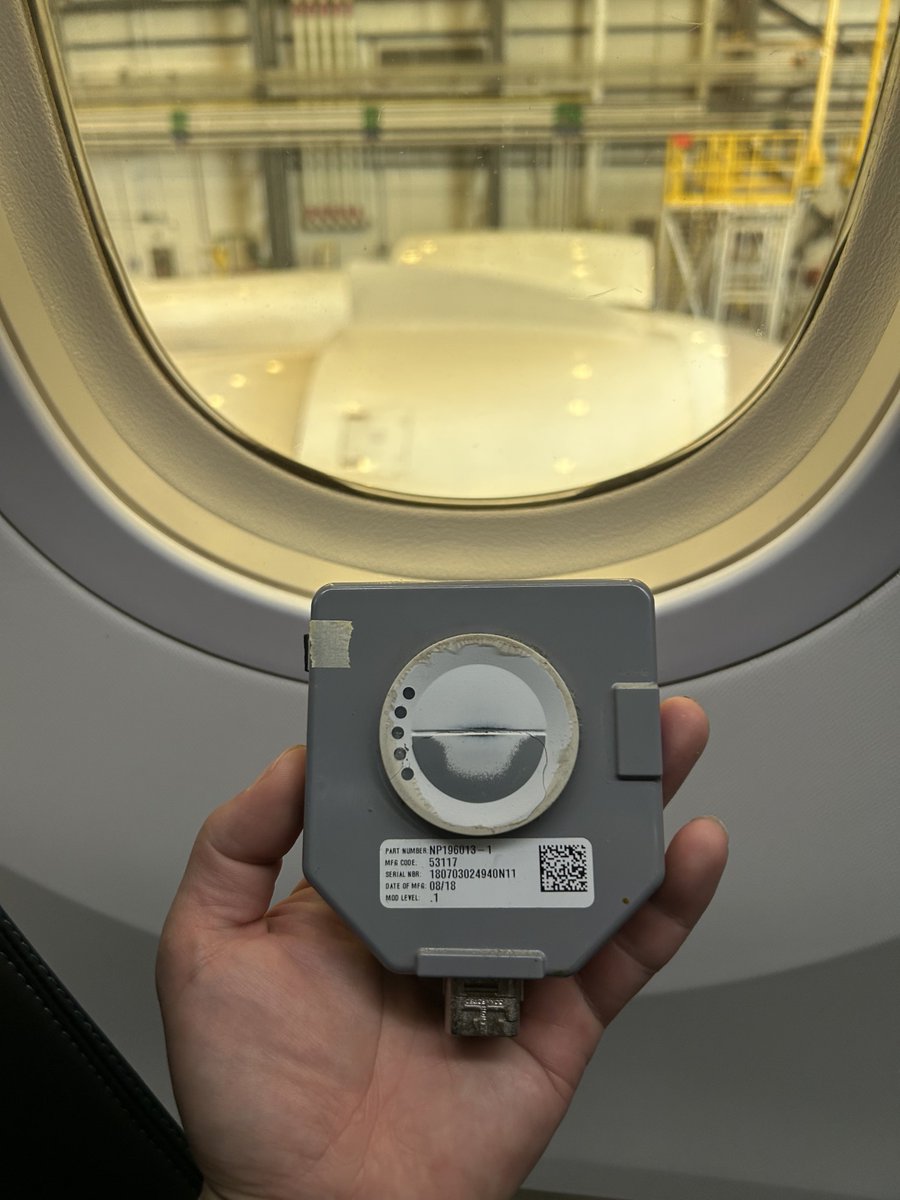
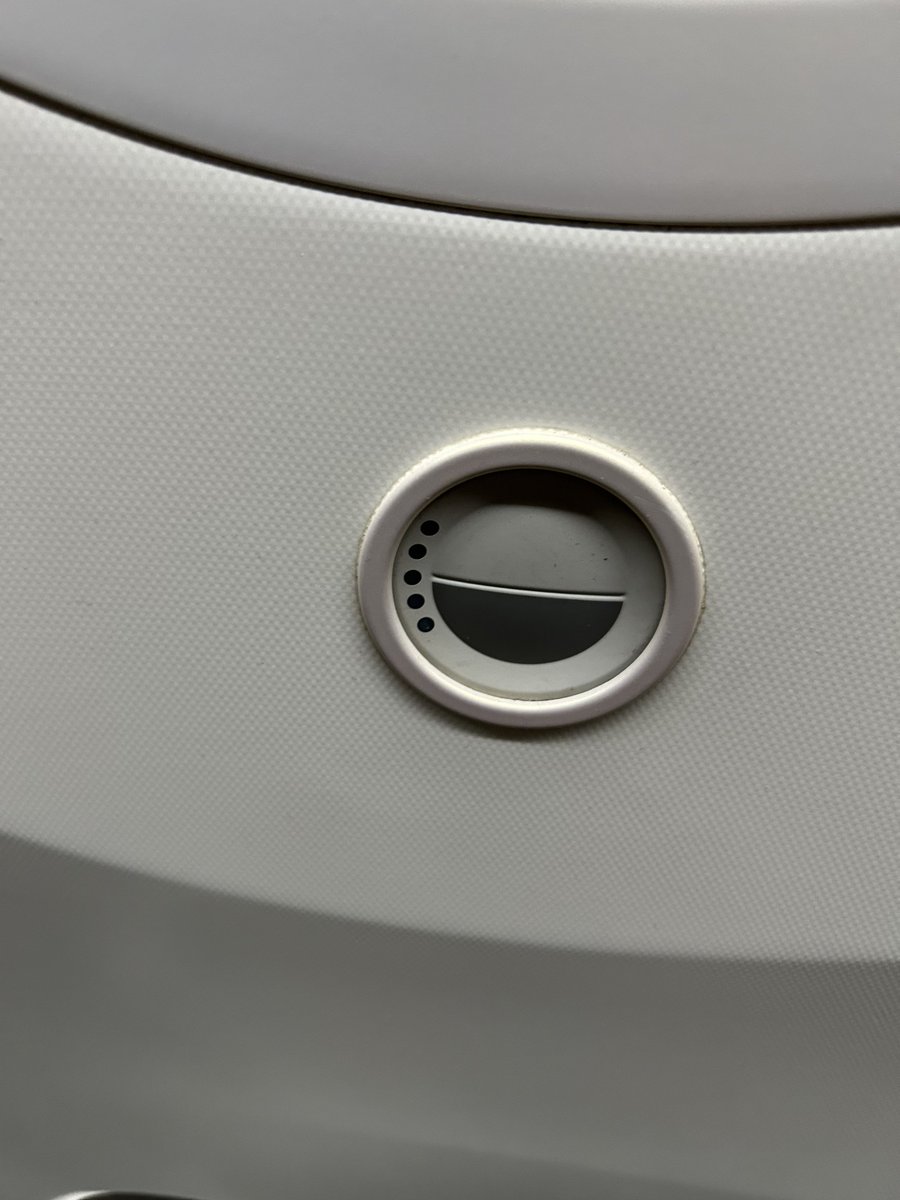
We often replace these electrical dimmable window push buttons on B787.
They control the electrochromic windows... you press to tint the glass darker, but the change is slow. Many passengers keep pressing because they think it's not working. This wears the button out fast.
Replacements aren't cheap.
END OF AN ERA: Reports indicate SAM 29000, one of the iconic VC-25A Air Force One aircraft, may have completed its final flights after 35 years of service. The heavily modified Boeing 747-200 served every president since George H.W. Bush and became one of the most recognizable aircraft in the world.
A collapsed nose gear is an ugly thing, but look closely at what happens when you design an airplane with an intense level of forethought for such a failure. The weight sits entirely on the 787’s nose — not the engines — and the MLG doors still open freely.
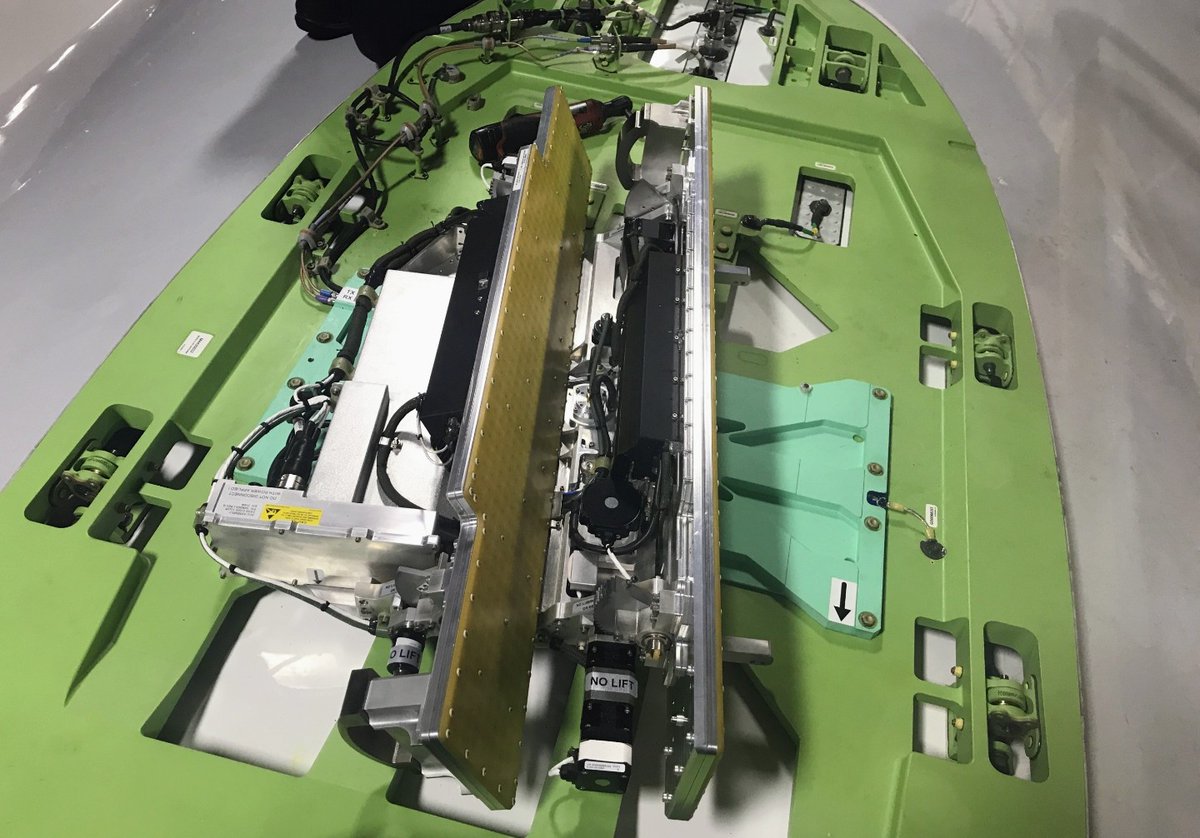
That hump on top of an aircraft is what enables in-flight Wi-Fi.
It’s called the radome, and it houses the satellite antenna system for broadband internet. Here’s a closer look at what’s inside:
Under the radome, the two antennas continuously swivel and adjust to different angles as they rotate. These constant movements allow them to stay locked onto the satellite, no matter which direction the aircraft is flying.
📸: Lou Koumades
I find myself frequently explaining the air systems of an airplane in replies, so let’s do a post to try & answer questions.
I’ll base everything on the 737, but most jets are similar.
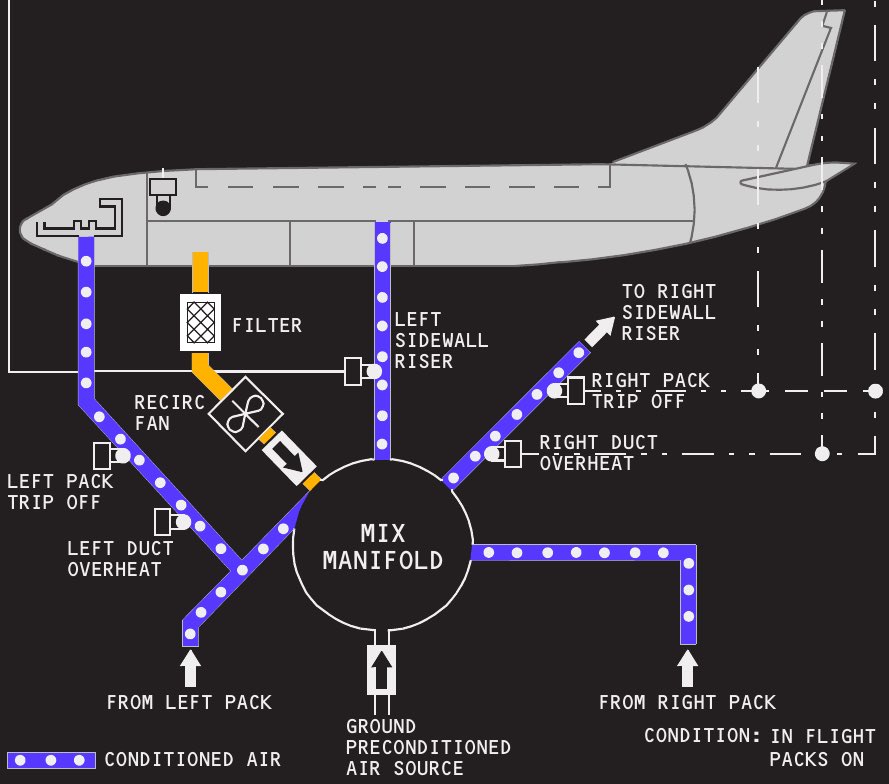
At the gate as you board, air comes from one of two sources: Ground Air (called PCA, or Pre-Conditioned Air) which is basically a big air conditioner mounted on the jet bridge, or the Auxiliary Power Unit (APU) which is a small turbine engine in the tail, providing both electrics & pneumatics to the jet when the engines are off.
I usually find the PCA gets too warm in the summer. It pumps out good air, but for whatever reason the jet gets warm. It might be because it travels to the jet via a big yellow hose that attaches to the belly & that hose is out in the sun. I don’t know.
In any event, the APU pumps out a little more air than the PCA, and I can control the temperature better. At my airline, they don’t let us run both APU air & PCA at the same time, as they fear over pressuring the ducts, but I hear other airlines do. I have done it in the past & watched a duct shut itself off…thankfully it came back on when I shut off APU air.
Anyway, when you disconnect PCA at the gate, you switch to APU. They also remove ground electrics at that time, which the APU takes over for as well.
(The APU air path is not included in the diagram below, but it’s the best I can find)
Then we push back from the gate.
During engine start, there is a brief period that we divert APU air to the engine. This spins the engine, which allows us to introduce fuel & ignition. Once the first engine is started (the right one, number 2), we take air from it to supply the cabin.
Pay attention here: even though the APU is not supplying air to the cabin during this moment, you’ll notice some air is coming out of the vents, albeit at a lower pressure. We’ll talk about that in a second.
For simplicity’s sake, just understand the engines supply cabin air the rest of the way. We can use the APU, but we shut it down as soon as the engines are running. No need to waste fuel.
All of these air sources go through a process of cooling via a heat exchanger (I’m simplifying), except the PCA…because, as it says in the name, the PCA is pre-conditioned. Anyway, once brought down to temperature, it goes into the “Mix Manifold”.
The Mix Manifold is where the outside air meets the recycled air, taken from the cabin. Remember how there is still air coming from the vents when the APU air is diverted to start the engines? That’s because the “Cabin Recirculation” fans (there are two) are always on & pulling air from the cabin to go into the Mix Manifold. The “Recirc Fans” are just left on at all times, unless we have smoke in the cabin & need to stop circulating it. They also turn off automatically when we shut the battery off on the last flight of the day. They can turn themselves off under some conditions of the engines, but that’s not meaningful to your understanding. Just remember that those switches are left in “on” & we don’t touch them unless an emergency checklist tells us to.
So, the Recirc Fans are constantly pulling air from the cabin through a big HEPA filter. They push that air into the Mix Manifold, where it mixes with PCA, APU or engine air & gets distributed to the cabin.
On landing, we start the APU back up. It will take over air & electrical duty from the engines so we can park at the gate, then reconnect PCA & ground power. Once they are connected, the APU is shut down.
You may wonder what the term “PACK” means in the diagram. This refers to the air-conditioning “packs” for each engine. We just call them packs, but it’s where the heat exchangers I referred to earlier are (it’s more complicated than that, but it won’t help your understanding).
Now, it’s possible to have the engines off, no PCA & no APU at the gate. That’s not the norm, but even in this scenario the recirc fans are still pushing air. It just doesn’t get cooled, so the jet gets hot.
Hope that helps!
If you ever wanted to see the flaps in action on a 737-8, well look no further. Watch how everything works in unison to bring down the flaps.
📹: stigaviation
Esto cambiará tu manera de pensar sobre el cielo.
¿Sabías que una reparación de motor puede costar 10M$ y tardar 9 meses?
Lo que ves en el vídeo es el "arte invisible" del MRO: cada aspa se mima como si fuera de cristal bajo manuales de 10.000 páginas.
La seguridad no se decide en el aire, se garantiza en el hangar a las 6:00 AM.
¿Pagarías más por tu billete sabiendo el coste real de este mantenimiento?