findings are of interest for long-term stays in extreme environments, such as space flights. Monitoring psychosocial functioning and social interaction will be key for successful human space exploration.
Happy to see our new paper �� out:
Social interactions in isolated, confined, and extreme environments: A study of Antarctic winter teams using wearable sensors | PNAS https://t.co/lyTcoAJoHX
@Team_Schmutz @UZH_ch @unibern @Uniklinikum_Wue
during extended stays of small expert teams in confined extreme environments, social interaction and team coherence decrease, while loneliness, paranoid ideation, and team conflicts increase. Surprisingly, intense social interaction was associated with more paranoid ideation.
New paper alert:
Much insight from a simple measure of motor control and general fitness:
Transdiagnostic Patterns of Grip Strength in Schizophrenia, Current Depression, and Remitted Depression https://t.co/t0cGdXzEXR
🧠 New Editorial in JPN! 🧠
"Half of us are blind, few of us feel, and we are all deaf." — Osler.
In our latest piece, “Quantitative Semiology: AI-Generated Teaching Signals in Psychiatry,” we explore how psychiatry can evolve by embracing clinical signs
https://t.co/T5xLzMajgQ
🧠mechanisms of psychomotor abnormalities...
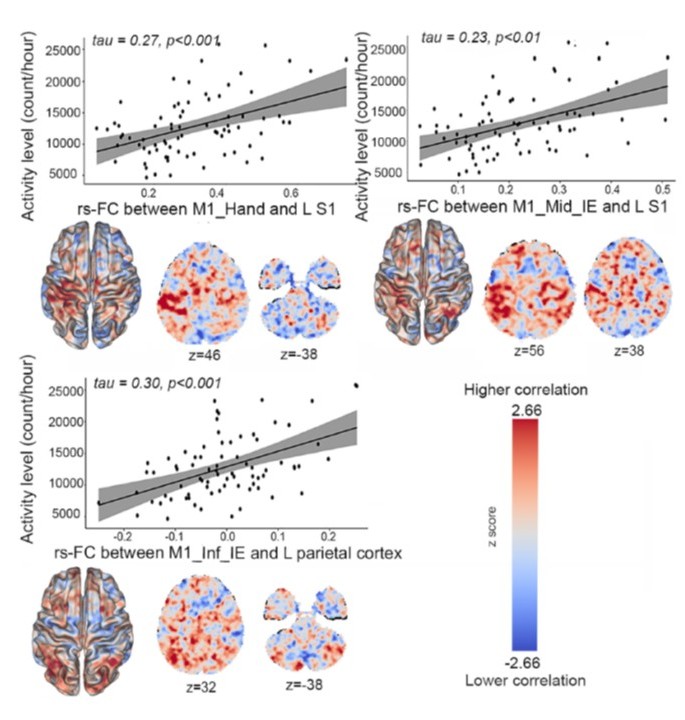
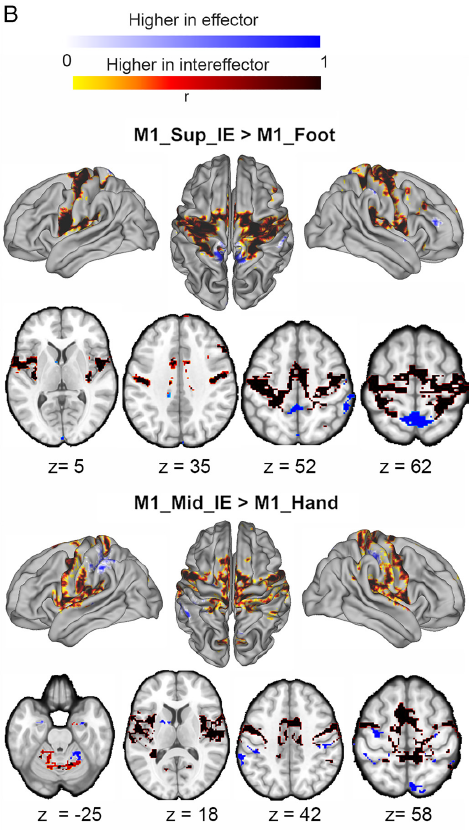
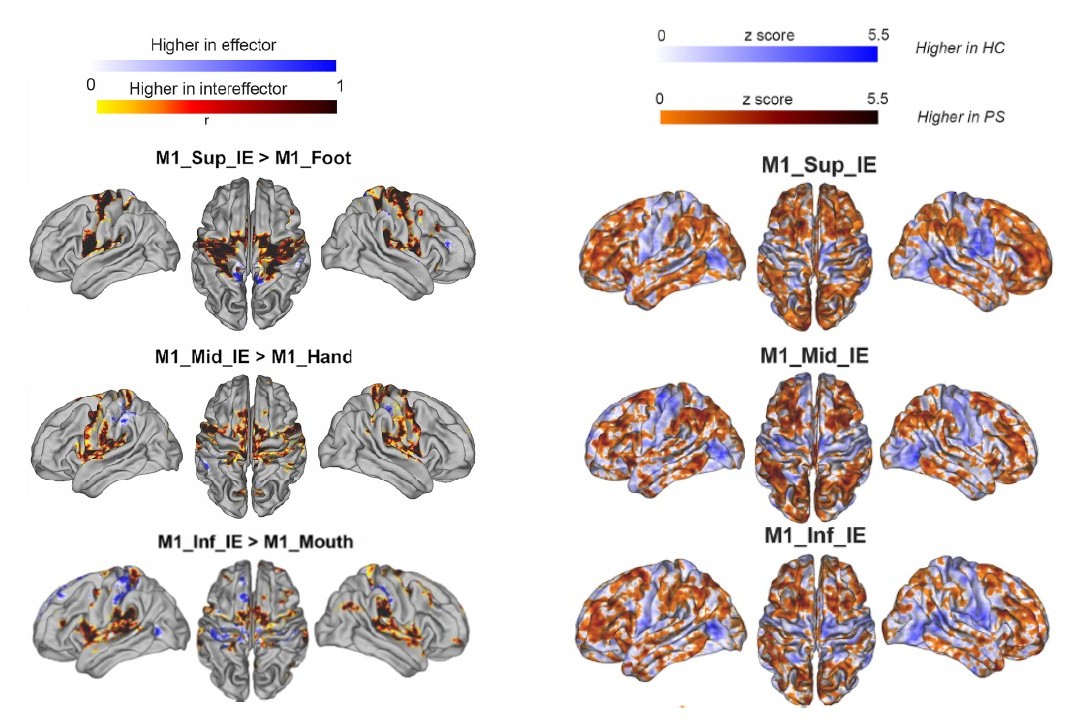
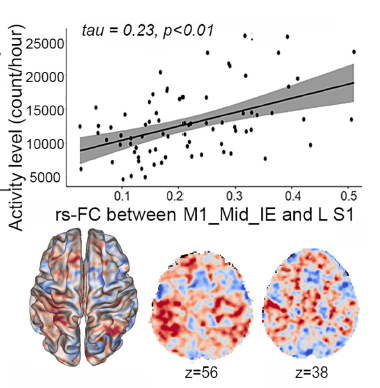
Our @PNASNews paper shows distinct areas in the primary motor cortex are involved in psychomotor behaviors. Orchestration of complex movement is impaired and could become a TMS🧲target
https://t.co/y5YAwhcdbI
https://t.co/UmQCFwKeuj
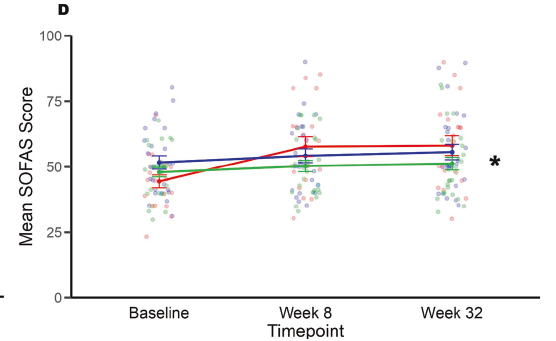
Our exciting RCT is out. We combined rTMS with group psychotherapy in psychosis to improve nonverbal communication and social functioning. The combination improved social functioning that was maintained six months after the trial.
@molpsychiatry
https://t.co/2BcPzPW7bY
Our exciting RCT is out. We combined rTMS with group psychotherapy in psychosis to improve nonverbal communication and social functioning. The combination improved social functioning that was maintained six months after the trial.
@molpsychiatry
https://t.co/2BcPzPW7bY
We thought we knew the primary motor cortex. Turns out that functional organization is more complex. The intereffector regions in M1 are altered in psychosis with psychomotor slowing and connectivity is linked to complex behaviors.
New paper in PNAS:
https://t.co/y5YAwhcdbI
New paper @SchizBulletin w/ 943 schizophrenia and 250 high-risk for psychosis participants replicated across 6 datasets: defeatist performance beliefs have 3 factors (Overvaluing Success, Failure, and Social Evaluation) reflecting separate txt targets for negative sx
🚨We are hiring a ⭐️Research Assistant⭐️ to run rTMS 🧲🧠 clinical trials in people with substance use and psychosis @VUMCPsych ! RAs get lots of clinical contact and experience with neuromodulation! Great for someone applying to MD or PhD programs! https://t.co/qr6peVuAzg
We are hiring!
Postdoc position in Data Science in Neuroscience in our lab @EPFL_en Cutting-edge research analyzing rich datasets (VR, physiol, behav, metabolism, neuroimaging) to understand stress, anxiety & motivation
https://t.co/vFFA2wnEqJ
#Postdoc#DataScience#Neuroscience
New publication in #Neuroscience and Biobehavior Reviews! We propose a new model that links #social#connectedness with individual differences in social information processing.
👀➡️https://t.co/N0P82BLaIF
👏🏾👏🏼👏Herzlichen Glückwunsch an Maximilian Friedrich zum NeuroTech-Innovationspreis @DSZimSV Mehr über seine Forschung zur KI-basierten Videoanalyse in der Neurologie, insbesondere bei Bewegungsstörungen wie der #Parkinson-Krankheit erfahren Sie hier ➡️ https://t.co/JG1cnlrwwg
Happy to see this out. A review on sensorimotor systems and psychopathology led by rising star Juston Osborne
Aberrant psychomotor behavior is found in multiple psychiatric disorders and may aid early detection and staging
@AdaptProg@NEARLab_
A new review examining the #RDoC Sensorimotor Systems Domain illustrates how motor system dysfunction is involved in the pathophysiology of many psychiatric conditions; https://t.co/hUhIRByxSy @WaltherSeb@AdaptProg