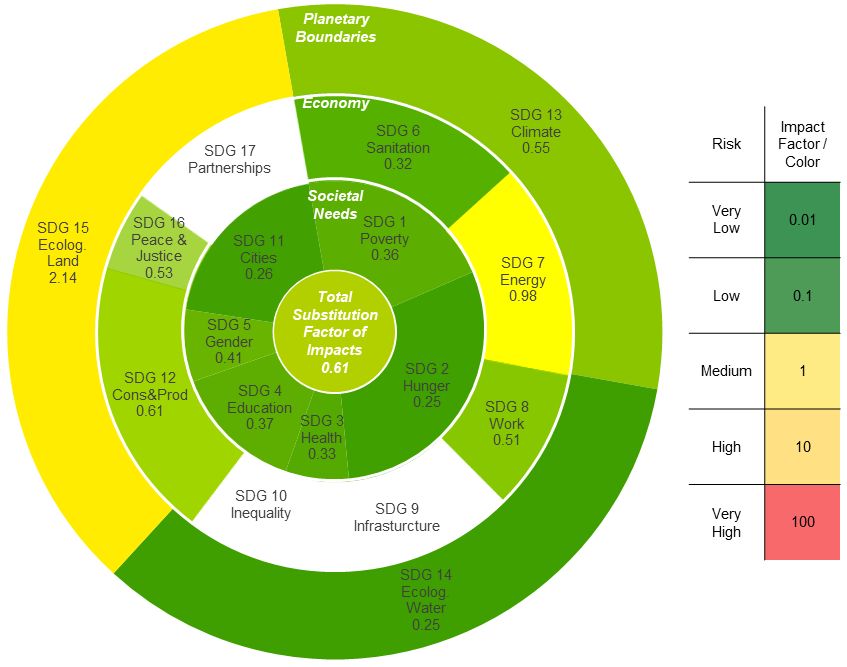
The HILCSA method (https://t.co/jNkJ7oQqa0) I developed is now licensed and applied by TRASH GALORE. HILCSA allows a social, ecological and economic sustainability assessment of products and production systems, in research and anywhere where holistic sustainability matters.
We've recently launched a new survey on the economic dimensions of bioeconomy which aims to gather your perspectives on bioeconomy transformations.
https://t.co/MnU7kmHuxR
Your participation is greatly appreciated, thank you in advance!
Eine neue Folge Future Histories!
Diesmal Teil 2 des Gesprächs mit @WaltherZeug über Material- und Energieflussanalyse und sozio-metabolische Planung und Walthers mit @Jakob_Heyer_ verfassten Artikel in der neuen @Ztschr_Prokla:
https://t.co/XbQ6aKRACB
#FutureHistories
Eine neue Folge Future Histories!
Diesmal spreche ich mit Walther Zeug (@UFZ_de) über Material- und Energieflussanalyse und seinen mit @Jakob_Heyer_ verfassten Prokla-Artikel (@Ztschr_Prokla) zu Ökobilanz und kybern. Wirtschaftsplanung.
Zu finden hier:
https://t.co/zeUpqYQrAN
@FutureHpodcast [2/2] and socio-metabolic planning (only in German, more episodes in English will follow). If you are interested check out all the other English and German episodes with a lot of interesting people, topics and visions.
#transformation
https://t.co/VThoj9p0ye
I had the honor of being a guest in the wonderful @futurehpodcast, which is one of the most important scientific-political platforms for the debate on transformations and possible futures. In the first two episodes with me we discussed material and energy flow analysis [1/2]
The HILCSA method for social, ecological and economic sustainability assessment of production and consumption systems is now available for non-commercial use free of charge. For commercial inquiries, please contact us directly. #lca#lcsa#sustainability
https://t.co/zqx6QLxx5Y
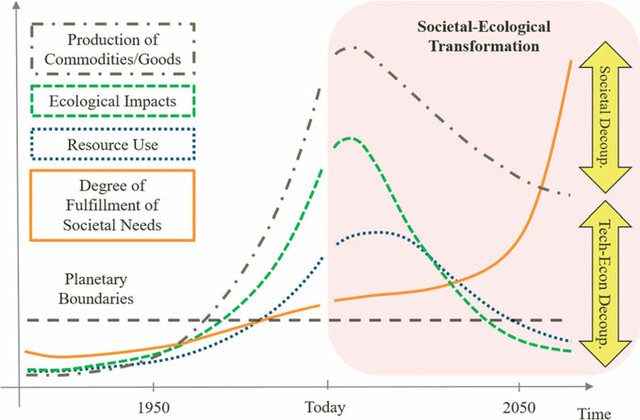
This method can not only be applied to current production systems and sustainability problems, but also refers to problems of transformations towards non-capitalist economies. (2/2)
In a recent article I show how political economy, social sciences and engineering methods are applied in Holictic and Integrated Life Cycle Sustainability Assessment, to analyze the social, ecological and economic impacts of production systems. (1/2)
https://t.co/1rCA8zB8px
yesterday I participated in a workshop on ecological economic planning with @E_Hofferberth @DominikPietron @WaltherZeug (among others)
this has been an incredibly revitalizing event, here are some short personal reflections on it and my networking work
RT @[email protected]
Kann #ChatGPT dazu benutzt werden, massenhaft #Desinformation ins Internet zu bringen?
Leider ja!
https://t.co/Gxdp6NwxBR
https://t.co/I61p8SSKRm
socio-ecological #crisis. To produce transformative-oriented #knowledge, fundamental changes are required within the science system.
https://t.co/BiJ07AxTfI [accessed Feb 13 2023].
https://t.co/BiJ07AxTfI (2/2)
We recently published a new paper on how science is challenged by the 2030 agenda #SDGs. #Science has never been unpolitical or free of norms and values, but the conflicting goals, values and visions have to be even more reflected in the currently intensifying (1/2)
The UFZ offers 4 PhD positions in the interdisciplinary graduate school “Governance Monitor”.
- Development of approaches and methods for the long-term tracking of environmental governance narratives to assess how policies promote or hinder societal sustainability (1/2)
- Monitoring of narratives on risk assessment and management measures for the sustainable use of chemicals in a circular economy: https://t.co/rr6IhZObB1
- Narratives in Germany and in Europe regarding the establishment of national and regional monitoring systems for the (1/2)









![WaltherZeug's tweet photo. I had the honor of being a guest in the wonderful @futurehpodcast, which is one of the most important scientific-political platforms for the debate on transformations and possible futures. In the first two episodes with me we discussed material and energy flow analysis [1/2] https://t.co/H3LEnGYq6e](https://pbs.twimg.com/media/GPti1rkXEAAWksy.jpg)