🔥PRIVACY TOKENS ARE ON ABSOLUTE FIRE RIGHT NOW
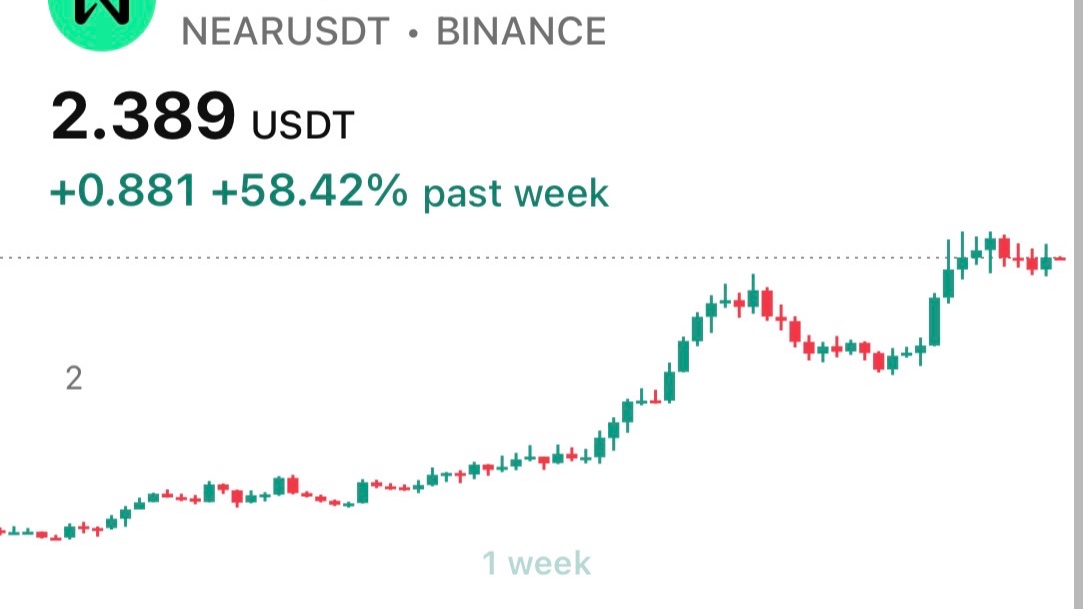
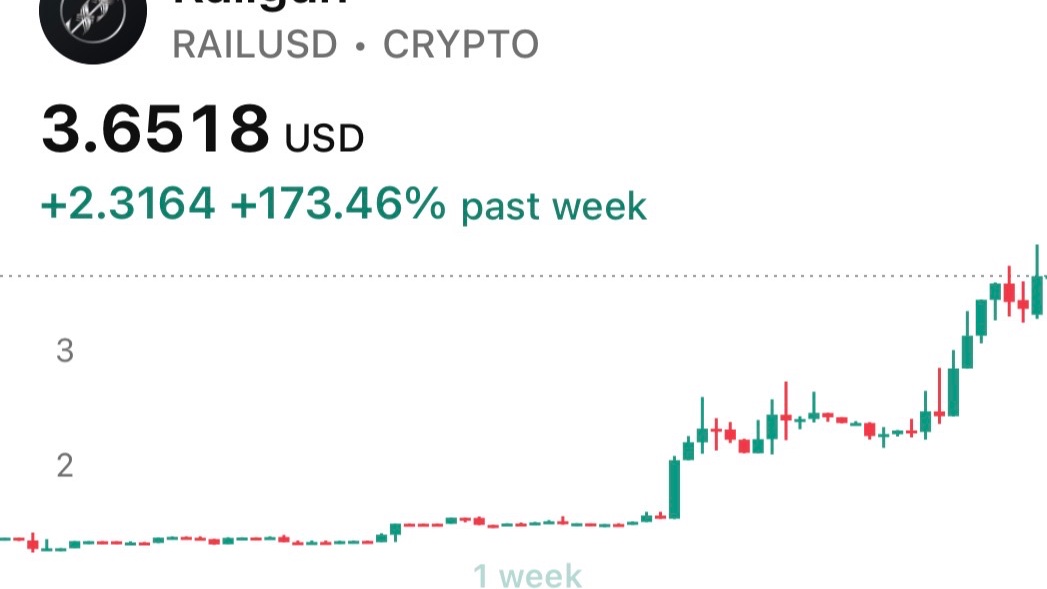
Railgun’s RAIL has surged more than 150% in just 7 days, while Near Protocol has jumped another 50% over the same period.
The privacy trade is rapidly roaring back into focus after Zcash’s explosive rally earlier this year.
Led by $ZEC, privacy coins are once again the hottest meta, but which privacy protocols actually make money?
At the top is @RAILGUN_Project ( $RAIL ), with annualized fees of $4.7 million, accounting for nearly 50% of all fees generated by privacy protocols.
@TornadoCash ( $TORN ) comes in second with $2.7 million (27% of all fees). The only other protocols with annualized fees north of $1 million are @HoudiniSwap and @theprivacycash.
If privacy remains a dominant trend, expect fees across the sector to continue climbing.
Led by $ZEC, privacy coins are once again the hottest meta, but which privacy protocols actually make money?
At the top is @RAILGUN_Project ( $RAIL ), with annualized fees of $4.7 million, accounting for nearly 50% of all fees generated by privacy protocols.
@TornadoCash ( $TORN ) comes in second with $2.7 million (27% of all fees). The only other protocols with annualized fees north of $1 million are @HoudiniSwap and @theprivacycash.
If privacy remains a dominant trend, expect fees across the sector to continue climbing.
RAILGUN hit $91.88m TVL this week, fresh ATH. $4.7m in protocol revenue on $2b+ shielded volume. that's a 5% revenue/TVL ratio, better than most of defi. ethereum foundation staked RAIL tokens. business privacy product launched may 4. privacy demand isn't declining, it's repricing into compliant wrappers. monero gets delisted, RAILGUN prints revenue. the market decided which version of privacy it wants to pay for
Raoul Pal: “The entire banking system will go to ETH”
Raoul explains:
“I find it hilarious that 1.5-2 years ago people were like, ‘ETH is dead.’ I’m like, 'No, the entire banking system will go to ETH.' That doesn’t mean it’s a mono-chain world, but I know how banks work… It’s really for them about Lindy effects — things that survive; things that you don’t get fired for; things that are proven — because nobody wants to lose their jobs over new technology.”
Etherealize co-founder Danny Ryan adds to Raoul’s point:
“I had to learn this. We’ve worked for a decade to make sure Ethereum is resilient, multi-client, is distributed across the world, has 100% uptime. And I had no idea until I talked to the banks: I’ve found a customer of decentralization. They just don’t know it. They care about uptime. They care about resilience. They care about the thing that’s been around for the longest. They care about the thing that no one can turn off. You just have to translate the language to them. And yes, the ‘no one gets fired for picking Microsoft’ dynamic is very real, and it’s in Ethereum’s favor.”
Raoul points to Ethereum’s developer network effect as well.
When Brian Armstrong posted that AI agents can’t open bank accounts but can use crypto wallets - and that there will soon be more AI agents making transactions than humans - it stuck with me. Not because it was an extraordinary prediction, but because of how casually it hinted at something massive.
If AI agents start transacting on our behalf - buying compute, paying for data, negotiating access to tools, coordinating with other machines - the internet could slowly evolve into an economy where software becomes an active economic participant.
Imagine waking up and your personal AI agent - let’s call it BaseAgent - has already been working for hours. Overnight, it rented a short burst of GPU compute to process a batch of research you received while you were asleep. It paid a data provider a few cents to access a niche dataset, pulled what it needed, and moved on. By the time you check your phone, the results are already summarized and sitting at the top of your inbox.
Later that day, BaseAgent notices a temporary spike in demand across distributed compute markets. Because you’ve allowed it to monetize idle resources, it leases a portion of your workstation’s unused GPU capacity into the marketplace. Somewhere across the world, another agent is paying to borrow those cycles. You don’t notice anything - your computer keeps humming softly under the desk.
That evening, BaseAgent notices a new contract posted to a marketplace offering a reward for a rapid breakdown of unusual activity across several DeFi protocols. Rather than taking on the entire job itself, it assembles a small network of specialized agents - one traces wallet flows across chains, another maps liquidity movements, and a third identifies possible arbitrage patterns. Within minutes, the work is completed, the analysis is submitted, and the reward is automatically split among the agents through their wallets.
There are no subscriptions to manage, no invoices to chase, and no billing departments in the middle. Just machines negotiating prices and settling payments instantly, around the clock.
It sounds futuristic, but it’s not as far away or bizarre as it might seem. AI agents weren’t designed to operate inside traditional financial systems built around accounts, approvals, and human identity. Crypto, on the other hand, was built from day one to move value across the internet without permission. In that sense, the two are a natural match.
Once machines can transact freely, they begin behaving like economic participants. They compare prices, outsource work, assemble networks, and move capital faster than any human ever could.
If that world emerges - and I think it will - crypto stops being something people speculate on and starts becoming something their software needs.
And when tens or hundreds of millions of AI agents begin demanding internet-native money to do business with each other, owning the assets that power that system may look less like speculation and more like being early once again.
🚕 BANKS: YOU’RE THE TAXICAB INDUSTRY -- AND UBER JUST PULLED UP.
At Consensus, Anthony Scaramucci basically told bank execs: crypto isn’t asking for permission. It’s coming whether you like it or not -- so either modernize the “taxi rules,” or watch the new rails drive away with your lunch.
The CLARITY Act push is turning into a real forcing function: the lobbying knives are out and the industry is trying to lock in market structure rules in this spring window (before Memorial Day starts to feel like a missed exit.)
If the CLARITY Act momentum holds, the “wait and see” era dies fast.
This is the moment for banks to pick a lane -- build, buy, or partner -- because once the rules are on paper, crypto stops being an edge-case experiment and becomes a distribution war. ⚔️
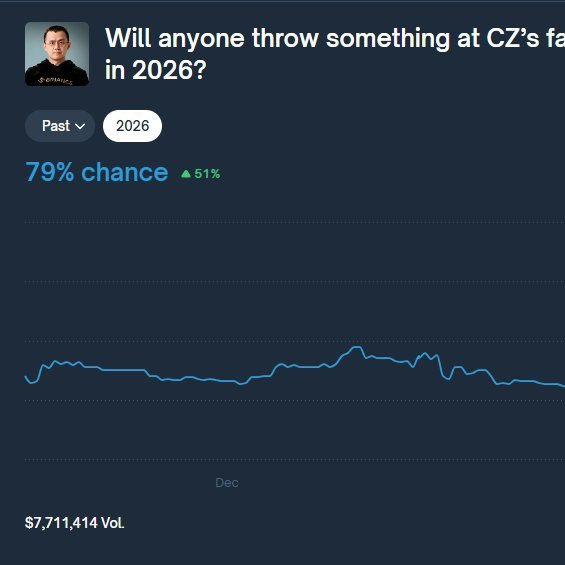
🚨Polymarket now shows a 79% chance of someone throwing something at CZ’s face at a crypto event in 2026, with over $7M in volume. Hate against CZ is getting wild.
A lot of people often forgot how fast crypto can move…
2021:
$SOL Went from $20 to $200 in 50 days. (10x)
$Doge went from $0.07 to $0.7 in less than 30 days. (10x)
$Avax went from $3 to $60 in less than 40 days (20x)
You only need 4-6 weeks for #alts to wipe out 3-4 years of suffering.
You don’t need 1-2 years for altcoins to make massive gains.
Key Window: Feb to Late April/Early May
- Waterman 🌊