@IsomorphismThm@claucece I didn't even claim that. The paper says "SNOVA uses a weak variant of the whipping technique of MAYO", which is what enabled the new attacks.
Spotlighting Greyhound 🐾, the new amazing work from @KhanhCrypto and @gregor_seiler!
A new super fast and compact polynomial commitments from standard lattice assumptions!
📚: https://t.co/hmaoBY0bNp
👨💻: https://t.co/jIEeYTcqWM
This is a very nice website on what women in academia face,as "We start our summary by stating common gender stereotypes such as "women just need to act like men to succeed in academia" or "academia is fair and objective - women are just not good enough".
https://t.co/sFYoVXBAwQ
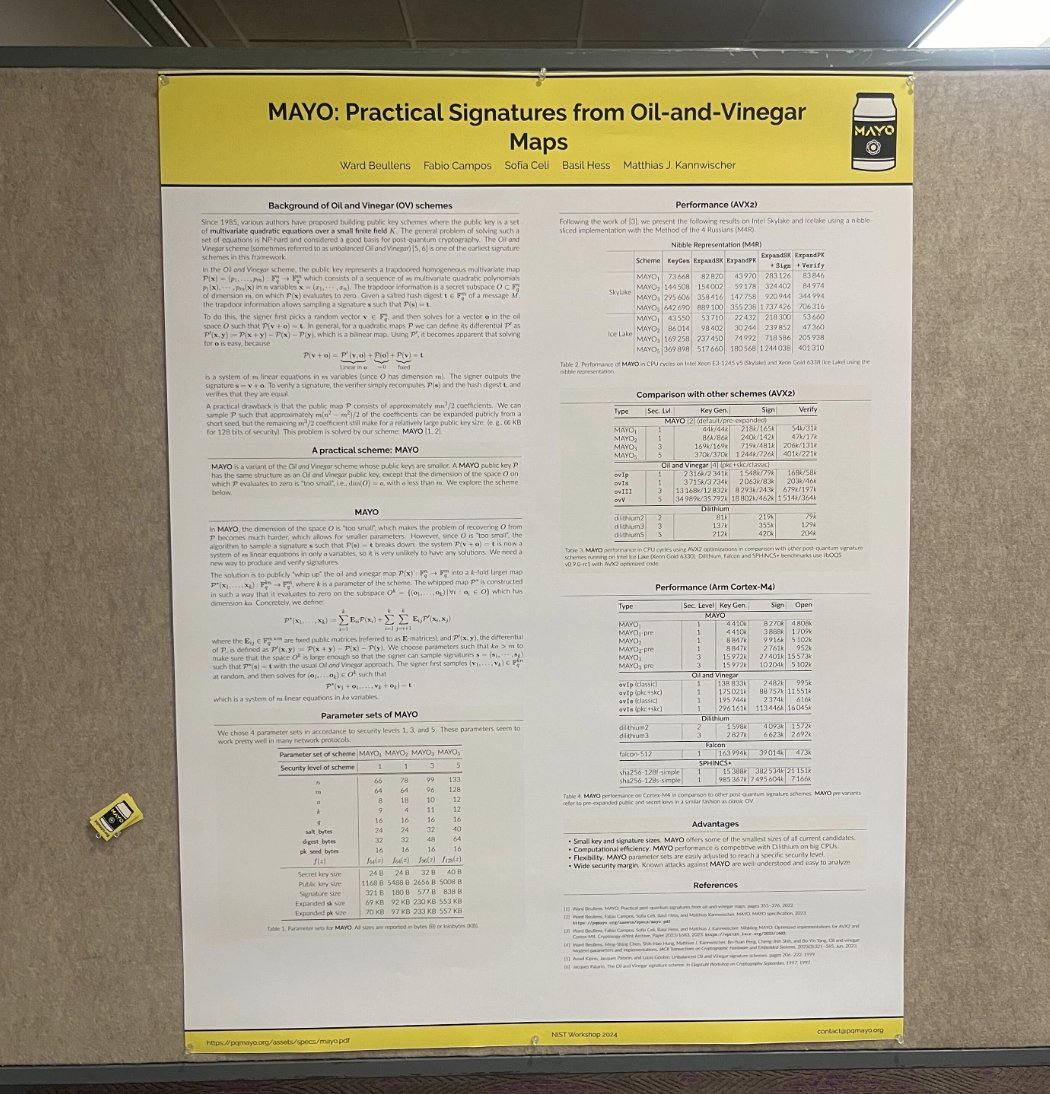
If you are around for the NIST's Fifth PQC Standardization Conference, go check our MAYO poster and talk to Matthias Kannwischer or @WardBeullens . They will presented our paper: https://t.co/nGo9M1VM3j and our poster!
@mjos_crypto Nice attack 👍😁 If I understand correctly their scheme expects the matrices in the signature to be invertible, but their implementation doesn't check this. So adding the check should prevent the attack, right?
Just looking at the sizes, PQMayo is the most promising submission to the NIST on-ramp I’ve seen. Also the cycle counts are better than expected. Just needs thorough cryptanalysis. 🤞
Recently out of the over is the MAYO-sage code: https://t.co/kYPsAltSar, where we aimed at creating an easy to follow implementation of the PQC scheme MAYO.
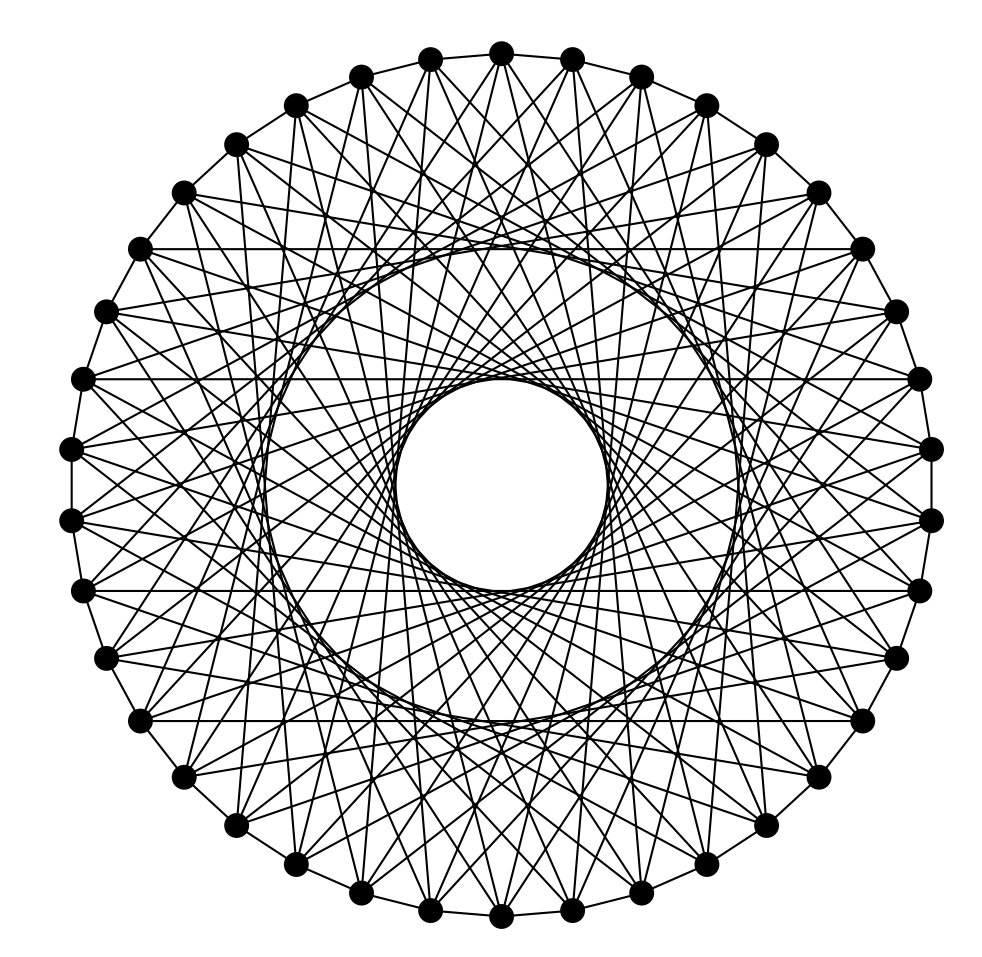
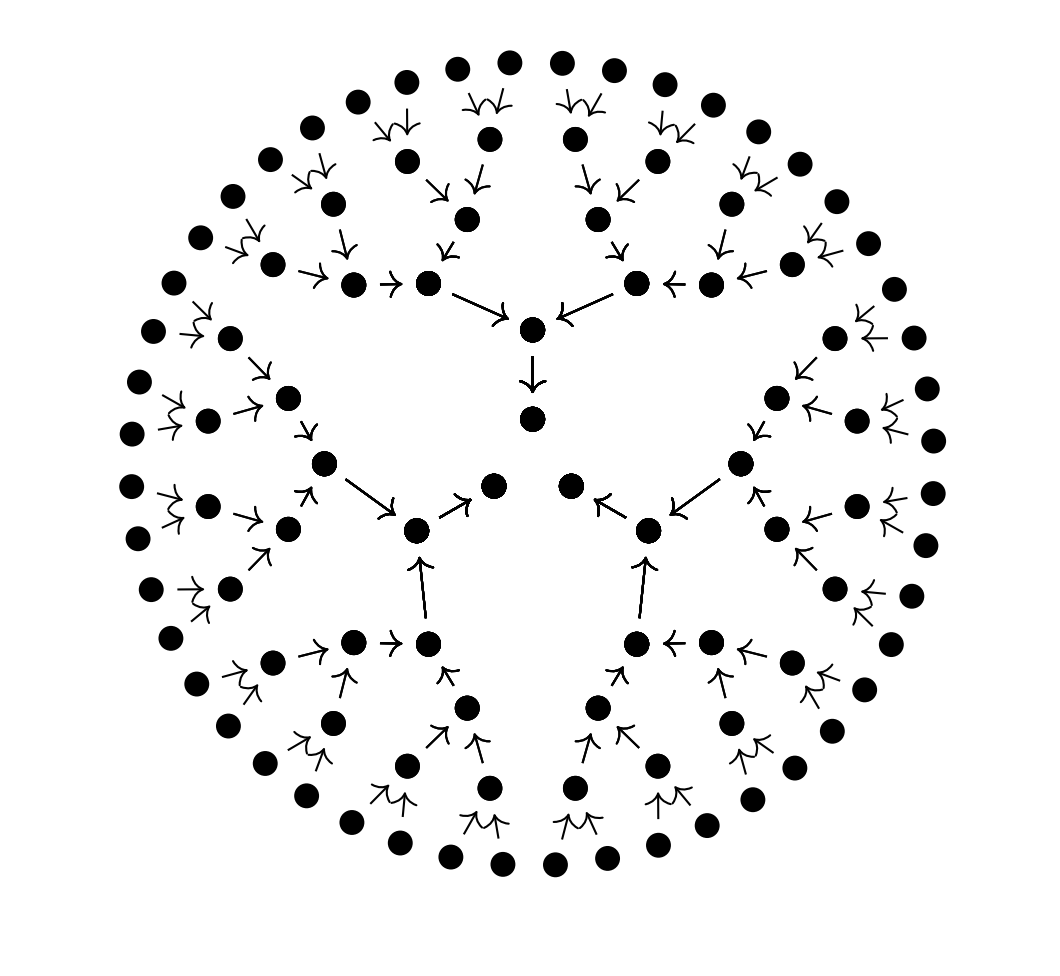
Isogenists have had a monopoly on pretty graphs for far too long! (By the way, I don't know why these graphs look the way they do, if you find out please let me know...)