On 2 June 1840, Thomas Hardy was born, a man who probably understood one uncomfortable truth about life better than most: fate possesses a far more developed sense of irony than the majority of writers.
Hardy was not born among aristocrats, university professors, or literary salons. He was born in a small village in Dorset, into the family of a builder and a mother with an unusual love of books. His father played the violin at village gatherings, his mother, Jemima, passed on to him a love of literature, history, and folklore, and between the two of them he received perhaps the finest possible preparation for becoming a writer: the ability both to observe life and to listen to its stories.
And perhaps it was precisely there that the future Hardy was born.
In the world of ordinary people.
Among fields, church bells, muddy roads, and that slow current of time which he would later transform into his literary universe of Wessex.
Because Hardy did not merely write novels.
He created an entire world.
A world in which nature is indifferent, society is harsh, love is beautiful and dangerous at the same time, and fate often appears as though it is secretly amusing itself at the expense of human plans.
“Nothing is so strange as what has happened.”
The longer one lives, the less this sounds like a literary aphorism and the more it resembles a statistical certainty.
His books are populated by people who struggle not so much against evil as against circumstances.
Tess of the d��Urbervilles is simultaneously one of the most beautiful and one of the most merciless stories about innocence in English literature.
Jude the Obscure is a novel about dreams that society refuses to allow to come true.
Far from the Madding Crowd is a reminder that love rarely follows logic and even more rarely concerns itself with consequences.
And behind all of this stands Hardy’s philosophy.
Not pessimism.
That is too simple a word.
Rather, a painful clarity.
A conviction that life owes us no justice, that nature does not negotiate with our desires, and that a human being must find dignity not in victory, but in the act of continuing forward.
At this point Bertrand Russell would probably have nodded in approval.
Because Hardy never attempts to comfort us with illusions.
He simply offers us the truth, and the truth is sometimes the highest form of respect.
The women in his life also resemble a novel.
His first wife, Emma Gifford, was the great love of his youth. At the beginning their relationship was filled with romance and intellectual attraction, yet over the years silence accumulated between them. After her death, Hardy fell into profound grief and wrote some of the most beautiful love poems in the English language, as though he had managed to speak truly with her only after she was gone.
Later he married Florence Dugdale, who was much younger than he was, yet this story too contained more complexity than peace.
Which would probably surprise no reader of Hardy.
“Silence is wonderful to hear.”
And perhaps that is the great lesson of his life.
To learn to hear what has not been spoken.
To understand absences.
To notice the missed opportunities, the unrealized loves, and the quiet tragedies that shape human destiny far more powerfully than great historical events.
The more I read Hardy, the more it seems to me that he was not a pessimist.
He was a realist with the soul of a poet.
And that often looks exactly the same in the eyes of optimists.
And as only Thomas Hardy could conclude a reflection on love and human nature:
“It is difficult for a woman to define her feelings in a language chiefly made by men to express theirs.”
Thomas Hardy and his wife Florence, 1915
Chance meetings with Kiwis, a house martin's house, wildflowers blooming, warm sunny days and beach games with the grandchildren.
A new blog for the start of summer.
https://t.co/Tm6kTkE5Lm
Ravel/Siloti, Shostakovich, Liszt… One of the most intense and thrilling piano recitals I have ever heard.
👏👏👏 @igorpianist
If you didn’t listen to the live relay on Radio3 this lunchtime, do listen later on BBC Sounds.
@PetrocTrelawny#WigmoreHall125
"Creatures came and went. Hedgehogs were discovered. A mouse squeezed himself between my floorboards. Ducks swam on the stream. Pigeons cooed from the dovecot. But though I made my wish, I never got the elephant that I had set my heart on."~C.R.Milne #GardenWildlifeWeek
Looking forward to tomorrow’s complete performance of Wagner’s Parsifal in Inverness Cathedral — with Sir John Tomlinson, no less, as Gurnemanz and Tomas Leakey conducting (plus a wee programme note from yours truly). Some tickets still available!
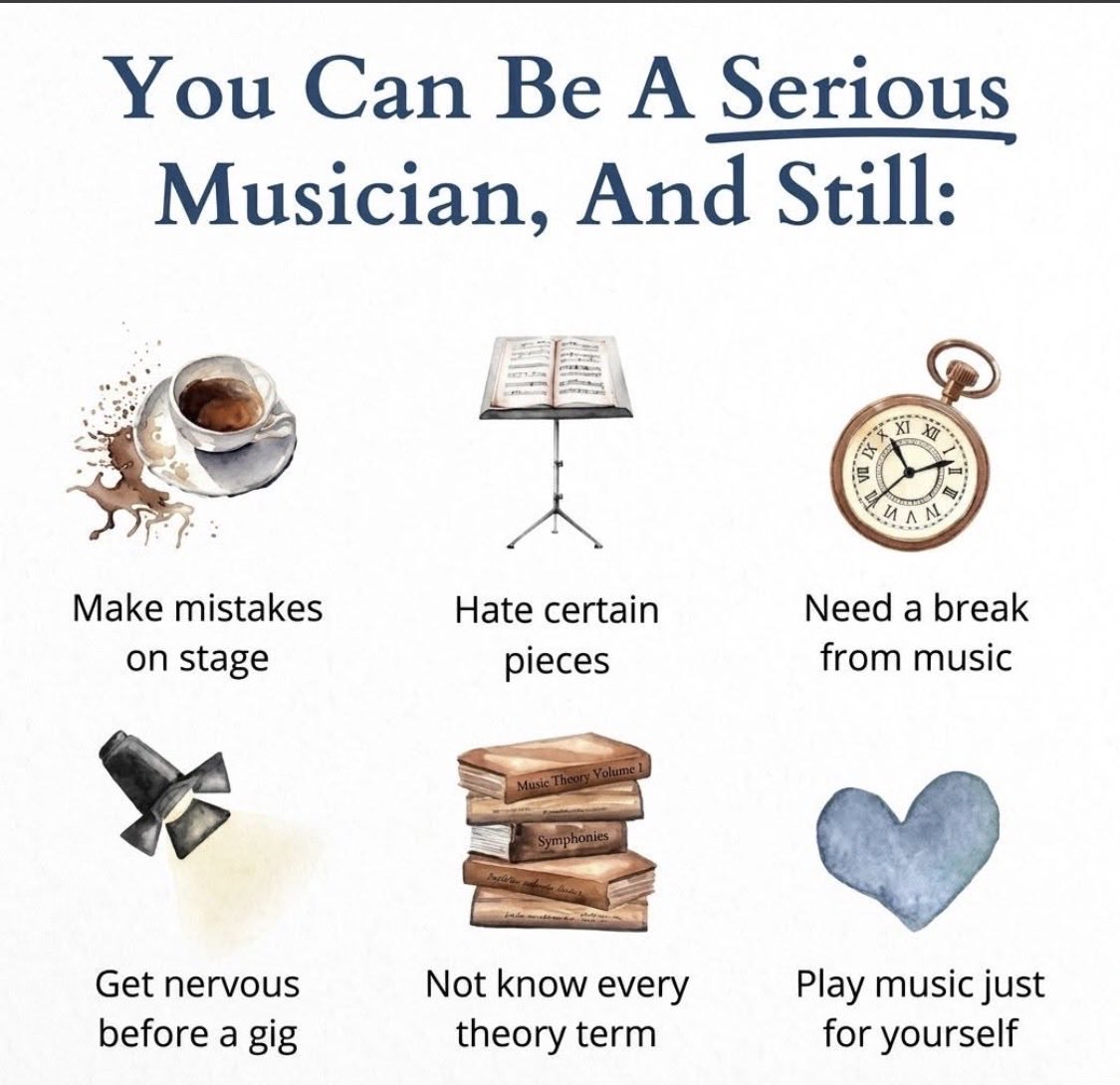
Good morning. Just a reminder. The most important thing for me is to be authentic; be you; if you play with commitment and passion that’s what audiences remember. #music