BREAKING: Even Keir Starmer's Chief Secretary Darren Jones admits he doesn’t have confidence in Rachel Reeves to grow the economy.
Text messages continue to reveal what Labour will tell Peter Mandelson, but refuse to admit to the British people.
Die seit 2003 verlassene Raststätte an der A3 bei Obstalden GL könnte bald zum Tesla-Hotspot werden. Fans fordern dort Supercharger und ein US-Style-Diner mit Blick auf den Walensee. Es gibt aber ein grosses Problem mit der Zufahrt auf die Autobahn.... https://t.co/NCDRw56exT
I wonder if this is why we are not seeing FSD being pushed in the UK yet if Australia is still waiting for v14 FSD from Tesla and v13 isn’t good enough for the UK roads? @TeslaOwnersUK
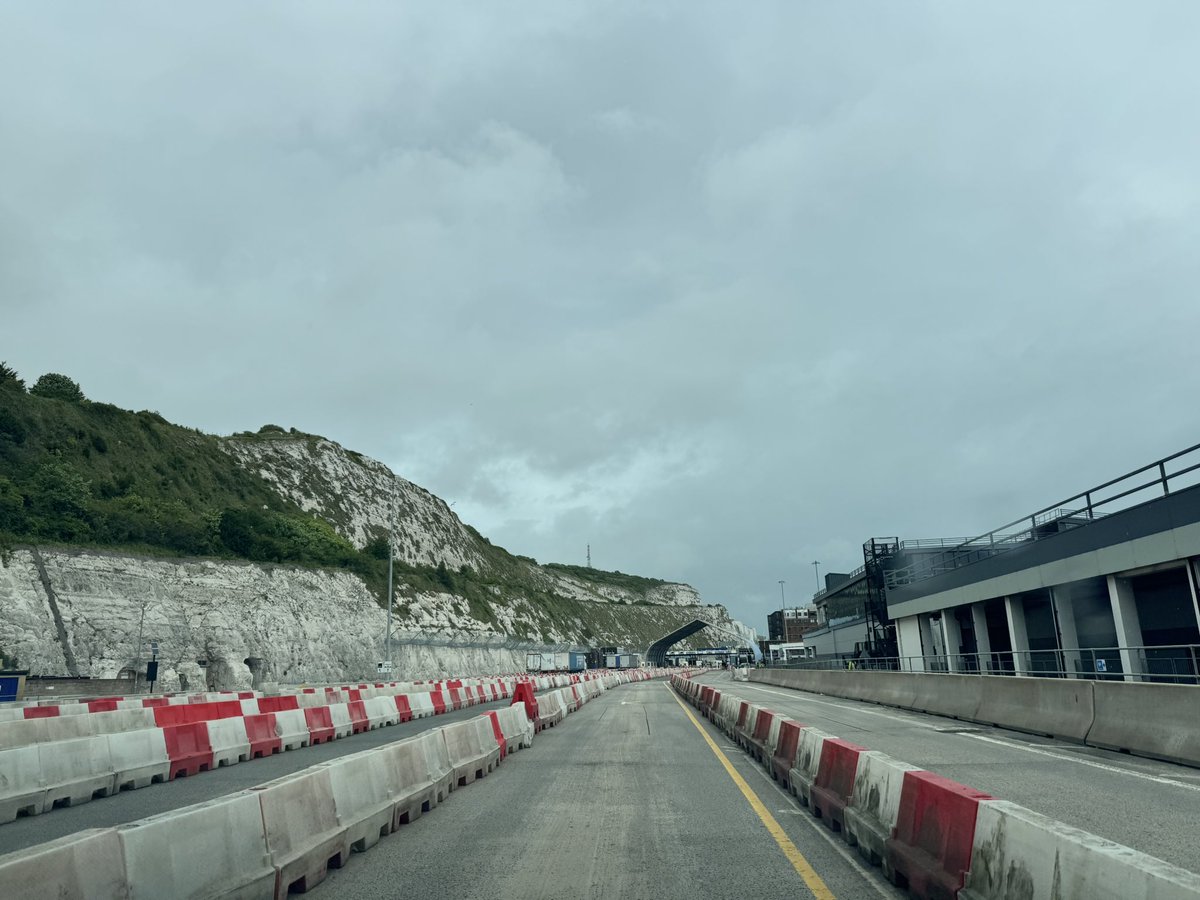
Well well well. The #FBPE crowd were crowing about the delays at Dover during half term and bank holiday and as I predicted, it’s back to its normal self today, a normal work day.
Today we’re celebrating our 300,000th vehicle delivered in the UK, at our Manchester Delivery Hub ⚡️🐝🦔
Thanks to all the Tesla owners for creating a world of amazing abundance!
A better summary than I was planning on writing on the latest RDW/EU discussion on autonomous vehicles (not Tesla FSD specifically - that was last month’s meeting that’s been well reported on.
🚨 Wichtiger regulatorischer Fortschritt für Tesla FSD in Europa – 1. Juni 2026 🇪🇺
Heute fand die 53. Sitzung der MVWG-ACV (Automated and Connected Vehicles Subgroup der Motor Vehicles Working Group) der EU-Kommission statt. Die niederländische Zulassungsbehörde RDW hat dort ein wegweisendes Rahmenwerk (Framework) für die Zulassung von End-to-End-KI-Fahrsystemen vorgestellt – genau wie Tesla FSD (Supervised).
Was genau passiert ist:
• Die RDW hat nicht nur über das konkrete Tesla-Case gesprochen, sondern ein grundsätzliches neues Bewertungs- und Zulassungs-Framework präsentiert.
• Kernproblem: Die klassischen UNECE-Regulierungen und EU-Normen sind für reine KI-basierte, datengetriebene Systeme („AI-native“) nicht optimal ausgelegt. Deshalb schlägt die RDW vor, Ausnahmen nach Artikel 39 der Verordnung 2018/858 gezielter zu nutzen und ein modernes, auf KI zugeschnittenes Prüfverfahren einzuführen.
• Das geht weit über die bisherige Diskussion hinaus: Es ist ein Vorschlag für einen Paradigmenwechsel hin zu moderner, lernender KI im Straßenverkehr.
Zum Vergleich: was war Anfang Mai?
Am 5. Mai gab es beim TCMV-Meeting (Technical Committee on Motor Vehicles) noch ein Update zur nationalen Typgenehmigung der Niederlande vom 10. April 2026. Das war konkret auf Tesla FSD fokussiert und diente der Information der Mitgliedstaaten. Heute war es breiter, technischer und zukunftsorientierter.
Wo stehen wir jetzt?
• FSD (Supervised) ist bereits in den Niederlanden, Litauen und Estland aktiv (über gegenseitige Anerkennung).
• Die heutige Präsentation legt den Grundstein für eine harmonisiertere EU-weite Herangehensweise.
• Nächste Schritte: Weitere TCMV-Sitzungen (vermutlich Ende Juni) mit vertiefter Diskussion. Eine formelle Abstimmung könnte später 2026 kommen.
Das ist kein fertiger EU-Rollout über Nacht – aber ein klarer regulatorischer Fortschritt und ein starkes Signal, dass Europa die Zukunft der KI-gestützten Fahrsysteme ernst nimmt und pragmatische Lösungen sucht.
Tesla-Fans in Europa: Der Zug rollt weiter. Supervised, sicher und schrittweise – aber mit echten Fortschritten. 🇳🇱➡️🇪🇺
https://t.co/IV3hrg7p95
Sometimes you need a big shift change to make a difference. But sometimes it’s a very small yet significant detail that can grind the system down. And these are often missed so this sounds like a great use!
Hello, we are Jonathan and Abigail - unashamed pedants who want to bring this affliction to bear on all things public policy and practice.
We believe that details matter, especially in public administration. This is why today we are founding quibble: a campaign to fix the small stuff.
Think, for example, about the cookie banner that we click on every webpage. Each instance is not a big deal, so we just put up with it. But its cumulative impact adds up - on average we press it 5 times per day. The European Commission estimates that it costs EU citizens 343 million hours per year.
And who is there to represent the impacts of seemingly minor issues like this in a systematic way? We want quibble to be the answer. In the case of the cookie banner, lots of advocacy has rightly focused on privacy, but has this meant that user experience has taken a backseat? We believe there are ways to improve user experience without compromising on privacy. We will share more about this soon.
Consider another example. Did you know that in some government-run car parks you can be fined for a minor keying error, such as accidentally typing a zero instead of an “o”? Again, we will come to the detail of this quibble in the coming weeks, but for now just consider again the question: who? Who is there currently to systematically represent the interests of the parker who is given an unfair ticket?
An inherent feature of consumer interests is that those who have them rarely have enough other things in common to make collective organisation and representation feasible. This is the gap that quibble seeks to fill. Now of course excellent consumer interest groups exist. But understandably quibbles might not be at the top of their lists. Our hope is that quibble will be complementary; picking up the bottom-of-the-list issues faced by various groups - the stuff they are almost too embarrassed to raise because they are too small.
We are not embarrassed about detail. If you’ve ever had a splinter, you know small things can have a big impact. This is what quibble is committed to tackling, and our wider hope is that by doing so we will also incentivise policy makers to be even more careful about detail.
Check out our website here, including our first four campaigns: https://t.co/gZiqqHbhIL