Doctors and nurses often tell parents a Vitamin K injection immediately after birth is necessary to prevent deadly brain bleeds.
Dr. Suzanne Humphries says the actual data paints a far different picture.
“Late vitamin K deficiency bleeding would be 1.3 to 4.5 per 100,000 births.”
“The ones that would have a brain bleed requiring surgery would be 0.4 to 2.7 per 100,000.”
“And only 1 in those 5 babies would have a brain bleed and die.”
“Your baby could be one of 0.26 to 0.9 per 100,000 that could die from a brain bleed.”
“So put that into perspective and decide if you wanna have this injection put into your baby.”
@DrSuzanneH7@CHDTVLive
🇺🇸SPEAKER MIKE JOHNSON DELIVERS POWERFUL PRAYER ON THE HOUSE FLOOR
"Those voices have seek to distort the self-evident truth that we know so well, that our founders BOLDLY proclaim — that the declaration that our rights do NOT derive from the government. They come from you, our Creator and Heavenly Father.
Lord, just as we humbly sought out your guidance in past trials, we are doing it here again today.
We turn to you once again to save us from these afflictions, to deliver us from the forces of evil, oppression and justice and tyranny, both within our borders and beyond our shores.
And Lord, never let us be separated from your mercy and your love. We pray, Lord, that you continue to bless our president with the wisdom and prudence and strength to govern our nation in accordance with your will."
A strong, unapologetic reminder that our rights come from God, not government. Speaker Johnson is leading with faith and conviction. God bless America. 🇺🇸🙏🏼
What an amazing turnout for the Long Beach Pride Parade
The city was expecting 10s of thousands for visitors
The parade starts in 25 minutes and there are only 2 tents along the path. No one is lining the streets. There are maybe 10 people in total
In the past the streets were lined with people. It turns out nobody cares anymore without the constant propaganda
The Pride festival was cancelled yesterday and now nobody showed up to the parade
Hantaviruses: Virology and Clinical Presentation
Virology
Hantaviruses are enveloped, single-stranded, negative-sense RNA viruses belonging to the family Hantaviridae (order Bunyavirales). Their genome is segmented into three parts (S, M, and L) encoding the nucleocapsid protein, two glycoproteins (Gn and Gc), and an RNA-dependent RNA polymerase, respectively. Unlike most other bunyaviruses, hantaviruses are not arthropod-borne; instead, each viral species is associated with a specific rodent (or occasionally shrew or bat) reservoir host, in which infection is persistent and asymptomatic. Humans are accidental hosts, typically infected through inhalation of aerosolized excreta (urine, feces, saliva) from infected rodents. Person-to-person transmission is rare, with the notable exception of Andes virus in South America.
Clinical Presentation
Hantavirus infections in humans cause two main clinical syndromes, divided roughly along Old World/New World lines.
Hemorrhagic Fever with Renal Syndrome (HFRS) is caused predominantly by Old World hantaviruses such as Hantaan, Seoul, Puumala, and Dobrava viruses. After an incubation period of roughly 1–4 weeks, illness classically progresses through five phases: febrile, hypotensive, oliguric, diuretic, and convalescent. Symptoms include fever, headache, back and abdominal pain, conjunctival injection, petechiae, and acute kidney injury, sometimes with hemorrhagic manifestations. Severity varies widely, with Hantaan and Dobrava causing more severe disease (case fatality up to 5–15%) and Puumala causing a milder form known as nephropathia epidemica.
Hantavirus Cardiopulmonary Syndrome (HCPS) is caused by New World hantaviruses, most notably Sin Nombre virus in North America and Andes virus in South America. After a 1–5 week incubation, patients experience a nonspecific prodrome of fever, myalgias, and gastrointestinal symptoms lasting several days, followed by abrupt onset of cough, dyspnea, and rapidly progressive noncardiogenic pulmonary edema due to capillary leak. Cardiogenic shock often follows in severe cases. Case fatality is high, around 35–40%, and treatment is largely supportive, with extracorporeal membrane oxygenation (ECMO) used in severe cases.
Laboratory clues common to both syndromes include thrombocytopenia, leukocytosis with a left shift, elevated hematocrit (from hemoconcentration), and the presence of immunoblasts on peripheral smear. Diagnosis is confirmed by serology (IgM/IgG) or RT-PCR. No specific antiviral therapy is approved, though ribavirin has shown some benefit in HFRS if given early.
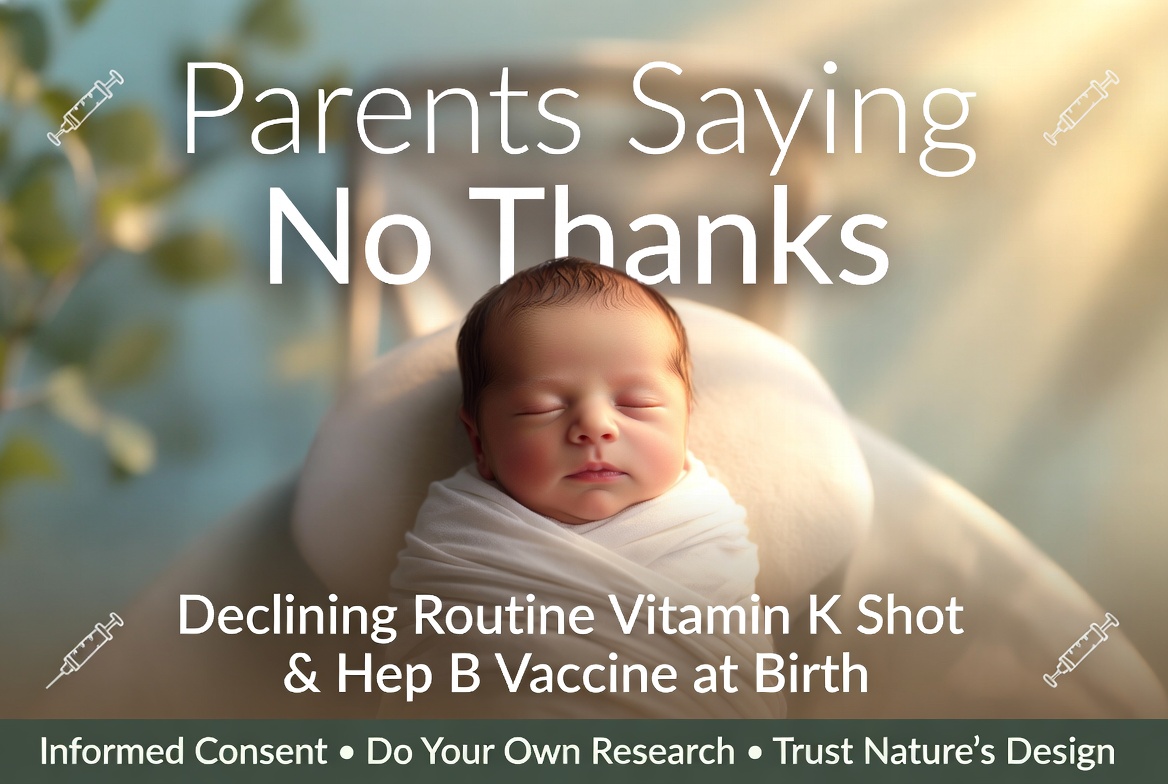
Breaking news from the delivery room: Parents are quietly saying “No thanks” to the standard newborn protocol.
More moms and dads are declining the routine vitamin K shot, Hep B vaccine at birth, and the whole “just in case” bundle. Refusal rates have nearly doubled in recent years — and it’s not rebellion. It’s research.
When mom tests negative for Hep B and baby isn’t heading into a high-risk lifestyle on day one, many families are asking: Why poke a brand-new human with interventions they don’t fully understand in those fragile first hours?
This is **informed consent** in action. Parents protecting their littlest ones by questioning the script instead of blindly following it.
A quiet, powerful shift toward trusting our bodies’ natural design.
If you’re in the “do your own homework” camp, this one feels like a win.
Death Valley National Park is experiencing its first major superbloom in a decade as of March/April 2026, driven by record winter rainfall (1.7 – 2.5+ inches) that transformed the desert landscape with vibrant carpets of yellow, pink, and purple flowers.
https://t.co/YgaHskYSlM