No Solicitors. Newbie 3D artist. I enjoy Tabletop RPGs, video games, anime, horror and sci-fi movies, and commissioning art of my OCs. Profile Pic by @Wanilmith
If anyone is interested, I made a fairly long thread about my OC Reah in @RhlPixels thread about OCs. Go check it out, and see some other cool characters too.
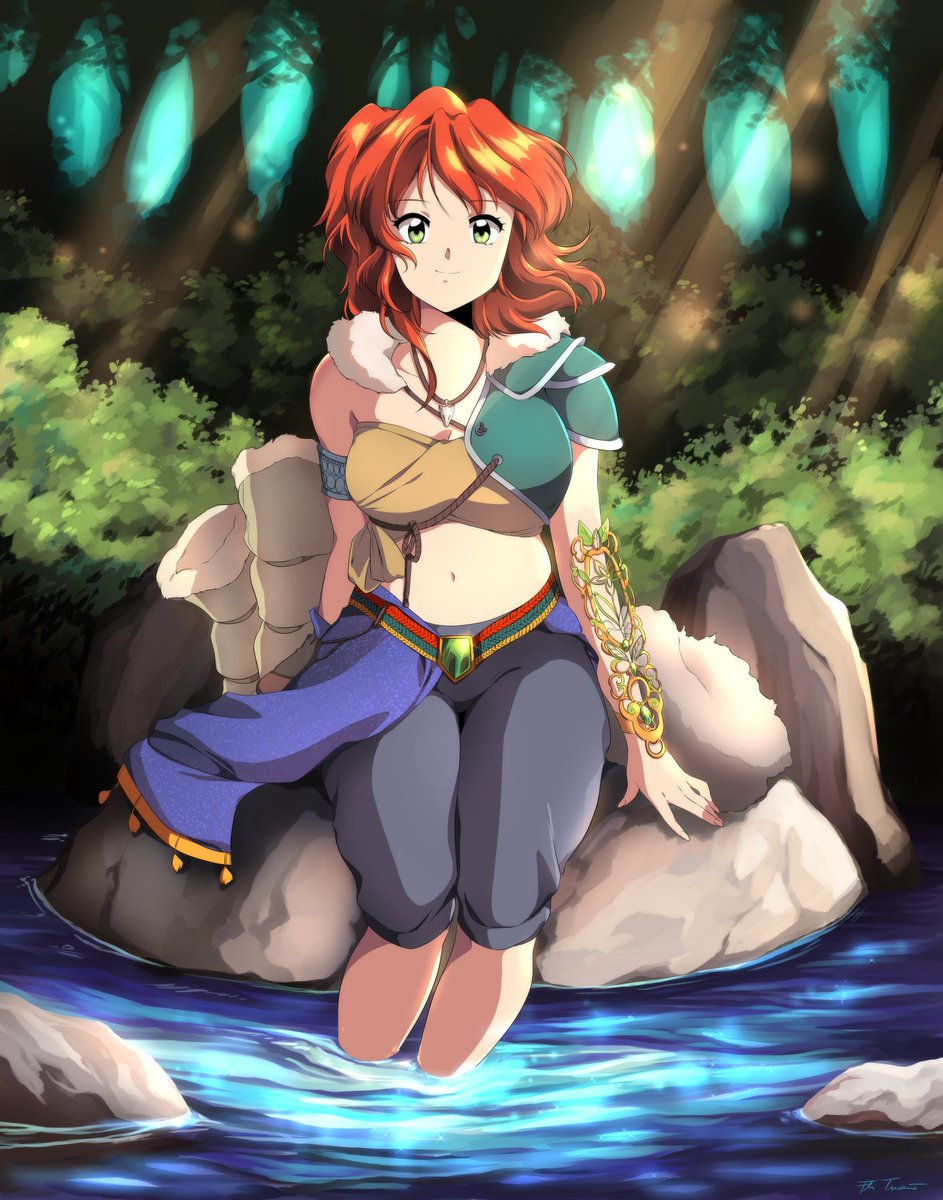
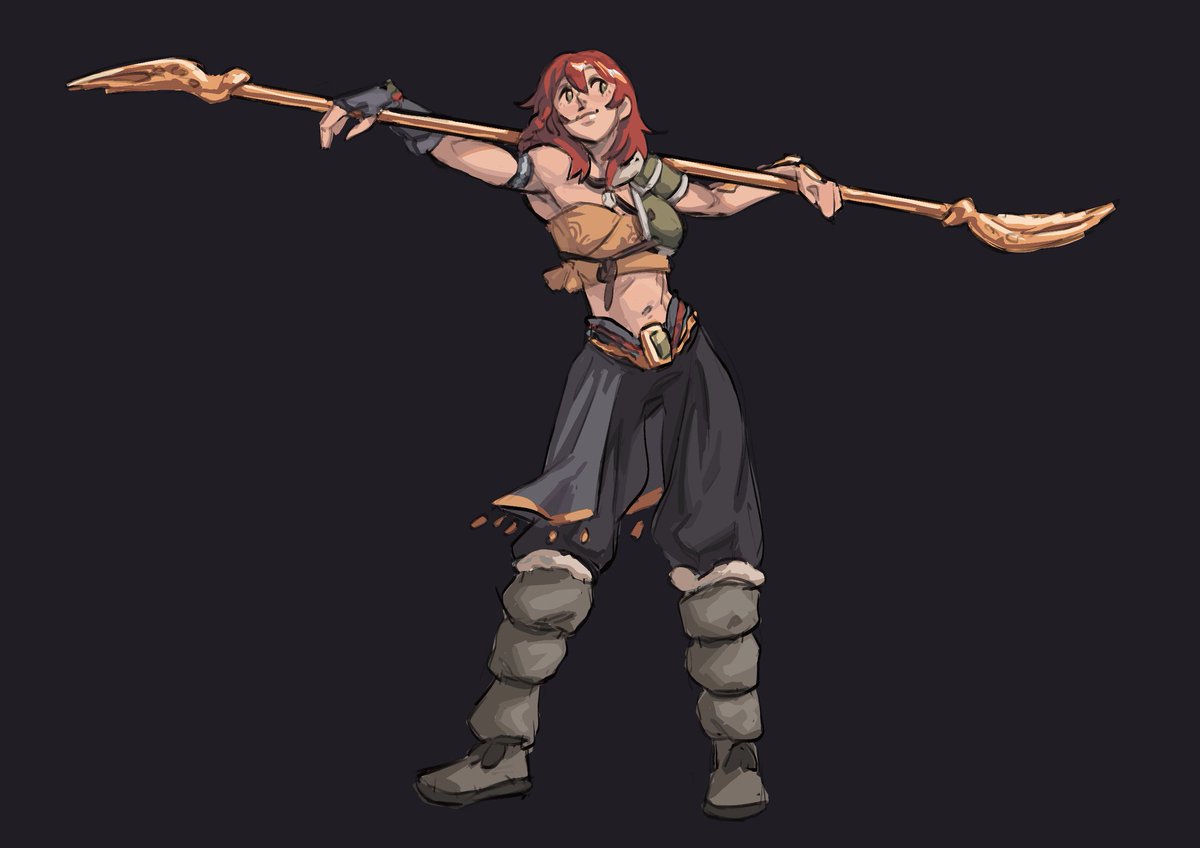
@RhlPixels Then I think I'll do that. This is Reah. She's the daughter of my namesake character, and hopefully I'll be playing her in a game in a few months. She loves to travel, and in order to facilitate that, works as a monster slayer, cartographer, and anything else that allows travel.
>rare
It shouldn't ever happen at all.
Not even once.
Your entire platform is suspect. It's fundamentally flawed.
It's a thinly-veiled attempt at mass surveillance, and the "rare" usage has show us exactly how bad it's going to be if Flock is widely used.
Go away forever.
My new game Cronus' Tomb: First Quest is coming to Steam on the 25th this month!
It's a complete expanded remake of my first ever jam game, Cronus' Tomb, which is now ~10 years old, woof!
This is a big thing for me, so I'd really appreciate it being shared around in any way.
https://t.co/5qEveMeGw3 was silently delisted from Google yesterday.
Google has given no reason for the removal. The lack of human moderation there also likely means no reason will ever be given. I just don't even know anymore.
From my perspective, Miyazaki is a rather unique, yet extremely serious game developer.
His career did not begin in the game industry. In fact, he didn’t become a game developer until he was almost thirty years old.
Even among developers of my generation (those of us born in the 1970s), I think it’s remarkable that someone who wasn’t even a game developer during the dawn of the polygon era eventually became one of Japan’s most representative game creators. (In other words, compared to the rest of us from the same generation—including myself—his career path is exceptionally unusual. Most notably, unlike many of us, he was not working at one of the major development studios that held a significant technological advantage during the early polygon era. That, more than anything else, is what makes his path so unique.)
Next, regarding my impression of Dark Souls.
People often focus on its difficulty as a game, but I believe Miyazaki’s true creativity shines through in the world he created. (By the way, I personally think Dark Souls has fairly simple action mechanics, and I don’t actually consider it to be an especially difficult game.)
If you look into my own career, you’ll see that I was personally involved with the Dark Souls series and Elden Ring as the General Manager overseeing both production and marketing (Just to clarify, I wasn't part of the development team itself. My involvement was simply as the General Manager of the publisher-side department overseeing production and marketing). From that perspective, I can say that Dark Souls didn’t suddenly become a massive success overnight. It was the result of everything Miyazaki and his team had built up through their previous titles.
Today, he receives offers from all over the world, but when I think back to the days when he and his team were struggling the most, many of those offers seem like they’re coming from people who only know who they are today. Some of them almost feel like complete reversals in attitude. Well, that’s just my personal perspective.
Personally, I had grown tired of people who would simply compare games by saying things like, “That title cost X billion yen to make and sold Y million copies,” and then use nothing but those numbers to judge them against other games. There were so many people who couldn’t appreciate the journey or the growth of the developers themselves. Anyone can look at the current numbers—they’re available to everyone. Whenever I heard those kinds of opinions, I always thought, “That’s exactly what you’d expect from someone who’s never actually developed games.”
What surprised me even more was that, even if people couldn’t properly evaluate that journey, almost nobody even seemed interested in trying to understand the process of how those developers gradually reached where they are today.
(I'm NOT talking about the fan community).
Now, going back to Miyazaki, there are two things about him that have always stayed with me.
The first was back when I was developing Summer Lesson for VR, around the time it was generating a lot of buzz.
One day, he came to try an early build of Summer Lesson along with people from several other game companies.
While everyone else was laughing, chatting, and having fun with it, Miyazaki alone played it with incredible seriousness. Then, after everyone had finished and started discussing their impressions, he remained completely silent, staring intently at the preview monitor, deep in thought.
Everyone became curious and finally asked him, “Miyazaki, what are you thinking about?”
He suddenly smiled and said,
“Oh… I got completely absorbed in thinking about what I would do if I were making this, and what kind of game I’d create.”
What he talked about after that was, in the best possible sense, completely insane.
It was one of those rare moments when I caught a glimpse of what I’d call his “mad scientist” side—his deeply serious, obsessive approach to creativity.
The other thing that left a strong impression on me was that he generally dislikes video interviews (including live streaming).
I once asked him about it by email, and he replied with quite a long explanation. After reading it, I completely understood where he was coming from.
Simply put, he doesn’t like watching himself moving around on video. (Psychologically speaking, it’s actually a bit more complicated than that.)
But there was another reason.
According to him, there are naturally many people in this industry who know games far better than he does. Whenever he listens to those people speak, he realizes that his own understanding is still shallow, and it makes him feel that he’s not yet in a position to be the one talking about games.
I mean… it’s common for well-known developers to say, “I still have a long way to go.”
But whenever someone like him says that, my reaction is always,
“Come on… if you say you’re still not there yet, then the rest of us won’t feel qualified to talk about games at all.” (laugh)
Anyway, that’s one of the reasons why video interviews with Miyazaki are extremely rare. And conversations with him on camera—especially long-form discussions with another developer—are even rarer. They almost don’t exist at all.
By the way, the other game developer in that photo is Masahiro Sakurai.
If you ask me, he’s basically:
“A Saiyan who genuinely believes he’s just another ordinary human.”
Every now and then, when the rest of us are struggling with some problem, he’ll say something that sounds exactly like Goku saying,
“Well… why don’t you just fly?”
And I’ll reply,
“Because we humans can’t use Flight Technique.”
Then he just stares at me with a completely puzzled look.
To put it in terms of Demon Slayer, I’d describe him as:
"Like Muzan Kibutsuji casually showing up at a drinking party where all the Hashira have gathered, genuinely believing he's just another ordinary guest".
That’s the kind of person he is.
Eu, particularmente, gosto do que o Terry Pratchett fez em Discworld, em que ele usa os termos do jeito que existem, mas no universo a etimologia deles é completamente diferente, como por exemplo:
Small aspects of the story, but I don't feel that it subtracts from the experience. It also adds a new segment where you get play as a rival group to assist the main party, as well as superbosses throughout the world. It's a great experience!
Wild arms rules and I highly recommend playing at least 1-3. I can't recommend for or against 4+5 as I haven't had the chance to play them.
Also, wild arms 1 has a remake called Wild Arms: Alter Code F which is very good and use the combat systems from 3! It does change some-
Wild Arms is a 1996 PlayStation RPG from Media Vision. This Japanese-style role-playing game set in Filgaia, a fictional world that has elements of American Old West setting and medieval fantasy. Like most representatives of the genre, the game features turn-based battles against randomly appearing regular enemies and bosses.
Whether one labels it 'colonialism' or 'imperial integration' is a matter of academic framework, but it doesn't change the historical record.
Regardless of the legal status of the 'realm,' the Finnish population experienced systemic linguistic marginalization, ethnic cleansing, was used as a buffer zone for Swedish military ambitions, and endured the destruction of their indigenous cultural structures.
Using the term 'colonialism' is a way to highlight these power imbalances, which the term 'integrated realm' often glosses over intentionally to make the crimes appear lesser then they actually were.
Sweden has yet to reckon with the horrors they visited upon Finnic groups. They have yet to issue an apology to their former subjects and colonies, even in Africa and the Caribbean.
Remaining silent doesn't make these crimes disappear from record, nor can it unmake them.
Seekers of light
Believe not in forever
Believe not in truth
For they are empty and inconstant, as are all things
Tz986z:nm-St4ajw:x205-Cei282716-S!03:4.sdaer
#大乱闘ファンタシーファイターズ#PSO2NGS
SHARE IT! SIGN IT! SUPPORT IT!
This is the largest petition against Sony's attack on ownership out there at the moment: https://t.co/ZJGO46mfuU
Started by @PNPGames. If you want to support them (and us), shop games you will own here (ref link): https://t.co/DxZbeJzs6N
In these dire times we look for comfort. And what better way to find it than through the thing we love most, physical games.
Here is a list of all affiliated stores that you can support our fight for ownership through. Get games that will truly be yours: https://t.co/WXxhsWCOS1
We are proud to be releasing Moonlight Pale as a physical game for Switch and PlayStation 5.
Not a download code on a box.
Not a game key card.
A physical disc and cartridge that you 100% own and can play whenever you wish and share with whoever you wish. As it should be.