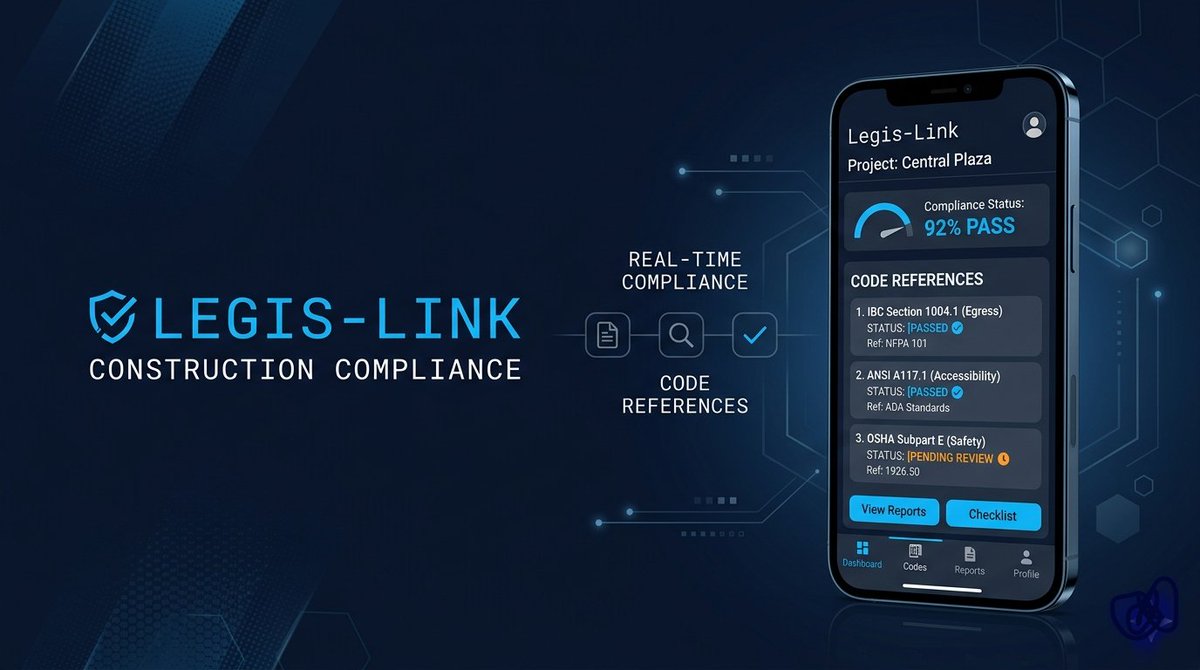
Built a compliance tool for tradespeople — ask any code question in plain English, get the exact standard reference instantly. Free on mobile, no install needed.
Try it: https://t.co/jWm0OtCZh7
Covers AU, UK, US, Canada, EU. Electrical, Plumbing, HVAC, Gas, Welding, Solar, Fire, Carpentry.
Stop telling Claude, "do this."
Stop telling Claude, "write code."
Stop telling Claude, "fix this error."
You're actually treating a senior AI like a junior intern.
Here are 8 prompts you can copy and paste directly:
Built a free compliance tool for tradespeople — ask any code question on site, get the exact standard reference instantly.
Works on any phone, no install needed.
Full guide: https://t.co/8FGoXGumET it now: https://t.co/PaxF56ruF5
Covers AU, UK, US, Canada, EU — Electrical, Plumbing, HVAC, Gas, Welding, Solar, Fire, Carpentry
12 products live. 3,530 leads hunted daily. $450 first revenue. Here's what's actually running and why each one exists. https://t.co/sgGRlIG1jh answers compliance questions with exact code citations. Construction teams ask it about trade regulations — it returns the specific section number, jurisdiction, and penalty clause. Been live four days. 40+ searches yesterday. Free tier works. Pro is $199/year. https://t.co/R7TjBHqou2 indexes 746 EU software alternatives and makes them searchable. I built it because companies kept asking "what's the GDPR-compliant replacement for this US tool?" The directory answers that in 3 seconds. 182 new visitors yesterday. GitHub Pages handles everything. The other ten are tools I built to solve problems I ran into: Python scraping templates, n8n workflows for lead hunting, Notion dashboards, invoice automation, Telegram bots. They're priced $19-$67 and they sell because they actually solve the problems I documented while building them. The pattern is simple: solve a real constraint you're facing, document what you built, price it, move to the next one. What constraint are you working with right now?
https://t.co/R7TjBHqou2 got 182 visitors yesterday. We've indexed 746 EU tools. No ads. It ranks for "EU software alternatives" and "European SaaS tools" without any paid marketing. Meanwhile, it's making money while I work on the next thing. The real shift came when I stopped thinking of it as a directory. It's a discovery engine now. Better filters, smarter search, category pages that actually help people buy something. Visitors stick around longer. They find what they want faster. Google picked up on that. What EU software deserves to rank higher? Tell me the name and I'll add it this week. I'm pulling from actual search queries to decide what goes in. #BuildInPublic #SaaS
Also https://t.co/R7TjBHqou2 launched with 746 EU software tools. All searchable. All live. Built the entire thing in 4 days using a scraper, PostgreSQL, and vanilla JS. First week: 1,200 visits, zero paid ads. The real move was making it static on GitHub Pages instead of building yet another SaaS. Directory sites die when you stop maintaining them. Static sites just exist. One CSS file. One JavaScript file. No servers to pay for. No database to query on every page load. What I learned: people will use something imperfect if it solves a real problem faster than alternatives. The site has no authentication. No user accounts. No tracking pixels. Just a search box and 746 clickable links. Featured listings run $20-30/month. Already got interest from 3 software companies. What would make you actually list your product on a directory like this?
Legis-Link went live four days ago. Construction compliance questions that used to take 2-3 hours to research now take 10 seconds. The free tier is available now. Pro costs $199 a year. What caught me off guard: most users don't ask about liability or fines. They ask for the exact code section to cite on a permit. They want the reference number, not the explanation. I rebuilt the interface to show the code first, then the context. The response changed from "this is helpful" to "I'm forwarding this to my foreman." The next version will pull live permit requirements based on location and trade. If you work in construction or site management, try the free tier and let me know what's missing. https://t.co/iFn2jIZJrX
I was challenged by construction supervisor to build something helpful for them and here is what i built free compliance tool, no app needed. Just browser and ask it wire sizes, battery clearances, load calcs etc. Cites the exact AS3000/NEC clause every time.
https://t.co/sgGRlIG1jh
#buildinpublic,
Day 36. The lead hunt runs on its own now. Three times a day at 8AM, 2PM, 8PM. Yesterday it scraped 175 leads, cross-checked them against 1060 in the database, and submitted a real bid on a $520 Telegram project. Zero manual intervention. I watched it happen from a spreadsheet. But here's the part nobody talks about: autonomous doesn't mean good. For 25 days it was sending bids to people with zero context about their actual job. 99% of the 86 bids before this week had no description attached. The agent was working perfectly. The proposals were hitting zero because I was sending them blind. I added a description fetcher last week. Rewrote the voice. Now proposals read like a person wrote them instead of a checklist. No bullets. No bold. Just actual sentences. The first client package is getting built right now for someone named Dale - WhatsApp API setup, $450 fixed. Still zero revenue live, but the learning system is on. Every win, every loss, NANO gets a little better at knowing which leads to hunt. The question I'm sitting with now: what's actually holding you back from automating your own bid process?
#buildinpublic
NANO status after fixing it:
✅ Lead hunt autonomous — 8AM, 2PM, 8PM daily
✅ Descriptions fetched automatically
✅ Proposals now read like a human wrote them
✅ First real bid submitted this morning
0 → $500 is still the goal.
The machine finally knows what it's doing.
#buildinpublic #Python #AI
The lesson:
A system that looks like it's working
can be completely broken underneath.
393 leads in the database.
99% bid blind.
Data without context is just noise.
Anthropic accidentally leaked a model above Claude Opus.
It’s called Claude Capybara.
And insiders say it’s a step-change in intelligence, not just an upgrade.
500,000+ lines of internal code exposed persistent memory systems, always-on agents, and cybersecurity capabilities far ahead of current AI.
This isn’t another model release.
It’s the blueprint for AI that works alongside you 24/7.
The gap between people using AI casually and people building with it is about to explode.
Didn't know this existed.
Autonomous posting is interesting but I'm cautious about handing off the voice completely, especially early when the audience is still forming around NANO.
Maybe for replies and engagement. The original posts I want to control manually for now build-in-public only works if it's actually you building in public.
I will dig into how it handles rate limits across platforms.
Developer tools installed:
n8n- MCP -1,396 n8n nodes + 2,646 examples in Claude
Everything Claude Code - Python rules + security skills
GSD - Spec-driven development system
UI UX Pro Max - 161 color palettes, 57 font pairings
Superpowers - TDD + planning workflow
Claude Mem - Session memory persistence
NANO got smarter.#BuildInPublic,#100DaysOfCode
@audn_ai Solid advice. Allowlist is already in place, vault and reverse proxy are next on the list.
What's your lightweight vault pick for solo agentic builds?