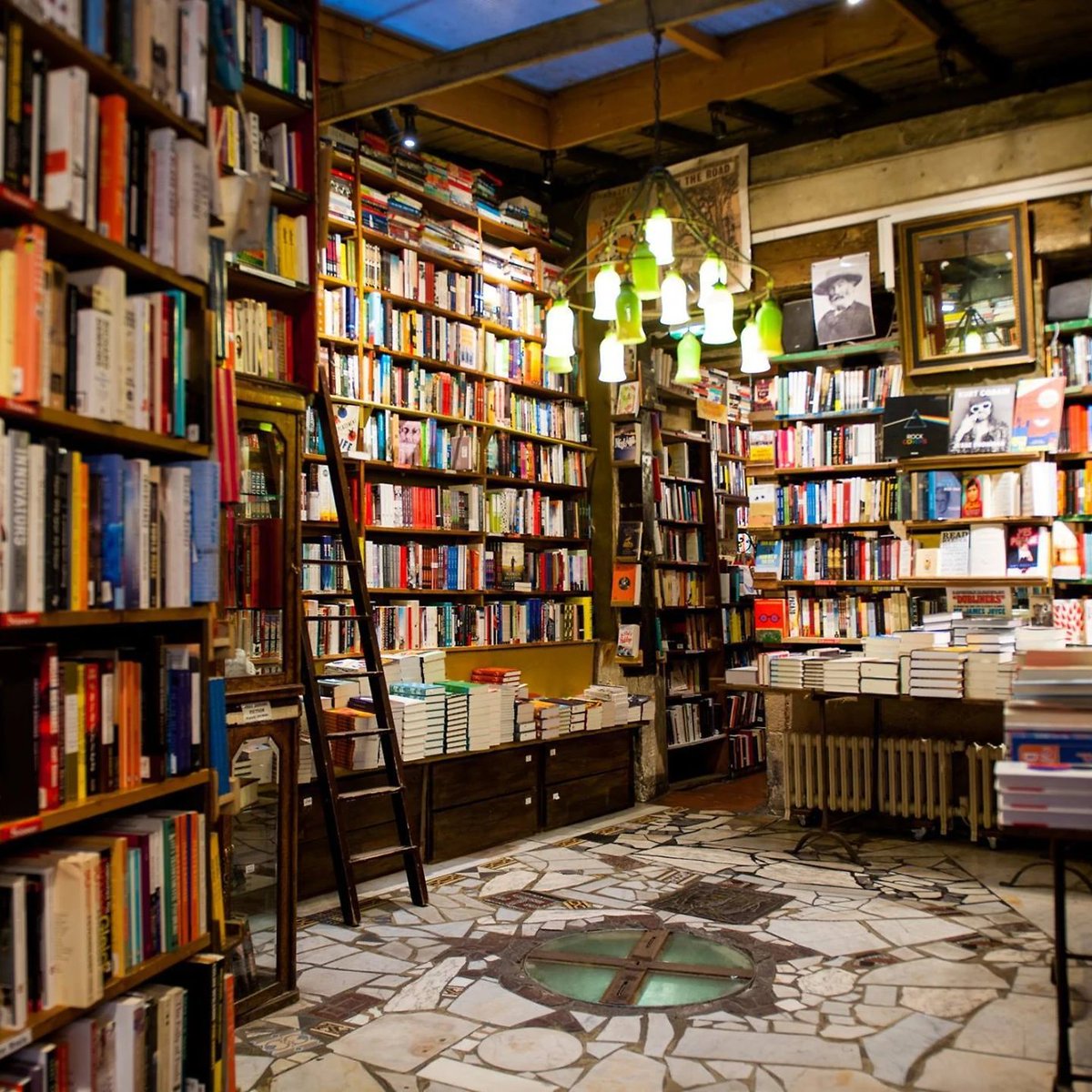
Plans to close the Shakespeare Institute in the playwright’s birthplace of Stratford-upon-Avon have been criticised by figures including actors Samuel West and Janet Suzman, who warn moving it to another location will “destroy the very thing that makes it unique” 👇
https://t.co/4s12IvZ5Y2
Friends, I need your help. After 75 years, @BirminghamU wants to close the Shakespeare Institute and move it from Stratford-upon-Avon to Edgbaston. It won't survive.
Please sign this and RT to the skies. And watch this space for further action https://t.co/Tnbuqdxu8x
Sign the petition to stop the privatisation of the British Library.
At a time when public spaces are being fenced off for corporate interests, any attempt to privatise the British Library represents an attack on the public's right to accessible, free and communal spaces. https://t.co/DBFnezB0ne
Stop the privatisation of the British Library. Gawd, I know we shouldn't have to cos it's obvious it should be a public resource. Please sign here: https://t.co/cmLXWqM2Ey
“In every village in the country there’s an 800 year old building that’s free to enter.”
Historian @history_alice encourages her audience to visit their local church in order to get connected with their own local history.
@HenryRiley1
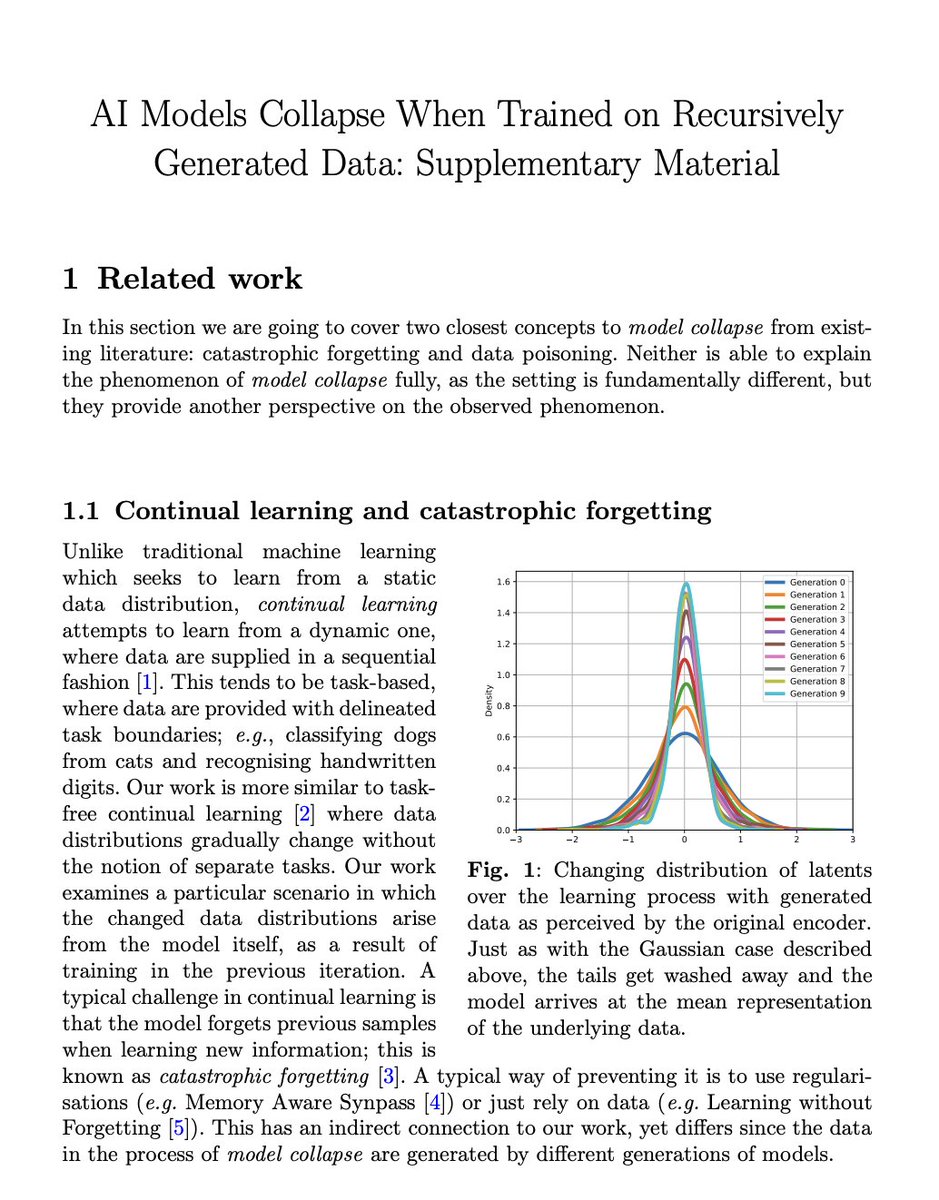
ChatGPT has now a big problem.
Researchers at Oxford exposed a massive threat to large language models.”
It’s called "Model Collapse."
And it explains why the internet is about to become a toxic waste dump for Large Language Models.
Right now, AI companies are scraping the entire web to train their next-generation models.
But there’s a massive problem.
The internet is no longer just human data. It is rapidly filling up with AI-generated text, images, and code.
What happens when an AI trains on data generated by another AI?
A new paper in Nature just gave us the answer. And it is terrifying.
When AI models are recursively trained on AI-generated data, they suffer from irreversible brain damage.
The researchers found that the model starts forgetting the "tails" of the original data distribution. The rare, weird, unique, and complex human nuances completely disappear.
It's like making a photocopy of a photocopy.
Every generation loses resolution. The output gets flatter, blander, and more generic, until the model completely collapses in on itself.
For years, we thought the biggest bottleneck for AI was compute, getting enough H100 GPUs from Nvidia.
This paper proves the real bottleneck is us.
If we keep flooding the internet with synthetic AI slop, we will poison the very data pool required to build smarter models.
The ultimate irony? We thought AI was going to make human creators obsolete.
Instead, this research proves that verified, genuine human data is about to become the most valuable commodity in the tech industry.
🔴 EXCLUSIVE: After *five-year* legal battle, Democracy for Sale has forced the government to reveal who referred firms to lucrative Covid PPE ‘VIP lane’ for 'politically connected'
30+ senior Tories are named, plus ex Duchess of York, and many more 🧵
https://t.co/qNBcKuqMmE
Happy All Souls' Day!
Welsh folklore tells us that 2 November is a good day for eyes:
"In almost every parish there was a holy well and on All Souls' Day old women generally washed their eyes in the waters so that their eyesight might retain its strength."
📷St Non's Holy Well
Happy All Souls' Day!
Welsh folklore tells us that 2 November is a good day for eyes:
"In almost every parish there was a holy well and on All Souls' Day old women generally washed their eyes in the waters so that their eyesight might retain its strength."
📷St Non's Holy Well
Dans la grotte #Chauvet (Ardèche) des scans UV ont révélé la présence d’une fine couche de calcite invisible à l’œil nu recouvrant en partie les dessins au charbon, vieux d’environ 37 000 ans.
Cette pellicule translucide, déposée naturellement par l’eau, a agi comme un vernis protecteur et a probablement contribué à la remarquable conservation de ces œuvres pendant des millénaires. (Cette étude a été menée par l’équipe de Philippe Walter, CNRS / Sorbonne)
https://t.co/n4NA7yZRHU
Excited that my Tutankhamen documentary is @BBCTwo tomorrow 9pm. It’s a relief to know there’s no other major UK show airing at that time tomorrow…. (sarcasm klaxon 🚨).
But if you don’t fancy the Traitors final then I’ll be imparting ancient Egyptian loveliness for you.
I used to have hedgehogs living in the garden that I would see every night and share photos and videos of regularly: there were at least three different individuals including the named resident female Henrietta.
This was until landlord of the neighbouring property decided to clear their entire garden— all of the trees, all the shrubs, all the bramble, everything was torn up and thrown out.
They also tore down the shared fence between our gardens which had been an old wooden fence covered in ivy, with plenty of gaps for the hedgehogs to pass through. They built a brand new 6ft tall impenetrable fence.
The construction of this fence may seem minor but it means that wildlife like hedgehogs can no longer pass through. The removal of the plants from that garden means that the hedgehogs lost a huge part of their foraging and living area.
I have not seen a single hedgehog in our garden since the neighbour made these changes. I don’t know if it’s because they can’t get in past the new fences, because they were scared away, or possibly because they were killed in the renovations.
I look for Henrietta often and wonder what happened to her. Did she get fenced out of our garden permenantly? Did she get taken away with the branches and leaf litter? Did she get fenced inside the neighbours garden and find herself unable to get back out? I’ll probably never know.
I’ve made some gaps in the new fence now and though I wait for the hedgehogs to return, it has been several months now and I still haven’t seen any.
Hedgehogs are a Red List species in the UK, yet landowners seemingly have no requirement to consider them whatsoever in any renovations they make. I pleaded with the neighbouring landlord (via some very patronising estate agents) to leave some habitat intact. They ignored me.
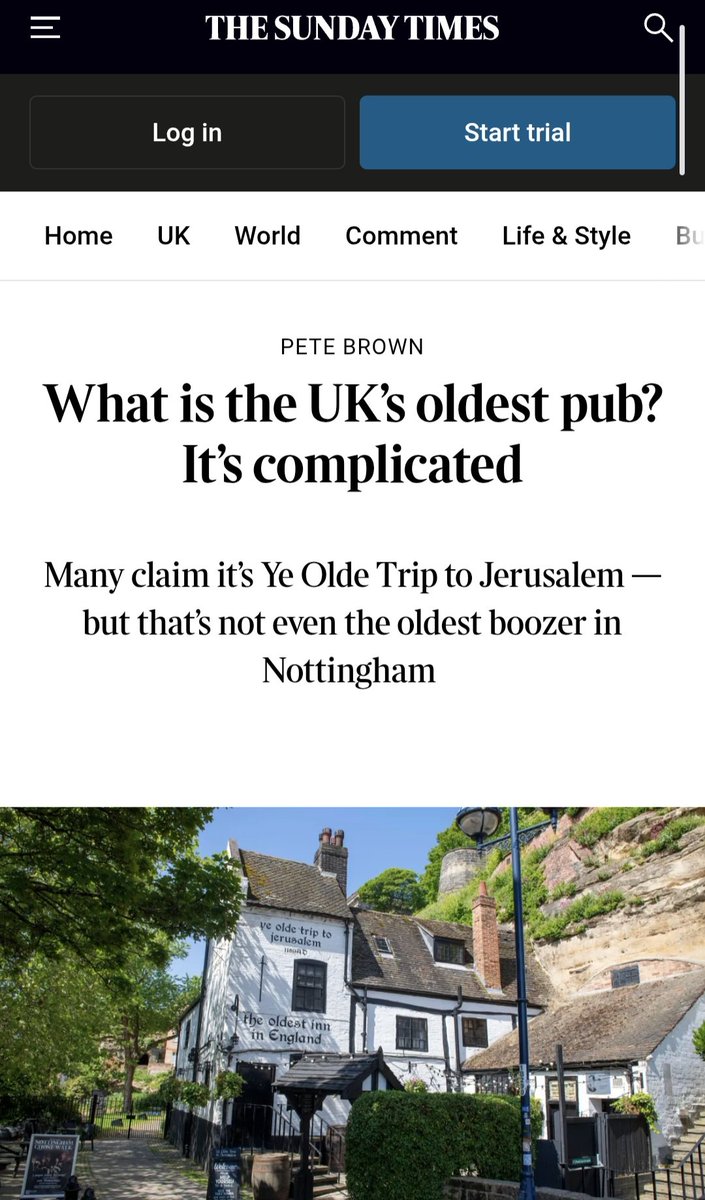
Most media outlets are now inaccurately reporting my oldest pubs research.
They're taking info from a heavily edited 2 min Insta reel rather than the carefully explained evidence in my book published two years ago.
For the real story see Chapter 9:
https://t.co/7wLZUEfncz
William Chapman's family are grieving their son, who suffered mental health problems and the leader of the free world posts an ai video reenacting the tragedy...you know - just for fun.
The world is falling apart, people dying in wars and this old man who is meant to be a leader posts this.
Diabolical
Pleased that, the beer writer, Pete Brown has based his recent article for The Times on my research into Britain's oldest pubs.
Article here:
https://t.co/CUSio1aiw7
Early version of my research here:
https://t.co/Bb8dyOmAw6
Full chapter available in:
https://t.co/7wLZUEfncz