🔥🔥In the mid-90s, Amitabh Bachchan went bankrupt.
His production company collapsed. Debt of ₹90 crore. Personal bank balance: zero. 55 legal cases. The government raided his house.
Dhirubhai Ambani heard about it and told his son Anil: "Iska bura waqt hai, isse kuch paise de do."
Bachchan refused the money. Self-respect over relief.
Years later, retelling this story at a Reliance event,
he got emotional — and so did Mukesh Ambani, sitting right there.
1. Three startups
2. ABHI
3. BAZAAR
4. HABALL
5. All three from Karachi
6. All founded after 2019
7. All backed by global capital
Mohammad Ali. 31 years old. Pakistani founder. Brilliant app idea. Needs Rs50 million.
No money. No assets. No track record. No bank will touch him.
Fifteen years ago, Pakistan had virtually zero institutional venture capital. Zero. Today — 53 funds. Karachi alone: 23. An entire ecosystem. Built from scratch. In one generation.
Here’s what a VC does: it raises a pool of money from wealthy individuals, institutions and pension funds — and bets it on young companies that banks won’t touch.
Any one of the homegrown Pakistani VCs — Zayn VC, Sarmayacar, i2i Ventures, Lakson Investments, Fatima Gobi Ventures — can write Mohammad Ali a Rs50 million cheque. And then there are the internationals. Indus Valley Capital — diaspora-led, US-based. Alter Global — San Francisco. Karandaaz — backed by UK Aid and the Gates Foundation. All of them. Looking at Pakistan. Writing cheques for Mohammad Ali.
Imagine: Fifteen years ago, Mohammad Ali had no options. Today, he has 53.
For decades, the only way a Pakistani entrepreneur could get capital was through bank loans or family money. VCs change that entirely. They fund the idea, absorb the risk, and ask for nothing back if the startup fails. That’s a fundamentally different relationship between capital and ambition — and it’s still very new in Pakistan.
In 2021, Ali Ladhubhai and Omair Ansari of Karachi founded ABHI, an app that employees download, connect it to their employer’s payroll, and withdraw earned salary on demand — before payday. By 2026, ABHI had raised $57.8 million, expanded into the UAE and Saudi Arabia, and acquired a microfinance bank. ABHI also earned a World Economic Forum Technology Pioneer designation. ABHI has over 1 million users and is valued at around $90 million. Potential IPO by 2028.
Bazaar is a B2B (business-to-business) platform — meaning its “customers” are small shopkeepers and businesses. Shopkeepers use it to order inventory for their stores digitally instead of calling a distributor. Think of it as an app for shop owners, not shoppers. Bazaar raised $108 million from Tiger Global and Dragoneer.
Haball is also a B2B payments infrastructure platform — meaning it works behind the scenes connecting large corporations with their distributors and suppliers automating invoicing, payments and supply chain financing. Haball processes $3 billion in transactions.
Plain fact: ABHI is an app in your pocket. Bazaar is the app behind your neighbourhood kiryana store. Haball is the invisible financial plumbing connecting Pakistan’s entire supply chain. Three very different products — one common thread: Pakistani founders, Pakistani problems, global capital.
All three success stories are from Karachi. Yes, Pakistan’s startup revolution is currently a Karachi story. Lahore is catching up but the capital, the founders, and the exits are concentrated in one city — Karachi.
Three startups. All from Karachi. All founded after 2019. All backed by global capital.
Here is how fast this has moved. In 2015, Pakistan had almost no institutional venture capital. Today — 53 funds. $4.77 billion in cumulative funding. Tiger Global. Dragoneer. The Gates Foundation. The Qatar Investment Authority. All here. All betting on Pakistan. An entire venture capital ecosystem — built in 10 years. That is not progress. That is a revolution.
Remember Mohammad Ali? 31 years old. No money. No assets. No track record. Fifteen
years ago, no options. Today — 53 funds. Mohammad Ali’s time has come.
Mohammad Ali. 31 years old. Pakistani founder. Brilliant app idea. Needs Rs50 million.
No money. No assets. No track record. No bank will touch him.
Fifteen years ago, Pakistan had virtually zero institutional venture capital. Zero. Today — 53 funds. Karachi alone: 23. An entire ecosystem. Built from scratch. In one generation.
Here’s what a VC does: it raises a pool of money from wealthy individuals, institutions and pension funds — and bets it on young companies that banks won’t touch.
Any one of the homegrown Pakistani VCs — Zayn VC, Sarmayacar, i2i Ventures, Lakson Investments, Fatima Gobi Ventures — can write Mohammad Ali a Rs50 million cheque. And then there are the internationals. Indus Valley Capital — diaspora-led, US-based. Alter Global — San Francisco. Karandaaz — backed by UK Aid and the Gates Foundation. All of them. Looking at Pakistan. Writing cheques for Mohammad Ali.
Imagine: Fifteen years ago, Mohammad Ali had no options. Today, he has 53.
For decades, the only way a Pakistani entrepreneur could get capital was through bank loans or family money. VCs change that entirely. They fund the idea, absorb the risk, and ask for nothing back if the startup fails. That’s a fundamentally different relationship between capital and ambition — and it’s still very new in Pakistan.
In 2021, Ali Ladhubhai and Omair Ansari of Karachi founded ABHI, an app that employees download, connect it to their employer’s payroll, and withdraw earned salary on demand — before payday. By 2026, ABHI had raised $57.8 million, expanded into the UAE and Saudi Arabia, and acquired a microfinance bank. ABHI also earned a World Economic Forum Technology Pioneer designation. ABHI has over 1 million users and is valued at around $90 million. Potential IPO by 2028.
Bazaar is a B2B (business-to-business) platform — meaning its “customers” are small shopkeepers and businesses. Shopkeepers use it to order inventory for their stores digitally instead of calling a distributor. Think of it as an app for shop owners, not shoppers. Bazaar raised $108 million from Tiger Global and Dragoneer.
Haball is also a B2B payments infrastructure platform — meaning it works behind the scenes connecting large corporations with their distributors and suppliers automating invoicing, payments and supply chain financing. Haball processes $3 billion in transactions.
Plain fact: ABHI is an app in your pocket. Bazaar is the app behind your neighbourhood kiryana store. Haball is the invisible financial plumbing connecting Pakistan’s entire supply chain. Three very different products — one common thread: Pakistani founders, Pakistani problems, global capital.
All three success stories are from Karachi. Yes, Pakistan’s startup revolution is currently a Karachi story. Lahore is catching up but the capital, the founders, and the exits are concentrated in one city — Karachi.
Three startups. All from Karachi. All founded after 2019. All backed by global capital.
Here is how fast this has moved. In 2015, Pakistan had almost no institutional venture capital. Today — 53 funds. $4.77 billion in cumulative funding. Tiger Global. Dragoneer. The Gates Foundation. The Qatar Investment Authority. All here. All betting on Pakistan. An entire venture capital ecosystem — built in 10 years. That is not progress. That is a revolution.
Remember Mohammad Ali? 31 years old. No money. No assets. No track record. Fifteen
years ago, no options. Today — 53 funds. Mohammad Ali’s time has come. The only question is whether Pakistan will get out of his way.
🚨 BREAKING: Claude can now completely rewire your brain so you can learn anything in a few clicks.
Here are 7 Claude prompts to learn anything 10x faster:
Here are 10 GitHub repos that quietly print money while you sleep.
1. Cal. com
Open-source Calendly. Fork it, white-label it, sell to dentists and lawyers for $200/month. The founders hit $5M ARR in 3 years doing exactly this.
Repo → https://t.co/haz8ihRsHm
2. Plausible Analytics
Privacy-first Google Analytics. Self-host it, resell to agencies for $50/month per client. Two founders bootstrapped this to 7 figures.
Repo → https://t.co/RFrcpqTBQ7
3. Ghost
Open-source Substack with 100% margin. 1,000 readers at $5/month equals $60,000 a year. Forever.
Repo → https://t.co/Z1MdZ5Zapg
4. n8n
Open-source Zapier. Sell automation services for $500-$2,000 per setup. n8n raised $14M because the agency model behind it works.
Repo → https://t.co/hdycABGGc1
5. Supabase
Free Firebase replacement. Build a SaaS in a weekend, charge $29-$99/month. They raised $116M for a reason.
Repo → https://t.co/dFB2QvafA7
6. Medusa
Open-source Shopify. Take 5% on every sale forever. Zero rev share to Shopify.
Repo → https://t.co/uEuCK6zuZO
7. AppFlowy
Open-source Notion. Sell self-hosted to enterprises worried about data privacy. They raised $30M because this market is massive.
Repo → https://t.co/IDMykTCkMU
8. Coolify
Open-source Vercel and Heroku. Charge developers $20/month to manage their deployments. Replace their $200 Vercel bill.
Repo → https://t.co/N5Fk22qraT
9. Listmonk
Open-source Mailchimp. Send unlimited emails for the cost of an AWS bill. Resell to agencies at 10x markup.
Repo → https://t.co/NS6Uukcklw
10. Penpot
Open-source Figma. Sell self-hosted design tools to agencies who refuse to upload client files to the cloud.
Repo → https://t.co/Lx1CYUP4p4
The difference between developers who build features and developers who build businesses is one decision.
Pick one of these. Fork it this weekend. Ship it next week.
The founders behind these repos already proved the model.
Save this. Share it with the developer in your life who deserves to break free.
100% free. 100% open source.
SEO in 2025:
❌ Ahrefs for keyword research
❌ Human prospecting for links
❌ Surfer for content optimization
❌ Screaming Frog for tech seo
❌ 2-3 content writers for blogs
SEO now:
✅ Claude + API keys
Here's how I run my ENTIRE SEO operation through Claude 👇
The saddest thing about PSL 11 is that no team picked Khawaja Arham. Sialkot boy. Mark my words. In a few years every team will want him. 6 foot 4 powerful opening bat. Can take bowling attacks apart. Scored 295 in a club game recently. Can bowl too.
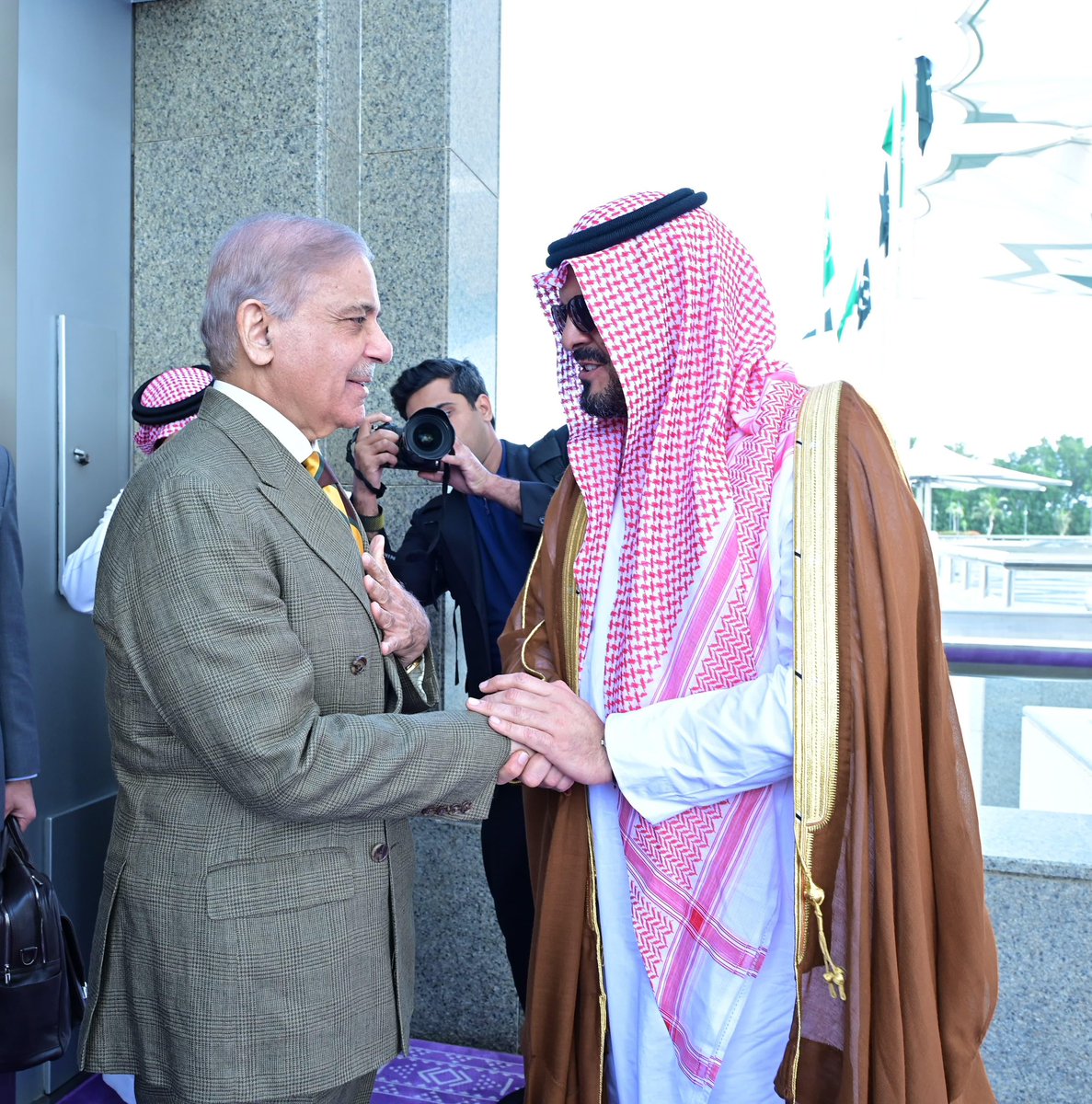
Sharif in Riyadh.
Munir in Tehran.
Same day.
Pakistan is doing what the UN, the EU, and the Security Council combined cannot.
One country holding the ceasefire together.
The difference in attire by Field Marshal Asim Munir while receiving the Iranian and U.S. delegations is not accidental, it reflects diplomatic signaling rather than just protocol variation.
When he received the Iranian delegation in full military uniform, it carried a strategic message. It is a signal to Israel that Pakistan stands firmly engaged on security matters concerning Iran, and that this relationship has a defense dimension, not just diplomacy.
On the other hand, his meeting with JD Vance in civilian attire reflects a different diplomatic posture. Wearing a civilian suit aligns with standard diplomatic norms, projecting a softer, statesman-like image rather than a security-centric one.
I love this video of Khan Sahab. A simple cake you'd find in your neighborhood bakery. Cuts it, takes his piece, picks the part that fell on the table, and he's already finished it by the time the camera pans back to him.
Nothing extravagant. From the people, for the people.
The Champions started their campaign with Victory. 💚
(No Coaches, No mentor, No data analyst).
Just Sameen, Shaheen & Sikandar doing mock auctions, Drafts, fantasizing elevens while playing Luddo & won LQ THREE titles in the last FOUR years!!