🪔 What a joy this morning to be able to celebrate with Jeanette and Katrina as they pledged their lives in consecrated virginity to Christ - a tradition that goes back to the very start of the Church. Jeannette is a ward nurse who has publicly advocated for the culture of life and served many faithful years as one of the leaders for our ACTIV8 Pro-Life Training Week. All of this will continue for her, only now she serves Christ and His Church in the world dedicated to a life of prayer and celibacy for God.
🙏 At today’s Mass, during their consecration rite, the Bishop prayed an ancient prayer for consecrated virgins that dates back to the fourth century over both of them which includes these beautiful lines:
“Among your many gifts you give to some the grace of virginity.
Yet the honour of marriage is in no way lessened.
As it was in the beginning, your first blessing still remains upon this holy union.
Yet your loving wisdom chooses those who make sacrifice of marriage
for the sake of the love of which it is the sign.
They renounce the joys of human marriage, but cherish all that it foreshadows.
Those who choose chastity have looked upon the face of Christ, its origin and inspiration.
They give themselves wholly to Christ, the Son of the ever-virgin Mary,
and the heavenly Bridegroom of those who in his honour dedicate themselves to lasting virginity.”
📖 ‘Jesus said to them, “Not everyone can accept this teaching, but only those to whom it is given. For there are eunuchs who have been so from birth, and there are eunuchs who have been made eunuchs by others, and there are eunuchs who have made themselves eunuchs for the sake of the kingdom of heaven. Let anyone accept this who can”.’ - Matthew 19
The Chiefs are great team, and I always thought they would win the match, but the embarrassing and ugly truth is that the Crusaders just didn’t show up tonight. It’s not a great advertisement for the game of rugby to see so many dysfunctional one-sided matches, especially at the business end of the season. #superrugby #crusaders #chiefs
I answered only because the author of this post teased us into it — rather like a man in a paper crown wandering into a library and announcing that every other book is counterfeit because his own arrived already bound.
“Humans wrote the Bible.”
Indeed they did. Over centuries. Kings, shepherds, prophets, physicians, poets, exiles, fishermen, jurists, and mystics — writing across different languages, empires, and catastrophes. And yet, despite all that human complexity, the thing astonishingly coheres around a single theological drama: covenant, fall, redemption, sacrifice, resurrection, divine kingship. One does not weaken a cathedral by observing that many masons built it.
As for “arguing, editing, and removing books” — yes, civilizations preserve, debate, translate, and canonize texts. That is what literate religious cultures do. The existence of councils proves seriousness, not fraud. Scholars discussing manuscripts is not evidence against Scripture any more than surgeons discussing anatomy disproves the existence of bones.
Then comes the magnificent comedy:
“God authored the Quran. No partners, no mistakes, no revisions.”
An extraordinary claim from a religion whose own early history includes variant recitations, disputes over codices, burned manuscripts under Uthman ibn Affan, and entire traditions devoted to explaining abrogation — namely that certain verses superseded others. One cannot spend centuries writing commentaries explaining textual complexities and then stroll onto social media pretending the book descended from Heaven already leather-bound beside a complimentary bookmark.
And the phrase “no revisions” is especially delightful. My dear fellow, if a government standardizes a text by suppressing competing copies, that is not the absence of revision. That is revision wearing imperial robes and hoping nobody notices the smoke from the bonfire.
The deeper irony, however, is philosophical.
The Bible never hides the humanity of its authors. It practically flaunts it. Psalms bleeds poetry. Ecclesiastes sounds like a melancholic philosopher staring into the abyss. Gospel of Luke reads with the care of a historian. Revelationerupts like a fever dream painted in fire and gold. The Christian claim was never that God bypassed humanity, but that He worked through it.
That is the entire scandal of Christianity: incarnation rather than dictation. God entering history rather than dropping a celestial PDF from the sky.
And frankly, the obsession with a text being “perfect” often says more about insecurity than divinity. Only modern internet polemicists imagine that truth must arrive mechanically, sterile and monolithic, like a divine instruction manual assembled in a cosmic factory.
Remember when Paula Bennett did that favour for David Seymour at the last election by publicly giving the nod to the ACT Party candidate running against her own National Party candidate in Tamaki? #nzpol
If you haven't had a chance to watch the full conversation with Frank yet, make sure you check it out! 🔗👇
🟠 Watch or Listen on Substack:
https://t.co/dbacUXL2pH
🟢 Watch or listen on Spotify:
https://t.co/3yjEtemdxq
Frank Ritchie hosts a weekly talkback show on Newstalk ZB; he founded a Christian chaplaincy organisation to minister to journalists and others who work in the NZ media; and until relatively recently he was also a Protestant pastor. Then, in Easter 2026, after many years of profound grappling and contemplation, he swam the Tiber and entered the Catholic Church.
After 15 years of back-and-forth on various hot button issues, sometimes on opposing sides, Frank and I finally sat down together in dialogue as ecclesial brothers. In this episode of The Dispatches we discuss what led to Frank’s conversion to Catholic Christianity, his experiences as a media personality, the crisis of dehumanisation in public discourse, and lots more.
🔥 ✝️ 🩸 Today the Christian Church commemorates the martyrdom of Saint Charles Lwanga and his Companions - a group of Catholics and Anglicans - killed in Uganda in 1886 by the brutal pagan king Mwanga II.
*In 1879, the White Fathers, a French Roman Catholic society of apostolic life founded in 1868, arrived at the court of King Mutesa I of Buganda, modern-day Uganda, and received permission to establish a mission to teach the Catholic faith. When King Mutesa died in 1884, one of his sons from his tenth wife, Mwanga II, took up the throne at the age of sixteen.
Though initially tolerant, Mwanga eventually became convinced that the Christians were a threat to his throne and his sexually perverted way of life.
It was common practice for the kings of Buganda to have many young boys in their court, known as “pages,” to carry out the daily duties of the king’s household. Among the expectations that King Mwanga had of these young boys, some as young as thirteen, was consent to his sexual advances. When some of the boys refused to consent on the grounds that they were Christian and the king’s requests were immoral, the king became infuriated and feared that Christians would overtake his kingdom and become a threat to his throne.
On October 29, 1885, Anglican bishop James Harrington and some of his companions were murdered by King Mwanga after being accused of plotting against the kingdom. After their martyrdom, twenty-five-year-old Joseph Mukasa Balikuddembe, the head of the king’s household, rebuked the king for his actions.
Joseph was a Catholic catechist responsible for teaching many of the boys in the king’s court the Catholic faith. On November 5, 1885, the king beheaded Joseph and had his Catholic followers arrested. He then appointed the catechumen Charles Lwanga as head of his household.
Charles knew he might be next, so he sought and received baptism by the White Fathers that same day, along with many of the boys he had been catechizing.
On May 25, 1886, King Mwanga murdered two more Christian members of his court. Catechist Charles Lwanga, fearing for the eternal salvation of the boys who were still catechumens, baptized the rest of the boys himself. Later that day, the king called all the members of his household together and ordered them all to renounce the Christian faith or face torture and death.
Charles courageously professed his faith in Christ, and many of the boys did so with him. The outraged king ordered their execution to take place at Namugongo, the traditional site for public executions.
Namugongo was a two-day journey on foot. As the boys traveled under the cruel direction of the executioners, many of them were beaten as they walked, bound together with ropes.
Three boys were killed along the way, one being slain by his own father for refusing to renounce the faith.
After reaching the site of execution on May 27, the boys waited seven days as the preparations were made. During that time, they were starved, beaten, and bound hand and foot, awaiting their death.
Charles was cruelly and painfully killed first. His executioners lit only a small fire under his feet so he would suffer longer. It is reported that Charles said to his executioners, “You’re burning me, but it’s like water you’re pouring to wash me. Please repent and become a Christian like me.” As the flames consumed him, just before he died, Charles cried out in imitation of our Lord, “My God! My God!”
Soon after, the rest of the boys were tortured and killed in the same manner. They died praying aloud the Lord’s Prayer. In all, twenty-two young men and boys were martyred and later declared saints in the Roman Catholic Church.
Additionally, twenty-three Anglicans were martyred with them.
King Mwanga initially thought he could stamp out Christianity by killing one Christian. That only inspired others to convert.
[From the biographical account at: https://t.co/pImD6iTyT3]
About a week ago I had the privilege of appearing as a guest on the Floreology podcast with Simon Ussher. We had a really enjoyable conversation about cultural collapse, faith, and the fundamental importance of Christian anthropology for sound morality and building humane society. Enjoy!
#nzpol
https://t.co/7NkRTbiVzg
“Are we not perhaps all afraid in some way? If we let Christ enter fully into our lives, if we open ourselves totally to him, are we not afraid that He might take something away from us? Are we not perhaps afraid to give up something significant, something unique, something that makes life so beautiful? Do we not then risk ending up diminished and deprived of our freedom?. . . No! If we let Christ into our lives, we lose nothing, nothing, absolutely nothing of what makes life free, beautiful and great. No! Only in this friendship are the doors of life opened wide. Only in this friendship is the great potential of human existence truly revealed. Only in this friendship do we experience beauty and liberation.”
- Pope Benedict XVI -
Frank Ritchie hosts a weekly talkback show on Newstalk ZB; he founded a Christian chaplaincy organisation to minister to journalists and others who work in the NZ media; and until relatively recently he was also a Protestant pastor. Then, in Easter 2026, after many years of profound grappling and contemplation, he swam the Tiber and entered the Catholic Church.
After 15 years of back-and-forth on various hot button issues, sometimes on opposing sides, Frank and I finally sat down together in dialogue as ecclesial brothers. In this episode of The Dispatches we discuss what led to Frank’s conversation to Catholic Christianity, his experiences as a media personality, the crisis of dehumanisation in public discourse, and lots more.
🟠 Watch or Listen on Substack:
https://t.co/dbacUXL2pH
🟢 Watch or listen on Spotify:
https://t.co/3yjEtemdxq
“It is certainly not by watering down its content or softening its demands, that we can make Christianity attractive, but by bearing witness with humility and courage to the way, the truth, and the life that has converted and sanctified so many people.”
𝐏𝐨𝐩𝐞 𝐋𝐞𝐨 𝐗𝐈𝐕, 𝐓𝐡𝐮𝐫𝐬𝐝𝐚𝐲 𝟐𝟖𝐭𝐡 𝐌𝐚𝐲, 𝟐𝟎𝟐𝟔
Address to Plenary Session of the Dicastery for Evanglization
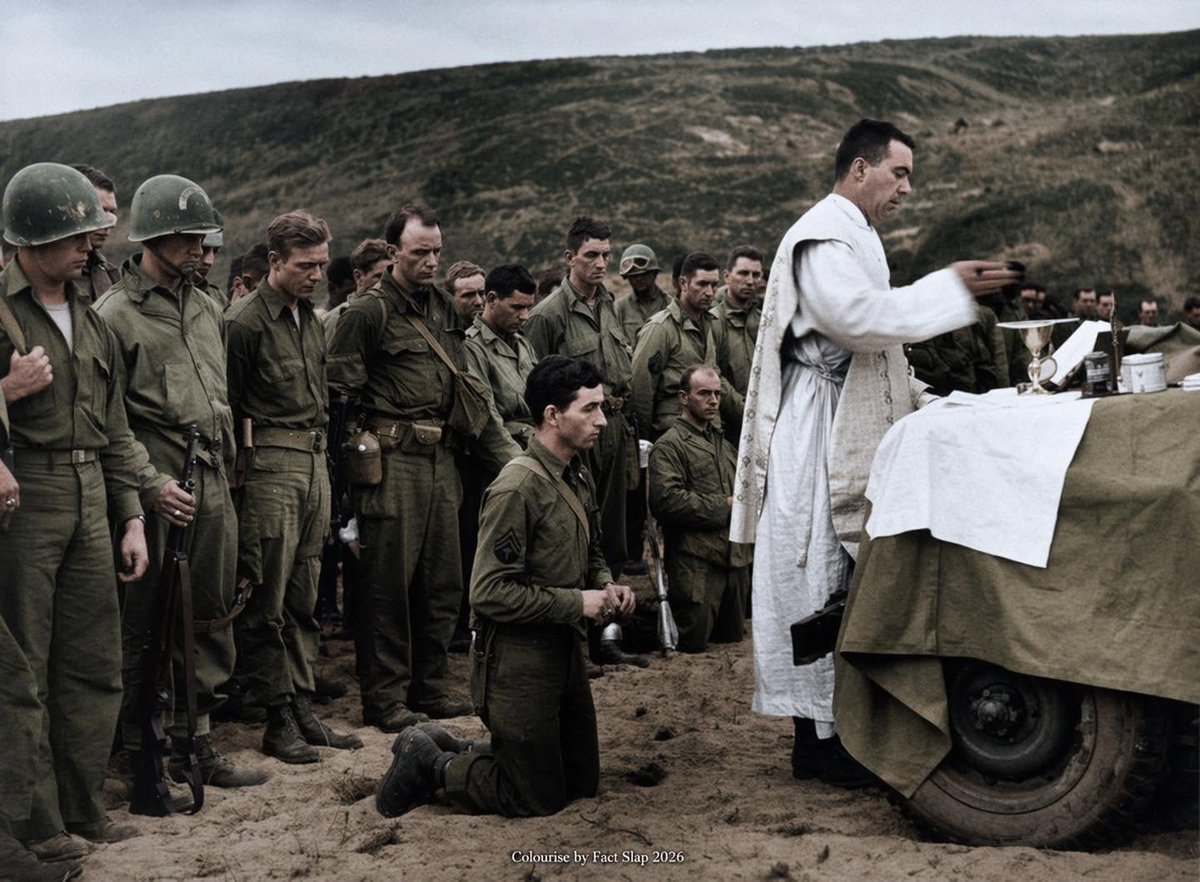
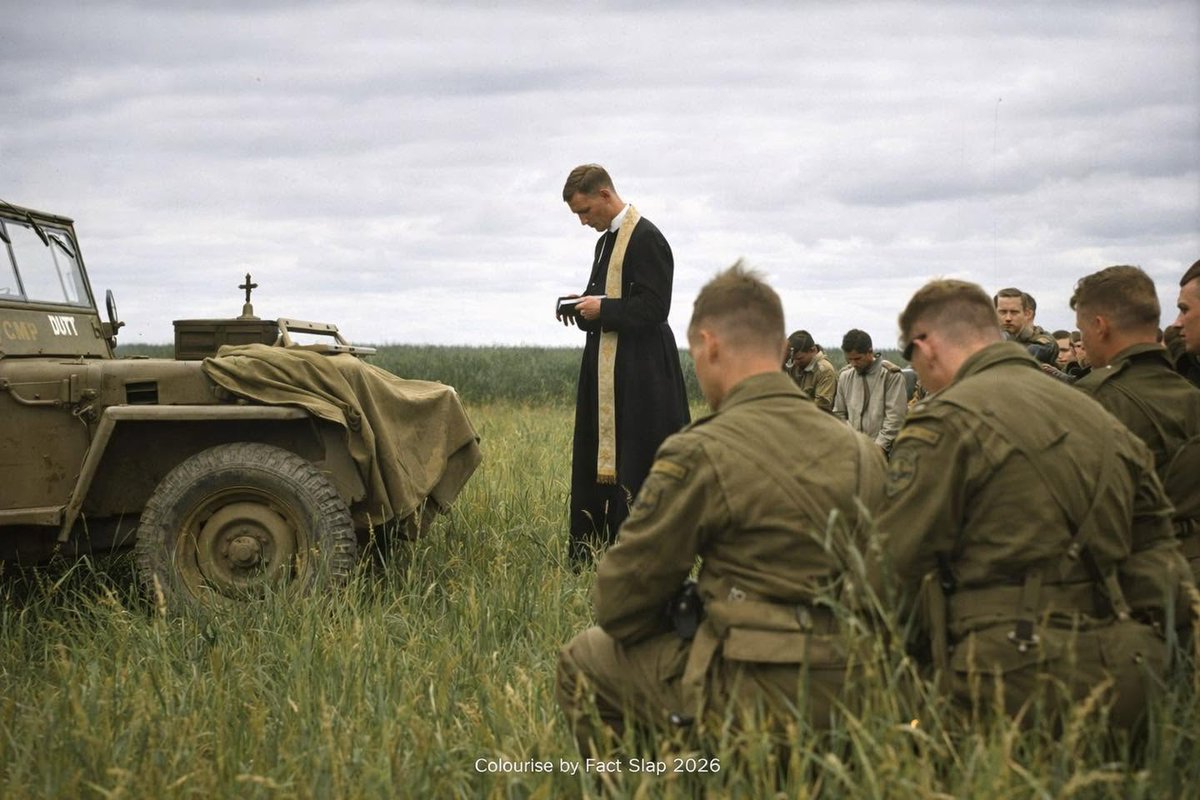
🔥 💯 This👇 - Reverence and care is in the celebration of the Sacred Liturgy is one of the most important pastoral, spiritual, formational, and countercultural acts of Christian discipleship and evangelism that we can commit ourselves to. Lex orandi, lex credendi.
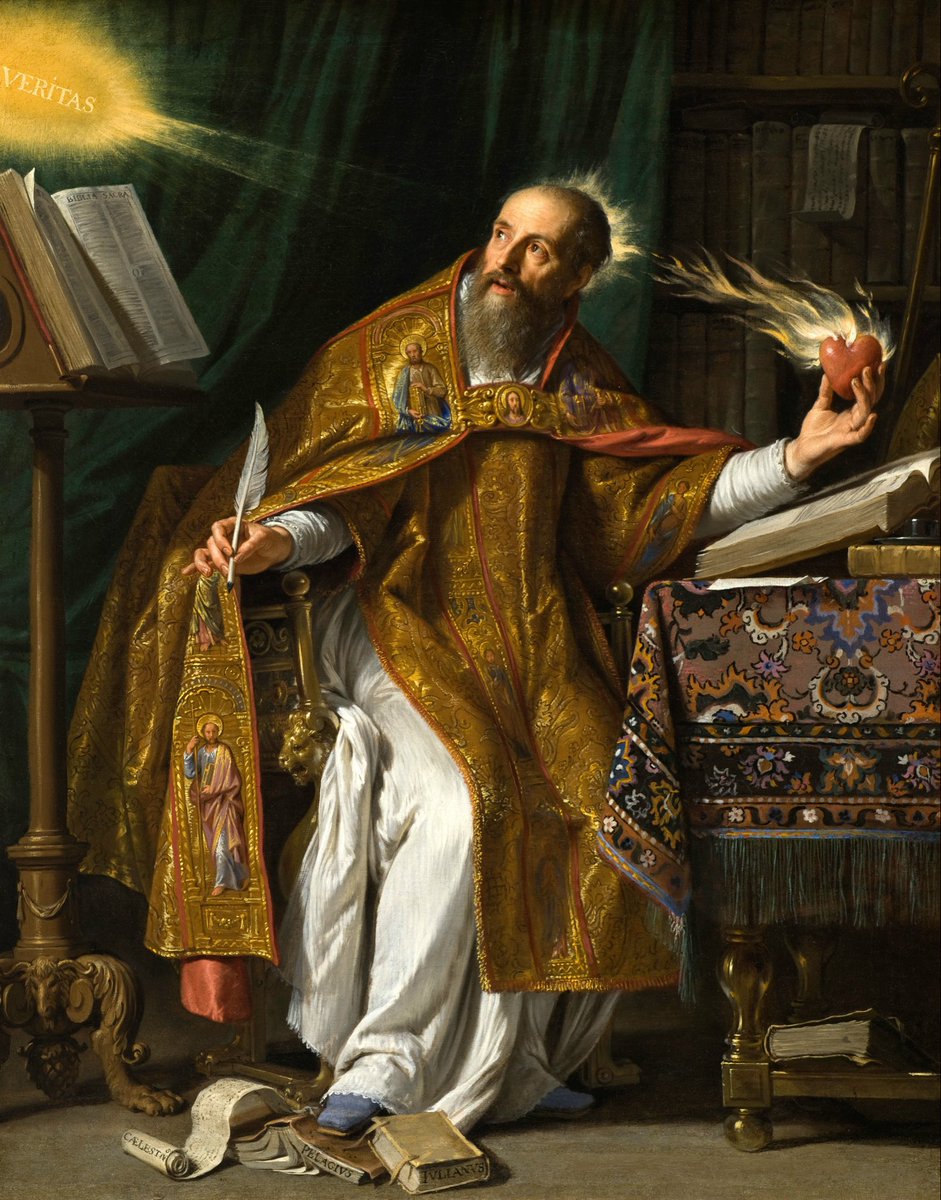
“Your best servant is the one who is less intent on hearing from you what accords with his own will, and more on embracing with his will what he has heard from you.”
- Saint Augustine -
👇 This framing is frustratingly deceptive, especially when it’s a Catholic group posting stuff like this.
Firstly, when you read the full quote from Pope Leo XIV, you can see that he’s alluding to the fact that modern military techniques and technologies require a reexamination of the application of Just War principles. He is NOT saying that the Just War principles should now be considered meaningless - he literally starts this quote by referring to self-defence as a “right”, and in doing so, he is proclaiming one of the fundamental tenants of Just War teaching:
“Today, more than ever, without prejudice to the right to self-defense in the strictest sense, it is important to reaffirm that the 'just war' theory, which has all too often been used to justify any kind of war, is now outdated.”
In this statement, Pope Leo XIV is simply reaffirming something that Pope Benedict XVI said publicly in an interview in 2003, while he was still Cardinal Ratzinger and head of the Congregation for the Doctrine of the Faith:
"Given the new weapons that make possible destructions that go beyond the combatant groups, today we should be asking ourselves if it is still licit to admit the very existence of a 'just war.'"
If you’ve been listening to my podcast of late, you’ll know that I’ve been talking about the fact that when Augustine, Aquinas, Suárez, and others taught about Just War, they were not living in, or even envisaging a world of industrialised, mechanised, nuclear, drone, or missile warfare.
These major recent developments have serious implications for the application of Just War principles, and it is clear to anyone who cares about this issue that most nations are not even stopping to consider the moral implications of the technologies they are now regularly using in warfare. Now that AI technology is an increasing feature of modern warfare, it is apparent why this reevaluation has become even more pressing.
Which is precisely why, after writing his aforementioned initial statement, the one that is now being taken out of context, Pope Leo XIV spends MANY paragraphs unpacking this salient point in greater detail. Giving essential context that is not being presented to the public in misleading posts like the one below.
Ironically, in one of these subsequent elaborating paragraphs, Pope Leo XIV actually reaffirms the central principle of Just War, when he states that “armed force should be used only as a last resort in cases of legitimate self-defense”, thus showing that he is NOT rejecting Just War principles but rather their misuse and the urgent need for reevaluation in light of modern warfare.
#pope #magnificahumanitas #popeleoxiv












![WatchLFM's tweet photo. 🔥 ✝️ 🩸 Today the Christian Church commemorates the martyrdom of Saint Charles Lwanga and his Companions - a group of Catholics and Anglicans - killed in Uganda in 1886 by the brutal pagan king Mwanga II.
*In 1879, the White Fathers, a French Roman Catholic society of apostolic life founded in 1868, arrived at the court of King Mutesa I of Buganda, modern-day Uganda, and received permission to establish a mission to teach the Catholic faith. When King Mutesa died in 1884, one of his sons from his tenth wife, Mwanga II, took up the throne at the age of sixteen.
Though initially tolerant, Mwanga eventually became convinced that the Christians were a threat to his throne and his sexually perverted way of life.
It was common practice for the kings of Buganda to have many young boys in their court, known as “pages,” to carry out the daily duties of the king’s household. Among the expectations that King Mwanga had of these young boys, some as young as thirteen, was consent to his sexual advances. When some of the boys refused to consent on the grounds that they were Christian and the king’s requests were immoral, the king became infuriated and feared that Christians would overtake his kingdom and become a threat to his throne.
On October 29, 1885, Anglican bishop James Harrington and some of his companions were murdered by King Mwanga after being accused of plotting against the kingdom. After their martyrdom, twenty-five-year-old Joseph Mukasa Balikuddembe, the head of the king’s household, rebuked the king for his actions.
Joseph was a Catholic catechist responsible for teaching many of the boys in the king’s court the Catholic faith. On November 5, 1885, the king beheaded Joseph and had his Catholic followers arrested. He then appointed the catechumen Charles Lwanga as head of his household.
Charles knew he might be next, so he sought and received baptism by the White Fathers that same day, along with many of the boys he had been catechizing.
On May 25, 1886, King Mwanga murdered two more Christian members of his court. Catechist Charles Lwanga, fearing for the eternal salvation of the boys who were still catechumens, baptized the rest of the boys himself. Later that day, the king called all the members of his household together and ordered them all to renounce the Christian faith or face torture and death.
Charles courageously professed his faith in Christ, and many of the boys did so with him. The outraged king ordered their execution to take place at Namugongo, the traditional site for public executions.
Namugongo was a two-day journey on foot. As the boys traveled under the cruel direction of the executioners, many of them were beaten as they walked, bound together with ropes.
Three boys were killed along the way, one being slain by his own father for refusing to renounce the faith.
After reaching the site of execution on May 27, the boys waited seven days as the preparations were made. During that time, they were starved, beaten, and bound hand and foot, awaiting their death.
Charles was cruelly and painfully killed first. His executioners lit only a small fire under his feet so he would suffer longer. It is reported that Charles said to his executioners, “You’re burning me, but it’s like water you’re pouring to wash me. Please repent and become a Christian like me.” As the flames consumed him, just before he died, Charles cried out in imitation of our Lord, “My God! My God!”
Soon after, the rest of the boys were tortured and killed in the same manner. They died praying aloud the Lord’s Prayer. In all, twenty-two young men and boys were martyred and later declared saints in the Roman Catholic Church.
Additionally, twenty-three Anglicans were martyred with them.
King Mwanga initially thought he could stamp out Christianity by killing one Christian. That only inspired others to convert.
[From the biographical account at: https://t.co/pImD6iTyT3]](https://pbs.twimg.com/media/HJ1TaukagAAX6mQ.jpg)