Meet the expert behind WayRay's laser technology.
From laser myths to the future of AR, today we asked our Head of the Laser Group five questions about the science and engineering shaping tomorrow's reality.
What makes Deep Reality Display® different?
It brings together holography, computer vision and AR to make digital information feel part of the real world. Here are a few things that shape the experience — from safety and navigation to entertainment.
WayRay started with a simple idea — navigation should be part of the driver’s field of view. That’s how True AR started.
Today, it goes beyond cars — any transparent surface can carry information.
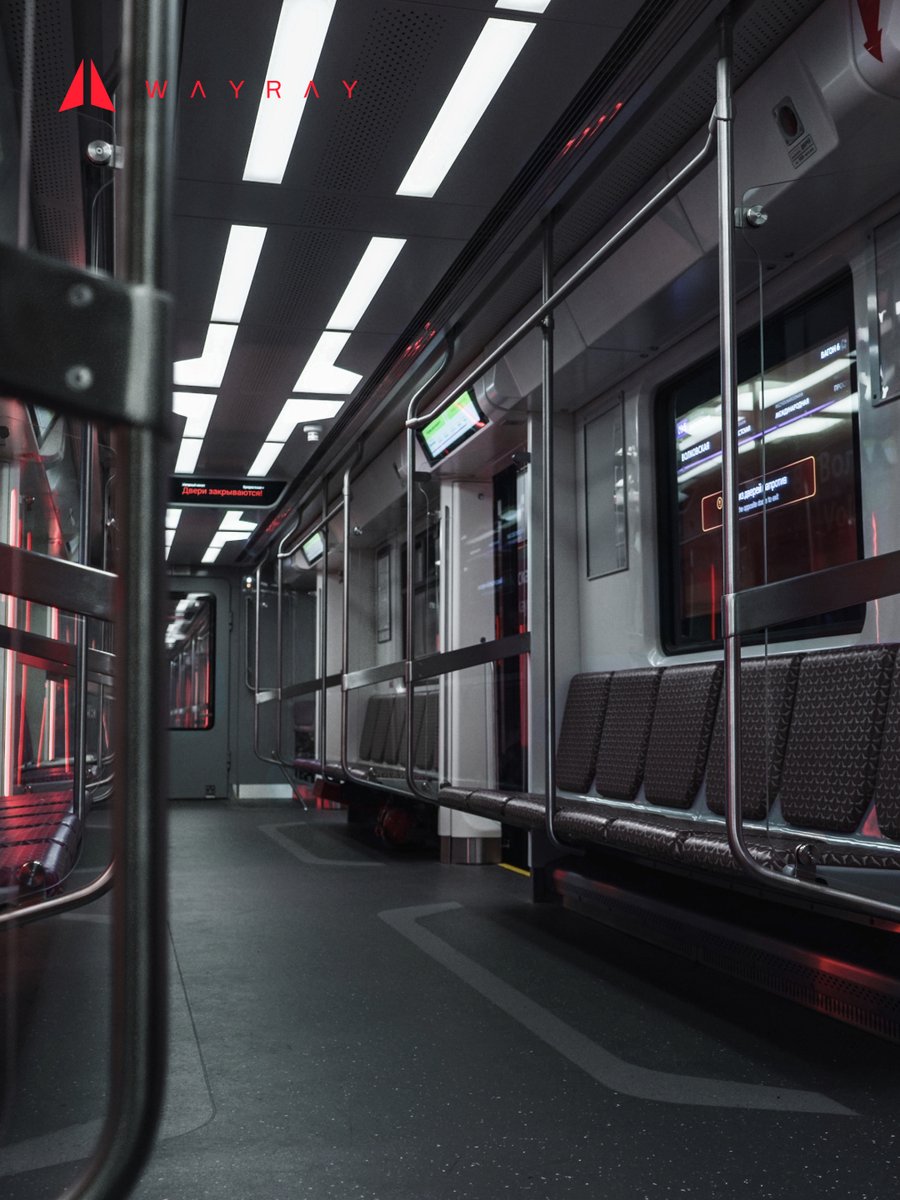
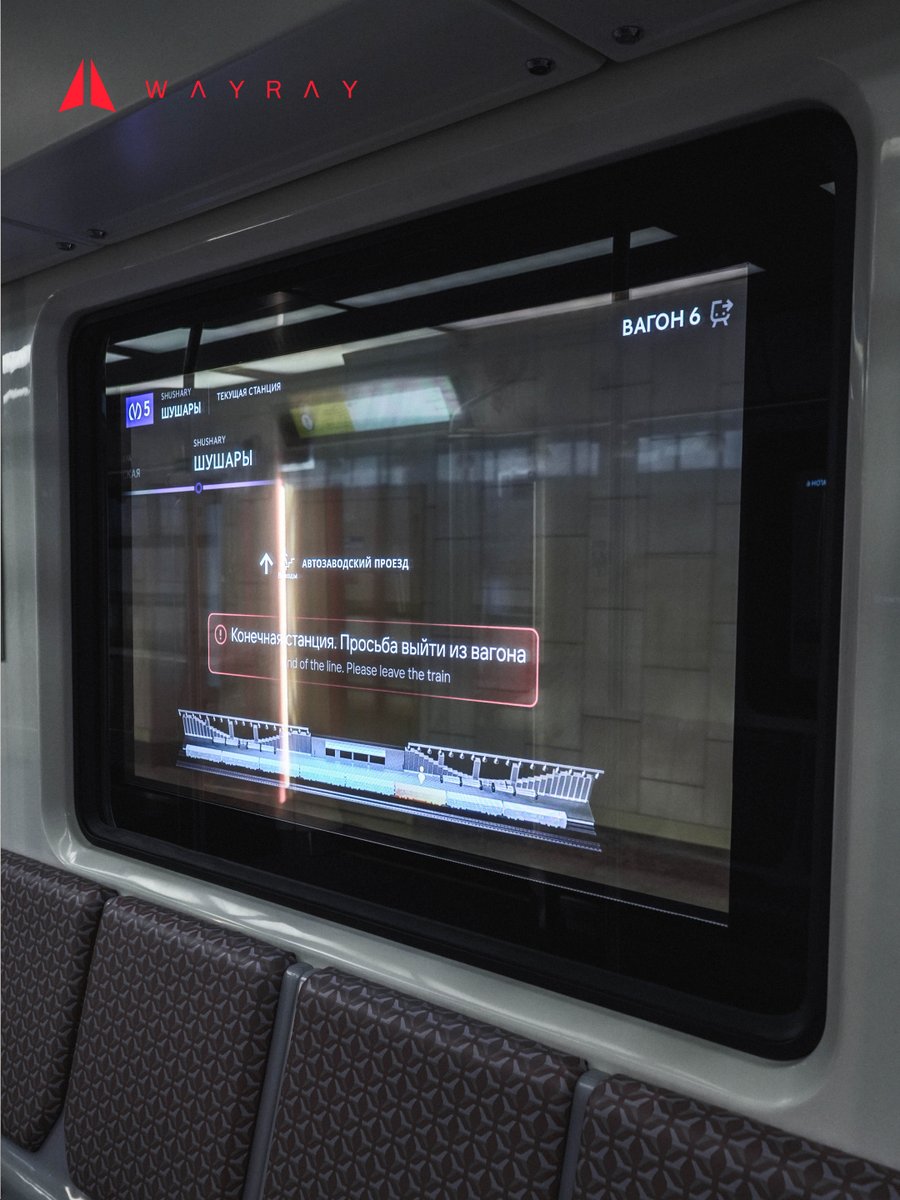
Our new product — Side Windows — is already running in metro trains.
It creates a clear and unified information space inside the carriage, showing what matters during the journey — stations, routes, transfers, and announcements.
Built to work globally and ready to scale.
After a period of silence, we’re excited to share what’s been happening. WayRay has undergone a major transformation: we restructured the company, kept our core tech and team, and continued working in stealth mode.
Today, we’re back — with a clearer focus and new directions.
I have seen a few augmented reality windshields for vehicles in my life. Best one I saw was from @WayRay which had a film that was stuck to the inside of the windshield which, when sprayed with laser light, generated a hologram (3D image) over the road in front of you.
The problem is it costs and weighs a few pounds in dashboard.
That said, the use case is an interesting one, even if I expect that any Apple vehicle will be driving you like my Tesla did to us tonight.
The real problem is that what's more important? A cool screen on the road ahead or a car that can self drive?
I can tell you for myself it isn't even close. Self driving is way way way way more important to me and the consumers I study.
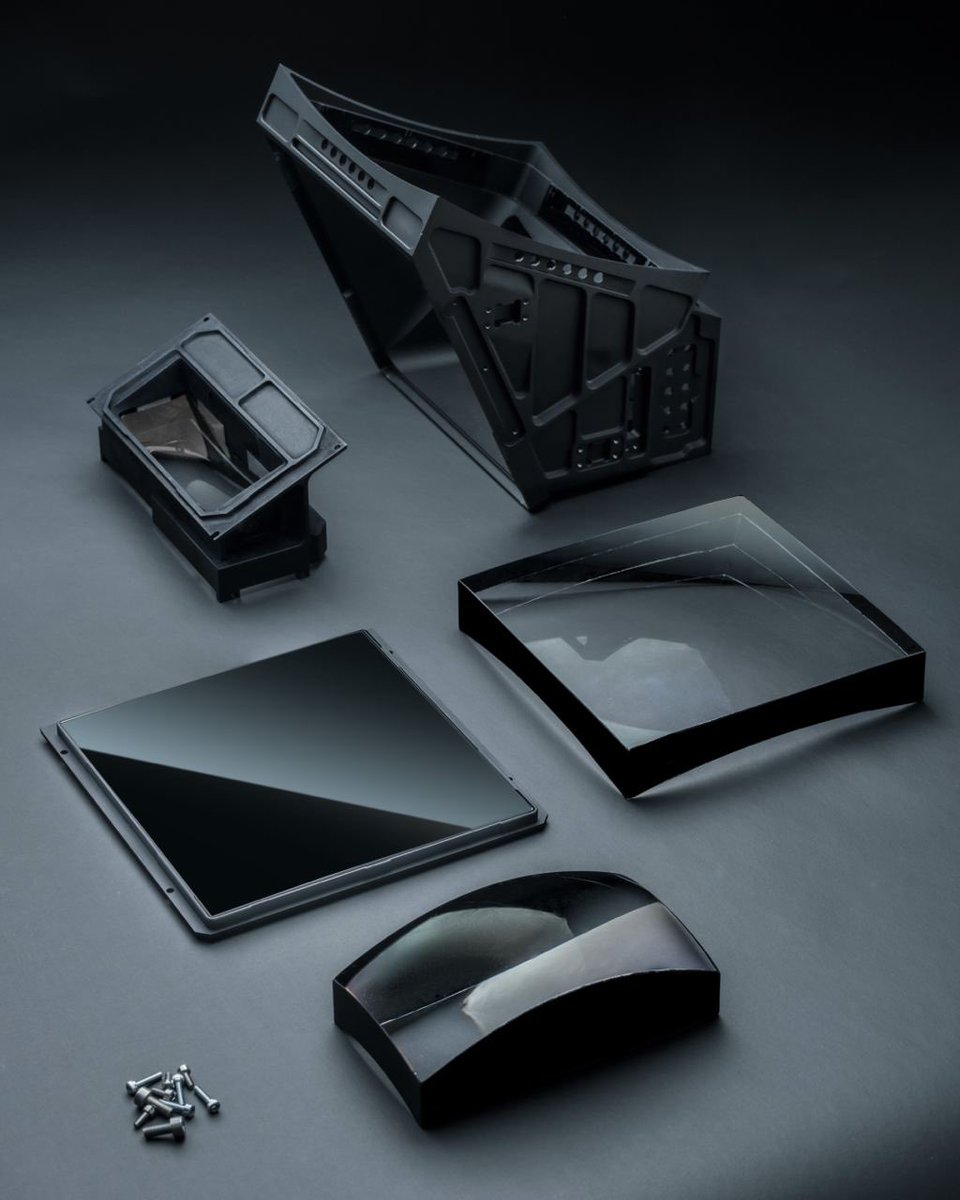
Quality assurance and metrology is vital part of automotive HUD development and production.
Non-contact profilometer and interferometry will allow to measure submicron deviations and optimize process until all components and assemblies are in-spec.
#deeptech#ar#automotive
We've altered the microstructure of integrated film, enabling it to perform complex optics. The versatile material is tailored to meet auto safety standards for durability, light absorption, etc. It's a blank canvas with infinite possibilities.
#automotive#film#deeptech#ar
2/2 Spatial positions of the driver’s and passenger’s ‘eye boxes’ are different, being situated on their respective sides of the vehicle. Furthermore, we also account for any potential misalignment in the car body during measurements, installation and lifetime of the vehicle.
1/2 Holographic HUD system design begins by measuring the primary parameters of the car, including its overall dimensions and internal packaging restrictions, as well as the spatial position of the ‘eye box’ where observer eyes are expected.
#deeptech#ar#automotive
Math models are used to calculate the performance effectiveness. The final design has to be simulated using a finite element model – where the construction of the laser module is subdivided into tiny triangles or cubes and simulated numerically.
#semiconductor#deeptech
Heat dissipation is a concern for many devices, the same applies to our laser modules. The wavelength of semiconductor laser emission directly depends on its temperature – therefore, thermal management is key to maintaining system performance across the full automotive range.
The global #Automotive#AR and #VR market was valued at USD 840M in 2022 and is anticipated to reach USD 7489.2M by 2029, witnessing a CAGR of 44.0% during the forecast period 2023-2029 via @MarketWatch
https://t.co/Ma2XeYbOyD
A series of thermal calculations were conducted, custom composite tubes with minimal thermal expansion ordered for precision. A design was created to secure the micrometres in specific spatial positions. Over 3 days, the car faced temperatures from -40° to +50° multiple times #ar
Whole car climatic tests of Deep Reality Display. To confirm the theory of windshield shape alteration due to car body deformation when the outside temperature changes, the tooling department developed a micrometric windshield deflection meter. #ar#Automotive
@alessiograncini@ozgurakbaba Would you prefer to wear glasses or to see virtual imagery and interact with it through the windshield with other vehicle occupants without the need for a headset or glasses? https://t.co/M4u2FryMkK
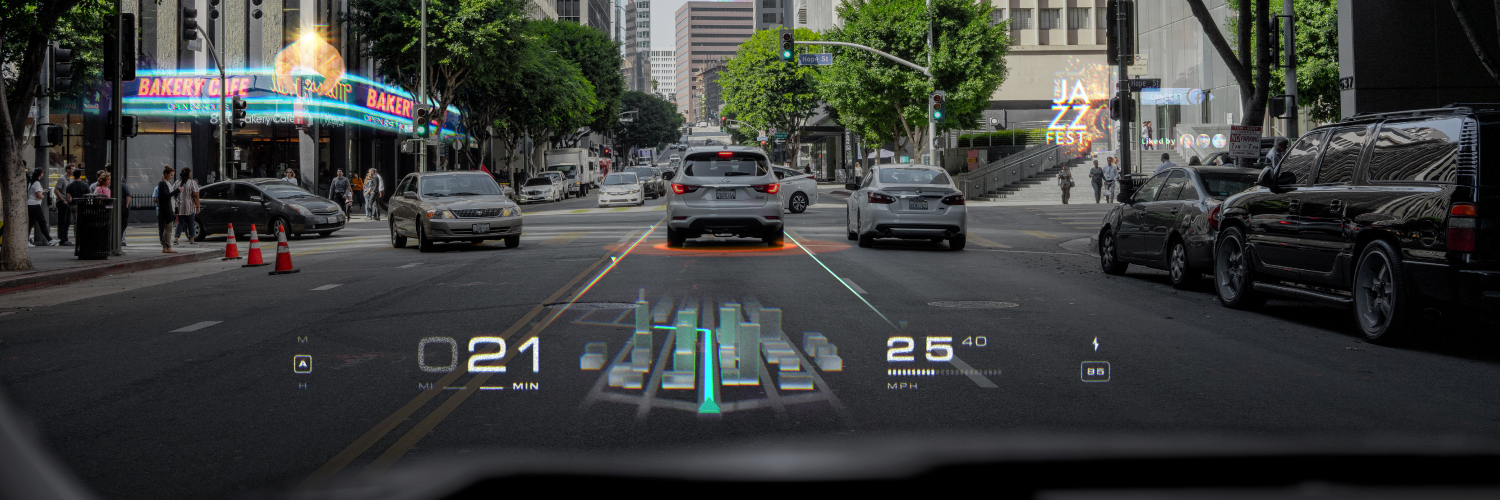
The latest generation #AR HUD, WayRay’s Deep Reality Display is capable of projecting virtual imagery over the car’s surroundings at various depths.
It also offers various entertainment for passengers turning the vehicle into a game console on wheels.
https://t.co/3e9y9pWdMK