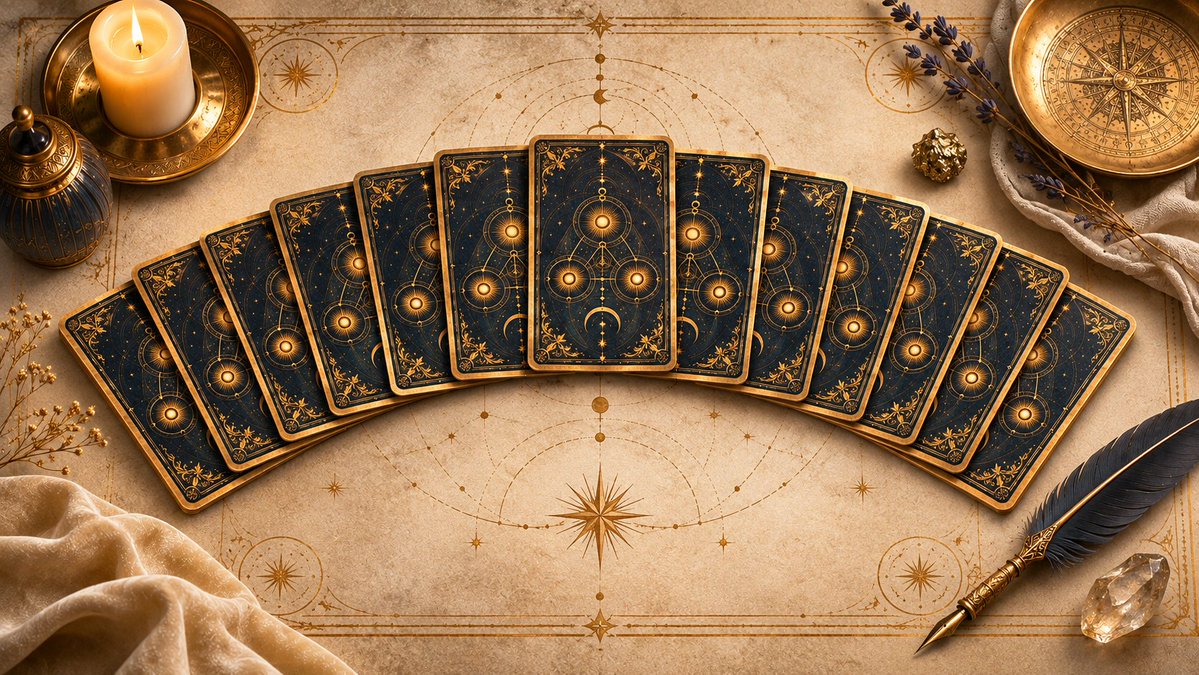
What if consciousness is not merely something we experience, but something in which we deliberately participate?
Discover Volume I: Awareness, the first book in The Four Principles of Sovereign Consciousness, and explore Teller’s Tarot — symbolic clarity, not prediction.
Visit Querying Qualia today. Explore the work, order your copy, or book a personal Tarot reading.
https://t.co/dRGRKlphph
Daniel, the CEO of DPMF has released more sneak peeks into the AVA game which will be available to web 2 and web 3 gamers. A wallet is not necessary to play but if you want to take advantage of Game-Fi opportunities you will need a wallet.
Viewable on PC and mobile this game will unite XRPL and non-crypto users under one game-verse... Beta should be released to a lucky few later this week and then open to the public within 3 to 4 weeks afterwards. The video shows an XSQUAD character in a hangar, and walking up to a Mech Walker... MW-2.
The MW-2 will be available to purchase and use after the full release for a lucky few... do you feel lucky?
@DPMF_XDX@FUZION_XIO
Set a reminder for our @DPMF_XDX Live Space this Sunday November 22th at 20:00 GMT / 12pm PST / 3pm EST with @james_six8jay.
Come and listen to his story of Loss, Support and Renewal. He will share with us his book “Hacked” based on his real life occurrences. If you think getting rugged for a couple of hundred dollars is horrible then you really need to listen to his story.
Set your reminder here⬇️
https://t.co/jdWJYv7TVz
Hosted by:
@LiveFre47518057@WesleyDalton20@LatestCryptoXRP@WayTellerAE@Daniel_DPMF
Come and listen to Six8Jay’s story of Loss, Support and Renewal. He will share with us his book “Hacked”. Based on his real life occurrences. If you think getting rugged for a couple of hundred dollars is horrible then you really need to listen to his story.
@DPMF_XDX@james_six8jay
https://t.co/gfSlTkus05
ℹ️ DPMF overview
🇬🇧 UK-based FinTech company
🚀 Founded in 2020
🧱 Building on the XRP Ledger
Designing and developing decentralised applications (dApps) with focus on:
• Web3 utility
• GameFi & DeFi
• Self-custody & security
• Digital ownership
🪙 Powered by XDX, our native XRPL token.
More at https://t.co/pm1hJSPeJa
#XRP #XDX #XIO #XSQUAD #XRPLedger #DeFi #GameFi #SocialFi #AVAProgram #XRPL
The alpha wolf does not exist, and the scientist who made it famous spent forty years trying to take it back.
The idea comes from a zoo. In 1947 a Swiss researcher called Rudolf Schenkel watched a group of wolves in an enclosure in Basel. They were unrelated adults, strangers to each other, shut in together. They fought constantly for rank, and Schenkel named the winners the alphas.
In 1970 a young American biologist, David Mech, repeated the idea in a book called The Wolf. It sold well over a hundred thousand copies. The alpha entered the language, and from there it went into dog training, management seminars and a whole shelf of advice for young men.
Then Mech went to look at wild wolves. He spent thirteen summers in the high Arctic, living alongside a pack that had never learned to fear people.
He did not find a single alpha. He found a mother, a father and their children. The so-called leaders were the parents. Nobody had fought their way to the top. They had bred. When food was short, the pups ate first.
Mech published the correction in 1999. He asked his publisher to stop printing the book. They kept printing it, because it sold.
The entire theory came from watching animals in a cage and assuming that was how they lived.
A good deal of what you have been told about your own species was worked out the same way, on rats in a laboratory and volunteers on a ward. People have kept on believing the zoo wolf long after anyone went and looked at a wild one.
Mikhaila Peterson Fuller took the historic Oxford Union stage and silenced the whole room with an 8-minute speech.
The motion under debate: “This House Would Go Beyond Meat.”
She denounced it. She began with this:
“I was diagnosed with juvenile rheumatoid arthritis in 37 joints at age 7.
By 17 I had a hip and ankle replacement.
16 years of immunosuppressant injections, crippling depression and a body falling apart.
Doctors said it was incurable.
Then, at 23, she tried the one thing no doctor ever told her to:
She ate just meat.
2 months later → almost all symptoms gone.
Off SSRIs, Adderall, and all immune meds.
Pregnancy brought back symptoms roaring… so she went 100% carnivore (beef, salt, water).
6 months later → again in complete remission.
8+ years later she’s still symptom free and flares every single time she tries adding plants.
She is not alone, her whole family is carnivore for autoimmune issues and her community has 7,000+ people with similar stories.
Then she let the receipts fall:
Harvard published a survey of 2,000+ carnivores (6+ months) (Oxford University Press):
→ 90–95% experienced major improvement or complete resolution of autoimmune, mood, metabolic, gut & skin problems
→ 92% of type-2 diabetics stopped taking insulin completely
Hardly any side effects
Her last line at Oxford:
We’re being told to eat less of the one food that puts “incurable” diseases into remission for thousands of people…while 1 in 5 North Americans have autoimmunity and 68% are overweight or obese.
“Maybe we have the food pyramid completely upside down.”
Watch the complete 8-minute Oxford Union speech below. It’s visceral, intimate and will challenge everything you’ve been told about meat.
What chronic health condition would you do anything to fix? Share your story below – no judgment, only support.
I think there is a further distinction worth exploring here: Art as an act of participation, rather than simply an act of production.
Within the Aetheric Emporium, I use narrative and art as a recursive method of world-building. Narrative gives rise to imagery, imagery reveals possibilities not previously recognised, and those discoveries subsequently inform and transform the narrative itself.
The resulting NFTs are not simply illustrations or collectibles. They are artefacts of an evolving mythology, carrying provenance, correspondence, and consequence within a participatory world.
Indeed, participants can enter that world, act within it, and alter its unfolding narrative. Those actions, in turn, generate new art, new artefacts, and new narrative possibilities.
The artwork is therefore not necessarily the conclusion of the creative process. It can become the condition for its next emergence.
For me, this is where digital art, narrative, and blockchain become particularly interesting: not merely as media for representing an imagined world, but as instruments through which that world continues to develop.
Returning to the Cards.
Tarot does not tell us what the future must be.
It can introduce an unfamiliar perspective into a familiar question, revealing assumptions we have stopped examining.
After months exploring Querying Qualia and our inherited maps, I return to Teller's Tarot.
The cards are not the answer.
Read the new essay:
https://t.co/ITqP5RiOIW
Join us for an evening of markets, conspiracies and Friday the 13th events with Versan from Black Swan Capitalist!
@VersanAljarrah@DPMF_XDX@FUZION_XIO
https://t.co/rmiF9ajc7E
Bulk import feature:
Got a whole series ready to mint? 📦
Drop a zip or CSV into FUZION-XIO ‘Create’ and your artwork, names and details fill in for you, extra columns even become traits.
Less typing,
more creating! 🖼️
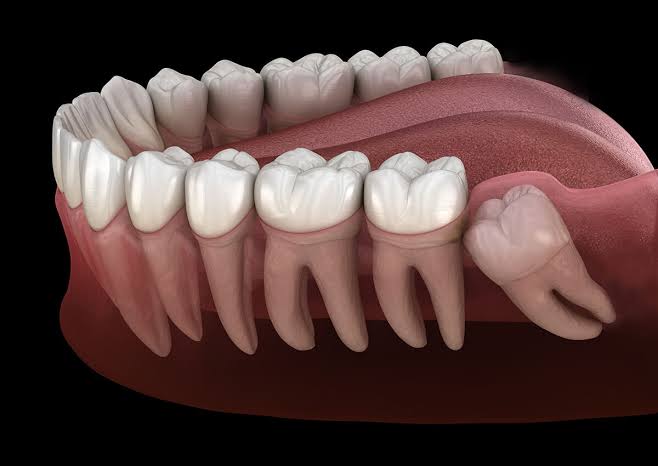
American surgeons pull around 10 million wisdom teeth a year, mostly from teenagers. Jay Friedman, a public health dentist who spent three decades fighting the practice, worked out that at least two-thirds of them were doing no harm whatsoever.
The reasoning is an old one. Everybody's go eventually, so have the lot out young, the sound ones with the bad, before they cause trouble. Four at once, usually under a general anaesthetic, followed by a week of soup, ice packs and photographs of chipmunk cheeks. It is so routine that the teenager who keeps all four is the one who gets asked questions.
In 2007 Friedman added it all up and called it a public health hazard. About 5 million Americans go under every year, at a cost of over $3 billion. They lose around 11 million days a year to pain, swelling and missed school or work. Tens of thousands are left with lifelong damage, many with a lip, chin or tongue that never gets its feeling back because the drill clipped a nerve. Most of the pain blamed on wisdom teeth, he found, was caused by the surgery.
Then came the comparison his profession hated most. The share of wisdom teeth that ever turn nasty is about the same as the share of appendixes that turn into appendicitis, and nobody takes every teenager's appendix out just in case. By his estimate the average oral surgeon in America was making about half a million dollars a year from wisdom teeth.
His colleagues called him a traitor. The following year the American Public Health Association came out against pulling healthy wisdom teeth.
Britain had got there first. The very first ruling NICE ever issued, in 2000, told dentists to leave healthy wisdom teeth where they were. America carried on, and still does.
Wisdom teeth arrive on schedule in every mouth. What has changed is the jaw they are meant to fit into. A jaw grows to the work a child's food gives it, and years of soft, sweet, mushy food build one too small for the teeth it was always going to grow. Impacted wisdom teeth are rare in skulls from before farming. In ours they are a rite of passage.
The face shrank to fit the food, and the teeth that no longer fit the face come out at seventeen, as a precaution, at a profit.
Every generation finds a new set of teeth to blame for the menu.
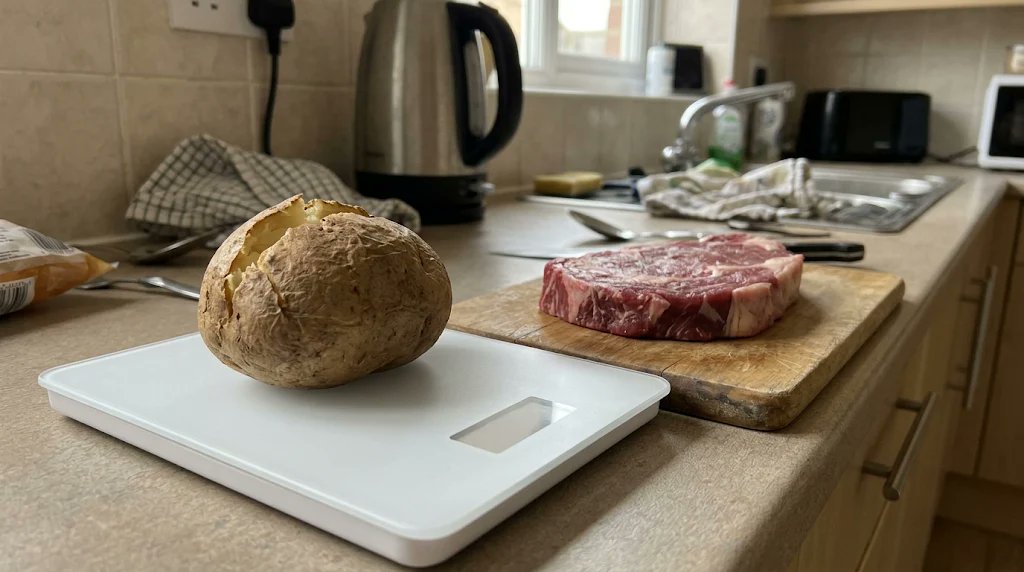
The potato has been promoted to superfood this week, so I put it on the scales against a real one.
The superfood, 200g, baked, skin and all:
- 5g protein
- 42g starch
- About 1,000mg potassium
- About 20mg vitamin C
- No B12
- No haem iron
- No vitamin A, D or K2
- No creatine
- No fat to carry anything
- Keeps you full for about two hours
A 200g ribeye, which has never been called a superfood by anybody:
- About 50g complete protein
- No starch
- About 600mg potassium
- More than a day's B12
- A full day's zinc
- Haem iron, the kind you absorb
- Creatine, carnosine and taurine
- The fat that carries A, D, E and K2
- Still working at bedtime
Potassium is the potato's proudest number, and the steak turns up with well over half as much and none of the glucose. Vitamin C is its other party piece, and a body that isn't wading through 42g of starch at a sitting needs far less of it, because glucose and vitamin C queue for the same door into your cells.
Then there's the boast that the potato is the most filling food ever tested. That comes from a single study in 1995, where volunteers ate 240 calories of each food and reported how full they felt. 240 calories of boiled potato is a heaped bowl of nearly 300g, most of it water. 240 calories of beef is a few mouthfuls. The potato won a stomach-stretching contest against a snack, and the researchers stopped the clock at two hours, just before the starch could show them what happens next.
So the superfood's case is a mineral the steak mostly matches, a vitamin the starch makes you need, and a fullness trophy won with water.
The ribeye brought everything else on the list, and nobody gave it a press release.
One of these is dinner. The other came in a sack and got a publicist.
The potato is being sold as a health food again, and the only healthy thing about it has ever been the fat poured over it.
It is a nightshade. It is about 80% water, and the rest is starch that hits your blood faster than table sugar does. For 450 years it has been the thing beside the meat, and not one cuisine on earth has made it worth eating without animal fat.
Chips in beef dripping. Roasties in goose fat. Mash beaten with half a pack of butter and hot cream. Dauphinoise, which is a pint of cream with some potato in it. Aligot, so heavy with cheese it stretches a yard off the spoon. Latkes in schmaltz, boxty in bacon fat, champ with a well of melted butter in the middle, and the jacket potato that nobody in history has ever eaten dry.
Europe did not want it. It arrived from the Andes in the 1570s, grew underground, belonged to the same family as deadly nightshade, and spent the best part of two centuries as pig feed. Frederick the Great had to order Prussia to plant it in 1756, and Russian peasants rioted when they were made to.
They had a point. The potato defends itself with solanine, a nerve toxin packed into the skin, the eyes, the sprouts and any patch gone green. In 1979, 78 schoolboys in south London were poisoned by a school dinner of potatoes that had been stored too long, and 17 of them ended up in hospital.
The Irish labourer of the 1840s ate up to 14 pounds of potatoes a day and stood taller than the English recruits beside him in the army. The part always left out is the buttermilk he drank with them by the quart, and the butter whenever he could get it. It was the dairy doing the nourishing, with the potato as ballast. When the crop failed in 1845, a million people died while Irish cattle and butter went on being shipped to England.
On its own, the starch in a medium jacket potato comes apart into roughly nine teaspoons' worth of glucose, and it starts doing so in your mouth.
For a lean, active person with a steak in front of them, a potato roasted in dripping is a pleasant way to eat more dripping. For somebody carrying three stone they cannot shift, with a liver that has been fielding glucose since breakfast for thirty years, it is a sugar surge in a cardigan, and calling it a whole food is how they stay stuck.
The potato was never the meal. It earned its seat at the table on the strength of what ran off the meat, and that is still the only seat it deserves.