Listening today. Learning for tomorrow. As a nonpartisan, nonprofit organization, we deliver accessible social-scientific research on young people ages 13-25.
When we asked young people about barriers to thinking about and planning for the future, they most frequently mention financial concerns. Respondents describe concerns about paying for college, finding stable employment, and earning enough income. Read: https://t.co/hm4U7UOOij
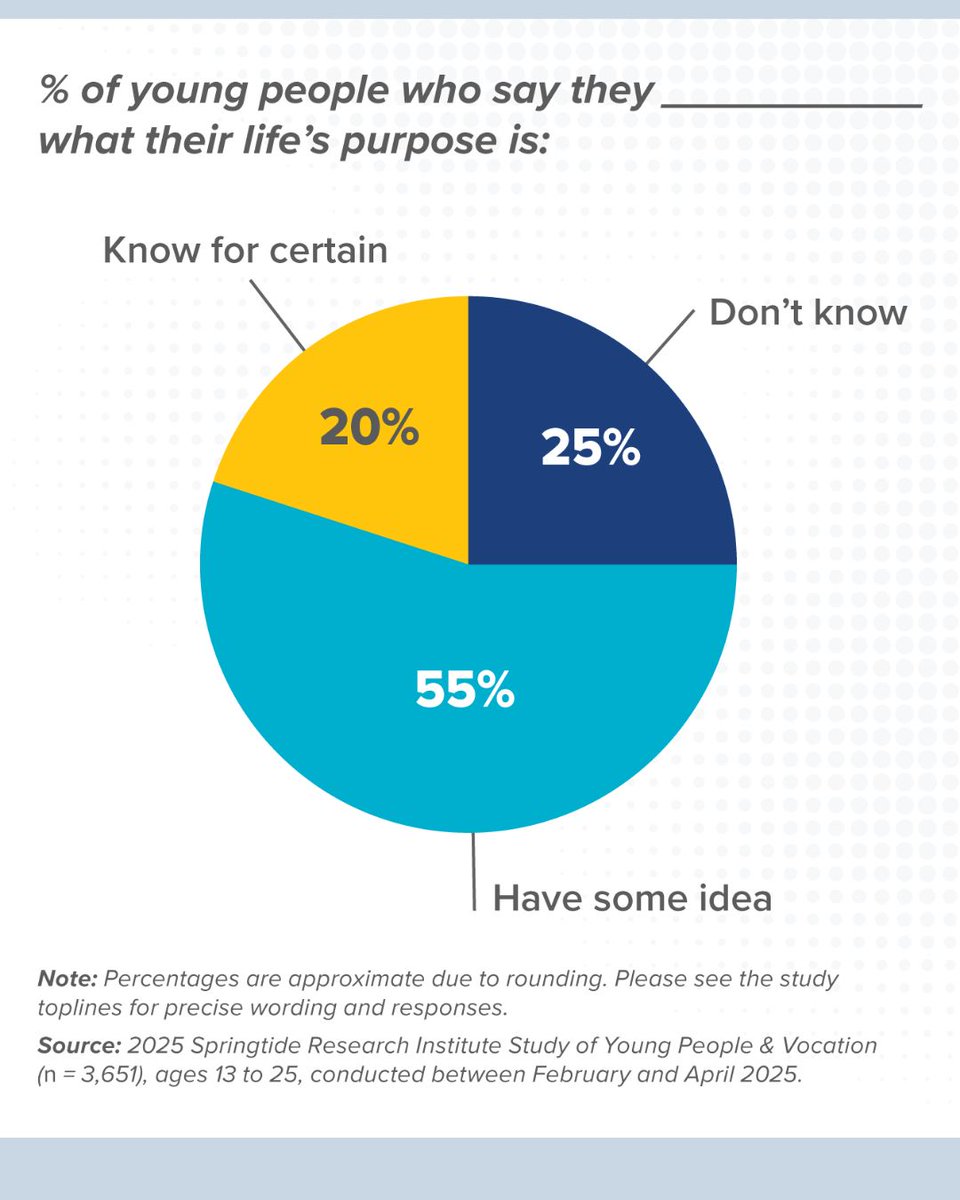
We find that most young people already have some sense of their life’s purpose. Three-quarters (75%) of young people say they have at least some idea of what they are meant to do in life, including 20% who say they are certain about it. Read more: https://t.co/O4urq9bF6H
Who helps young people discover their purpose in life? Over half (55%) of respondents say that teachers have moderately or significantly influenced their thinking about the future. Get more data: https://t.co/O4urq9bF6H
In 2025, we surveyed over 3,500 young people to examine how they discover a sense of purpose. In this report, you’ll learn how trusted adults can accompany teens and young adults as they reflect on what they are meant to do in life. Download the report: https://t.co/mv9SrxKugP
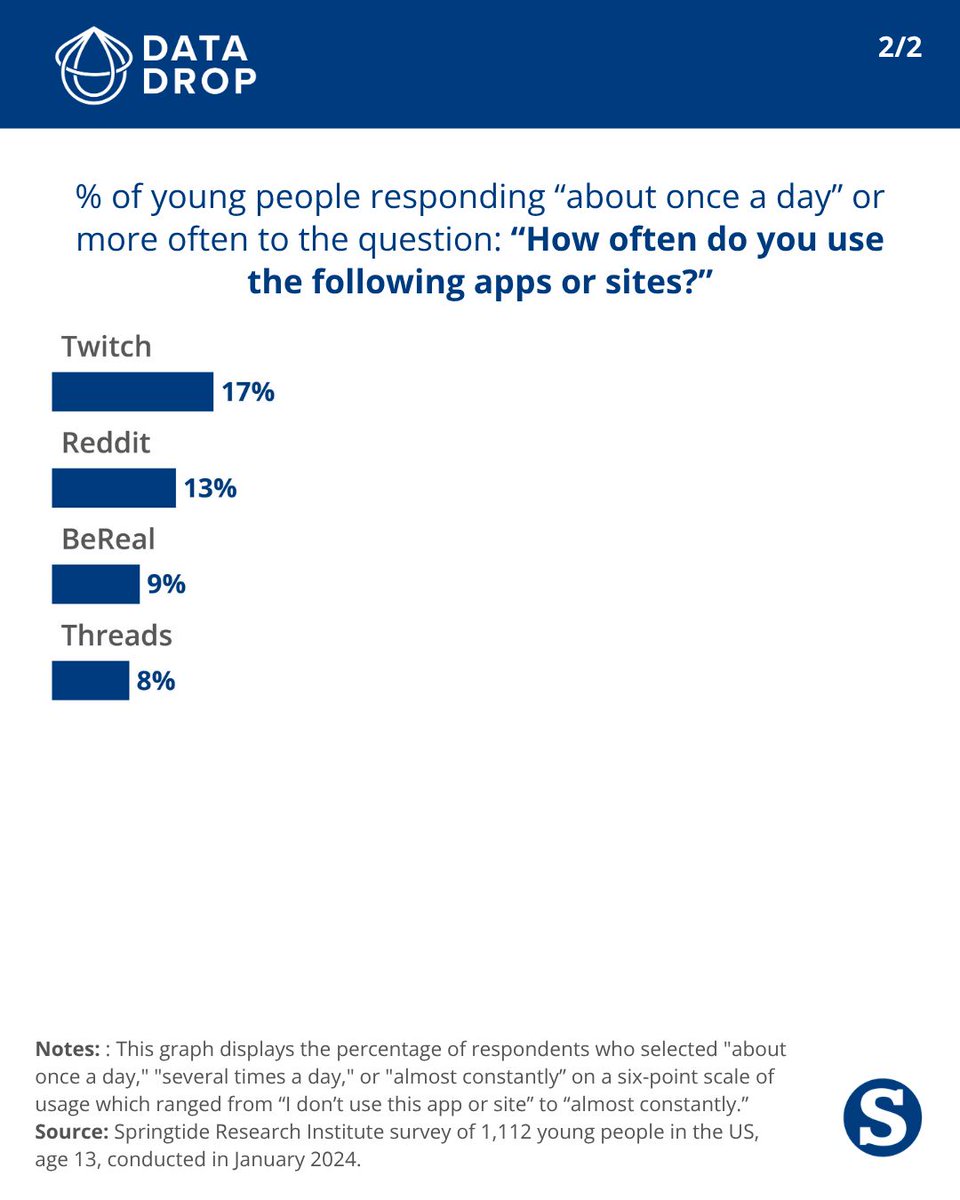
When we surveyed #GenAlpha teens in 2024, almost all respondents (99%) said they use social media at least sometimes. Most commonly, they reported daily use of YouTube (82%), TikTok (65%), and Snapchat (51%). Read: https://t.co/yrswn2z2pa
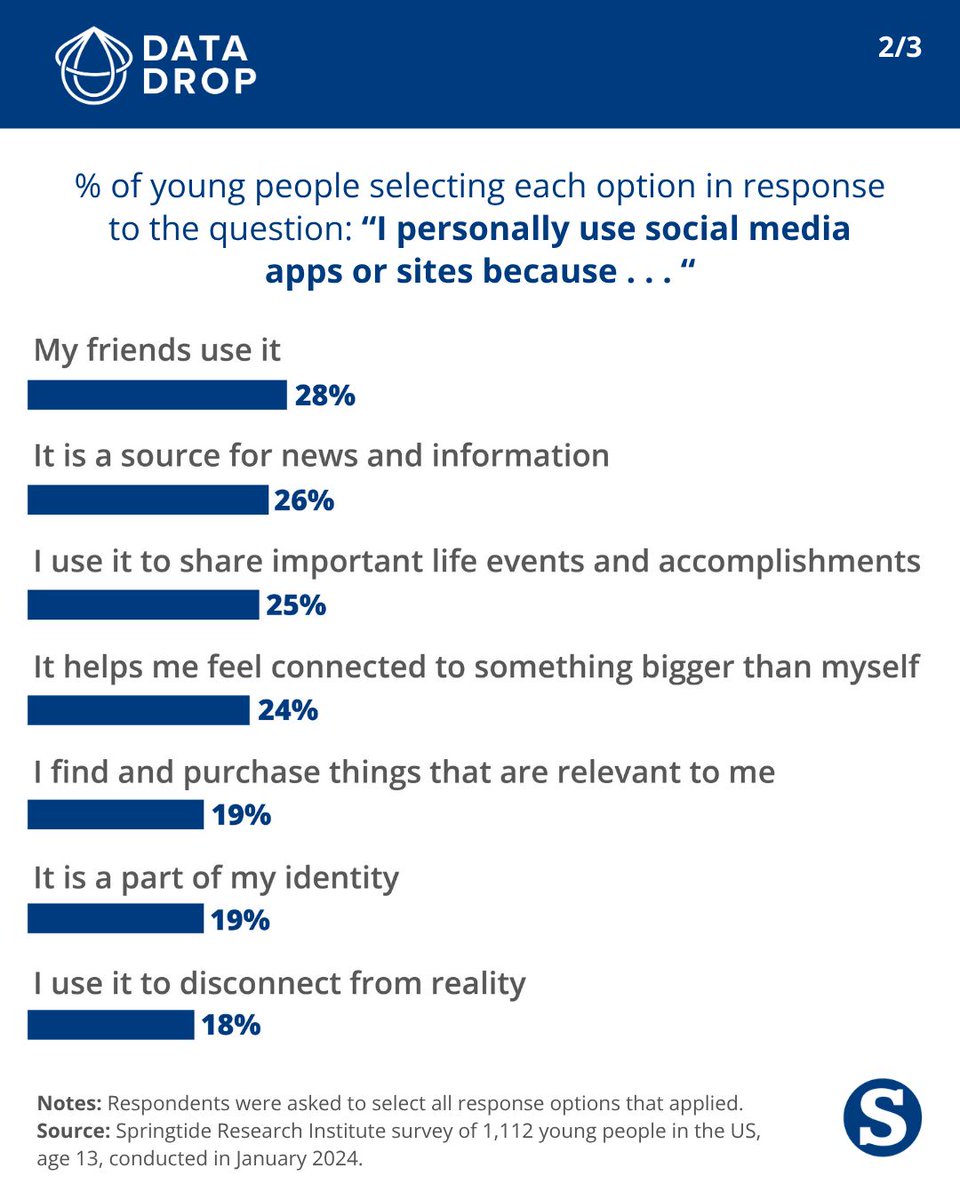
In January 2024, we asked the oldest members of Gen Alpha about their social media usage. These teens said they use social media for a variety of reasons, but most commonly, they used it because their friends used it (65%). Read more: https://t.co/yrswn2z2pa
Our researchers found that two-thirds (66%) of young people agree or strongly agree that the Church should expand opportunities for women to participate in decision-making.
Read more about young Catholic's thoughts on gender roles: https://t.co/KvgFKSj6GL
Catholic youth most commonly cite family tradition as the reason why they continue to identify as Catholic. Respondents whose mothers currently identify as Catholic are more likely to identify as Catholic and say they expect to remain Catholic. Read: https://t.co/KvgFKSj6GL
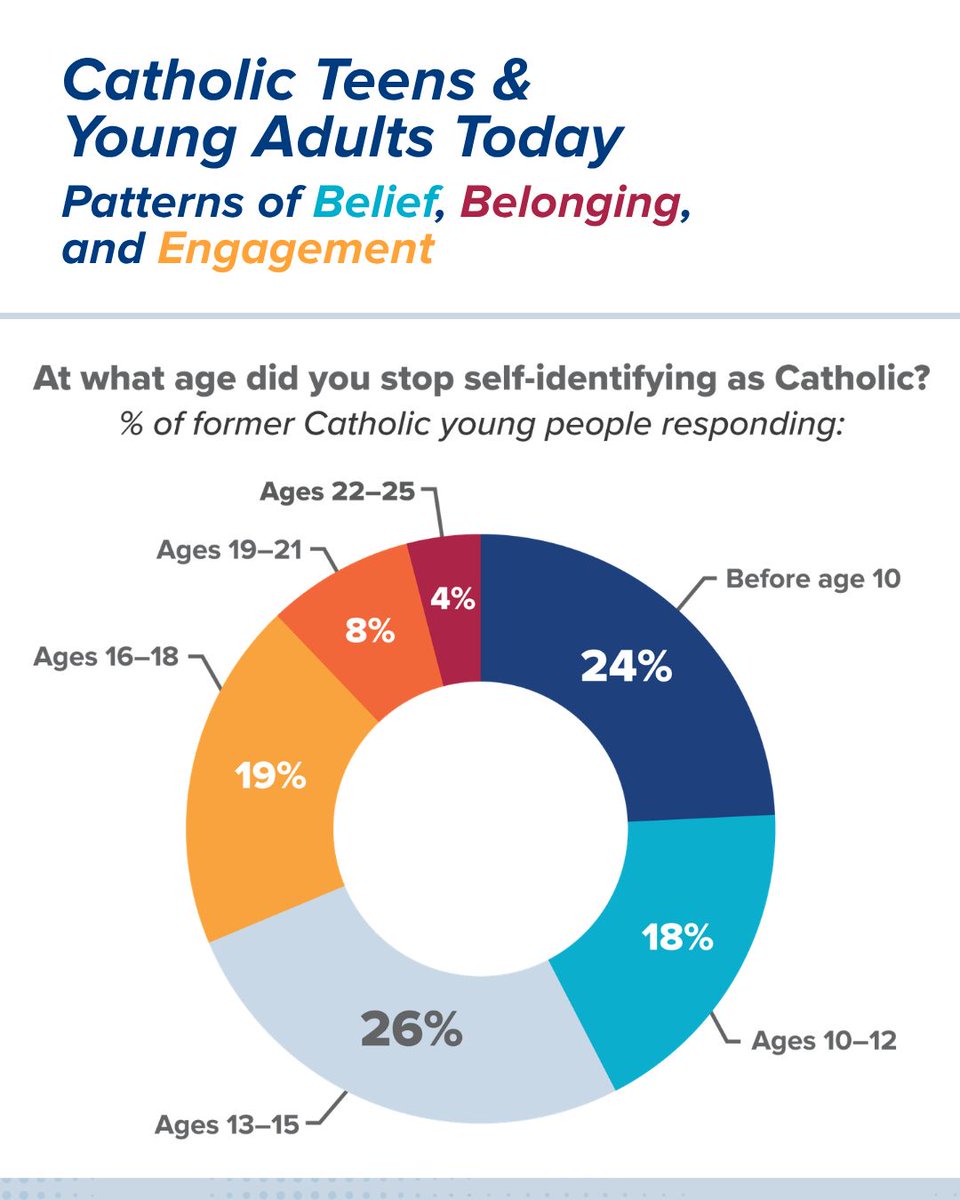
Our researchers found that 42% of former young Catholics stopped identifying as such before turning 13, and 87% disaffiliated by age 18. Most say it is unlikely they will ever identify as Catholic again.
Read more: https://t.co/KvgFKSj6GL
In our newly published study, race/ethnicity emerges as the strongest predictor of Catholic disaffiliation among young people.
Get more data on current and former Catholic young people: https://t.co/KvgFKSj6GL
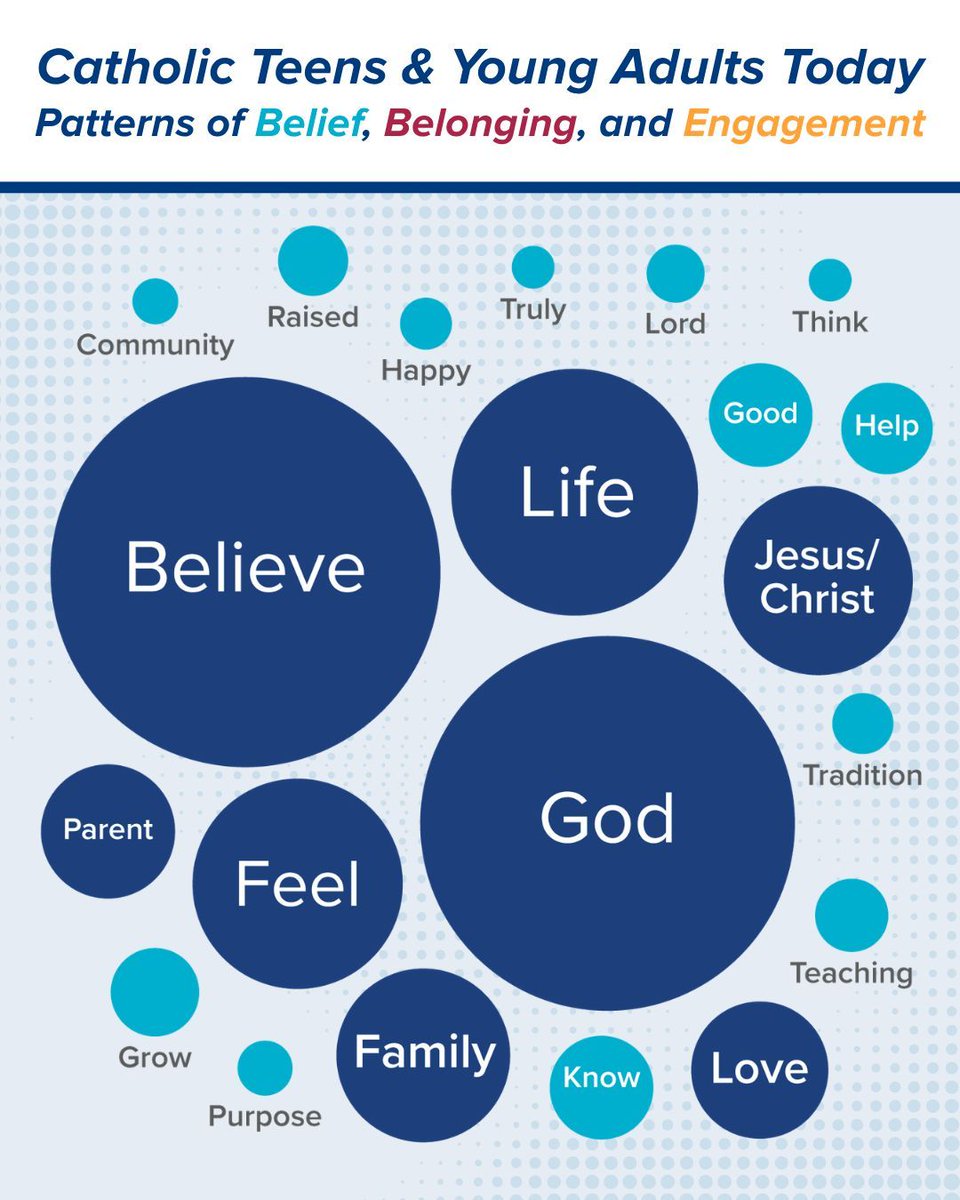
We asked Catholic young people why they continue to identify or practice as Catholic. This word cloud visualizes the most frequently used terms in respondents’ open-ended responses. Get more data https://t.co/67O4CPDP47
Springtide surveyed over 1,000 young people to document patterns in Catholic (dis)affiliation, relationships, and practice. In this report, you’ll find insights into the identities and behaviors of Catholic teens and young adults. Read the report: https://t.co/J2r3tT1xLx
When asked about how important religion is in their lives, almost half of our respondents say it is among the most important things or the most important thing in their life. Read more: https://t.co/9KStzQqBL8
Building a sense of belonging in religious spaces matters; what happens when the community feels temporary? Our research shows peers are key to engagement in religious spaces, and their absence can leave young people feeling disconnected.
Read more: https://t.co/9KStzQqBL8
Family members play an essential role in the development of religious identity and involvement for young people. Almost two-thirds of the young people in our study continue to identify with the religious tradition in which they were raised.
Learn more: https://t.co/9KStzQqBL8
Why do some young people stay involved with religious or spiritual organizations? Our researchers discovered that religious involvement often grows from three interconnected influences: parents, peers, and personal belief.
Find out more: https://t.co/9KStzQqBL8
Our research finds that religious young people tend to volunteer more frequently than their non-religious peers. Get more data: https://t.co/RSYQhVp5Bs
Join us on Thursday, April 16, at 3:30 p.m. ET for a free webinar on how to cultivate and strengthen belonging within your school. Learn how educators, principals and administrators can help students flourish. Sign up for free: https://t.co/KDIs2CsJ8e
Our 2025 data highlight various motivations for why teens and young adults engage in volunteer work. The most common reasons are that they enjoy it (46%) and it feels good to help others (42%).
Find out more about why young people volunteer: https://t.co/W4lmuL9XIg
Our research finds that young adults attend religious services less often than teens. Nearly half of teens, ages 13 to 17, attend religious services at least monthly, compared with about one-third of young adults, ages 18 to 25. Get more data: https://t.co/tNauRWA4Pt