@rathkrishna@monikahalan I agree.
Where are they getting this data from. Did they double check the data?
At this rate, I won’t be surprised if we eventually discover it all started with a typo! 😊
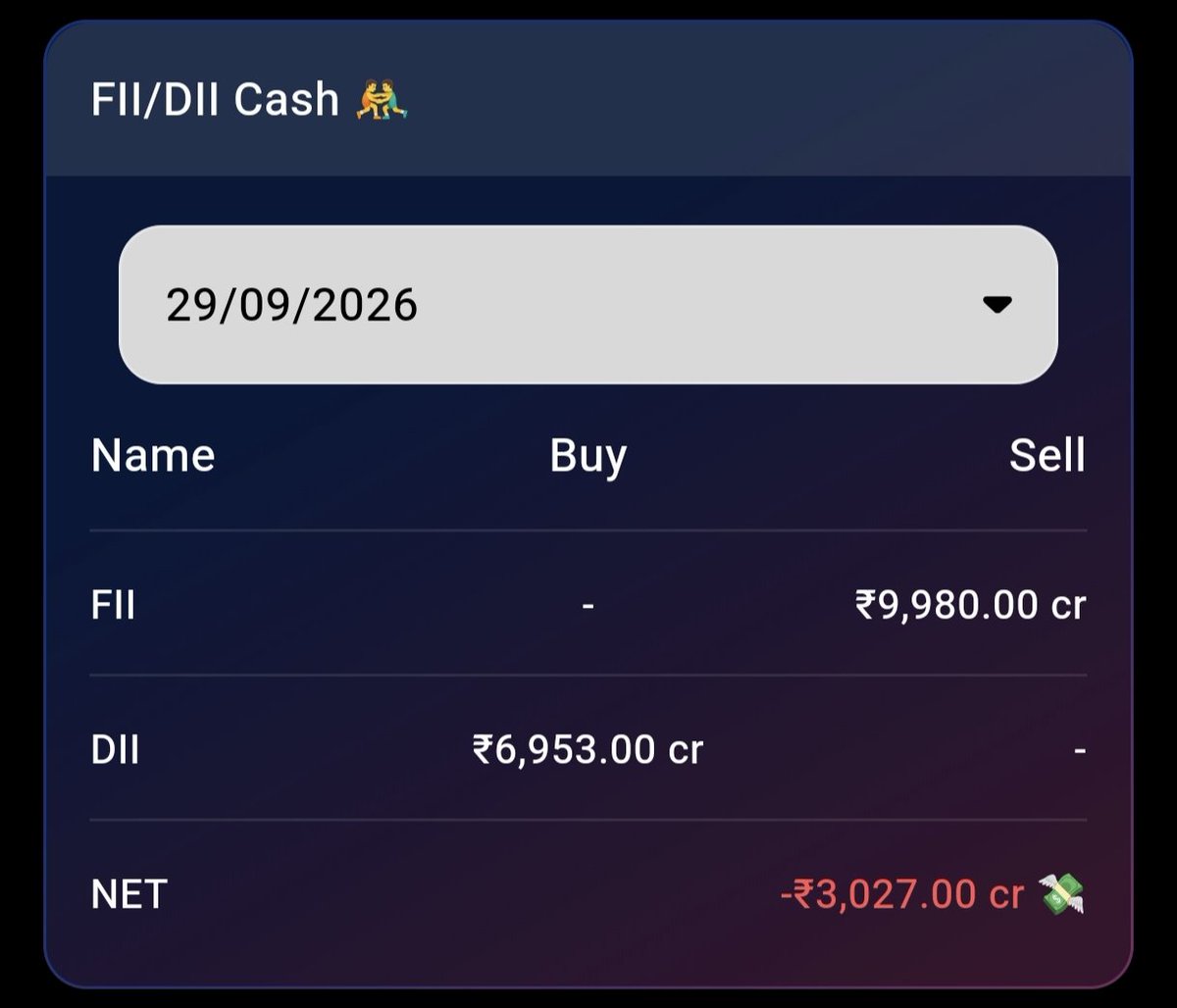
Markets have fallen 15% over 2 years
Past corrections have been sharper or longer
20 to 50% in 2000/2008/2020
Or 2000 to 2003 / 2008 to 2013
Not expecting corrections is the correction we need in our expectations
The time to fear the correction is before such periods of no or negative returns
Can it fall more or stay here for long - yes
Can it turn soon and give steady returns - yes
Lowest valuations in crisis at 12 x
Peak valuations in bubbles are 25/30x
We are in the middle
Can go where in the near term
In the medium to long term / if we survive such phases, returns will be ours
@CNBCTV18News@_prashantnair@YashJain88 “Most Indians are just one hospitalisation away from bankruptcy.”
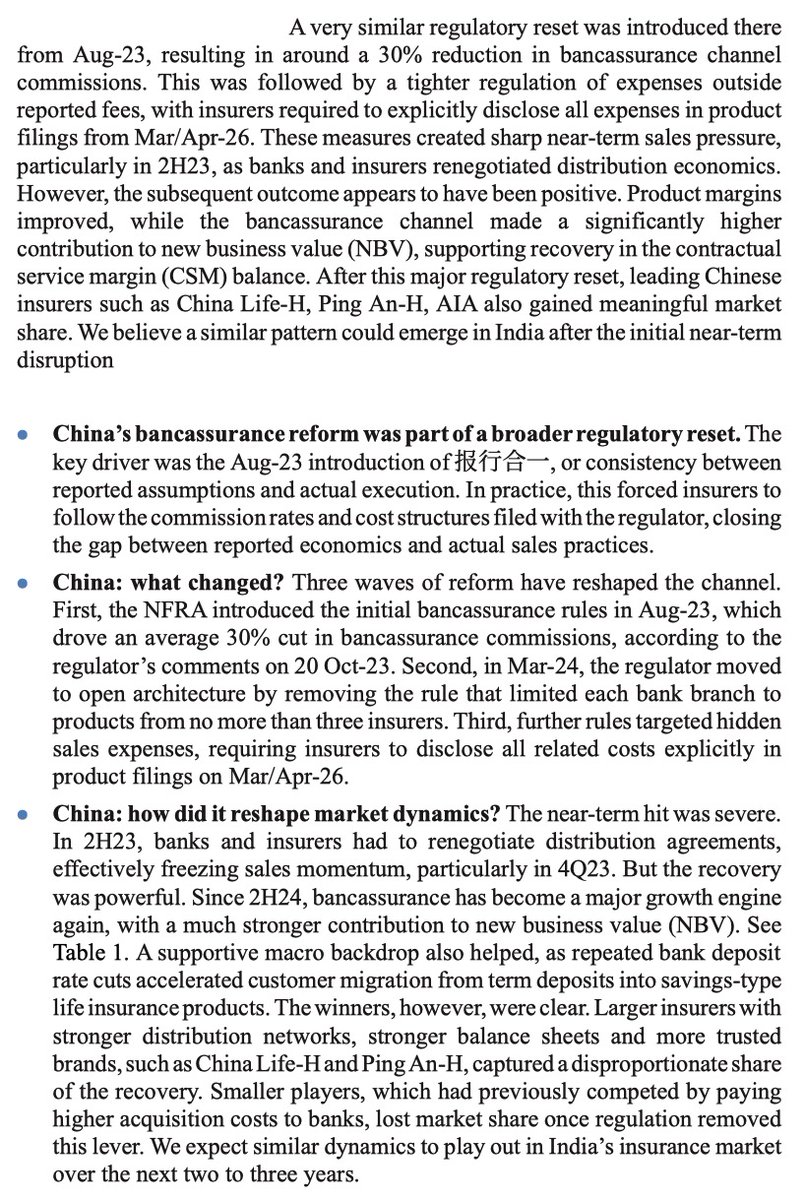
When healthcare costs can push families into financial distress, how responsible is it to disrupt the distribution channel working to bridge India’s protection gap?
@CNBCTV18News@_prashantnair@YashJain88 Do they understand:
In a country where insurance remains underpenetrated and largely a push product due to low awareness of its consequences, what is the economic cost of weakening the very distribution channel driving penetration?
@CNBCTV18News@_prashantnair@YashJain88 Uninsured event → household/business bears the loss → savings are depleted or debt rises → consumption/investment falls → government support may rise → economic recovery slows.
44% post-tax profit of a few large distributors doesn’t reflect the reality of smaller ones.
A small sample size. A sweeping conclusion. And a decision that affects the entire distribution ecosystem.
Is that really a sound basis for such a big decision?
'Some large insurance distributors have over 44% profit after paying taxes, which is too high for the financial svcs sector,' says Ajay Seth of #IRDAI. He adds, 'Commissions are at 38%. If anyone has to be shocked, it has to be policyholders'
@_prashantnair@YashJain88#Insurance
As a regulator, what should worry you more?
People going bankrupt because they’re uninsured—and the impact that has on the economy—or distributors earning higher commissions?
I’m genuinely not sure what the priority of a #regulator is here.
But is India the same as China?
Most Indians are one serious health emergency away from financial bankruptcy.
Insurance can save them. But who takes insurance to these people? Intermediaries.
And what motivates intermediaries to sell more insurance?
Isn’t it commission?
If you take away that motivation because you think they’re earning “too much”—which, by the way, shouldn’t be the problem—then answer this:
Why should they work harder to increase insurance penetration?
Take away the incentive. Don’t be surprised when you get less of outcome.
₹1 crore invested approximately two years ago:
India Nifty ₹89 lakh
S&P 500 ₹1.54 crore
Germany DAX ₹1.53 crore
Japan Nikkei ₹1.72 crore
Taiwan ₹2.31 crore
South Korea ₹3.54 crore
Enjoy LTCG
If #Nifty ends the year around the current levels
It will be the worst yearly performance since 2011
Congratulations to the taxation policies of Government of India which has made this possible even when economic growth remains strong.
@FinMinIndia@PMOIndia
We can now initiate tax on short term and long term capital loss to boost revenues as capital gain revenue may fall.
LTCL 12.5%
STCL 20%
Higher STT was booking losses.
Not only it will boost revenues for freebies but also prevent investors from booking losess :)
I think MDR on UPI was probably inevitable at some point, especially given how widespread UPI adoption has become. It could also lead to more competition, instead of just three apps accounting for more than 95% of the market.
That being said, there are some use cases, like investing and broking, where the proposed MDR structure doesn’t really make sense.
The problem with broking is that there is no guarantee that money transferred to a broker will actually result in a transaction.
As brokers, we can’t force a customer to trade after transferring money. And if we can’t pass the UPI charge on to the customer, there is essentially no limit to the cost a customer can impose on a broker without generating any revenue.
Just as an example, 10,000 customers could each make 50 UPI transfers of ₹2 lakh in a month without executing a single trade. At the proposed MDR, this could potentially cost the broker around ₹2 crore, without generating any business.
What makes this even more challenging is quarterly settlement (QS). This is a SEBI regulation that requires brokers to send unused funds back to clients every month or quarter.
Most customers then transfer these funds back to their broking accounts, with more than half of these transfers happening through UPI. So regulation essentially forces this movement of money every month or quarter, and the broker could end up bearing the cost when the money comes back, without any incremental benefit or revenue.
By the way, we currently don’t charge brokerage on equity delivery trades because the economics allow us to offer them for free. But if every UPI transfer starts carrying an additional cost, irrespective of whether the customer actually trades, I don’t see how we can absorb this indefinitely.
I think having an MDR is okay. It still doesn’t solve the problem of customers transferring money without transacting, but something like 0.02% with a cap of ₹5 or ₹10 per transaction seems much more reasonable for broking, instead of a cap as high as ₹300.
BREAKING:
🇺🇸 US House passes bill that
impose up to 100% tariffs on
countries buying Russian oil,
including India.
India says it is committed to energy
security for its 1.4 billion people and
will take necessary measures to
protect its trade and
economic interests.