Need liquidity, but don’t want to sell your crypto?
Have you considered borrowing against your holdings instead?
Crypto-backed borrowing gives you a way to access liquidity while keeping your assets committed as collateral.
With SmartCredit, you can borrow at a fixed interest rate for an agreed loan term, so your borrowing costs are clear from the start.
Explore your borrowing options:
👉 https://t.co/ZPIYEQVWlN
GM Degens!
Today's optimisation has landed on three tokens, with solana:C3DwDjT17gDvvCYC2nsdGHxDHVmQRdhKfpAdqQ29pump taking the largest share.
🟡 solana:C3DwDjT17gDvvCYC2nsdGHxDHVmQRdhKfpAdqQ29pump: 43.15%
🟣 solana:C29ebrgYjYoJPMGPnPSGY1q3mMGk4iDSqnQeQQA7moon: 39.38%
🟣 $URANUS: 17.47%
Curious what your own Solana memecoin portfolio could look like?
Get your AI-optimised recommendation.
👉 https://t.co/yjuqtGbY42
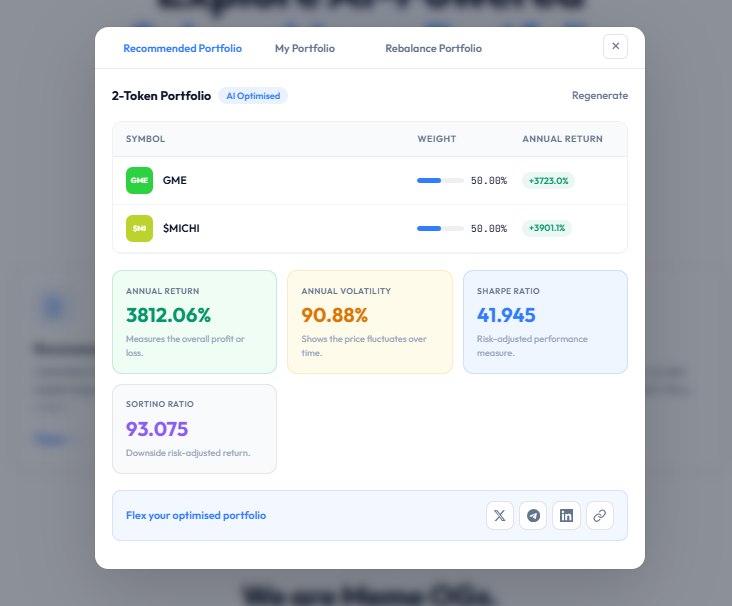
Only two tokens. Both got a 50% allocation.
🟢 $GME: 50%
🟡 $SMICHI: 50%
That’s today’s MemePortfolio recommendation.
Curious what the optimiser would pick for your portfolio? Find out here:
👉 https://t.co/efzTPPzLvc
#Solana#Memecoins#MemePortfolio
GM Degens!
A portfolio shouldn’t just be a collection of tokens you happen to like.
There should be a reason behind how much you allocate to each one.
SmartCredit’s Token-Based Portfolio uses Markowitz optimization to recommend token allocations and provides portfolio metrics to help you understand the expected returns and risk.
Build with a clearer framework:
👉 https://t.co/Pvn7zhjww1
Would you rather have a borrowing rate that changes along the way, or know your rate and loan term from the start?
SmartCredit offers fixed-rate, fixed-term P2P loans. Your rate and term are agreed when the loan begins, so you know the interest terms you’re committing to.
Know the terms before you borrow.
👉 https://t.co/ZPIYEQVWlN
Here we go.
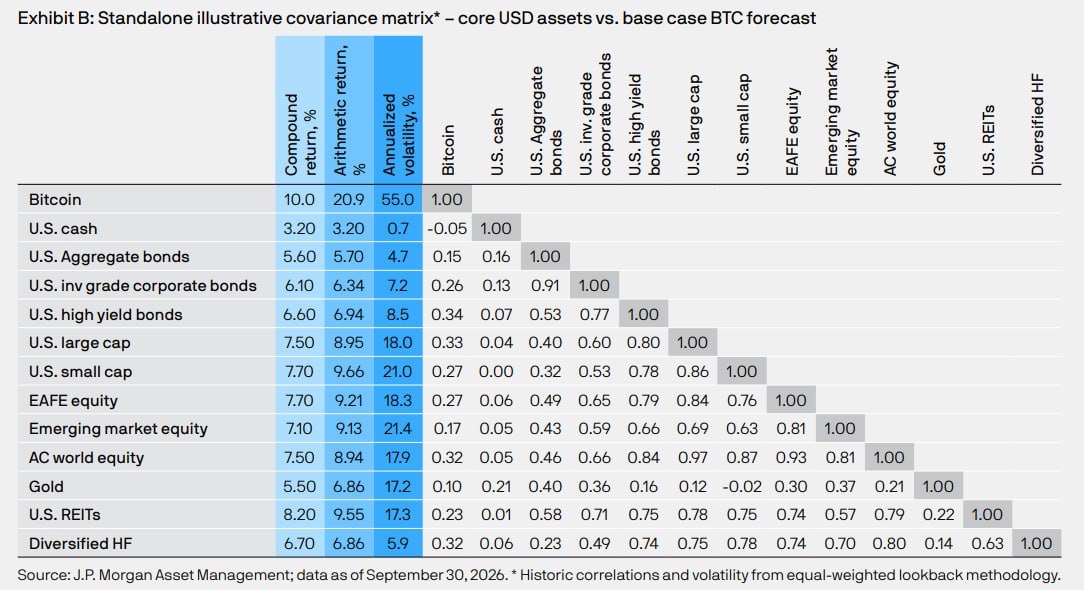
These are J.P. Morgan’s predictions for the annual returns and correlations of different asset classes over the next 10 years.
Surprised?
👉 https://t.co/z9YEImRnqM
Are you building a crypto portfolio but not sure which tokens to include or how much to allocate to each?
SmartCredit’s token-based portfolio tool recommends the assets and their respective weights, alongside metrics like annual return, volatility, Sharpe Ratio, and Sortino Ratio.
From token selection to portfolio allocation, explore the recommendation and examine the numbers.
👉 https://t.co/Pvn7zhiYGt
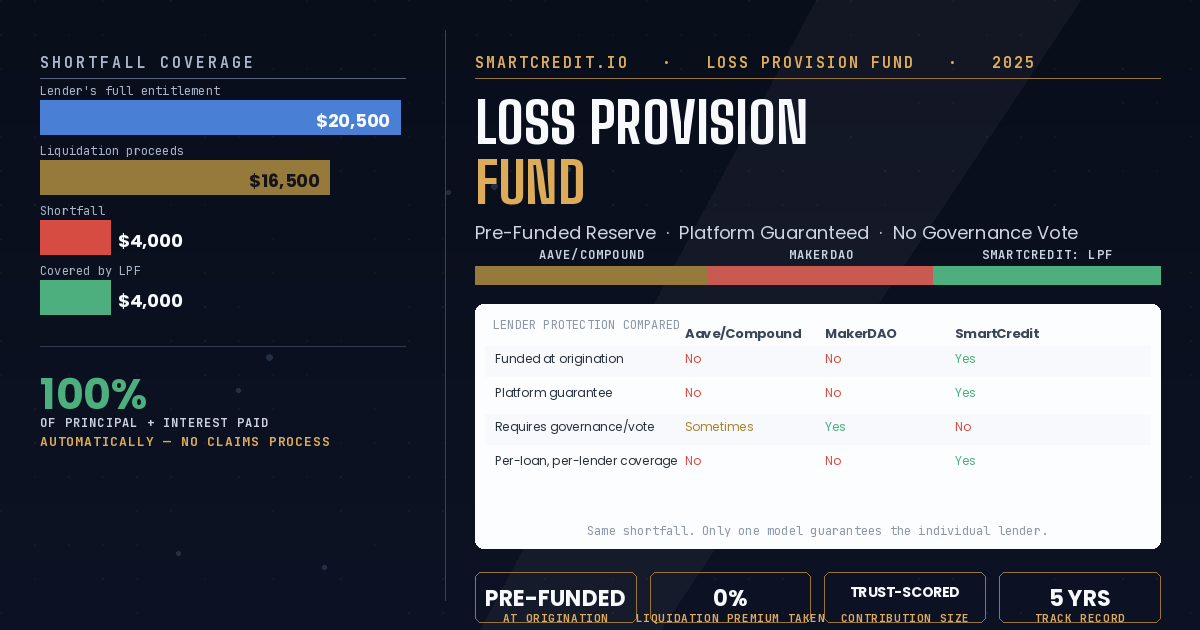
When you lend in DeFi, what happens if the borrower doesn’t repay and the collateral can’t cover the full loan?
That’s a question worth asking before looking at the yield.
SmartCredit’s Loss Provision Fund is designed to cover the shortfall between liquidation proceeds and the lender’s principal plus agreed interest. It’s funded through borrower interest payments and backed by a platform guarantee.
Understand the protection behind your lending position.
Learn more: https://t.co/RUhzh5YVb0
🚨 Global money supply just hit a RECORD $103.4 TRILLION.
The US, China, Eurozone and Japan added roughly $1T in August alone.
That's 10 straight months of increases.
More liquidity has historically been a major tailwind for Bitcoin and other risk assets.
Worth keeping an eye on 👀
https://t.co/lzbm3vBD3c
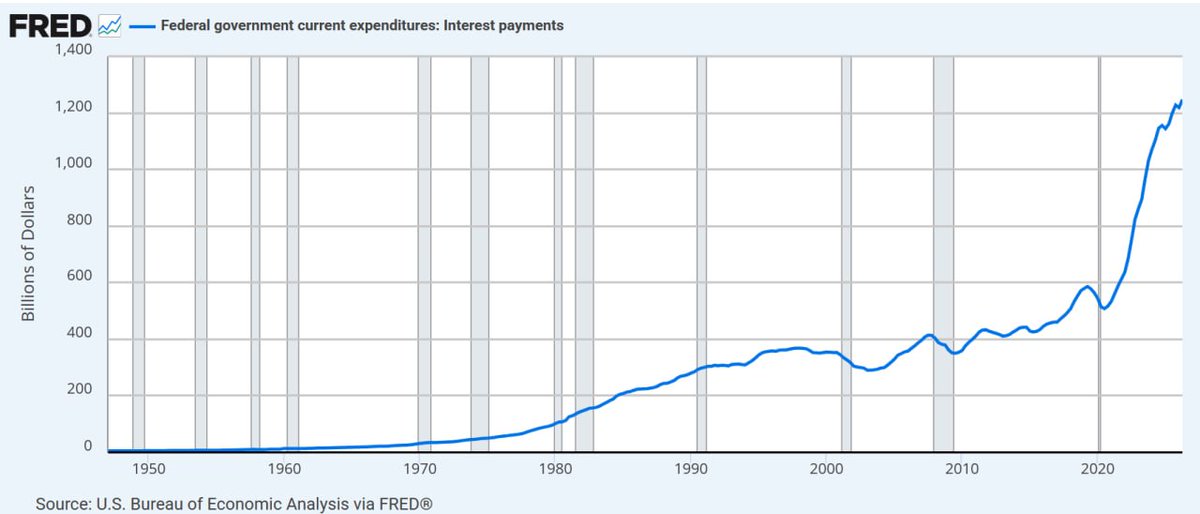
The US federal revenue forecast is $5.6T for this year, while federal interest payments are forecast at $1.247T.
That means federal interest payments are equivalent to 22% of US federal revenue.
What would be the credit rating of a company whose interest payments were 22% of its revenue?
👉https://t.co/LvUj14OvO8
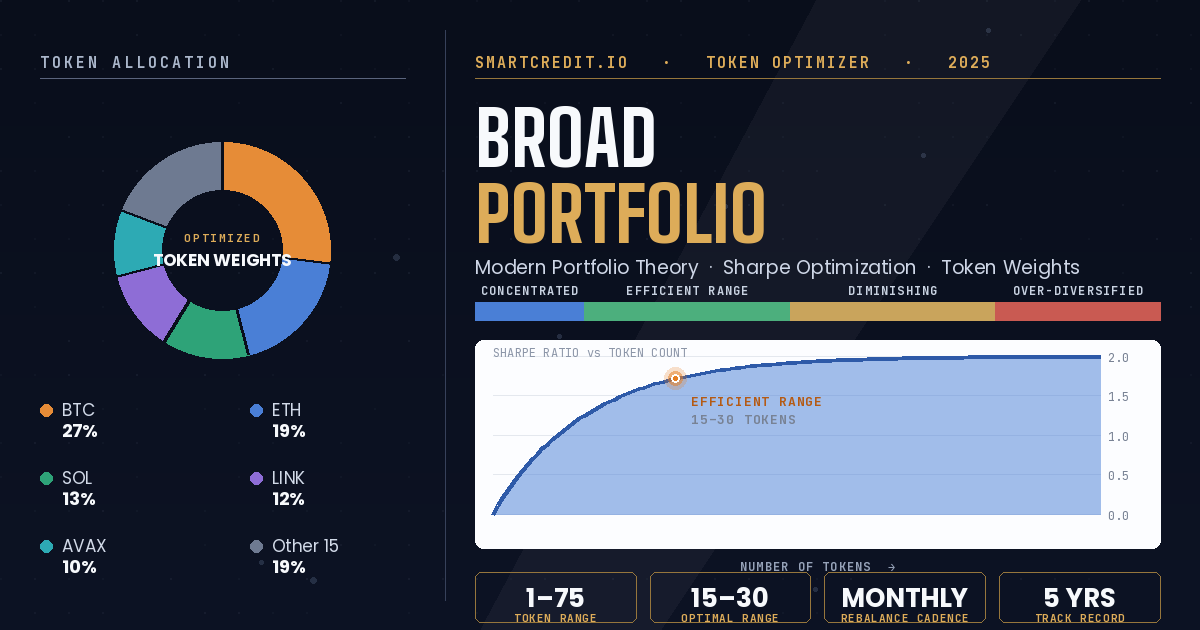
How many tokens should actually be in your portfolio?
10? 20? 50?
Instead of picking a number based on intuition, SmartCredit’s Broad Portfolio shows how Sharpe Ratio and portfolio volatility change as you add more assets.
You choose the token count. The optimizer handles the math.
👉 https://t.co/PnIJf17ANX
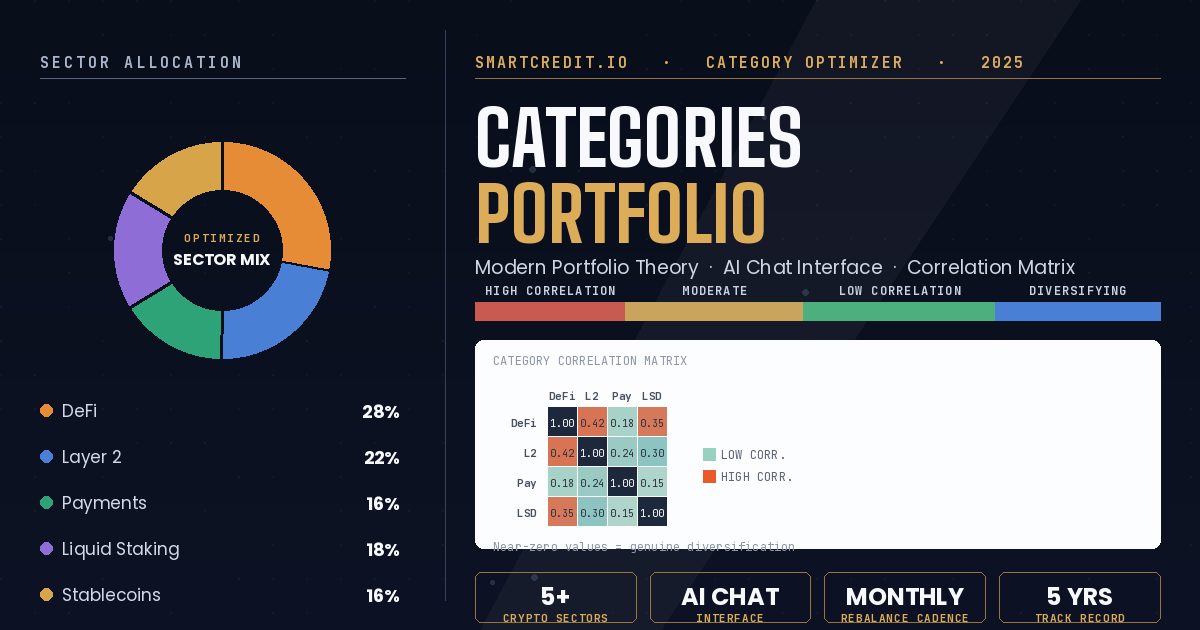
What if your goal isn’t simply to hold crypto?
What if you want exposure to interest-bearing categories?
SmartCredit’s Categories Based Portfolio can construct allocations around interest-bearing sectors, helping you explore how different sources of crypto yield can fit together.
Instead of asking which single source pays the most, look at how the sources fit into the portfolio.
More info: https://t.co/EHiUMEeTkV
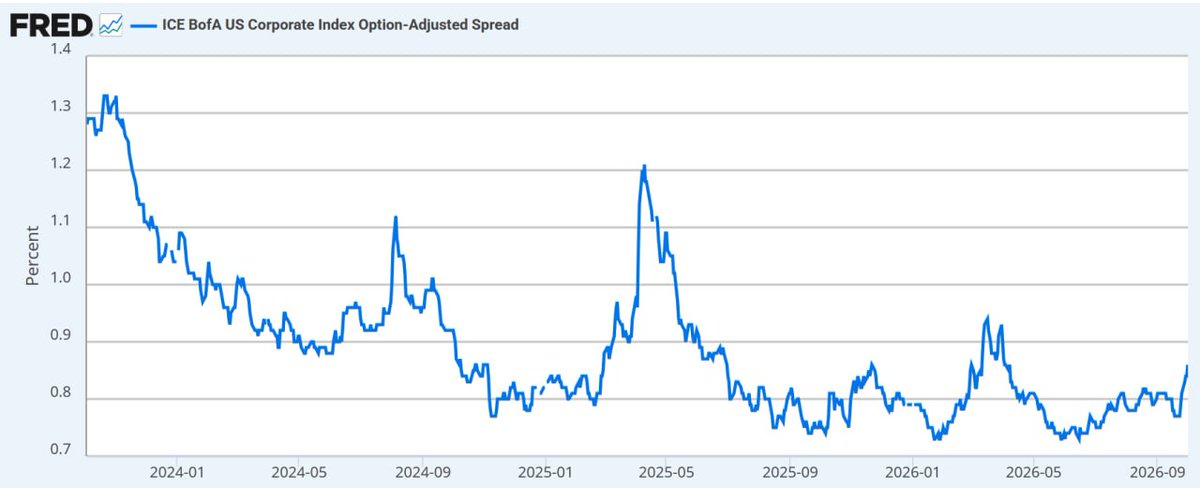
10Y Treasury yields set historic records, but the investment-grade U.S. corporate bond’s yield spread to 10Y Treasury yields is relatively stable.
The FED & Treasury are plumbing 10Y Treasuries, but investment-grade corporate bond yield spreads are stable.
Is it the start of decoupling the corporate credit market from Treasuries?
👉 https://t.co/X1beQ2fp2W
Before borrowing, ask one more question:
“Where does this rate sit compared to its history?”
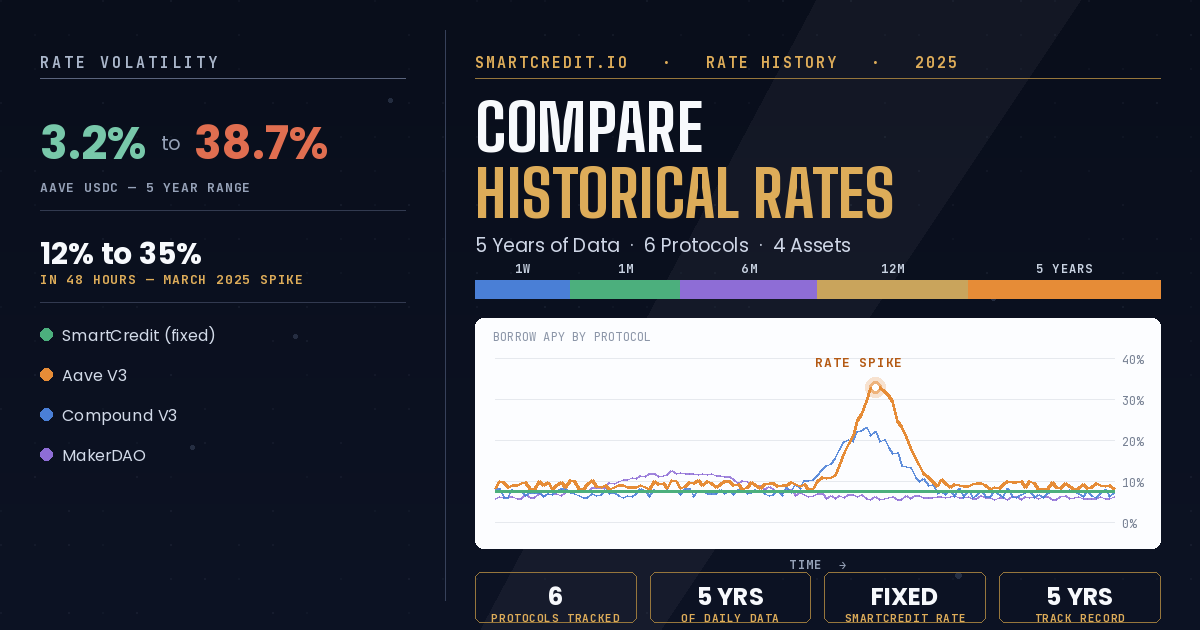
SmartCredit’s Compare Historical Rates lets you compare borrowing rates across SmartCredit, Aave, Compound and MakerDAO, with data going back up to five years.
Today’s rate is a number. History gives it context.
👉 https://t.co/QK8YYlfqUl
Before you lend in DeFi, ask these questions:
Where is my capital going?
Who is it funding?
And does my return depend on one borrower or an entire pool?
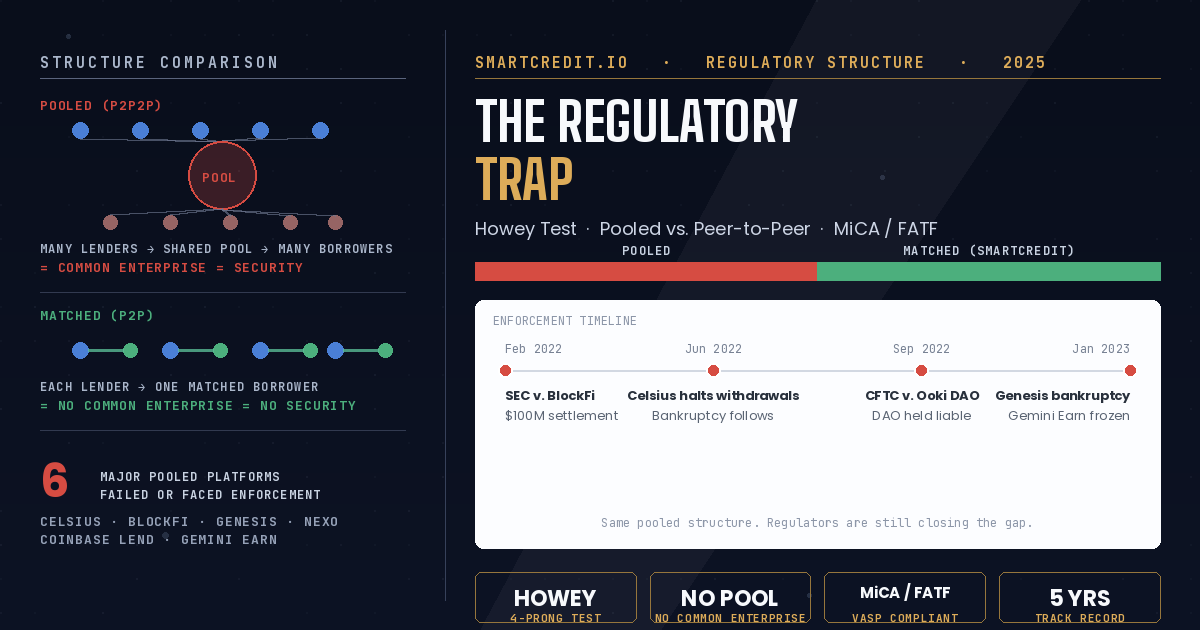
SmartCredit’s model is built around a simple structure: your capital is directly matched to a specific borrower’s Credit Line.
Not commingled into a shared lending pool.
That means you can see what your capital is funding, rather than having your position tied to the performance of an aggregated pool.
Structure matters when you’re putting capital to work.
👉 https://t.co/tC7UeZK5Oo
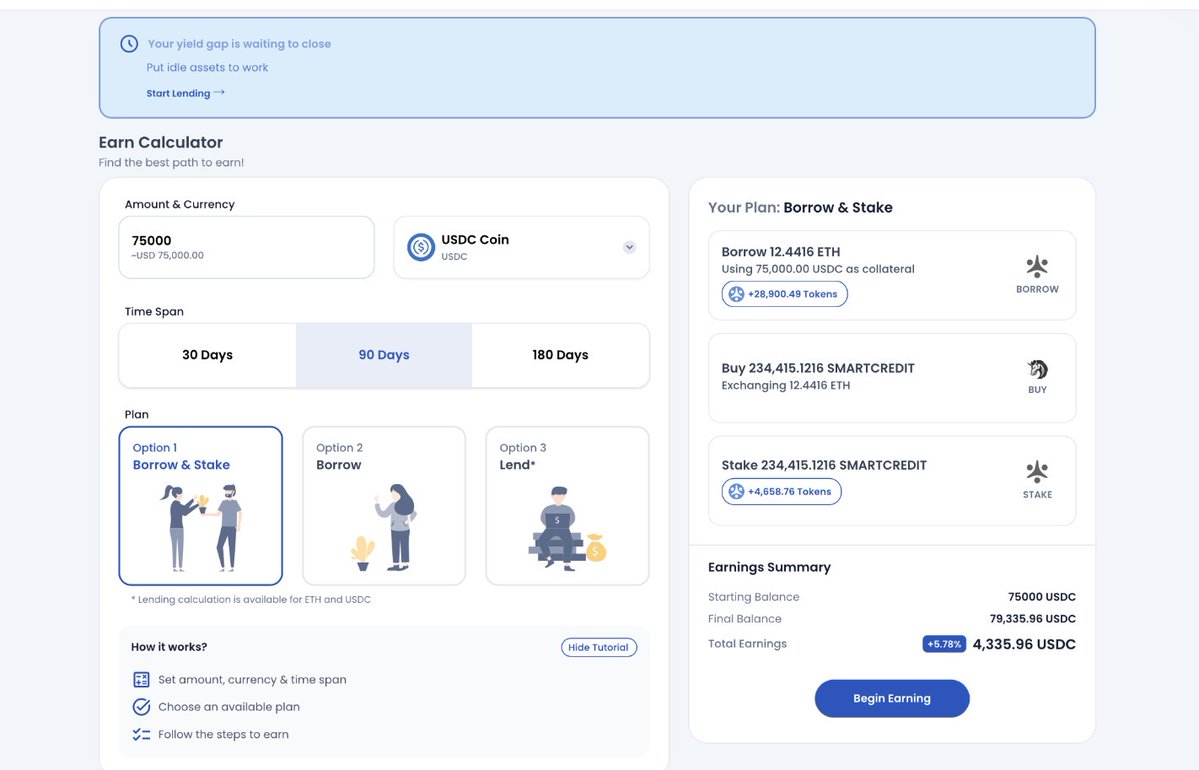
Before you put capital to work, know what the numbers look like.
SmartCredit’s Earn Calculator lets you run the numbers for:
• Lend
• Borrow
• Borrow & Stake
See how the position could work before committing capital.
👉 https://t.co/UB5wkk0FMj
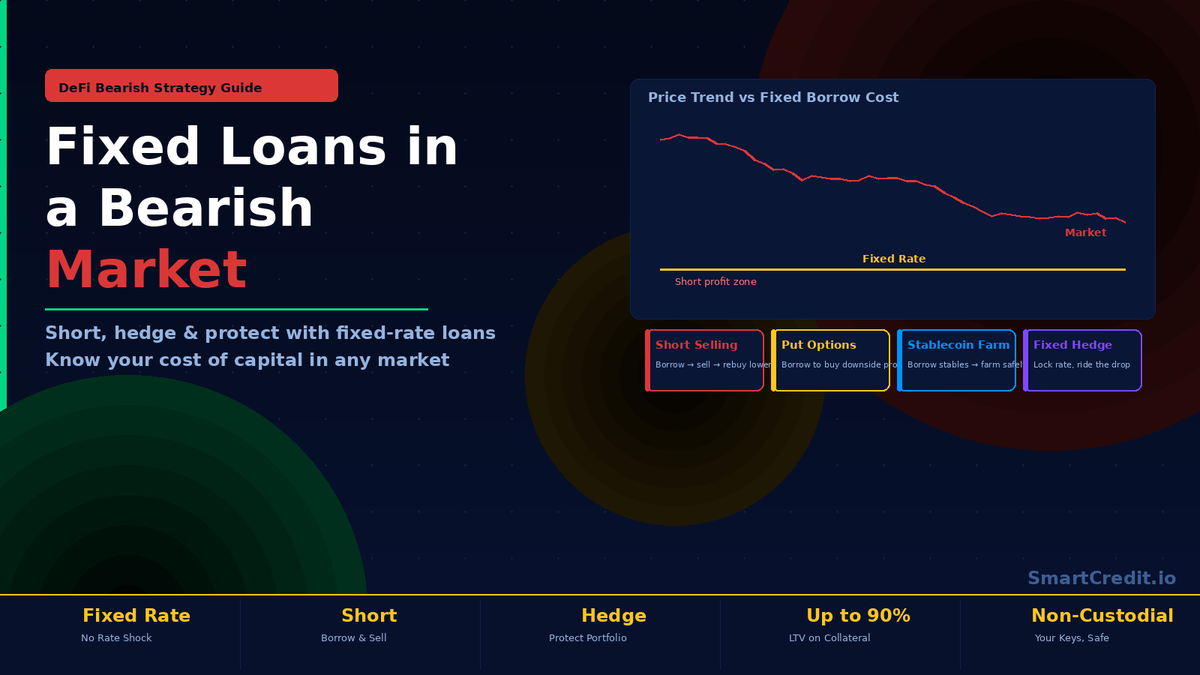
Most traders price in entry and exit before opening a short.
Almost nobody prices in what happens to their borrowing cost when everyone else has the same idea at the same time.
2022.l Aave ETH borrow rates averaged 15%. SmartCredit users who locked earlier paid 9%.
Same market. Same thesis. Different cost structure. Different outcome.
👉 https://t.co/KUDPIjJ27x