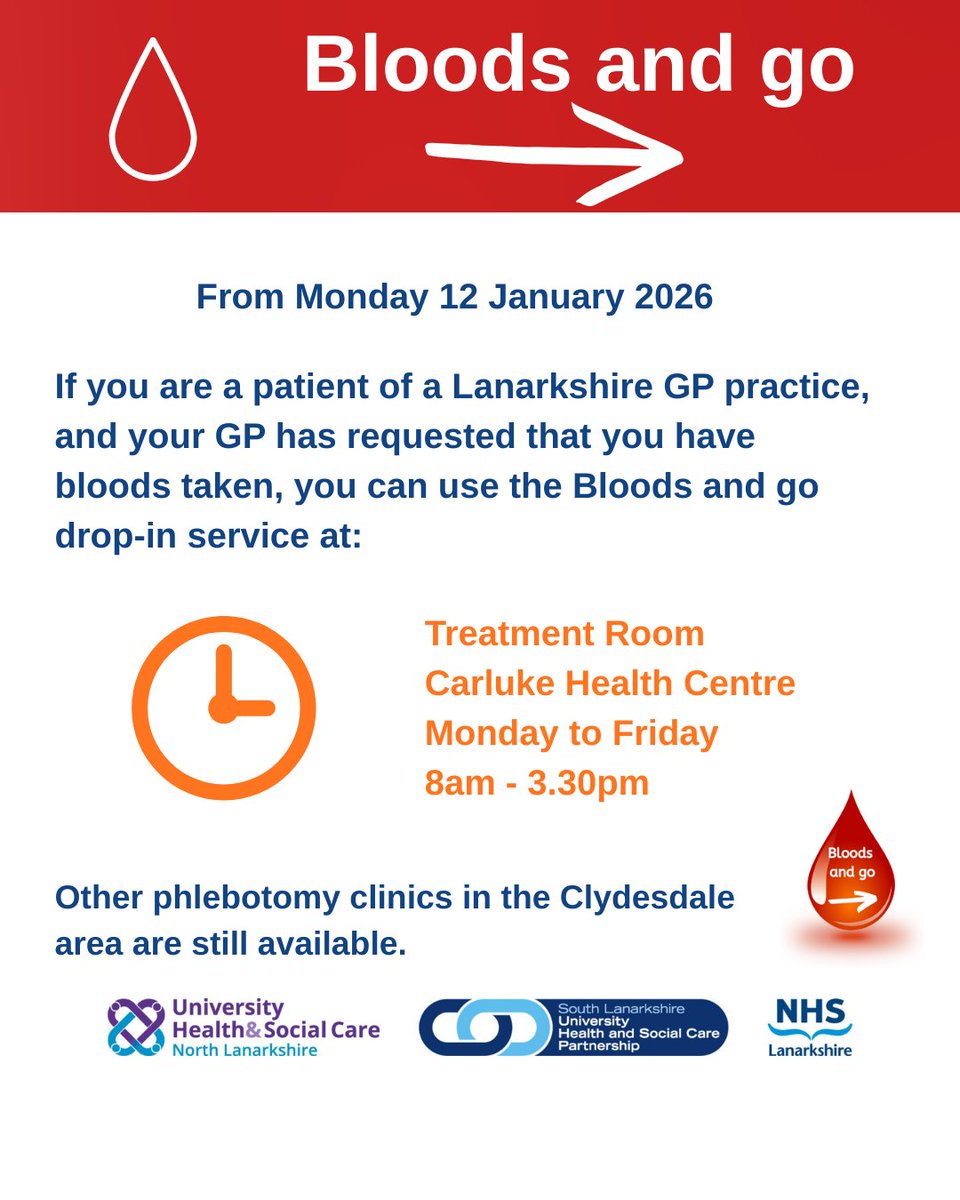
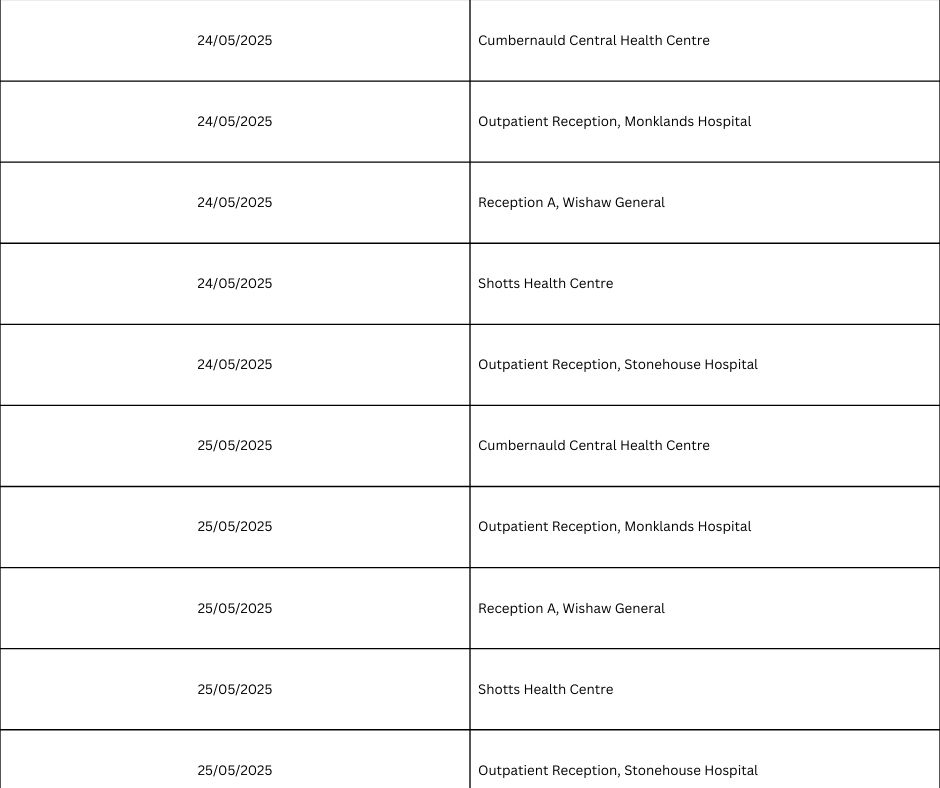
From 12 January, Carluke Treatment Room will be offering the Bloods and go drop-in service.
· Treatment Room
· Carluke Health Centre
· Monday to Friday
· 8am to 3.30pm
For details of all Bloods and go clinics in Lanarkshire, visit https://t.co/dqkbEjJJ02
Abronhill Health Centre is open this weekend and next weekend (10th and 11thand 17th and 18th) for anyone who has still to get their flu vaccination. It will be open between 9.00am and 5.00pm. Help us protect Lanarkshire be getting your flu vaccination.
September is Falls Prevention and Awareness month!
We joined forced with the Falls Team during the CAD days to raise awareness and prevent falls!
Follow this link from the @thecsp for Fall prevention tips: https://t.co/0CAkrfTZyi
#Physiotherapy#Fallsprevention#StaySafe
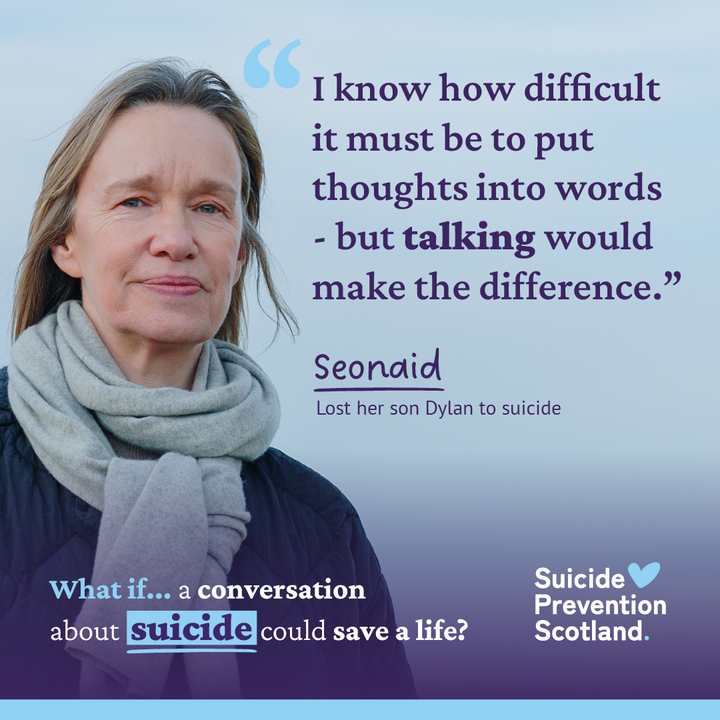
Seonaid believes that starting a conversation can be the first step in preventing suicide.
She's right.💙
Having a conversation about suicide could save a life.
Learn more: https://t.co/CtHPOKFqbd
We have an exciting opportunity to join a dynamic team that supports others to prevent & challenge mental health stigma. We're looking for a motivated Development Officer to be part of our mission at Lanarkshire Link's Stigma Free Lanarkshire Programme. https://t.co/STDU3fzYza
Check out our new promotional video - we would love to hear what you think of it!
Gear up for #Cycling and #ActiveTravel with our #SocialEnterprise 🚲
https://t.co/q5kSKrSkCi
Any eligible Lanarkshire residents that have not yet received their Spring Booster are welcome to drop in to our open clinics this weekend. Further drop in clinics will be published early next week. For more info on the spring booster visit https://t.co/zovtewTGLy
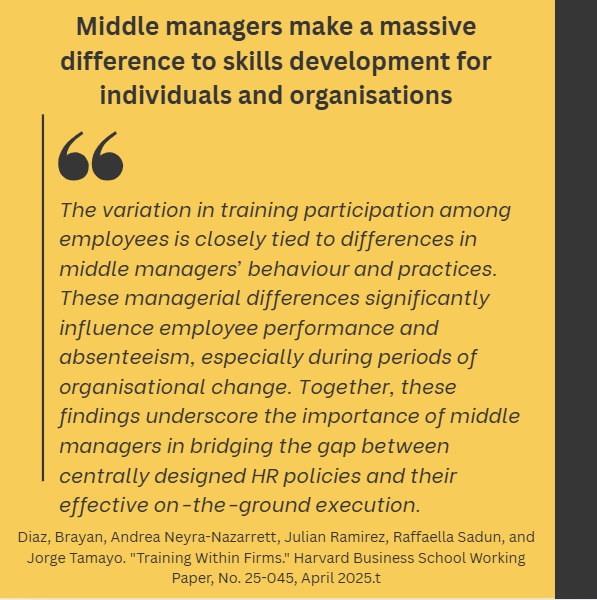
Never underestimate the power & importance of good mid-level managers. New research in a @HarvardHBS working paper: the attitude & support of mid-level managers can make or break the impact of training programmes for frontline employees. Organisations invest huge sums in employee training programmes to improve productivity, which often fail to deliver. Variation in training participation/engagement among employees is closely tied to differences in the behaviour & practices of their line managers. Managers who support & encourage training create the conditions for better employee performance & less absenteeism. Frontline teams with "high training" managers get more training during times of high pressure &/or organisational change & get better results, despite having to deal with increased demand.
Implications:
1) For policymakers/senior leaders: understand that top-down skill mandates are likely to be ineffective without local buy-in.
2) Include middle managers in the design & implementation of organisation-wide training initiatives.
3) Incorporate managerial incentives & practices into the design of training programmes.
3) View the process of training intervention in the wider context of the leadership support that employees are likely to get or not get.
https://t.co/NBJzOGFNKH.
What levers & mechanisms can senior leaders use to enable change in a hierarchical system? The most commonly used are holding to account through regulation, performance goals & incentives. These often lead to superficial compliance through control rather than building shared purpose through collaboration & trust.
This new article describes the use of an "Explicit Psychological Contract" (EPC), a formal agreement that outlines the mutual obligations/expectations between two or more parties with differing levels of power. In this case, the EPC was between a national healthcare regulator & leaders of five hospital systems seeking whole, system quality improvement.
Insights:
1) An EPC acts as a powerful tool in fostering an adaptive, reciprocal, and trust-based relationship by clearly articulating mutual obligations.
2) When a breach of the EPC occurs, one or both parties assess potential risks and benefits for trust relations, and may choose to trigger (or not) a collective discussion to understand why.
3) The true power of an EPC is accessed only when the parties to it stick to the expected behaviours across time, especially in the face of adverse conditions, e.g. political instability & resource constraints:
https://t.co/o6ZOLh4XbF. Via @DrNicolaBurgess.
The way that we, as leaders, convey emotions really matters. New research busts the myth that leaders who express harsh feedback at the start of a project help to drive performance by showing the required standard. The research showed the opposite: the extent to which leaders expressed positivity (at the start of a project or year) was the biggest predictor of team success. It was as simple as stating how much they cared about team members, enjoyed working with them & valued their specific contributions. The research doesn't suggest that leaders have to always be positive, but that challenging feedback works better at the midpoint of a project or a year. Timing is important. Leaders who express constant negativity hurt team members’ performance:
https://t.co/kIuycINP6K. Via @jacobsglevitt@HarvardBiz.
NHSLanarkshire & the MSKPhysiotherapy Dept are using the @escape_pain rehabilitation programme to help those struggling with symptoms of knee/hip OA.
If you have been referred to Physio for these conditions, you may be invited to one of our group information sessions.
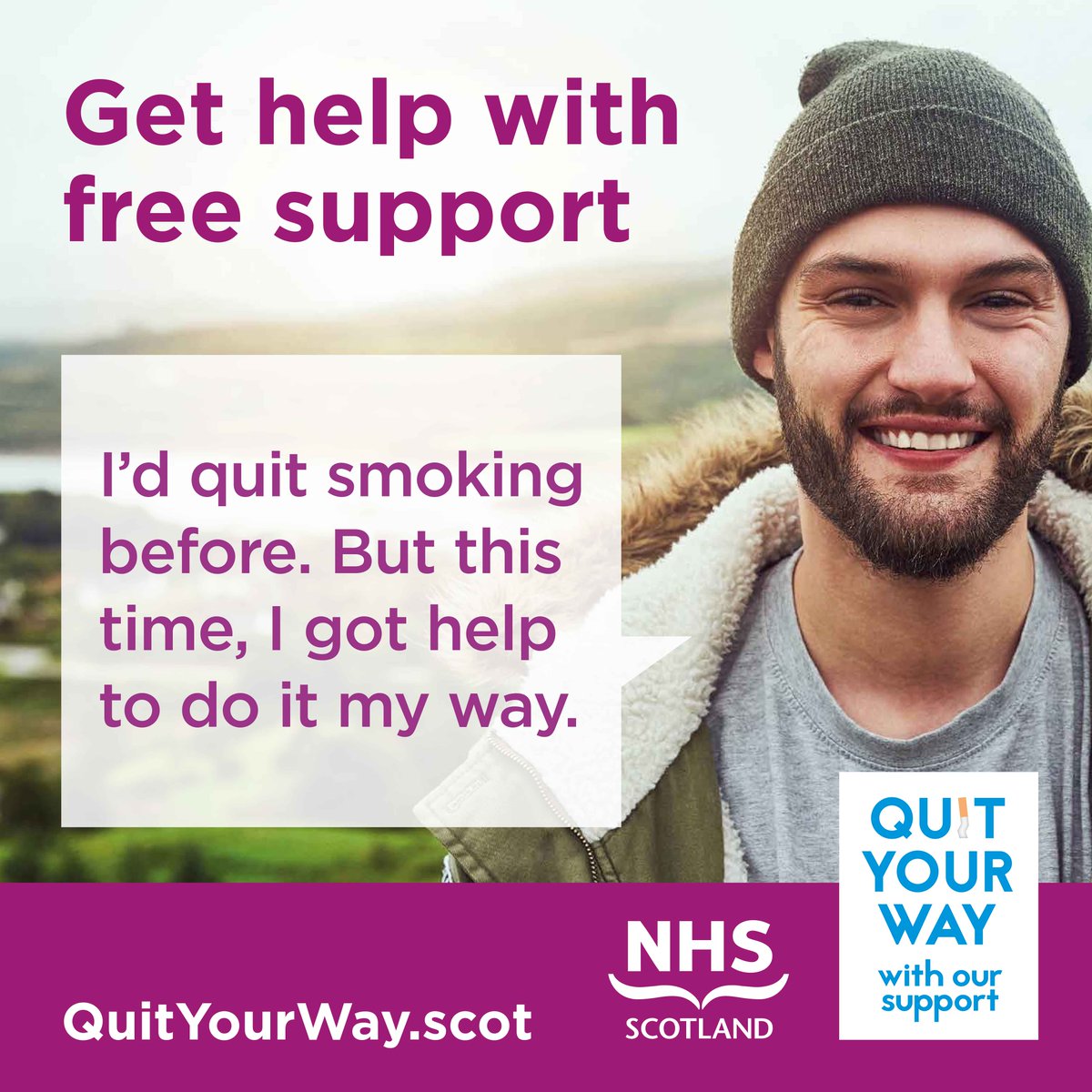
Quitting smoking isn’t easy.
Often it can take a few attempts.
Get help with free support.
With #QuitYourWay you’re more likely to stop – and stay stopped 🚭
Just send a message to [email protected] to find out more.