𝗠𝗼𝘀𝘁 𝗽𝗲𝗼𝗽𝗹𝗲 𝗱𝗼𝗻'𝘁 𝗹𝗼𝘀𝗲 𝗵𝗲𝗮𝗹𝘁𝗵 𝗯𝗲𝗰𝗮𝘂𝘀𝗲 𝘁𝗵𝗲𝘆 𝗹𝗮𝗰𝗸 𝗶𝗻𝗳𝗼𝗿𝗺𝗮𝘁𝗶𝗼𝗻.
𝗧𝗵𝗲𝘆 𝗹𝗼𝘀𝗲 𝗵𝗲𝗮𝗹𝘁𝗵 𝗯𝗲𝗰𝗮𝘂𝘀𝗲 𝘁𝗵𝗲𝘆 𝘀𝘁𝗿𝘂𝗴𝗴𝗹𝗲 𝘁𝗼 𝘁𝗿𝗮𝗻𝘀𝗳𝗼𝗿𝗺 𝗶𝗻𝗳𝗼𝗿𝗺𝗮𝘁𝗶𝗼𝗻 𝗶𝗻𝘁𝗼 𝗱𝗮𝗶𝗹𝘆 𝗵𝗮𝗯𝗶𝘁𝘀.
For years, I have observed that true wellness is not created by a single diet, workout or temporary change.
Health is built through the connection between:
🥗 𝗡𝘂𝘁𝗿𝗶𝘁𝗶𝗼𝗻— what we give our body
🧠 𝗠𝗶𝗻𝗱-𝗕𝗼𝗱𝘆 𝗖𝗼𝗻𝗻𝗲𝗰𝘁𝗶𝗼𝗻 — how our thoughts, emotions and beliefs influence our health
🌿 𝗟𝗶𝗳𝗲𝘀𝘁𝘆𝗹𝗲— the daily behaviours that shape our future
As a Wellness Transformation Coach, Nutritionist and Psychologist, my purpose is to help people create sustainable health transformations through practical, science-based approaches.
Here you will find insights on:
✓ Nutrition & healthy living
✓ Mind-body connection
✓ Behaviour change
✓ Stress management
✓ Lifestyle habits for better health
Because:
𝗛𝗲𝗮𝗹𝘁𝗵 𝗶𝘀 𝗰𝗿𝗲𝗮𝘁𝗲𝗱 𝗯𝘆 𝗱𝗮𝗶𝗹𝘆 𝗯𝗲𝗵𝗮𝘃𝗶𝗼𝘂𝗿𝘀, 𝗻𝗼𝘁 𝗼𝗰𝗰𝗮𝘀𝗶𝗼𝗻𝗮𝗹 𝗲𝗳𝗳𝗼𝗿𝘁𝘀.
Today during a wellness consultation, a client said:
"I understand the situation but my mind keeps going back to it again and again."
This is a common pattern of overthinking.
The brain naturally dislikes incomplete information. When something feels unresolved, it keeps revisiting it trying to find an answer, create certainty or protect us from a possible threat.
This is why overthinking often feels like problem-solving but many times it is just the brain repeating the same loop.
A helpful question is:
"Is there any action I can take right now or am I only replaying the same thought?"
If there is an action — take it.
If there is no action — it may be time to consciously close the loop.
Not every thought needs to be solved.
Some thoughts need to be released.
Your mind is a powerful tool. Learn to guide it....not just follow it.
@American_Heart Breathing is more than relaxation. It can influence the autonomic nervous system helping shift the body away from a stress response. A simple, slow-breathing practice can be a powerful tool for better calm and sleep.
@Zenm001 A powerful reminder that our interpretation often creates more distress than the situation itself. The pause between an experience and our reaction is where awareness and freedom begins.
@Chulbulpanda420 Depression needs a multidimensional approach alongside appropriate clinical care, sleep, movement, social connection and psychological support, acceptance, gratitude and cultivating more balanced thinking can help build resilience and support recovery.
@Zenm001 Beautifully put. True inner strength isn’t about controlling everything around us....it’s about learning to regulate our thoughts, emotions and responses. That’s where real freedom begins.
@DeeptaNagpal Glad to see breathing practices being included in the conversation around stress eating. 👏 Slow, mindful breathing can create that crucial pause between a craving and a reaction......helping us respond more consciously rather than automatically.
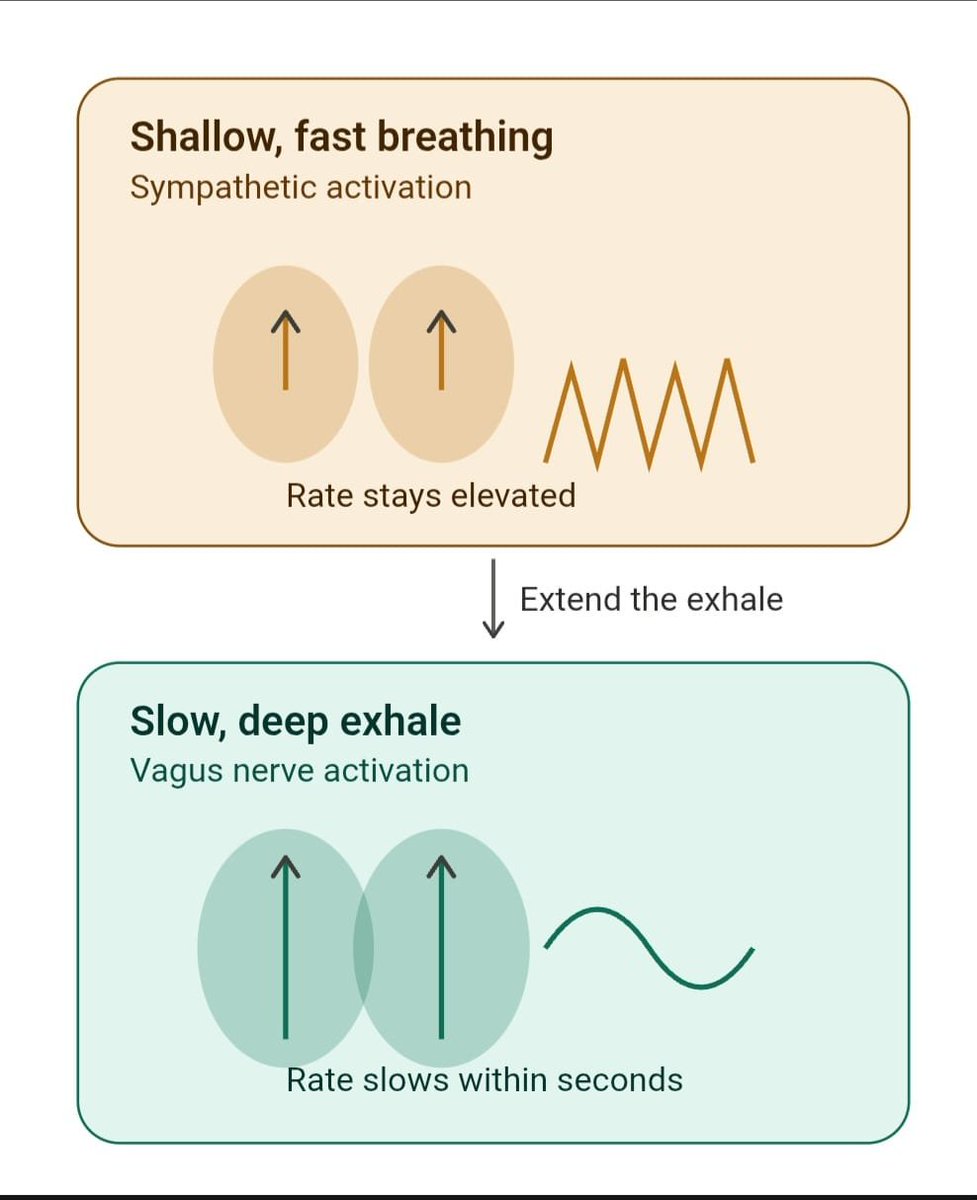
Your exhale is a switch.
A longer exhale (try inhaling for 4, exhaling for 8) directly stimulates your vagus nerve — shifting you from a stressed, sympathetic state into a calm, parasympathetic one. Measurably. Within seconds.
Next time you feel wound up, don't just breathe. Extend the exhale.
One fascinating piece often missed: fibre doesn’t just feed https://t.co/VvAUs29HbI feeds our gut microbes. Its fermentation produces short-chain fatty acids that influence gut and brain function. The gut also plays a role in serotonin metabolism, linking fibre, microbiome and mood in fascinating ways.
@thebrainyogi Great list! One important piece often overlooked: mindfulness. Regular mindfulness practice can help regulate the stress response and, in turn, support healthier BP. Managing BP isn’t only about what we eat but also how we respond to stress.
I have noticed something worrying while scrolling through X: health information is increasingly being turned into health anxiety.
One alarming post leads to another and before you know it, you are checking your own body for symptoms you never worried about before.
Sometimes, the problem is not what happened to your body.
It's what you started thinking after seeing it on social media.
You see a post about a serious illness.
Then another.
Then you start checking your own symptoms:
"I have that too."
"What if I have the same problem?"
"What if it gets worse?"
This is catastrophic thinking — turning a possibility into a perceived threat.
And your body does not always distinguish between a frightening thought and an immediate physical danger.
The brain perceives the threat → the body's alarm system switches on → stress hormones such as adrenaline and cortisol rise.
Now the body starts preparing for danger:
1. Heart rate and blood pressure can rise because the body is trying to deliver more blood and oxygen to the muscles.
2. Blood glucose can rise because the liver releases stored glucose to provide quick energy.
3. Digestion can slow or change because the body temporarily prioritises systems needed to deal with the perceived threat.
And that's where you may notice:
• More acidity or stomach discomfort
• Bloating
• Constipation or changes in bowel movements
• Loss of appetite or changes in hunger
• Tightness, restlessness or difficulty relaxing
Then comes the dangerous part:
You notice the physical symptoms and think,
"I knew something was wrong."
That thought creates more fear → more stress → more physical symptoms.
A thought has now become a mind-body cycle.
This does not mean every symptom is "just stress." Medical symptoms deserve proper evaluation.
But it does mean that constantly consuming alarming health content and repeatedly scanning your body for signs of disease can keep your nervous system on high alert.
So before you Google another symptom or scroll through another frightening health post:
Pause. Breathe. Ask yourself:
"What do I actually know right now — and what am I imagining might happen?"
Possibility is not probability.
Health is created by daily behaviours, not occasional efforts.
Acidity ? Here is an antacid — sometimes it feels like the complimentary add-on to every other prescription. 😄 The better approach is holistic: look at meal timing, food quality, sleep, stress, movement and weight while investigating the underlying cause. Medication has its place but so does fixing the lifestyle behind the symptom.
7/7
How can you support your brain-gut connection ?
🥗 Eat more fibre-rich foods :
Include vegetables, fruits, whole grains, pulses, beans and nuts to nourish healthy gut bacteria.
🥣 Add natural fermented foods:
Examples easily available in India:
• Homemade curd
• Buttermilk (chaas)
• Idli/dosa batter
• Kanji (traditional fermented drink)
🚶 Move your body daily:
Walking, yoga and exercise support digestion and stress regulation.
🌬️ Practice mindful breathing:
A few minutes of slow, conscious breathing can help calm the nervous system.
😴 Prioritise quality sleep :
Sleep plays an important role in maintaining hormonal balance and overall health.
The next time your stomach reacts to stress, remember:
Your gut is listening to your thoughts.
Your brain is listening to your gut.
Have you noticed that your stomach behaves differently when you are stressed ?
A stressful day can give you acidity, bloating, constipation, loose motions or even loss of appetite.
This is not just in your mind. There is a scientific connection between your brain and gut called the BRAIN-GUT AXIS.
👇
6/7
This is why true wellness cannot be separated into:
"Only physical health"
or
"Only mental health"
Your body and mind are continuously influencing each other.