Our lab examines how novel interactive computing systems can help people to achieve a state of wellness. We are particularly interested in issues of health equity, designing innovative software tools for populations who disproportionately experience barriers to wellness.
“I want people to have the information they need so they can make their own decisions,” says Herman Saksono. He designs social health technologies to improve the health outcomes of low-income populations. https://t.co/htEmTjN5Vh
I’m proud of this work led by @YZhang_Janice, examining perspectives on “crisis apps” amongst older adults! Check out her #chi2020 video presentation. One question we explored— how well do these tools support a sense of dignity, safety, and control? https://t.co/5Rb0zJqRij
We're excited to share our #chi2020 video presentation on how people use technologies that provide specific features and functions needed during crises, emergencies, or disasters, with a focus on vulnerable populations (i.e., older adults). @YZhang_Janice https://t.co/TMZHMr9ZSM
Excited to share our #chi2020 video presentation on the Storywell app. We explored the use of digital storytelling and reflections in a fitness tracking app designed to support physical activity in low-SES families. Here's a clip:
@KhouryCollege@NUBouve https://t.co/TlOyUD32sh
Register @ https://t.co/Xd3trLCpWk by tonight to attend our #CHI2020 virtual talks! Looking forward to a great set of talks on health/wellness, children/families, & education and HCI - Thurs 4/30, 1pm EST @jasoncyip @hermansaksono @_wendyroldan @Afsaneh_Razi@WellnessTechLab
In this upcoming work for #CSCW2020, led by @lrpina, we demonstrate design features that support parents and children in tracking and reviewing sleep and mood data together. https://t.co/DmIWmiZa3t
Our #chi2020 paper reports on our evaluation of Storywell, a mobile app we designed that combines storytelling & gamification to encourage meaningful physical activity reflection in families.
Download the full paper here: https://t.co/KpgyZJQdS3
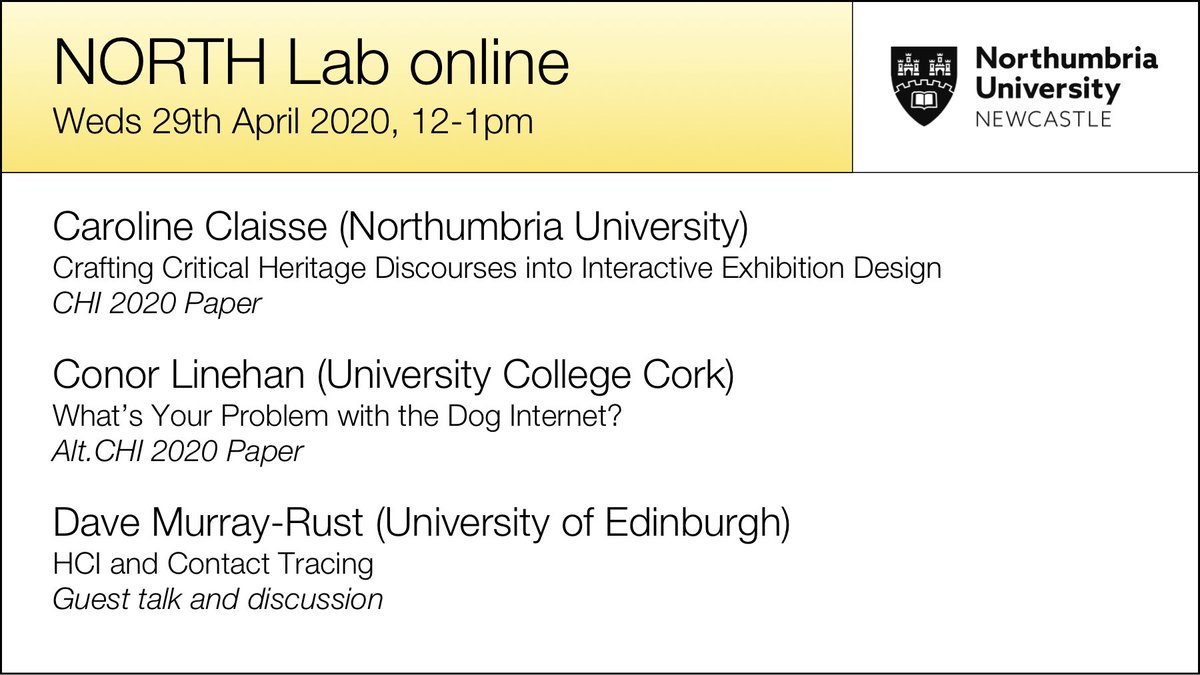
The NorthLab @NORTHLabHCI seminar this week (Weds 29th April, 12-1pm) will feature #chi2020 presentations by @CarolineClaisse and @conorlinehan followed by a discussion with @davemurrayrust on contact tracing. The Zoom invite is available here: https://t.co/3f7BdMqI1f
Aloha!🌊🏄♂️ Join our lineup of HCI talks for a Virtual Taste of #CHI2020 — surf the web into topics like data, health, & learning. Thurs, April 30, 1pm EST (7am Honolulu!). Signup: https://t.co/3MazJZB16a @tlclegg @jasoncyip @hermansaksono @_wendyroldan @Afsaneh_Razi & Yuhan Luo.
In our #chi2020 paper, we reported our evaluation of Storywell. We examined how gamification can go beyond competition and rewards in order to support the motivation to use family fitness apps — especially in low-SES contexts.
Preprint: https://t.co/xPZtek2Pt3
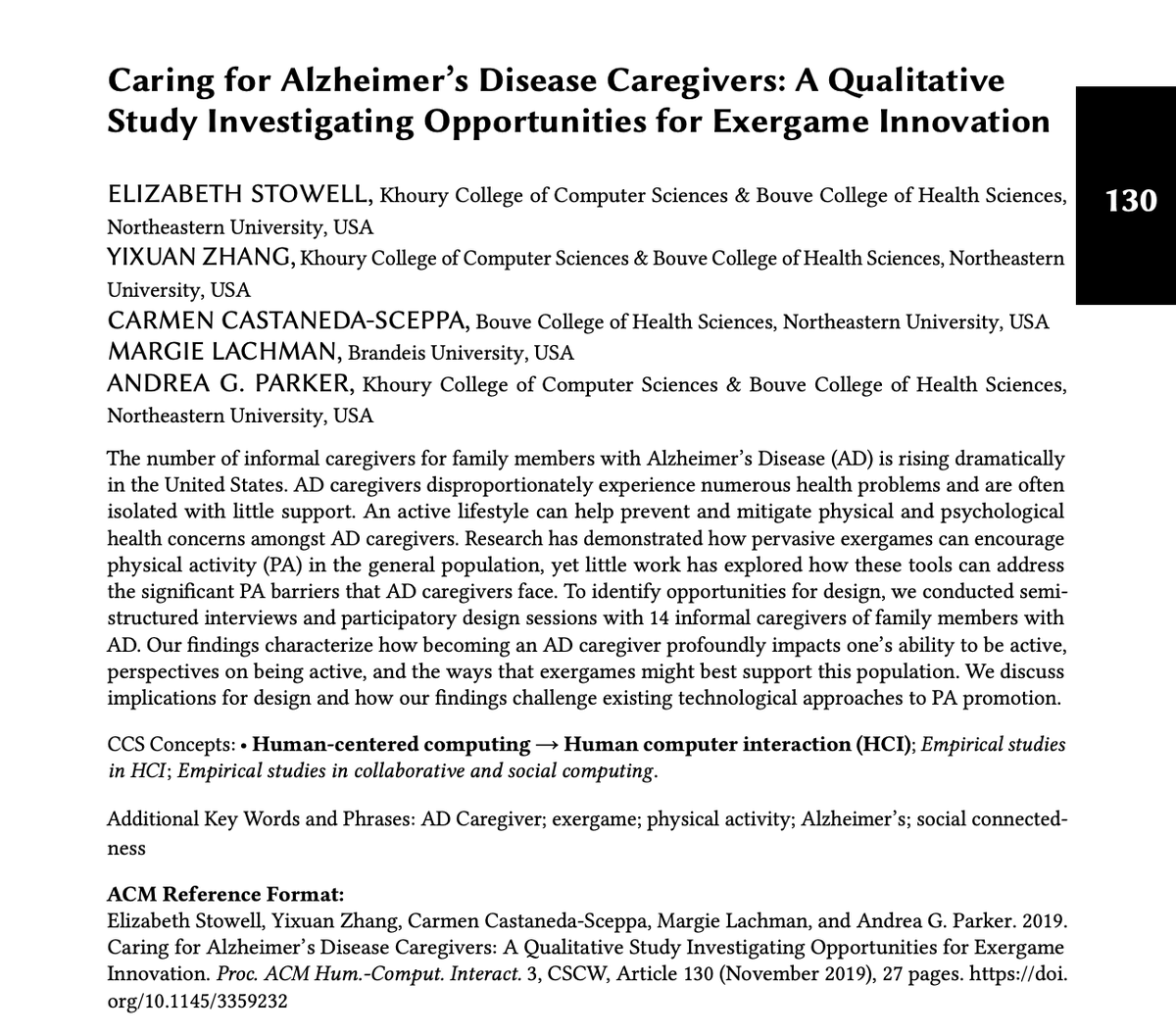
@EBStowell will be presenting our work on #health Exergame x Caregiver at #CSCW2019 14:30 - 16:00, Meeting Room 412. Full paper available https://t.co/V68v9WUSBF or https://t.co/nCZIaTyNXJ
.@EBStowell will present a study on exergame designs for Alzheimer’s Disease caregivers. Through participatory design sessions, we characterized ways that exergames might best support this population. @YZhang_Janice@andreagparker
Wednesday, 2:30 pm. Meeting room 412. #cscw2019
.@EBStowell will present our study about the networked disclosure in #MeToo. By inviting women to share their ordinarily silenced stories on Twitter, this networked reciprocal disclosure help counter the stigma over disclosing sexual violence.
Monday, 11 am. Salon A. #cscw2019
.@EBStowell pointed out an important future direction to examine how a person *could have* disclosed but did not, thus ensuring that everyone have equal opportunitty to disclose. #CSCW2019
Full paper: https://t.co/NyZQwVA2Tp
.@EBStowell shows that seeing sexual violence disclosures during the peak of #MeToo increased the probability of a user to disclose own sexual violence experience. This networked reciprocal disclosure can help counter the stigma towards disclosing. #CSCW2019