The message is well intended and largely accurate. But the challenge is that it still asks a young athlete to use a future-based “nostalgic mind” to solve a present-moment fear state.
If a young athlete’s brain is experiencing the present as dangerous (“If I mess up coach will..
One day you’re gonna wake up and AAU basketball will be over. No more weekend tournaments, packed gyms, or team hotels. No more “one more game” next weekend.
One day you’ll be out of eligibility for high school basketball. Then college basketball too.
And eventually, the thing that feels like your whole world right now becomes a memory.
So stop playing scared. Shoot your shot. Sprint the floor. Dive on the loose ball. Compete with confidence. Enjoy your teammates. Because one day you’ll wish you could go back and play just one more game with them.
Fear and hesitation have ended way more careers than missed shots ever will.
Just something to think about.
Work on calming and grounding their nervous system first, then focus on what matters right now: the next play, effort, high energy, connection, and competing freely.
The brain is wired for protection, not performance.
Thank you @EarlyRetirePod for having me on and having this really important conversation.
And, @coach_fletcher has some real skills in interviewing! Definitely follow and download his podcast!
Great coaches “join” their athletes by understanding their perspectives—which doesn’t always mean agreeing.
Connection isn’t about compliance; it’s about trust. When players feel heard, they’re more open to the feedback that leads to growth.
Peace is knowing when your work is meaningful, impactful, and aligned with the things you value most.
Hearing from your former athletes/clients long after you’re done working together is the experience of fulfillment.
The majority of all mental strength comes down to this:
The acceptance that “all outcomes are possible”.
Are you willing to commit consistently to do all the right things WITHOUT the certainty that you get the outcome you want?
Strength is on the other side of this acceptance.
In the performance world (athlete or leader) we should continually be moving more and more towards evaluation and moving further and further from criticism.
They’re in the same area code but miles and miles apart in effectiveness.
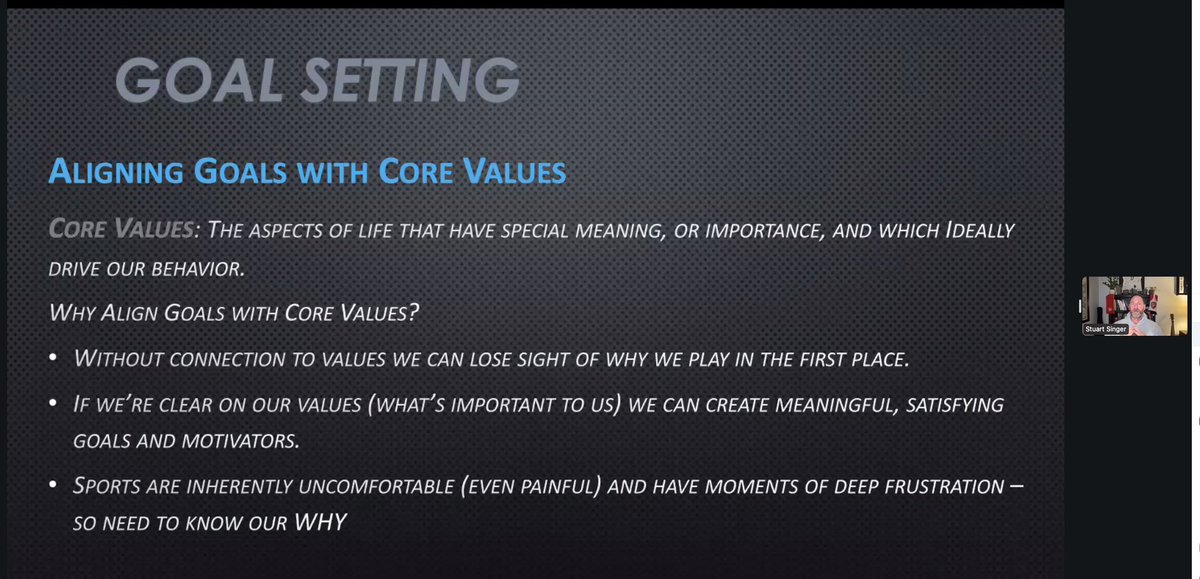
A big thank you to @Wellperformance for hosting our @SoccerParenting member-only workshop for parents on Goal Setting with Your Child this evening. 🔥⭐️💪🏼
Just an outstanding podcast with Stu Singer. Our friend Linda is putting out some awesome content. And I can’t believe I’m just discovering Stu Singer @Wellperformance . I’ve been devouring his content all night
https://t.co/Br6iQuC91r
Mental skills alone are NOT enough.
We must do work developing self-awareness in order to gain clarity of our habitual thought patterns and internal story.
Our story and thinking patterns are what trip us up in the first place. With this awareness we can apply the skills.
We need to expand our definition of wealth/success.
Must include:
✅reaching goals/awards aligned w/ core-values
✅meaningful relationships
✅physical/mental wellness
Success/wealth should be measured by a balance of achievement, inner purpose, love, health, and authenticity.
We’re not trying to rid ourselves of “butterflies”. They’re there for a reason - we have a big job to accomplish.
We’re developing a new relationship with them.
They’re not telling you you’re anxious. They’re telling you you’re determined to get this hard job done!
Don’t know who needs to hear this but mental skills are not one way of being.
High/low emotions are normal. Being always calm wouldn’t make sense or be “normal”.
Mental work is about self-awareness, authenticity, and the ability to have choice/efficacy in the moment.
Despite enduring a seemingly endless string of injuries/illness, forcing us to play 18 of 24 @NikeGirlsEYBL Champions League games with a max of 6 healthy girls, @HoneyBadgers25 finish our season as the highest ranked Nike 17U girls team in New England!!