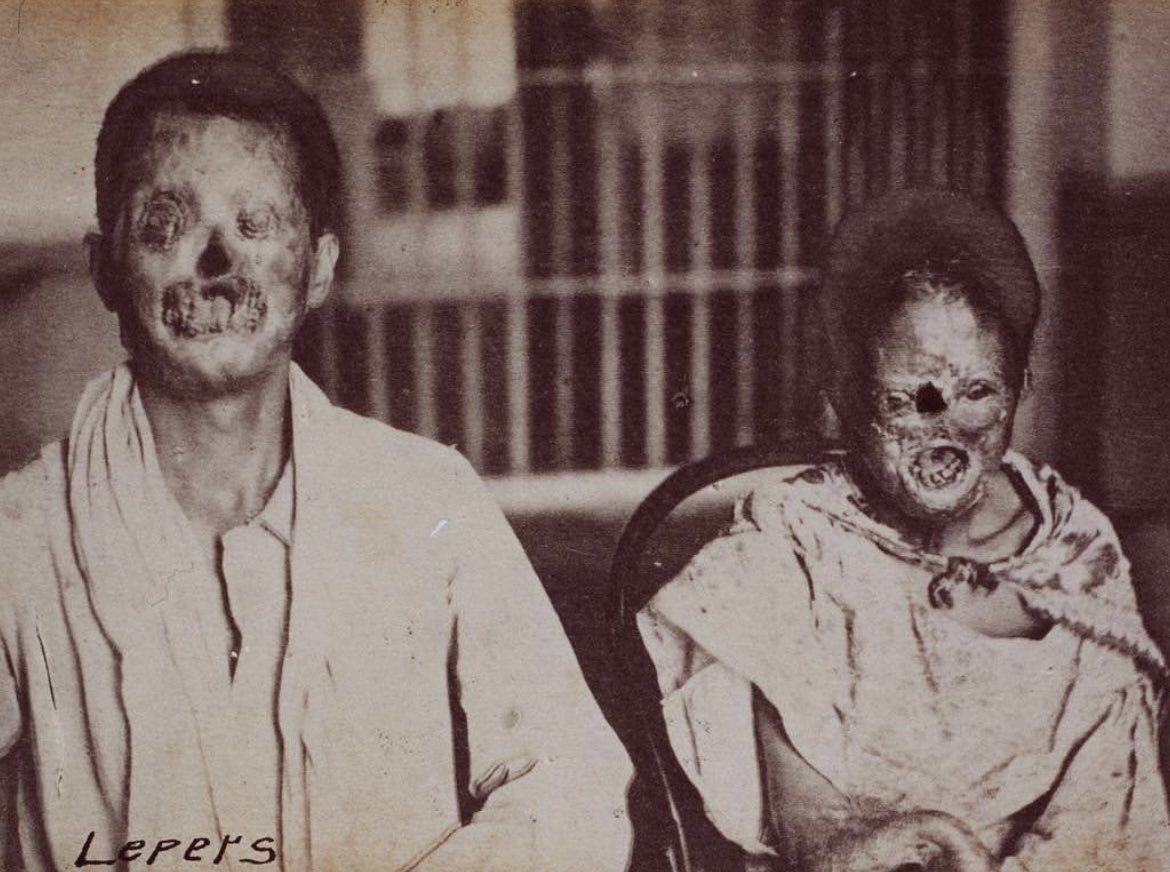
Leprosy, also known as Hansen's disease, is a chronic infectious disease caused by the bacterium Mycobacterium leprae. It primarily affects the skin, peripheral nerves, and mucous membranes, leading to skin lesions and nerve damage. In the 1890s, China faced significant challenges in dealing with leprosy and providing adequate care for affected individuals.
During that period, leprosy was a stigmatized and misunderstood disease, often associated with fear and social isolation. The lack of knowledge about the transmission and treatment of leprosy resulted in the mistreatment and discrimination of affected individuals. They were often ostracized from their communities, leading to a life of exclusion and hardship.
Leprosy's progression can be severe in some cases, particularly when nerve damage occurs. The disease can cause the loss of sensation in the affected areas, leading to the inability to feel pain, touch, or temperature changes. This lack of sensory perception puts individuals at a higher risk of sustaining injuries or developing unnoticed infections.
In the context of leprosy patients in China during the 1890s, those with advanced nerve damage were particularly vulnerable. Due to the absence of pain, injuries such as cuts, burns, or ulcers could go unnoticed. Without appropriate treatment and care, these injuries could become infected and lead to the gradual loss of extremities, such as fingers, toes, or even entire limbs.
The loss of extremities had significant physical, emotional, and social implications for the affected individuals. It affected their ability to perform daily tasks, impacted their self-esteem, and further contributed to the stigma surrounding leprosy. In addition to the physical challenges, the patients often faced limited access to medical care and support, exacerbating their difficulties.
It's worth noting that medical understanding and advancements in the treatment of leprosy have improved significantly since the 1890s. Today, leprosy is curable with multi-drug therapy (MDT), which effectively kills the bacteria and prevents the progression of the disease. Early diagnosis, proper medical care, and social support systems play a crucial role in preventing the physical and social consequences faced by leprosy patients in the past.
On the afternoon of November 24, 1971, a nondescript man calling himself Dan Cooper approached the counter of Northwest Orient Airlines in Portland, Oregon. He used cash to buy a one-way ticket on Flight #305, bound for Seattle, Washington. Thus began one of the great unsolved mysteries in FBI history.
Cooper was a quiet man who appeared to be in his mid-40s, wearing a business suit with a black tie and white shirt. He ordered a drink - bourbon and soda - while the flight was waiting to take off. A short time after 3:00 p.m., he handed the stewardess a note indicating that he had a bomb in his briefcase and wanted her to sit with him.
The stunned stewardess did as she was told. Opening a cheap attaché case, Cooper showed her a glimpse of a mass of wires and red-colored sticks and demanded that she write down what he told her. Soon, she was walking a new note to the captain of the plane that demanded four parachutes and $200,000 in twenty-dollar bills.
When the flight landed in Seattle, the hijacker exchanged the flight's 36 passengers for the money and parachutes. Cooper kept several crew members, and the plane took off again, ordered to set a course for Mexico City.
Somewhere between Seattle and Reno, a little after 8:00 p.m., the hijacker did the incredible: He jumped out of the back of the plane with a parachute and the ransom money. The pilots landed safely, but Cooper had disappeared into the night, and his ultimate fate remains a mystery to this day.
The FBI learned of the crime in-flight and immediately opened an extensive investigation that lasted many years. Calling it NORJAK, for Northwest Hijacking, we interviewed hundreds of people, tracked leads across the nation, and scoured the aircraft for evidence. By the five-year anniversary of the hijacking, we had considered more than 800 suspects and eliminated all but two dozen from consideration.
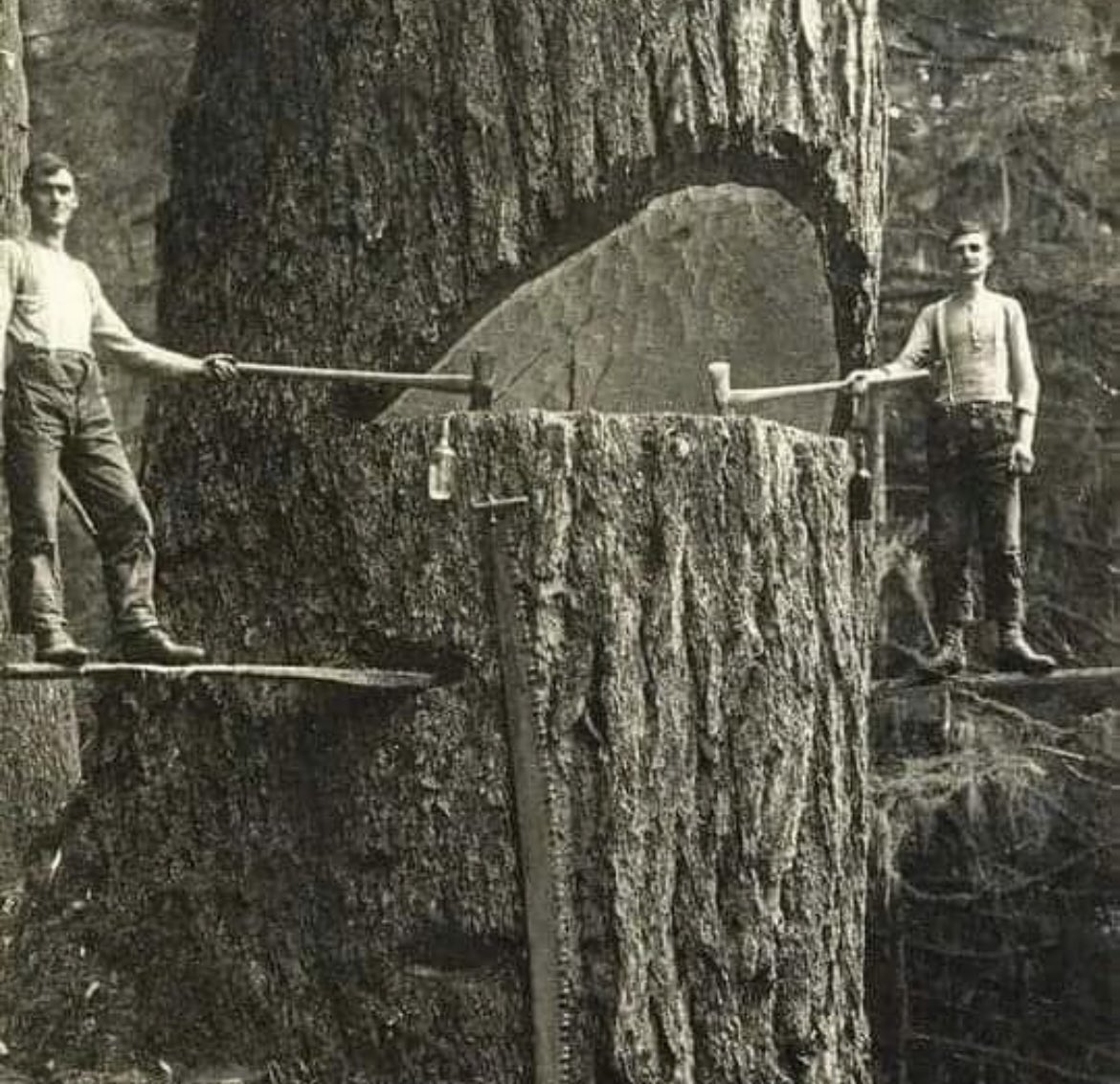
In the early 20th century, the Pacific Northwest region of the United States experienced a significant boom in the timber industry. This photograph shows two lumberjacks cutting a big tree in the Pacific Northwest in 1915.
During this period, the vast forests of the Pacific Northwest, particularly in states like Oregon, Washington, and Northern California, were rich in timber resources. Logging became a crucial industry, providing raw materials for construction, shipbuilding, and other growing sectors.
The demand for timber grew rapidly as the region's population expanded, and timber companies sought to exploit the vast forests. Logging operations often involved skilled lumberjacks who would venture deep into the forests to harvest the trees.
In the early 20th century, the tools and techniques used by lumberjacks were relatively primitive compared to modern logging practices. Two common tools used for cutting down trees were the crosscut saw and the ax. Lumberjacks would often work in pairs, cooperating to fell large trees. The process involved strategically cutting the tree at its base and utilizing leverage to control its fall.
The work of lumberjacks was physically demanding and dangerous. They faced numerous hazards, including falling trees, rolling logs, and rough terrain. However, the timber industry provided employment opportunities and attracted many workers, both locals and immigrants, looking for work and economic opportunities.
By the time of your specified year, 1915, the timber industry had become a crucial component of the Pacific Northwest's economy. It played a pivotal role in the region's development, shaping towns and cities, and supporting various related industries such as sawmills, pulp mills, and paper production.
Over time, concerns about sustainable logging practices and the preservation of forests grew. Conservation movements emerged to advocate for the responsible management of timber resources and the protection of natural environments.
Today, the history of the timber industry in the Pacific Northwest serves as a reminder of the region's rich natural resources and the complex balance between economic development and environmental conservation.