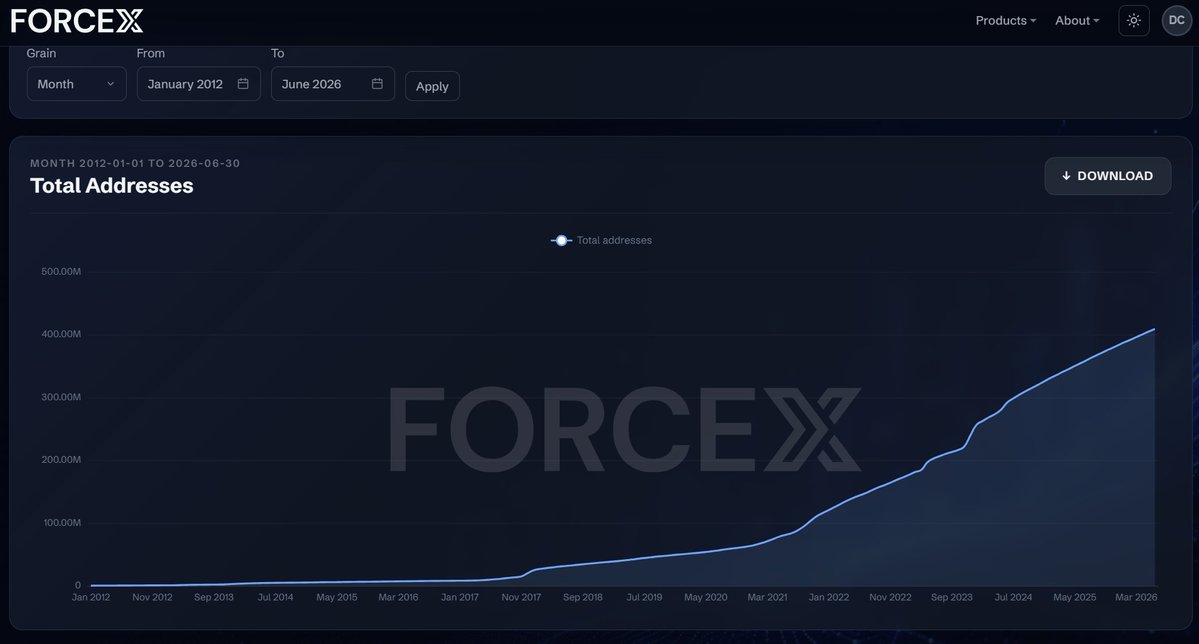
Litecoin total addresses have grown by over 22 million in just 6 months to more than 409 million since its genesis block. That 22 million is 5.37% of total addresses in the history of the blockchain.
Double that amount and in just 2026 alone, Litecoin will have had almost 11% of all addresses ever created, created in those 12 months.
Adoption on Litecoin is expanding its growth trajectory with every month that goes by!
@Minimilian84 These numbers are so tiny compared to history, not sure why anyone looks at these short / long ratios when it’s literally a dead pair being traded on bitfinex
$1.79 billion came out of the spot Bitcoin ETFs last week, seven weeks now of money heading one way.
I get why a number like that makes people uneasy, but I've stopped watching the total and started watching which money is actually leaving.
And it's MOSTLY the MONEY that was only there because things were going up.
The money that leaves first anyway, the leverage and the positions that only worked while the price kept climbing, and once the Fed held rates and dropped the easing language, it had every reason to unwind.
What barely moves is the quiet stuff, the things people actually understand and don't mind HOLDING on a bad day because they were never in it for the week anyway.
That, to me, is what it looks like when a market starts to grow up a bit (the boring part)
And I think about $LTC here, mostly because it's been answering that exact question since 2011 without ever really asking anyone to notice, running through every cycle strong and steady.
Trillions.
The most common question I get about $LITS in investor meetings is: How does a Litecoin treasury company actually make money?
The answer is yield, not speculation.
We use covered call options to generate returns on our Litecoin holdings without putting the underlying position at meaningful risk. If a call gets exercised, we rebuy at a different cost basis and keep moving.
That distinction also explains where we part ways with MicroStrategy. They operate at a completely different scale and have used debt vehicles to build their treasury.
We've deliberately stayed away from that structure. Our balance sheet reflects what we hold, not what we owe.
But yield generation is only phase two.
Phase three is deploying capital back into the Litecoin ecosystem.
That means identifying projects and infrastructure that expand what the network can do, and putting resources behind them.
Every $ we commit at that level strengthens the underlying thesis for every institution evaluating this asset.
So that's what we built $LITS to pursue.
@LiteStrategy I’m so happy to be apart of this as a shareholder and litecoin holder (though I’m hurting very bad right now and lost 75% of my networth lol)
The whole treasury sector is being stress tested this year, and what separates the companies that survive from the ones that don't is whether you build something beyond holding the token or you just accumulate and wait.
The catch is that you need an asset people were already reaching for, and Litecoin has quietly been that for over a decade.
Welcome to DAT 3.0.
@GreekEconomyFTW@dangambardello This is exactly what I’m talking about, no basis other than words like this because price is down (news flash every price is down) but LTC has the most organic network growth outside of btc and eth the last many years. No mention of that from the random bot haters