Kenyans hear "China" every time debt comes up.
But China is not even Kenya's biggest lender.
Total public debt sits at Sh12.86 trillion right now.
Here's exactly who owns all of it, and the name that gets left out of almost every headline:🧵
To be honest, I’d rather see Lamine Yamal lifting the World Cup while celebrating with the Palestinian flag than see Messi being congratulated by Trump and Netanyahu.
That’s just where I stand.
🚨🔴⚪️ Christos Tzolis to Arsenal, here we go! Deal signed between the two clubs for €40m fee, Club Brugge authorize Christos for medical.
New winger for Arteta as Tzolis only wanted Arsenal, saying no to other clubs. Deal done, as @dimitrismanakos reported.
👀 #AFC also working hard on Morgan Rogers behind scenes.
@fletcheropee We can easily make 20 million for selling just official 10,000 jerseys.
I’d be interested to see data from East West on Gor Jersey sales last season cause 10k seems easily achievable.
We're hosting Afcon soon. Govt should commission Kenyan creatives to come up with our own chants and celebrations. We CANNOT be caught doing the Viking row at Talanta Stadium.
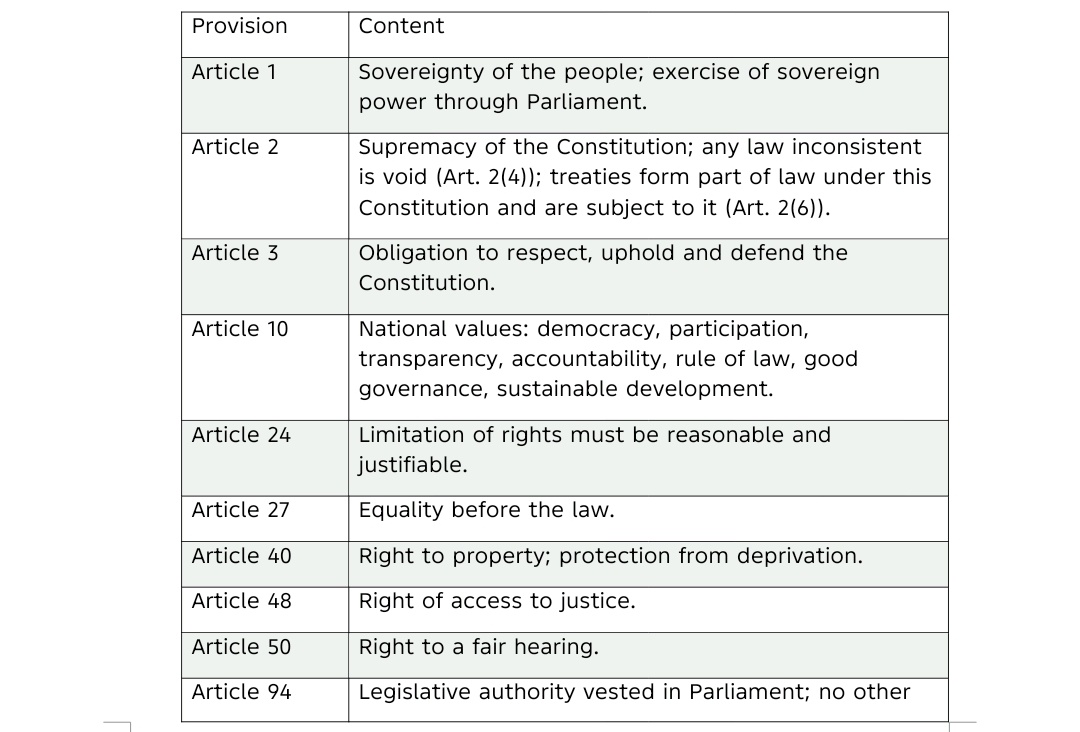
These are the articles of the Constitution of Kenya 2010 that are contravened by the Bretton woods agreement,that bind us to the IMF and give them the audacity to "not be sued" unless and until they authorize it 😂😂😭🚮.
Ukoloni maomboleo we say?
Lindsey Graham knew that the surgery to remove ribs in order to suck your own dick had risks. He went forward with clear eyes and a full heart. He died on his own terms.
Europe spent 400 years using slave labour in colonies to build its wealth, rebranded this extraction model in the 20th century and somehow its citizens still believe their social conditions are a result of some superior intellect rather than inhuman violence.
People defend capitalism because they confuse it with commerce. They believe “capitalism” is when people start businesses and sell things.
If people understood that the thing they call capitalism and love so much is actually just commerce and that it’s not the same thing as capitalism, they would feel very different.
This is because a local baker selling bread, a mechanic fixing cars, or an artisan selling wares on a digital storefront is a sign of commerce in a market economy, which is simply a mechanism for exchanging goods and services based on supply and demand.
Needless to say, this has existed for thousands of years before capitalism was created.
As economic historian Fernand Braudel pointed out, commerce and capitalism are not only distinct; but historically, they have often operated at cross-purposes.
According to Braudel, ordinary commerce is competitive and transparent, while capitalism is anti-competitive and deliberately opaque, making it a zone of privilege held by a small elite who bend the rules in their favour.
Braudel further argues that commerce, or the market, is horizontal, transparent, and competitive and as old as civilization itself. It involves individuals or small groups trading goods, where barriers to entry are low, no single player dominates, and profit is a reward for fulfilling a specific need.
Capitalism, meanwhile, is a specific institutional arrangement that emerged relatively recently in human history, around the 16th to 17th centuries. It is NOT just people “trading stuff”. It is instead the legal and financial system where the means of production are privately owned, and the primary objective is the continuous, infinite accumulation of capital.
Because of this accumulation-obssessed nature of capitalism, when it scales up, it seeks to eliminate the free play of commerce to protect its investments. True market competition is risky for massive capital as it drives prices down and threatens profit margins.
Braudel contended that capitalism only begins where commerce ends. It is the zone of high finance and state collusion. Because it operates across vast distances such as the 17th-century spice trade, information takes months to travel, which creates a deliberate lack of transparency.
Braudel noted that the great capitalists of the early modern era in Madeira and Venice or the Dutch East India Company, never wanted to compete in a fair, transparent market because competition slices profit margins to the bone. Instead, they secured royal charters, exclusive trading rights, and naval protection. At the same time, the state granted them legal monopolies, effectively outlawing competition.
Therefore, capitalism naturally trends toward creating monopolies and securing state interventions like bailouts, subsidies, and regulatory capture to shield itself from the very market forces it claims to champion. In fact, the most important takeaway from Braudel’s analysis is that capitalism is NOT the natural evolution or the highest form of the free market, it is its dark shadow.
So, when our lizard overlords use “free market” and “capitalism” interchangeably, they’re deliberately hiding this distinction and using the moral legitimacy of the hard-working, transparent business owner to defend the structural privileges of the protected financial elite and its regulatory capture.
If ordinary people could comprehend these distinctions, many self-described “capitalists” would realise they are just pro-commerce, and actually anti-capitalist, because it would be clear that defending “capitalism” means defending the right of a small parasite class to bypass the market entirely.
We haven’t grasped how deep the internal security crisis in the country is because we use words that mask its intensity, such as “goons” and “insecurity”.
So what if we called it what it is, “state-organized armed militia”, “state-funded terrorism”, “state-sponsored violence”?